STR Cleaners: How to Hire the Right Turnover Team
STR cleaners are professionals who specialize in preparing short-term rental properties for incoming guests: a job that looks like housekeeping on the surface but operates under entirely different constraints. Turnovers between Airbnb and VRBO stays run on fixed, often brutal time windows. A 2 PM checkout and a 4 PM checkin leaves roughly two hours to clean, restock, inspect, and stage a property to guest-ready standard. That is not residential cleaning. That is a logistics operation.
- STR cleaners specialize in fast, guest-ready vacation rental turnovers: a fundamentally different job from standard residential housekeeping.
- The core distinction: STR turnovers operate on tight windows (often 2 to 4 hours) and require restocking, inspection, and photo-ready staging alongside the physical clean.
- Pricing for vacation rental cleaning varies significantly by market, property size, and turnaround speed: qualitative comparisons matter more than chasing the lowest per-job quote.
- Hosts should vet STR cleaners on three criteria before signing any agreement: STR-specific experience, guaranteed turnaround windows, and a documented inspection protocol.
- Quality control without being on-site is possible: structured post-clean photo requirements, guest feedback loops, and periodic scoring are the tools that separate reliable teams from unreliable ones.
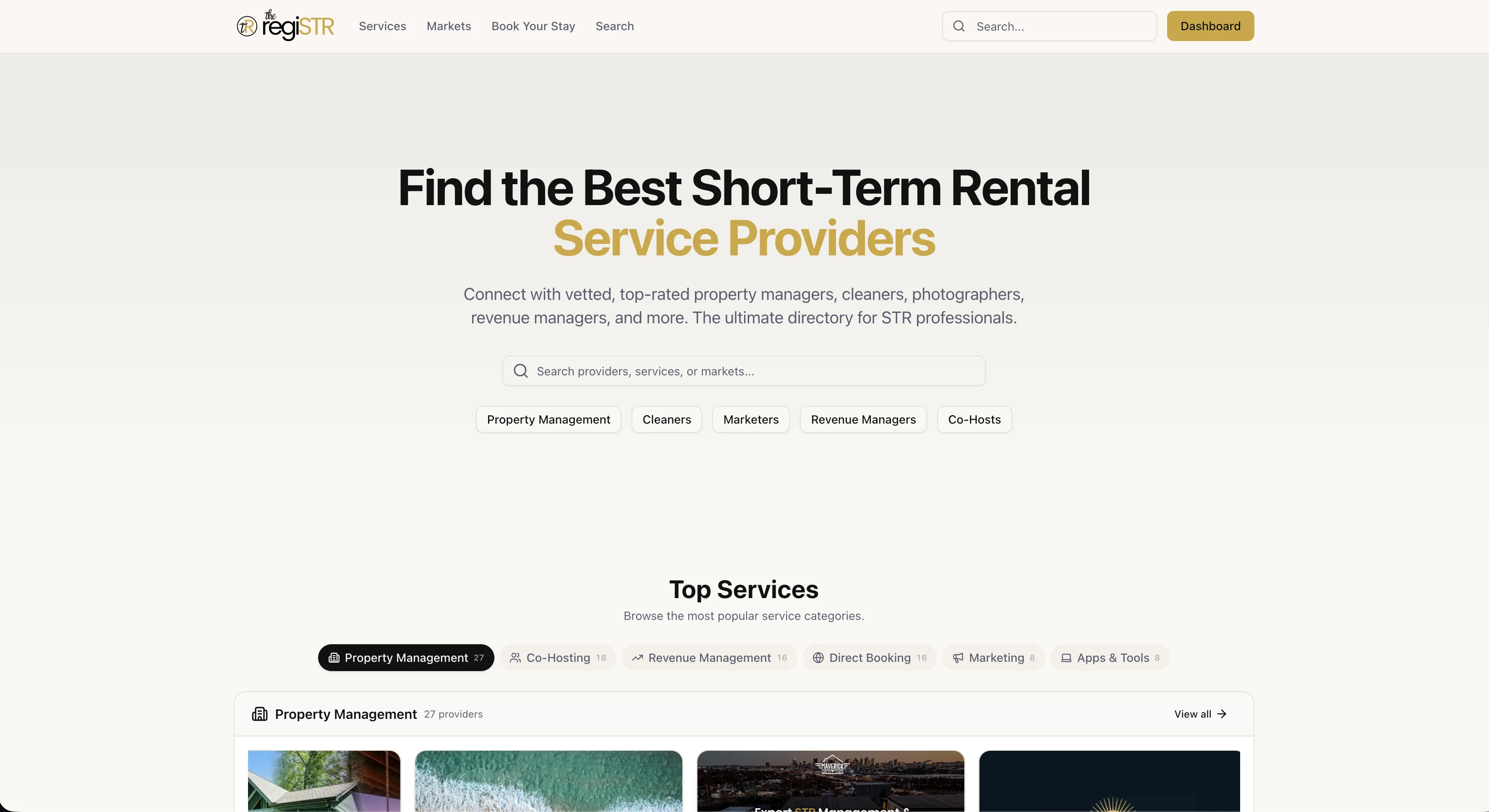
- As a specialized STR service directory, the regiSTR lists vetted short-term rental cleaners organized by market, so hosts in any major STR destination can find pre-screened providers without starting from scratch.
At the regiSTR, we work with STR operators across every major vacation rental market in the country, and the challenge we hear most consistently is not pricing or regulations or even guest complaints. It is cleaning. Specifically: finding a cleaner who actually understands the difference between tidying a home and executing a professional STR turnover. The two are not interchangeable, and hosts who treat them as equivalent pay for that assumption in bad reviews.
This guide covers what STR cleaning actually means, how to price it, how to vet a cleaner before you hand over your keys, and how to maintain quality control from a distance. Whether you own a single cabin in the Smoky Mountains or manage a portfolio across three markets, the framework is the same. The providers change. The standards do not.
What Does STR Cleaning Mean?
STR cleaning refers to the specialized turnover service performed on short-term rental properties between guest stays. It is distinct from residential housekeeping in scope, speed, and accountability. An STR cleaner must complete a full clean, linen reset, consumable restock, and property inspection within the window between a guest's checkout and the next guest's checkin: often under three hours, sometimes less.
The "STR" in STR cleaning stands for Short-Term Rental, the category of lodging that includes Airbnb, VRBO, and direct-booking vacation properties. What distinguishes these properties from long-term rentals is guest frequency: an active STR property might turn over 20 to 25 times per month during peak season. Each turnover is a full reset, and each reset carries consequences for your listing's cleanliness rating on the booking platform.
What STR Turnovers Actually Require
A complete STR turnover is five tasks running simultaneously, not sequentially. Cleaners who approach it sequentially , room by room, task by task , typically cannot finish within the available window. The job requires a choreographed team approach, especially for properties with three or more bedrooms.
Those five tasks are: full surface cleaning of all rooms and high-touch points (door handles, light switches, remote controls), linen exchange and bed reset to hotel-fold standard, consumable restocking (toiletries, paper goods, coffee, dishwasher pods), a property inspection that logs any damage or maintenance issues, and a final visual check against the property's listing photos to confirm staging accuracy. Skip any one of these and the next guest notices. Skip the inspection and you lose the chance to document damage before the guest who caused it checks out.
Not every cleaner who advertises "Airbnb experience" understands this operational structure. At the regiSTR, the pattern we consistently observe is that the best STR cleaners come from hospitality backgrounds , hotel housekeeping, resort turnover operations , rather than general residential cleaning. They already think in checklists, timelines, and room-by-room workflows. That training transfers directly to vacation rental work.
For hosts building their first rental in markets like the Smoky Mountains or Gulf Shores, finding vetted STR cleaners through a directory organized specifically for short-term rental operators is the faster path than sorting through general cleaning platforms where specialization is unverified.
What Does STR Stand for in Cleaning?
In the cleaning industry context relevant to vacation rentals, STR stands for Short-Term Rental. It distinguishes cleaning services purpose-built for Airbnb, VRBO, and direct-booking properties from residential housekeeping, commercial office cleaning, or post-construction cleanup. When a cleaning company describes itself as "STR-specialized," that label signals they understand the operational constraints of vacation rental turnovers: fixed time windows, OTA cleanliness standards, guest-facing staging requirements, and the inspection accountability that remote owners depend on.
The abbreviation matters because it filters out noise. General cleaning directories and open marketplaces aggregate every type of cleaning service in the same search results. A host searching for help with Airbnb turnovers will find post-construction crews, commercial janitorial companies, and residential deep-clean services alongside actual vacation rental specialists. The STR designation is how you identify providers who have specifically designed their workflow, their team structure, and their pricing around the vacation rental use case.
Some cleaning companies use STR specifically in their service tier names: labeling packages as "STR Express," "STR Premium," or "STR Elite" to communicate the difference between a quick between-guest refresh and a full deep clean. Understanding that tiered structure helps hosts choose the right service level for each situation rather than defaulting to the deepest (and most expensive) clean for every turnover.
How Much Should I Pay Someone to Clean My Airbnb?
Pricing for Airbnb turnover cleaning varies significantly by market, property size, and turnaround speed. There is no reliable national average that translates cleanly to your specific property: a one-bedroom condo in a mid-tier market and a five-bedroom beach house in Destin are not in the same pricing universe. What we can say clearly: the right rate for your property is not the lowest rate you can find. It is the rate that covers a complete, consistent, guest-ready clean executed within your checkout-to-checkin window, every time.
In high-demand markets like the Florida Panhandle, Palm Beach County, and coastal Carolinas, STR turnover rates tend to run higher than the national average for residential cleaning. Two drivers explain this: the compressed time windows (faster work requires more team members, which costs more per job) and the seasonal volume peaks that give reliable cleaners leverage to price for quality rather than compete on cost.
Pricing Models: Per Job vs. Per Square Foot vs. Hourly
Three pricing structures appear most commonly in STR cleaning contracts, and each has a different risk profile for hosts.
| Pricing Model | How It Works | Best For | Watch Out For |
|---|---|---|---|
| Per-Job (Flat Rate) | Fixed fee per turnover regardless of hours worked | Predictable scheduling, high-volume properties | Cleaners rushing to protect their hourly margin |
| Per Square Foot | Rate applied to the property's total square footage | Large properties with consistent guest usage | Doesn't account for extra rooms, heavy soil load after parties |
| Hourly | Billed by time spent on-site | First-time hires where scope is unknown | No cost ceiling; incentivizes slow work; hard to budget |
For most established STR operators, per-job flat-rate pricing is the preferred structure. It creates cost predictability across your booking calendar and aligns the cleaner's incentive (finish efficiently) with yours (get done before the next guest arrives). The key is negotiating the flat rate clearly upfront: what it includes, what triggers an additional charge (significantly heavier soil load, extra guests, post-event cleanup), and what the rate looks like for deep cleans versus standard turnovers.
When comparing quotes from multiple providers, use the regiSTR's cleaning directory to filter by market and request quotes from several vetted providers simultaneously. Comparing providers side by side on a platform where everyone has already been screened for STR specialization eliminates the noise of evaluating general cleaners who are not equipped for the work.
Is $50 an Hour Good for House Cleaning?
For standard residential cleaning, $50 per hour sits at the higher end of the national range. For STR-specific turnover work, the hourly rate framing is the wrong lens entirely. Vacation rental turnovers are not priced the same way as recurring residential housekeeping, and comparing them on an hourly basis typically produces misleading conclusions about whether you are getting a fair deal.
Here is the core problem: a residential housekeeper spending four hours on a thorough clean is doing linear, uninterrupted work. An STR turnover team of two people spending two hours on the same property is doing parallel, time-pressured work that requires coordination, a documented inspection, restocking, and a staging check: all within a deadline tied to a guest's arrival. The labor intensity per unit of time is higher, which means the effective hourly cost is legitimately higher as well.
What actually matters is not whether the hourly rate clears a benchmark. What matters is whether the total per-job cost is sustainable relative to your cleaning fee revenue, and whether the cleaner delivers consistent results that protect your cleanliness rating. Hosts in markets like the Poconos, the Smoky Mountains, and the Clearwater and St. Petersburg area in Florida often find that paying a premium for a proven STR-specialized team protects far more revenue (through sustained high cleanliness ratings and repeat bookings) than the cost savings from hiring a cheaper generalist who underdelivers.
A cleaner who cannot commit to a guaranteed turnaround window is not the right fit for STR work, regardless of their hourly rate. That standard is non-negotiable. Build it into every conversation before you discuss price.
How Do You Find and Vet Reliable STR Cleaners?
Finding reliable STR cleaners requires a different process than hiring a residential housekeeper. The vetting criteria are specific to the vacation rental operating environment, and skipping any of them creates predictable failure points later. At the regiSTR, we built our cleaning directory around three core vetting questions that every host should answer before signing any cleaning agreement.
First: does this cleaner have documented STR-specific experience, not just general cleaning experience? Ask them to describe their process for a standard three-bedroom turnover. A specialist will walk you through a room-by-room workflow, a linen protocol, a restocking checklist, and an inspection step. A generalist will describe what they clean. The difference is immediately audible.
Second: can they commit to your specific turnaround window, in writing? Not "usually" or "depending on availability." A confirmed, contractual guarantee that your property will be turnover-complete before your checkin time. If they cannot make that commitment, move on.
Third: do they have an inspection protocol? What do they do when they find a broken item, a stain on the mattress, or evidence of unauthorized guests? Their answer tells you whether they function as a true operational partner or simply a cleaning service. Partners document, photograph, and notify immediately. Services clean and leave.
Red Flags to Reject Immediately
- No STR-specific references. If they cannot name hosts or property managers who will vouch for their vacation rental work specifically, their "Airbnb experience" is probably incidental.
- Hourly-only pricing with no per-job option. This signals they do not have a standardized turnover process and cannot predict their own time requirements.
- No proof of insurance. Non-negotiable. Any cleaner working in your property needs general liability coverage at minimum.
- Vague on inspection. If they say "we'll let you know if we see something major," they are not inspecting. They are cleaning and hoping.
- No written agreement. Verbal arrangements are liabilities. A legitimate STR cleaning provider will have a service agreement that defines scope, timing, and escalation procedures.
Green Flags That Signal a Real STR Pro
- They ask for your listing link before quoting: they want to see the property type, guest capacity, and how it is staged.
- They have a standard restocking protocol and will tell you exactly what consumables they track and replenish.
- They use a post-clean photo protocol and can send you timestamped images from key areas before your checkin window opens.
- They have a documented escalation process for maintenance issues found during inspection.
- They are already familiar with booking platforms like Airbnb and VRBO and understand how cleanliness ratings affect your listing visibility.
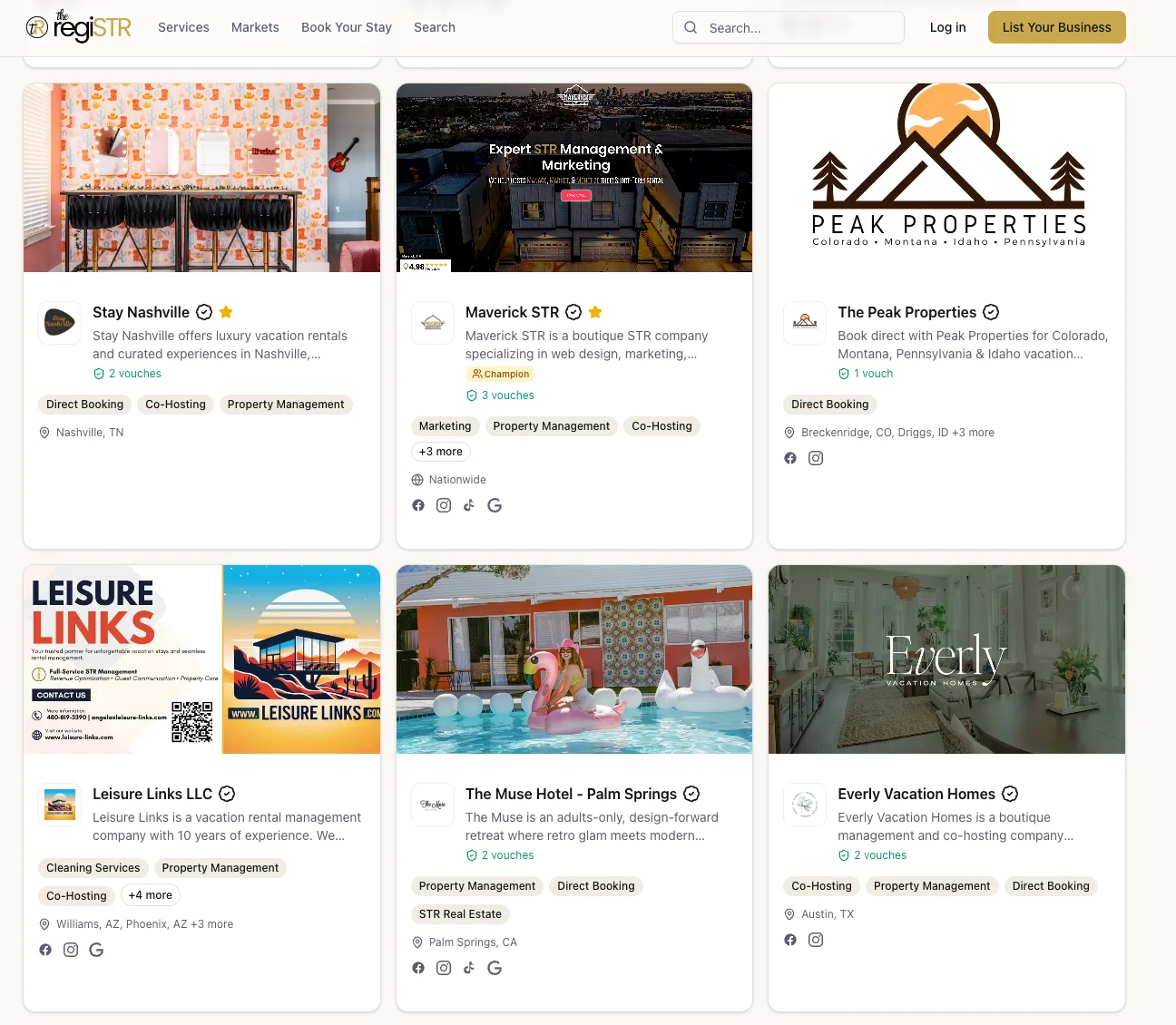
Providers like Revive Rental Solutions and Bluebird Bnb are examples of STR-focused operators listed in the regiSTR network who have been referred in by other short-term rental professionals. That peer-referral structure is a meaningful starting filter: providers in the directory have been endorsed by operators who have actually hired them, not just rated anonymously by strangers.
How Do You Control Quality When You Are Not On-Site?
Remote quality control is one of the most underrated skills in STR management. Most out-of-state owners either trust entirely and get burned, or micromanage through endless text threads and still get burned. The reliable alternative is a structured system with three components: post-clean documentation, guest feedback integration, and periodic scoring.
The post-clean photo protocol is the foundation. Before your cleaner leaves the property, they submit a set of timestamped photos covering the primary areas guests notice first: the main bedroom bed reset, the primary bathroom counter, the kitchen stovetop and sink, and the front entry or living room staging. This takes the cleaner roughly three minutes and gives you a visual record of the property state at the moment turnover is complete. If a guest later reports a dirty kitchen, you have documentation of what it looked like at checkout. If the cleaner has been cutting corners, the photos show you before a guest does.
Guest feedback integration means actively reading cleanliness-related comments in your first guest reviews after each turnover, not just monitoring your overall star rating. "The bathroom was spotless" and "the kitchen counter had crumbs from a previous guest" are both operational signals about the same turnover. One tells you the cleaner executed; the other tells you where the protocol broke down.
Periodic scoring closes the loop. Once a month, pull your cleanliness ratings from Airbnb or VRBO and map them against which cleaner executed each turnover. Over time, patterns emerge. Some cleaners perform consistently across bedroom counts and guest capacities. Others start strong and drift. Scoring makes that visible before it costs you Superhost status.
For remote owners who need a full-service management structure that wraps cleaning coordination inside a broader operational system, the regiSTR's property manager directory is the logical extension. Many STR property managers in the directory handle cleaner scheduling, inspection, and quality control as part of their service scope, removing the need for owners to manage that layer directly.
What Should a Complete STR Turnover Checklist Include?
A complete STR turnover checklist covers five functional categories, each of which must be executed in full before a cleaner marks the property ready. Hosts who provide this checklist to every new cleaner , and review it together before the first solo turnover , dramatically reduce the rate of missed items and guest complaints.
Category 1: Surface and Touch-Point Cleaning
- All countertops, tables, and hard surfaces wiped and disinfected
- Stovetop, oven exterior, and microwave cleaned inside and out
- Bathroom fixtures, mirrors, and tiles scrubbed and dried streak-free
- All high-touch points: light switches, door handles, remote controls, TV buttons
- Floors vacuumed and mopped throughout
- Trash removed from all rooms, new liners installed
Category 2: Linen and Bed Reset
- All used linens stripped and replaced with fresh sets
- Beds reset to hotel-fold standard with properly aligned pillows
- Towel sets replaced and folded or rolled per listing standard
- Mattress protectors inspected for staining; replaced if needed
Category 3: Consumable Restocking
- Toiletries: shampoo, conditioner, body wash, hand soap at each sink
- Paper goods: toilet paper (minimum two rolls per bathroom), paper towels
- Kitchen staples: dish soap, dishwasher pods, sponge
- Coffee station: pods or grounds, filters, sugar, creamer if provided
Category 4: Property Inspection
- Walk every room for visible damage: furniture, walls, fixtures
- Check appliances for function: refrigerator, dishwasher, washing machine
- Log and photograph any damage with timestamp
- Report maintenance issues to the host or property manager immediately
Category 5: Final Staging Check
- Confirm staging matches the property's listing hero photos
- Check that welcome materials (guidebook, house rules, WiFi card) are visible and legible
- Lock all doors, windows, and exterior access points
- Submit post-clean photo set to the host before leaving
This checklist is a living document. Hosts should update it after every guest review that mentions a cleanliness detail the current protocol missed. The cleaner who uses a host-provided checklist consistently and asks for updates is a better long-term partner than the one who insists their existing process is fine.
How Do You Build a Communication System With Your Cleaning Team?
Scheduling and communication breakdowns are the most common reason good STR cleaners stop being reliable. Not because the cleaner became less capable, but because the operational interface between host and cleaner was never structured properly in the first place. The fix is not more text messages. It is a clearly defined communication protocol established before the first turnover.
The baseline requirement is calendar access. Your cleaner should see your booking calendar in real time, not receive check-in and check-out notifications manually. Most property management software platforms support cleaner calendar sync, and even Airbnb's host dashboard allows shared access for team members. A cleaner who does not see your calendar directly is a cleaner who will eventually miss a turnover because they were waiting for a message that did not arrive in time.
Beyond scheduling, define the escalation path for three specific scenarios: damage found during inspection, consumables running low mid-stay, and a turnover that cannot be completed in the standard window. Each of these needs a pre-agreed response protocol. "Text me" is not a protocol. "Text me with a photo and I will respond within 30 minutes; if no response, call me" is a protocol. Remote owners who skip this step discover its importance during a peak weekend when their cleaner finds a broken sliding door and does not know whether to call a locksmith or wait.
For hosts managing multiple properties or operating in markets where same-day turnovers are frequent, consider whether a property manager who handles cleaner coordination might be worth the management fee. The regiSTR's full service directory includes both standalone cleaning specialists and property management companies that bundle cleaning, inspection, and maintenance scheduling into a single managed relationship. Knowing which structure fits your operational capacity is as important as finding the right individual cleaner.
Frequently Asked Questions About STR Cleaners
What does STR cleaning mean?
STR cleaning refers to the specialized turnover cleaning performed on short-term rental properties between guest stays. Unlike standard residential cleaning, STR cleaning must be completed within a fixed window (often 2 to 4 hours), includes restocking consumables and linens, and requires an inspection component to catch damage or maintenance issues before the next guest arrives.
What does STR stand for in cleaning?
In the context of vacation rental cleaning, STR stands for Short-Term Rental. It distinguishes cleaning services designed for Airbnb, VRBO, and similar properties from standard residential housekeeping or commercial cleaning. STR-specialized cleaners understand OTA platform standards, tight turnover timing, and guest-ready presentation requirements that general cleaners do not.
How much should I pay someone to clean my Airbnb?
Pricing for Airbnb turnover cleaning varies by market, property size, and turnaround speed. High-demand markets like the Smoky Mountains, Gulf Shores, and the Florida Panhandle tend to command higher rates than smaller or rural markets. The most important factor is not finding the lowest rate: it is finding a cleaner who can execute consistently within your checkout-to-checkin window without sacrificing guest-ready quality.
Is $50 an hour good for house cleaning when it comes to vacation rentals?
For a standard residential clean, $50 per hour is on the higher end of the national range. For STR-specific turnover work, the hourly rate comparison is less useful than a per-job quote because turnovers require speed, staging, restocking, and inspection work that residential hourly rates do not reflect accurately. A per-job rate negotiated upfront gives you cost predictability across your booking calendar.
What should be included in an STR turnover checklist?
A complete STR turnover checklist covers five categories: full surface and deep-touch-point cleaning in every room, linen exchange and bed reset to hotel standard, consumable restocking (toiletries, paper goods, kitchen staples), property inspection for damage or maintenance issues, and a final visual check against the listing's hero photos. Cleaners who skip the inspection step are a liability for remote owners.
How do you audit an STR cleaner without being on-site?
Remote quality control relies on three systems: a structured post-clean photo protocol where cleaners submit timestamped photos of key areas before checkout, a guest feedback loop where you review first-night comments for cleanliness flags, and periodic scoring based on cleanliness ratings on Airbnb or VRBO. Hosts who implement all three catch problems before they compound into bad reviews.
How do I find vetted STR cleaners in my market?
The fastest path to vetted STR cleaners is a directory organized specifically for the short-term rental industry, where providers have been screened for STR experience rather than general housekeeping. The regiSTR's Cleaning and Turnover Services category lists STR-specialized cleaners organized by market, so hosts in popular vacation rental destinations can compare providers without sorting through irrelevant general contractors.
What is the difference between an STR cleaner and a regular house cleaner?
The core difference is operational context. A regular house cleaner works on a flexible schedule, typically spends 3 to 5 hours on a thorough clean, and has no external deadline. An STR cleaner must complete the same quality of work within a fixed window tied to checkout and checkin times, often restocking and staging the property simultaneously, and report any damage or issues before the next guest arrives. Not every residential cleaner can make that shift.
The Right STR Cleaner Is a Revenue Decision, Not Just a Cost
Every host eventually learns that cleaning is not a back-office expense. It is a front-line revenue driver. Your cleanliness rating on Airbnb directly affects your listing's search visibility. A sustained drop from 5.0 to 4.6 in the cleanliness subcategory costs you placement in search results, which costs you bookings, which costs you revenue. The math on a reliable STR cleaning team paying for itself is not complicated once you have experienced the alternative.
The U.S. short-term vacation rental market is projected to reach $76.46 billion in 2026, according to AirDNA data, and with over 7 million active short-term rental listings globally as of early 2026 (Dataintelo), the competition for bookings in most markets is real. The properties that consistently earn five-star cleanliness reviews do not have a secret. They have a vetted, accountable cleaning team with a documented protocol and a communication system that actually functions under pressure.
Build your vetting process around the three non-negotiables: STR-specific experience, a guaranteed turnaround window, and a documented inspection protocol. Get everything in writing. Implement a post-clean photo protocol before your first turnover. And find your providers through a channel where STR specialization is already a filter, not something you have to verify from scratch on every inquiry.
When you are ready to find pre-screened STR cleaners in your market, the regiSTR is where operators across markets like the Smoky Mountains, the Poconos, Destin, and the Florida Panhandle start. Every provider in the Cleaning and Turnover Services category has been referred in by operators who have actually hired them. That peer-referral structure replaces the guesswork with a starting point that is already closer to reliable. Find STR Cleaners in your market at theregistr.co/cleaners.
If your next step is building out the rest of your vendor network beyond cleaning, the regiSTR's directory covers STR maintenance and handyman services, photographers, co-hosts, and property managers: all organized by market and filtered for short-term rental specialization. Every role your property needs, in one place. Sign up free at theregistr.co.
Content powered by inkSTR.co