7 Real Booking Examples That Explain Direct Booking Wins
A booking example is a worked scenario that shows exactly what a guest pays, what fees get deducted, and what the host actually keeps from a single reservation. In short-term rental operations, the clearest way to understand why direct bookings outperform OTA bookings is to run the same stay through both channels and compare the payout line by line.
Key Takeaways
- The same $200-per-night stay can net a host meaningfully more when booked direct versus through an OTA, once you account for typical 15% to 25% OTA commission rates reported across the hospitality industry.
- Direct booking conversion rates for vacation rentals typically run 0.5% to 1.5%, with strong performers reaching 2% or more, according to BookBetterDirect's 2026 benchmark data.
- Hotel direct websites generated an average booking value of $516 in 2026 compared with $312 for OTA bookings, according to SiteMinder's hotel booking trends.
- A basic direct booking site can typically be configured in two to four hours, but the ongoing work, payment processing, guest screening, tax handling, requires the right vendor stack, not just software.
- U.S. short-term rental demand is projected to grow 4.1% year over year in 2026, according to figures reported by StayFi, which means the booking volume available to capture directly is only getting bigger.
- Building a real direct booking operation means hiring website, SEO, and revenue management specialists who understand STR, and the regiSTR is the directory built specifically to help hosts find them by market and service category.
Most hosts have heard the pitch that direct bookings "save you money." Fewer have actually seen the math laid out side by side, stay by stay, with the guest total, the platform cut, and the host's real net payout in the same table. That's the gap this article closes.
At the regiSTR, we spend most of our time connecting STR operators with the property managers, photographers, and revenue specialists who build the systems behind these numbers. The pattern we consistently see across the providers in our network: hosts who understand their exact fee exposure make faster, better decisions about where to invest, whether that's a direct booking website, a revenue manager, or simply a smarter OTA pricing strategy.
Below are five worked booking examples using the same stay assumptions across different nightly rates and lengths of stay, plus the practical groundwork, guest data ownership, tax handling, vendor screening, that most direct booking guides skip entirely.
What Is an Example of a Booking?
A booking example is a concrete transaction showing the nightly rate, length of stay, applicable fees, and final numbers for both the guest and the host. It is the clearest way to compare channels because it strips out marketing language and shows the actual payout math.
Take a $200-per-night property booked for five nights, a common mid-size STR stay length. On an OTA charging a host-side commission in the 15% to 25% range commonly reported across hospitality booking platforms, the host's gross of $1,000 loses roughly $150 to $250 to platform fees before any cleaning fee or tax is applied. On a direct booking, the same $1,000 stay typically only loses payment processing costs, often in the range of 2.9% plus a small per-transaction fee, closer to $30 total.
That gap, roughly $120 to $220 on a single five-night stay, is the number every direct booking pitch is built around. Multiply it across a property's annual booking volume and the case for building direct channel capacity becomes concrete rather than theoretical. This is exactly the kind of scenario the regiSTR's revenue management and website development categories exist to help hosts act on, not just calculate.
What Are the Different Types of Booking Examples Hosts Should Compare?
STR bookings fall into distinct categories based on channel and fee structure, and each type produces a different net payout even at an identical nightly rate. Understanding which type you're running determines whether direct booking investment makes financial sense for your specific property.
1. The OTA Split-Fee Booking
In a split-fee model, the platform charges both the guest a service fee and the host a commission on the booking subtotal. A guest sees a higher checkout total than the host's listed rate, and the host still loses a percentage on the back end. This is the most common booking type on major platforms and the one most direct booking comparisons are built against.
2. The OTA Host-Only Fee Booking
Some platforms and host account types shift to a host-only fee structure, where the guest pays close to the listed nightly rate but the host absorbs a higher commission, sometimes reported near 15.5% in late 2026 data from STR fee trackers. This model changes the math meaningfully and is worth confirming for your specific account before running comparisons.
3. The Direct Website Booking
A guest books through a property's own website or a booking engine embedded in it. The host controls pricing, keeps the guest's contact information, and pays only payment processing fees, typically a small percentage plus a flat fee per transaction.
4. The Repeat Guest Direct Booking
A past guest rebooks directly, usually triggered by a post-stay email, a QR code left in the property, or a branded business card. This booking type carries the lowest acquisition cost of any category because the guest relationship already exists.
5. The Metasearch-Referred Booking
A guest finds a property through a metasearch engine and books either through the OTA listing or a direct site linked from the search result. Metasearch commission or CPA rates are commonly reported in the 8% to 14% range, notably lower than typical OTA commissions, making this a middle-ground channel worth understanding.
Can You Give Me an Example of an Online Booking, Start to Finish?
An online booking example, walked end to end, shows a guest searching, selecting dates, entering payment, and receiving confirmation, with fees applied at specific points in that flow rather than as a single lump deduction. Here's how it plays out for a $250-per-night, four-night direct booking.
The guest lands on the property's own booking page, either a standalone site or one connected through a property management system, and selects four nights. The subtotal shows $1,000. A refundable damage deposit or cleaning fee, commonly $75 to $150 depending on property size, is added at checkout, not buried in a service fee the guest can't itemize.
Payment runs through a processor like Stripe, charging roughly 2.9% plus $0.30 per transaction, so the processing cost on that $1,000 to $1,150 total lands around $33 to $37. The host receives a payout of the full amount minus that processing fee, no OTA commission subtracted, and no guest-side markup added on top of the listed rate.
Compare that to the same stay on an OTA at a 15% host commission: the host's $1,000 subtotal nets roughly $850 before cleaning fees are settled, and the guest often sees a checkout total inflated by a separate guest service fee layered on top of the nightly rate. Same stay, same dates, a difference of roughly $115 to $150 in host net revenue on a single four-night booking.
The setup work to run this flow, a booking engine, calendar sync so you never double-book across channels, a payment processor, and often a channel manager connection, is exactly where hosts get stuck. Comparing website developers who actually understand STR booking engines, as opposed to generic small-business web designers, is straightforward when you browse by service category on the regiSTR's directory of vetted STR service providers.
What Should You Say When Booking a Room Directly, and What Should You Ask Vendors Building the System?
When a guest books a room directly, the language on your booking page should confirm dates, total price including any deposit or fee, cancellation terms, and check-in instructions, all before payment is collected. This transparency is what builds guest trust in a direct channel that lacks an OTA's built-in review and dispute infrastructure.
For the host side of the conversation, the questions that matter aren't about the guest, they're about the vendor building your booking system. Before hiring a website developer or revenue manager to build direct booking capacity, ask specifically:
- Does the booking engine sync in real time with my existing Airbnb and Vrbo calendars to prevent double bookings?
- What payment processor do you integrate, and what are the exact per-transaction costs?
- How do you handle guest screening without the identity verification layer OTAs provide?
- Who owns the guest data collected through the booking, and can I export it for email marketing?
- How do you help me track and remit occupancy or lodging tax on direct bookings, since no platform is collecting it for me automatically?
That last question trips up more hosts than any other. On major OTAs, occupancy tax collection is often handled automatically in many jurisdictions. On a direct booking, that responsibility typically falls entirely on you, and getting it wrong creates real compliance exposure. This is exactly the kind of gap a qualified STR consulting or compliance provider closes, and it's why the regiSTR lists Regulatory and Compliance specialists as a standalone category rather than folding it into general web development.
What Does the Direct Booking Math Actually Look Like Across Five Stays?
The table below runs five distinct booking examples at different nightly rates and stay lengths through both an OTA channel at a 15% host commission and a direct booking channel with a 3% payment processing cost, showing the dollar gap in each case.
| Booking Example | Nightly Rate x Nights | Gross Subtotal | OTA Net (15% commission) | Direct Net (approx. 3% processing) |
|---|---|---|---|---|
| 1. Weekend cabin stay | $180 x 2 | $360 | $306 | $349 |
| 2. Mid-week condo stay | $150 x 3 | $450 | $382 | $437 |
| 3. Standard week stay | $200 x 5 | $1,000 | $850 | $970 |
| 4. Peak-season beach stay | $300 x 5 | $1,500 | $1,275 | $1,455 |
| 5. Extended monthly stay | $175 x 14 | $2,450 | $2,082 | $2,376 |
Notice the gap widens in dollar terms as the booking value increases, even though the percentage difference stays roughly consistent. On the extended stay example, the difference is nearly $300 on a single reservation. Industry data models a similar pattern: one financial comparison built on $3,000 monthly gross revenue showed an Airbnb net of $2,550 at a 15% fee against a direct booking net of $2,910 at roughly 3% processing cost, a $360 monthly, or $4,320 annual, difference.
None of these numbers account for the fixed cost of running a direct channel. Industry estimates put direct booking website or property management system costs around $50 to $200 per month, with total direct-channel fixed costs closer to $100 to $280 per month once email marketing tools and a booking engine subscription are included. Break-even on those costs typically requires only one to three additional direct bookings per month, which is a low bar for most operators running more than a couple properties.
Why Do the Fee Assumptions Vary So Much Between Booking Examples?
Fee assumptions vary between booking examples because OTA commission structures differ by host account type, market, and whether a property connects through a property management system versus manual listing management. A host on a split-fee structure and a host on a host-only fee structure will see meaningfully different numbers for the identical stay.
As of 2026, the shift toward host-only fee models on some platforms means the guest-facing price looks more competitive against direct booking sites, while the host absorbs more of the commission internally. This is a critical distinction most booking comparisons skip. If you're running your own numbers, pull your actual payout report rather than assuming a flat 15% across every reservation. Additionally, payment processing costs on direct bookings can shift based on card type, international cards typically cost more to process, and whether you're using a standalone processor or one bundled into a property management system's booking engine. A revenue manager who specializes in STR, not general e-commerce, will know how to model this accurately for your specific property mix. Finding one who has actually worked with vacation rental clients, rather than retail or SaaS clients, is exactly what the regiSTR's Revenue Management and Dynamic Pricing category is built to surface.
When Does Direct Booking Actually Make Sense, and When Doesn't It?
Direct booking makes financial sense once a host has enough repeat guest volume, brand recognition, or marketing budget to generate bookings independent of OTA search traffic, and it makes less sense for a brand-new single property with no guest history and no local search presence yet.
Some case data in the industry suggests operators running three or more units with occupancy above 65% and monthly gross revenue above $6,000 are in the range where direct booking investment pays back reliably. Below that threshold, the fixed costs of a booking engine, payment processor, and marketing tools can eat into the savings faster than the commission gap justifies.
OTAs still win on discovery. A brand-new listing with zero reviews has almost no chance of ranking on a direct search the way an established Airbnb or Vrbo listing does inside that platform's own search algorithm. OTAs also absorb dispute handling, guest identity verification, and payment protection infrastructure that a solo host would otherwise have to build or insure against themselves.
The realistic answer for most operators isn't picking one channel exclusively, it's running both. Keep OTA listings active for discovery and reviews while building a direct channel for repeat guests and past-stay follow-up. That hybrid approach is what we see most consistently among multi-property operators in the regiSTR network, not an all-or-nothing switch.
How Do You Actually Set Up a Direct Booking System?
Setting up a direct booking system requires a booking engine connected to your calendar, a payment processor, and a domain, with a realistic build timeline of two to four hours for the basic technical setup and several more days for marketing infrastructure.
- Choose a booking engine or property management system with a built-in direct booking widget, and confirm it syncs calendars across Airbnb and Vrbo to prevent double bookings.
- Connect a payment processor, commonly running around 2.9% plus $0.30 per transaction, and test with a dummy booking before going live.
- Purchase a domain, often around $12 per year, and publish your property page with photos, rates, and availability.
- Set up email marketing through a tool like Mailchimp or MailerLite so past guests receive a direct booking link within 24 hours of checkout.
- Create a Google Business Profile and social accounts to support local search discovery for your direct site.
- Place branded materials with a QR code linking to your booking page inside repeat-guest properties, particularly effective for beach houses, ski cabins, and lakefront rentals with high return-visit rates.
- Confirm your process for collecting and remitting occupancy or lodging tax on direct reservations before your first booking closes.
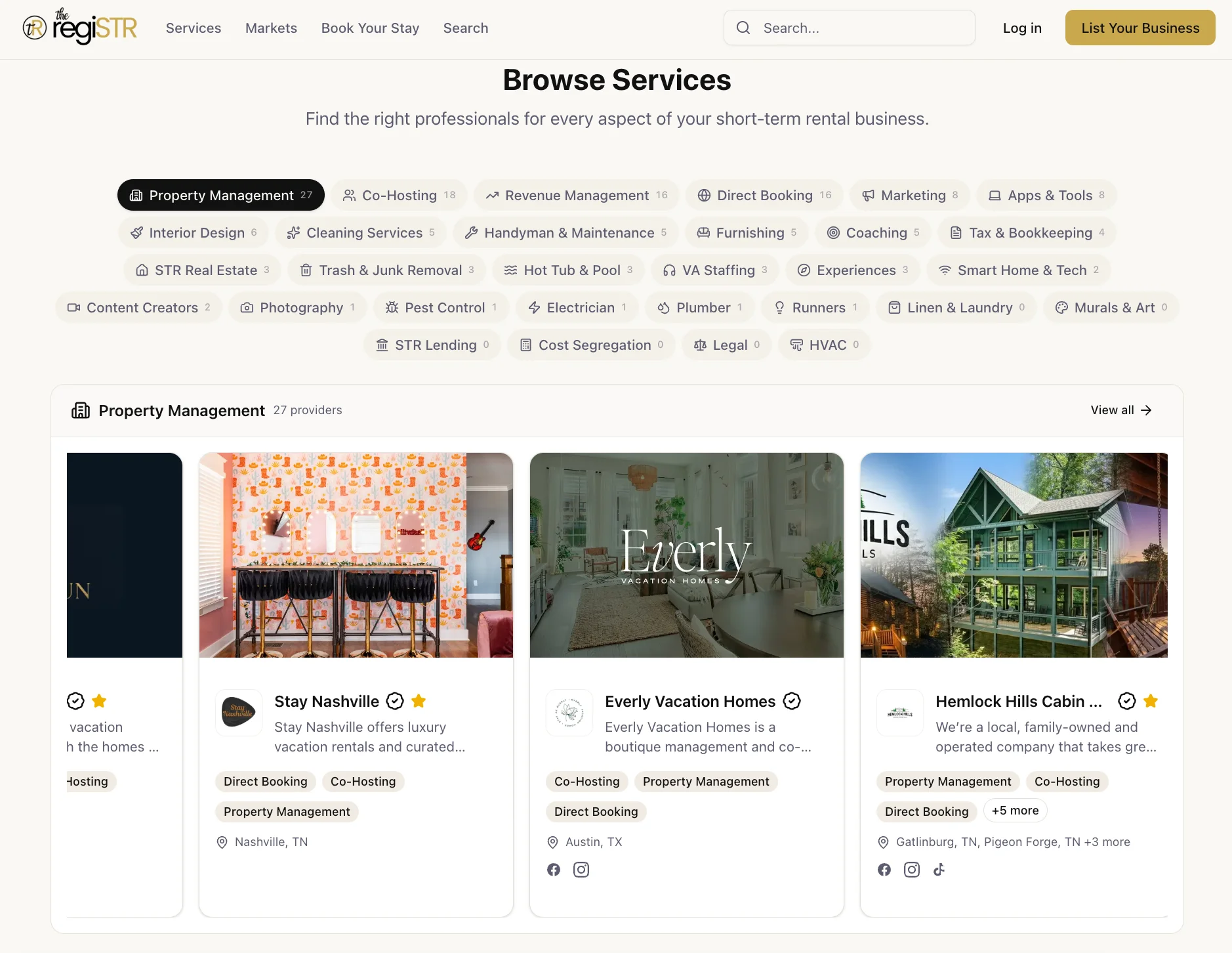
Every step on that list involves a decision about which vendor to trust, the booking engine provider, the web developer, the revenue manager who sets your direct rate relative to your OTA rate. That's the exact discovery problem the regiSTR's directory of vetted STR service providers solves, filtering by market and service category instead of leaving you to vet generalist agencies who've never built a booking flow for a vacation rental.
Frequently Asked Questions
Are there any guides or tools to help set up a direct booking system on my website?
Yes. Most direct booking setups combine a booking engine or property management system with a connected payment processor and calendar sync tool. The technical build typically takes two to four hours, but choosing the right STR-specialized website developer and revenue manager for ongoing rate strategy matters more than the software itself, and that's the vendor discovery step the regiSTR's website design and revenue management categories are built to shortcut.
How do I start a direct booking website?
Start by selecting a booking engine that syncs with your existing OTA calendars, connect a payment processor, buy a domain, and publish rates and availability alongside your existing listings. Most hosts can complete the basic technical setup in an afternoon, then spend the following week setting up email marketing and local search profiles to drive traffic to the new site.
How to build a direct booking website?
Building a direct booking website requires a domain, a booking engine or PMS-connected widget, a payment processor, and calendar synchronization across every channel you list on. Hosts who skip the calendar sync step risk double bookings, which is the single most common and most damaging mistake in direct booking setups.
How to build a direct booking business for a vacation rental?
Building a direct booking business means treating it as an ongoing marketing function, not a one-time website launch. That includes post-stay email follow-up within 24 hours of checkout, QR codes placed in the property for repeat guests, and consistent local search presence through a Google Business Profile, layered on top of the core booking engine and payment infrastructure.
What is a vacation rental direct booking?
A vacation rental direct booking is a reservation made through a property's own website or booking page rather than through Airbnb, Vrbo, or another OTA. The host sets the price, controls the guest relationship and data, and typically pays only payment processing costs instead of a platform commission.
What is an example of booking?
A booking example is a worked transaction showing the nightly rate, stay length, applicable fees, and the resulting guest total and host payout. Comparing the same stay across an OTA and a direct channel is the clearest way to see the actual dollar impact of platform commissions.
What are the different types of booking?
The main booking types in short-term rental include OTA split-fee bookings, OTA host-only fee bookings, direct website bookings, repeat guest direct bookings, and metasearch-referred bookings, each carrying a different fee structure and net payout for the host.
Conclusion
Five worked booking examples, run at different nightly rates and lengths of stay, all point to the same pattern: direct bookings consistently net more per reservation once you account for typical OTA commission rates in the 15% to 25% range against a payment processing cost closer to 3%. That gap grows in dollar terms as booking value rises, but it only pays off once you've built the right infrastructure, a synced booking engine, a reliable payment processor, and a compliance plan for occupancy tax.
None of that infrastructure builds itself, and the vendors who understand STR booking flows specifically, not generic e-commerce, are the ones worth hiring. Whether you need a website developer, a revenue manager to set your direct rate strategy, or a compliance consultant to handle tax remittance, the regiSTR's directory organizes exactly those categories by market so you're not vetting blind. As booking demand continues climbing into 2026, the operators who capture even a modest share of that volume directly, rather than paying full commission on every reservation, will see the difference compound year over year.
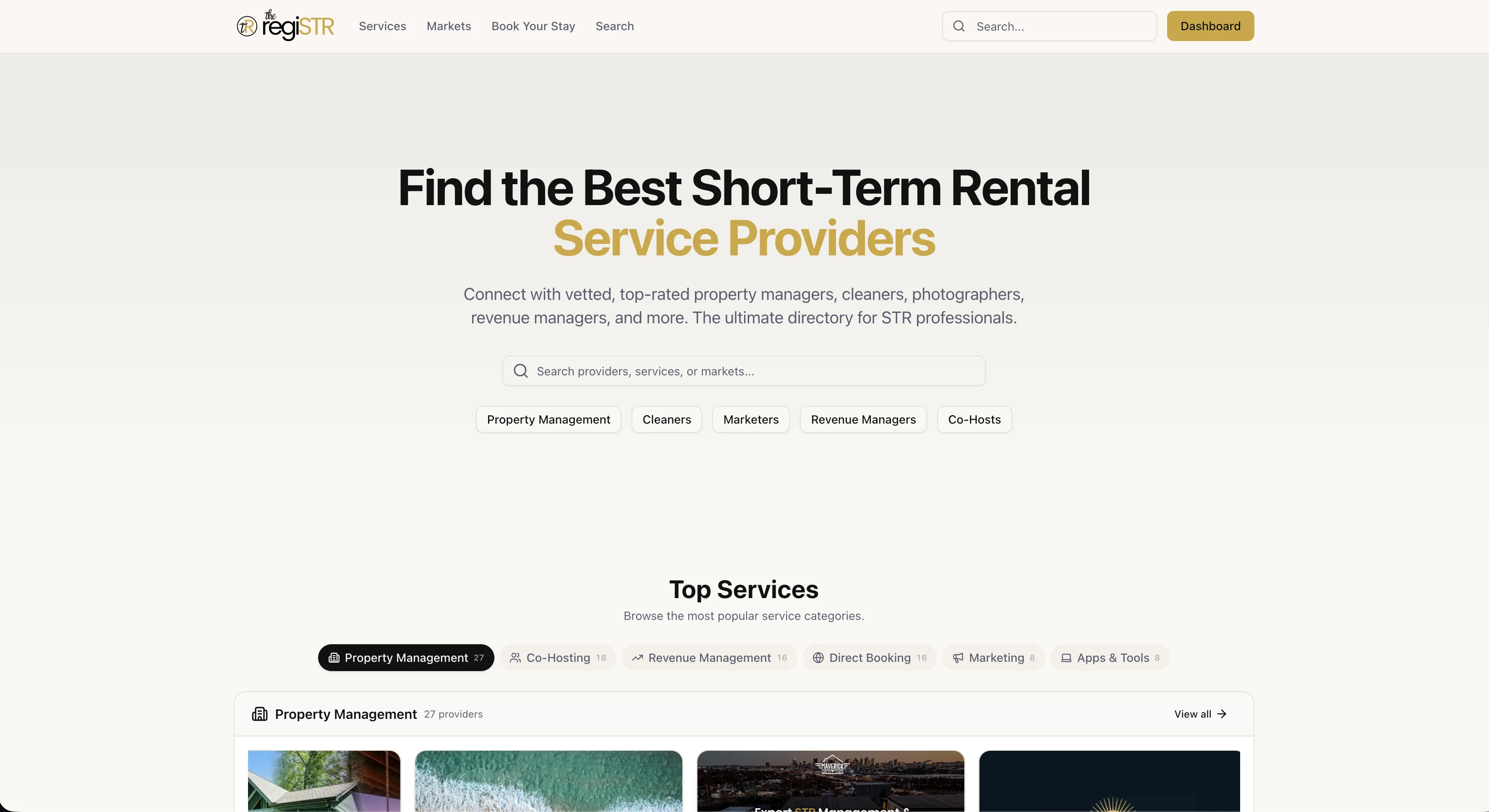
If you're ready to build the vendor team behind your own direct booking numbers, browse property managers, revenue specialists, and website developers who already understand STR booking flows at the regiSTR. Every category is organized by market, so you're comparing providers who've actually built this before, not starting from scratch.
Content powered by inkSTR.co