
Web Technology Tools: What STR Site Owners Should Know
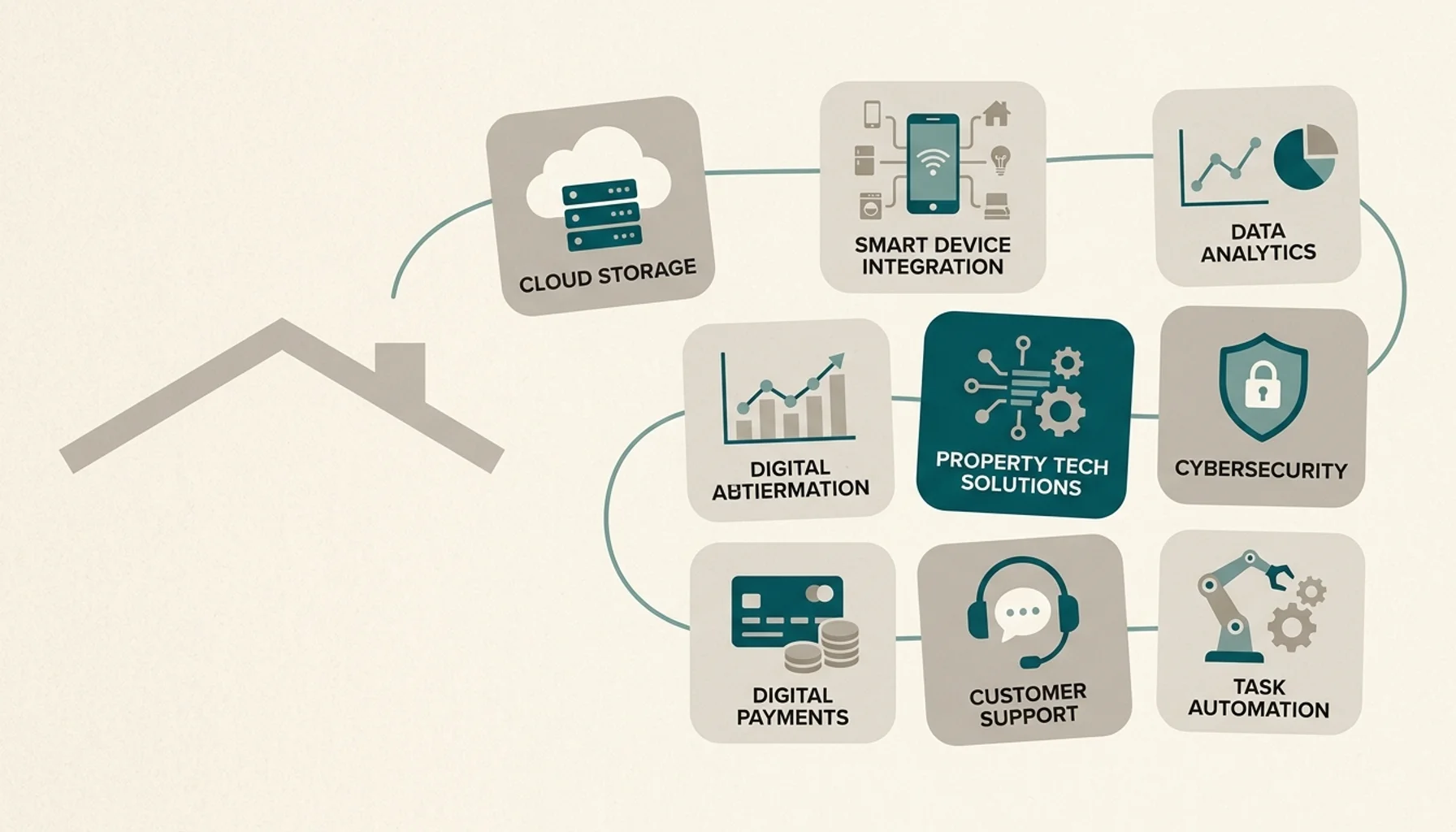
Web technology tools are the software applications that build, test, and deploy a website: code editors, frontend frameworks, build tools, testing suites, and hosting platforms. For a short-term rental operator, they matter because they determine whether your direct booking site loads fast, ranks in search, and actually converts visitors into guests.
Key Takeaways
- Web technology tools fall into roughly eight functional categories: code editors, frontend frameworks, CSS systems, build tools, testing and debugging tools, version control, hosting and deployment platforms, and AI coding assistants.
- The global web-development-services market exceeded $89 billion in 2026, with an 8.2% projected CAGR through 2030, according to Grand View Research, a sign of how much this space keeps shifting under anyone trying to build a booking site alone.
- According to W3Techs, WordPress powers 40.7% of all websites and holds 58.9% of the CMS market, making it the most common foundation for STR direct booking sites built without custom development.
- StayFi projects U.S. short-term-rental listings will hit 1.77 million in 2026, up from 1.69 million in 2026, which means more competition for search visibility and more reason to get your web infrastructure right.
- Most hosts don't need to become developers. They need to know enough about the toolset to hire and evaluate the right person for the job.
- the regiSTR connects STR operators with website design, SEO, and content marketing providers who already understand which web technology tools fit a direct booking strategy, so you're not vetting a generalist agency from scratch.
If you run a vacation rental and someone just told you that your booking site "needs better web technology tools," you probably nodded and had no idea what that actually meant. You're not alone. Most STR operators know Airbnb and Vrbo inside out but have never had to think about code editors, build tools, or hosting platforms until their direct booking site started underperforming.
At the regiSTR, we spend a lot of time connecting operators with the website designers, developers, and SEO professionals who build and maintain direct booking infrastructure. The single most common gap we see: hosts don't know what questions to ask a web developer, because they don't know what tools exist or why one choice matters more than another for a property site that needs to load fast, rank well, and convert.
This guide breaks down the actual categories of web technology tools relevant to an STR direct booking site in 2026, in plain language, with enough specificity that you can walk into a conversation with a developer or agency and know whether they're speaking your language or just billing hours.
What Are the Tools of Web Technology?
Web technology tools are the software, frameworks, and platforms used to build, test, and deploy a website or web application. For an STR direct booking site, that spans everything from the code editor a developer writes in, to the framework that renders your pages, to the hosting service that keeps your site online during a traffic spike.
Industry breakdowns generally group these tools into a handful of functional buckets. First, code editors and integrated development environments, where developers actually write and debug code. Second, frontend frameworks and libraries that structure how a page behaves and displays. Third, CSS and styling systems that handle layout and visual design. Fourth, build tools and package managers that compile and bundle code for production. Fifth, testing and debugging tools that catch problems before guests see them. Sixth, version control and collaboration platforms that track changes across a team. Seventh, deployment, hosting, and DevOps tools that get the finished site live and keep it running. And increasingly, an eighth category: AI coding assistants that speed up development work across all of the above. Notably, one competitor breakdown organizes these into nine categories rather than eight, adding design and prototyping tools as a distinct bucket separate from styling. Either grouping works. What matters for you as an STR operator is understanding that a direct booking website is not one piece of software. It's a stack of decisions, and each layer affects site speed, search ranking, and how easily your provider can make changes down the road.
This is exactly why we built the regiSTR's Website Design and Development category the way we did: it connects you with providers who already understand this full stack for STR use cases specifically, rather than a general small-business web designer who has never optimized a listing-heavy site for search or built in booking-widget integrations.
What Are the Big 3 of Web Development?
Most developers describe the "big three" of web development as the three foundational languages every website is built on: HTML for structure, CSS for styling, and JavaScript for interactivity. Every web technology tool, from a code editor to a frontend framework, ultimately exists to help someone write, organize, or manage these three languages more efficiently. HTML defines the skeleton of a page: your property description headers, your image gallery, your booking form fields. CSS controls how that skeleton looks: fonts, colors, spacing, mobile responsiveness. And JavaScript is what makes a page do things without reloading: a date picker that updates availability, a photo carousel, a pricing calculator embedded on your listing page. For an STR direct booking site, JavaScript matters more than most hosts realize. It's what powers the interactive booking calendar, real-time rate display, and any integration with a channel manager or payment processor. A developer who's weak on JavaScript will hand you a static brochure site that looks fine but can't actually take a booking without redirecting to a third-party widget that breaks your branding.
MDN Web Docs, maintained by Mozilla, is one of the most widely used reference resources for these three languages and the browser APIs built around them, offering practical guides for HTML, CSS, JavaScript, and developer tools built into Firefox. If you're evaluating a developer for your STR site, asking how they handle each of these three layers is a fast way to separate someone who builds custom, fast-loading sites from someone reskinning a generic template.
This distinction is precisely what we screen for when providers apply to join the regiSTR's directory under Website Design and Development. A provider who can only talk about templates and drag-and-drop builders gets filtered differently than one who can speak fluently about custom HTML, CSS, and JavaScript work built specifically for booking conversion.
What Are Some Popular Web Development Tools?
Popular web development tools span code editors, frontend frameworks, testing suites, and deployment platforms, each solving a different piece of the site-building process. Rather than one universal toolkit, developers typically assemble a stack: an editor to write code, a framework to structure the site, a testing tool to catch bugs, and a hosting platform to deploy it. For code editors, lightweight and cloud-capable options exist at multiple price points, with some IDEs positioned specifically for large JavaScript and TypeScript projects. For frontend work, component-based frameworks and libraries let developers build reusable page elements instead of writing every page from scratch, which matters if your STR site has dozens of individual property pages that need consistent formatting. For styling, utility-first CSS frameworks have become common because they speed up responsive design work, which is critical since most guests now book from a phone. For testing and debugging, browser-native tools built directly into Chrome allow developers to edit pages on the fly and diagnose performance problems without leaving the browser, according to Chrome's official developer documentation. For hosting, several platforms now specialize in static and JAMstack-style sites, offering free tiers alongside paid plans that scale with traffic and build volume. And for version control, Git-based collaboration platforms remain the standard for teams tracking changes across a codebase.
| Category | What It Does | Why It Matters for an STR Site |
|---|---|---|
| Code editor / IDE | Where developers write and organize code | Affects how quickly a developer can make updates or fix bugs on your site |
| Frontend framework | Structures page components and behavior | Determines how consistently property pages render across your listings |
| CSS / styling system | Handles layout, color, spacing, responsiveness | Directly impacts mobile experience, where most bookings originate |
| Build tools / package managers | Compile and bundle code for production | Affects site load speed, which influences search ranking and bounce rate |
| Testing / debugging tools | Catch errors before they reach guests | Prevents broken booking forms or calendar glitches during peak demand |
| Version control | Tracks changes across a codebase | Lets you or a new developer roll back a bad update safely |
| Hosting / deployment | Gets the finished site live and running | Determines uptime, scalability during traffic spikes, and total cost |
| AI coding assistants | Speeds up writing and reviewing code | Can reduce development time, but requires human review for accuracy |
You don't need to memorize every tool in every row of that table. What you do need is a provider who can explain, in one sentence, why they chose their particular stack for a site that needs to convert search traffic into direct bookings. If a developer can't answer that question specifically, that's a red flag worth taking seriously.
What Is the Best Web Technology?
There is no single "best" web technology tool. The right choice depends entirely on your project type: a simple marketing page for one property needs a different stack than a multi-property portfolio site with real-time availability, dynamic pricing display, and integrated payments. For a single-property or small-portfolio direct booking site, a content management system remains the most practical foundation for most hosts. According to W3Techs, one CMS platform alone powers 40.7% of all websites globally and commands 58.9% of the CMS market, which explains why so many web developers default to it for small business and hospitality sites: it's well-documented, has a massive plugin ecosystem, and doesn't require custom development for every feature. For a larger STR portfolio needing custom booking logic, real-time channel manager sync, or heavy SEO content investment, a custom-built site using a modern frontend framework paired with a static-hosting or JAMstack deployment approach often performs better on speed and search ranking than a plugin-heavy CMS site. Static and JAMstack hosting platforms typically offer free entry tiers with paid plans starting around the high-teens per month, scaling based on build minutes, bandwidth, and team seats. Grand View Research values the global web-development-services market at over $89 billion in 2026, growing at a projected 8.2% CAGR through 2030, a pace that reflects how quickly new tools and frameworks keep entering the market. That pace is exactly why hiring a generalist agency that learned one stack five years ago and hasn't updated since is a risk for an STR site competing for search visibility in 2026.
the regiSTR's directory doesn't try to steer every operator toward one technology. Instead, we connect you with website and SEO providers who work across CMS platforms and custom-built stacks, so the recommendation you get is based on your property count and revenue goals, not a developer's comfort zone.
What Do Web Technology Tools Actually Cost, and What Gets Left Out of the Sticker Price?
The advertised monthly price for a web technology tool almost never reflects your total cost. Free tiers and low-priced starting plans typically exclude usage-based charges: build minutes, bandwidth overages, storage limits, additional team seats, API call limits, and premium support, all of which scale up as your site traffic grows. For example, hosting platforms built for static and JAMstack sites commonly list free entry tiers alongside paid plans starting in the high-teens per month. That entry price covers a baseline of build minutes and bandwidth. Once your STR portfolio site starts pulling meaningful search traffic, or you add more properties with more pages, you can exceed those limits and get pushed into a higher tier or usage-based billing you didn't originally budget for. The same applies to code editors marketed as "affordable." A lightweight IDE priced under ten dollars a month per seat sounds trivial until you're paying for a five-person development team across multiple tools in the stack: editor, testing suite, deployment platform, and design software, each with its own monthly seat cost. Beyond direct fees, there's a cost almost no competitor content addresses: the operational burden of tool sprawl. Every additional tool in your stack means another login, another update cycle, another potential plugin conflict, and another thing your developer needs to be trained on if they leave and you hire a replacement. A five-tool stack that each cost twelve dollars a month doesn't sound expensive until you count the hours spent managing version conflicts between them.
This is the exact conversation we push STR operators to have before they sign a contract with a web provider: ask not just what the monthly software cost is, but what the total maintenance burden looks like a year from now. Providers listed under the regiSTR's Website Design and Development category are expected to be transparent about this during intake, not just quote a build price and disappear.
How Do You Choose the Right Web Technology Stack for a Different Project Type?
The right web technology stack depends on what kind of site you're building, and treating every STR website like the same project is one of the most common mistakes hosts make when hiring a developer. A single-cabin marketing page, a ten-property portfolio site, and a booking engine with live payment processing each demand different tools. For a static marketing site promoting one or two properties with no live booking engine, a simple CMS or a static site builder is usually sufficient and keeps ongoing maintenance low. For a content-heavy site built around SEO, such as a portfolio publishing destination guides and blog content to capture search traffic before Airbnb, a CMS with strong content-authoring tools and a solid plugin ecosystem tends to outperform a custom build, because content velocity matters more than raw page speed at that stage. For an ecommerce-style booking engine handling real-time availability, dynamic pricing, and direct payments, a custom frontend framework paired with a dedicated hosting platform built for application performance is worth the higher build cost. Speed and reliability under traffic spikes, like a flash sale weekend or a viral listing, justify the investment. And for an internal dashboard, such as a multi-property owner tracking occupancy and revenue internally, a simpler internal tool doesn't need the same SEO or public-facing performance investment as a guest-facing booking site. Grand View Research's estimate that the global property-management-software market will reach $3.8 billion in 2026, growing toward $5.9 billion by 2033 at a 6.4% CAGR, reflects how much of this internal-dashboard category is being built and sold as standalone software rather than custom development, another reason not every project needs a bespoke web build.
If you're not sure which category your project falls into, that's a normal place to start. It's also exactly the kind of question the regiSTR's directory is built to route correctly: browsing STR service providers by category lets you see which developers specialize in content-heavy SEO builds versus booking-engine work versus simple portfolio marketing sites.
Where Do AI Coding Assistants Fit, and Where Do They Fall Short?
AI coding assistants are tools that generate, suggest, or review code automatically based on natural-language prompts, and they've become a standard part of most modern web technology tool stacks by 2026. For an STR operator hiring a developer, the presence or absence of AI-assisted workflows in a provider's process is now a fair question to ask. The productivity case for AI coding assistants is well established: developers can scaffold a page layout, generate boilerplate code, or debug a common error faster than writing everything from scratch. Where most coverage of these tools stops short is addressing the risks that matter specifically for a business site handling guest data and payment information. First, code accuracy. AI-generated code can look correct and still contain subtle logic errors that only surface under specific conditions, like a booking calendar that miscounts nights during a daylight saving time change. Second, security. Generated code can introduce vulnerabilities if it isn't reviewed by someone who understands your specific data handling requirements, particularly around guest payment and personal information. Third, licensing. Some AI-generated code can inadvertently mirror licensed open-source code in ways that create legal exposure for commercial use. Fourth, dependency risk. AI tools sometimes recommend packages or libraries that are outdated, unmaintained, or introduce security holes into your site's supply chain. None of this means AI coding tools are bad. It means a provider using them responsibly should still have a human review step before code goes live on a guest-facing booking site, especially anything touching payment processing or personal guest data.
When we vet providers for the regiSTR's Website Design and Development category, we're specifically listening for whether AI-assisted work gets human review before deployment. A developer who tells you they "just use AI for everything" without a review process is not someone you want touching your booking engine.
What Gets Overlooked When Hosts Evaluate a Web Development Stack?
Accessibility, performance budgets, security monitoring, and backup strategy are the parts of a web technology stack that most STR operators never think to ask about, and most web developers don't bring up unless pushed. These aren't optional extras. They determine whether your site stays online, stays fast, and stays usable for every guest who lands on it. Accessibility affects a real slice of your potential guest base and can also carry legal exposure depending on your jurisdiction; a site that isn't navigable by screen reader or keyboard alone is turning away bookings you'll never know you lost. Performance budgets, meaning defined limits on page weight and load time, prevent a site from slowly bloating with new plugins and images until it takes eight seconds to load on a guest's phone in a spotty cell signal area near a mountain property. Backup strategy and rollback plans matter more than most hosts realize until the day a plugin update breaks their booking calendar during a holiday weekend. Ask any provider directly: if an update breaks the site at 11pm on a Friday, how fast can it be rolled back to the last working version? If the answer is vague, that's informative. Supply-chain security, meaning how a developer manages third-party code dependencies and keeps them patched, is another area competitor content skips almost entirely. An outdated plugin or library is one of the most common ways small business websites get compromised, and a compromised booking site is a direct threat to guest trust and payment security.
These are exactly the operational questions we encourage hosts to bring into any conversation with a web provider, and they're part of what separates a provider we'd list under the regiSTR's directory from one that just quotes a build price and moves on. If you want a starting framework for these questions, browse the full STR services directory and look for providers who address maintenance and security as part of their standard offering, not an upsell after something breaks.
Are There Guides or Tools to Help Set Up a Direct Booking System on My Website?
Yes. Direct booking systems typically combine a booking engine plugin or integration, a payment processor, and a channel manager sync, layered onto whatever CMS or custom framework your site is built on. Most hosts don't build this from scratch; they hire a developer or agency that specializes in STR direct booking infrastructure specifically. The setup generally involves connecting a booking widget to your existing calendar so availability updates in real time across Airbnb, Vrbo, and your own site without double-booking risk. It also requires a secure payment gateway integration and, ideally, SEO-focused content built around your property and destination so search traffic has a reason to land on your site instead of going straight to an OTA listing. This is squarely a location-independent service. Whether your property sits in Gatlinburg, Scottsdale, or Gulf Shores, the developer building your direct booking infrastructure can work remotely, which is why the regiSTR treats Website Design and Development, along with SEO and Content Marketing, as nationwide categories rather than market-specific ones.
Instead of guessing which agency understands STR-specific direct booking mechanics versus a generalist small-business web shop, browse providers under Browse All STR Services who list direct booking strategy as a core specialty. Sign up free at theregistr.co and you can filter specifically for that experience.
What Are the Latest Tools for Vacation Rental Managers to Improve Efficiency and Revenue?
The most relevant recent tools for vacation rental managers combine web technology with STR-specific operational software: dynamic pricing engines, channel managers, and direct booking infrastructure built on modern hosting platforms. As of 2026, the trend isn't toward more tools individually. It's toward tighter integration between the website layer and the operational software layer. AirDNA-based data reported by BuildUp Bookings forecasts U.S. short-term-rental demand and available listings each growing 2.7% in 2026, with RevPAR rising 2.9%. In a market growing that steadily but not explosively, the operators pulling ahead are the ones squeezing more revenue per available night, not just adding more listings. That means your website and pricing tools need to work together, not sit in separate silos. For efficiency, a well-built direct booking site reduces your dependency on OTA commission fees over time. For revenue, a site built with performance budgets in mind, meaning fast load times and clean mobile experience, keeps more of your search traffic converting instead of bouncing to a competitor's faster-loading listing page. Notably, Mordor Intelligence's estimate that the global web-performance market will reach $6.71 billion in 2026, projected to hit $10.44 billion by 2031 at a 9.24% CAGR, reflects how much investment is now going specifically into making sites load faster, not just look better.
the regiSTR's directory covers this full stack: Revenue Management and Dynamic Pricing sits alongside Website Design and Development and SEO and Content Marketing as nationwide, location-independent categories, because the operators seeing the best results are usually working with providers who coordinate across all three rather than hiring each in isolation.
What Are the Best Tools for New Vacation Rental Hosts to Streamline Operations?
New vacation rental hosts get the most value from a lean starting stack rather than trying to adopt every web technology tool available on day one. A simple CMS-based website, a basic booking widget, and one reliable hosting platform cover the core of what a first property needs before scaling into custom development. Beyond the website itself, streamlining operations for a first-time host usually means finding the human providers who can fill knowledge gaps: a cleaner who understands STR turnover timing, a photographer who knows how to shoot for OTA listing performance, and eventually a developer who can build out a direct booking presence once the property has enough of a track record to justify the investment. Almost 60% of respondents indicated that short-term rentals are advantageous because they provide an additional income source for hosts, according to Statista, which is exactly why so many first-time owners are entering the space right now. But income potential only materializes if the operational basics, including a functional, fast website, are handled correctly from the start rather than patched together after problems show up.
the regiSTR built its directory structure around this exact starting-point problem. Instead of a first-time host cold-calling five different types of vendors, our category pages, from Cleaning and Turnover Services to Website Design and Development, let you build your first vendor roster from one hub. Find STR Cleaners is often the first stop, since turnover reliability matters before your first guest ever checks in.
Frequently Asked Questions
What is the regiSTR and how does it differ from general web development directories?
the regiSTR is a short-term rental service directory that connects STR operators with vetted providers across categories including website design, SEO, and revenue management. Unlike a general web development marketplace, every provider listed serves the STR industry specifically, meaning they already understand booking engines, channel manager sync, and OTA competition rather than generic small-business needs.
Do I need custom web development, or is a template site enough for my vacation rental?
A template-based CMS site is usually enough for a single property or small portfolio without heavy SEO ambitions. Once you're managing multiple properties, running content-driven SEO to capture direct bookings, or need real-time pricing and availability integration, a custom-built site on a modern frontend framework typically performs better on speed and conversion.
How much do web technology tools typically cost for a small STR portfolio?
Costs vary widely and rarely stop at the advertised monthly price. Hosting platforms often start free or in the high-teens per month, but usage-based charges for bandwidth, build minutes, and additional seats can push costs higher as your site grows. Ask any provider for a full breakdown of ongoing costs, not just the initial build quote.
What are the latest tools for vacation rental managers to improve efficiency and revenue?
The most effective recent approach combines a fast, SEO-built direct booking website with dynamic pricing tools and channel manager integration, rather than treating each as separate. AirDNA-based data reported by BuildUp Bookings shows RevPAR rising 2.9% in 2026, and operators capturing that growth tend to have their web presence and pricing strategy working together.
Are there guides or tools to help set up a direct booking system on my website?
Yes, direct booking setup typically involves a booking widget synced to your calendar, a secure payment gateway, and SEO content built to attract search traffic. This is a location-independent service, so you can hire a specialist developer remotely regardless of where your property is located.
What are the best tools for new vacation rental hosts to streamline operations?
New hosts benefit most from a lean stack: a simple CMS website, a basic booking widget, and one reliable hosting platform, paired with reliable human providers for cleaning, photography, and eventually direct booking development as the property matures. Trying to adopt every available tool on day one usually creates more maintenance burden than it solves.
Should I hire a generalist web agency or an STR-specific developer for my direct booking site?
An STR-specific developer typically understands booking engine integration, channel manager sync, and OTA-competitive SEO in ways a generalist small-business agency does not. If a developer can't explain how they'd handle real-time availability sync or search visibility against Airbnb and Vrbo listings, that's worth probing further before signing a contract.
What should I ask a web developer before hiring them for my vacation rental site?
Ask what CMS or framework they recommend and why, how they handle testing before pushing updates live, what their backup and rollback process looks like, and whether AI-generated code gets human review before deployment. Their answers reveal whether they're building for long-term reliability or just delivering a one-time site launch.
Conclusion
Web technology tools aren't a mystery you need to master, they're a stack of decisions your developer makes on your behalf, and your job is knowing enough to evaluate whether those decisions serve your booking goals. In 2026, with the web-development-services market growing at an 8.2% CAGR according to Grand View Research, the gap between a fast, SEO-built direct booking site and a slow template site keeps widening every year you wait. Whether you're launching your first cabin listing or managing a multi-property portfolio, the providers who understand both the STR business and the underlying web technology tools are the ones worth hiring. Finding them shouldn't take months of cold outreach and guesswork.
If your direct booking site needs a rebuild, better SEO, or a pricing strategy that actually works with your web presence, Get started with the regiSTR and browse vetted website, SEO, and revenue management providers built specifically for the STR industry. Sign up free at theregistr.co and find the provider who fits your property, not a generic web shop guessing at what a booking site needs.
Content powered by inkSTR.co