Best Software for Vacation Rental Managers in 2026
The best software for vacation rental managers is not one platform. It is a stack: a channel manager to sync calendars across Airbnb and Vrbo, a property management system (PMS) to run bookings and reporting, a dynamic pricing tool to adjust rates nightly, and dedicated apps for cleaning coordination and guest messaging. Most operators layer four or five tools together rather than relying on a single all-in-one system.
Key Takeaways
- As of 2026, 74% of U.S. vacation rental managers use channel managers and 73% use dedicated property management systems, according to Key Data, meaning most professional operators run at least two core tools, not one.
- Over 40% of rental managers now use analytics tools to benchmark performance, per Key Data, a signal that software decisions increasingly come down to data, not gut instinct.
- Nearly 58% of U.S. companies have regretted at least one software purchase (Key Data), which is exactly why a structured evaluation framework matters more than a feature checklist.
- The global vacation rental market was valued at USD 97.85 billion in 2026 and is projected to reach USD 101.37 billion in 2026, per Precedence Research, meaning software vendors are scaling fast and consolidating features into fewer platforms.
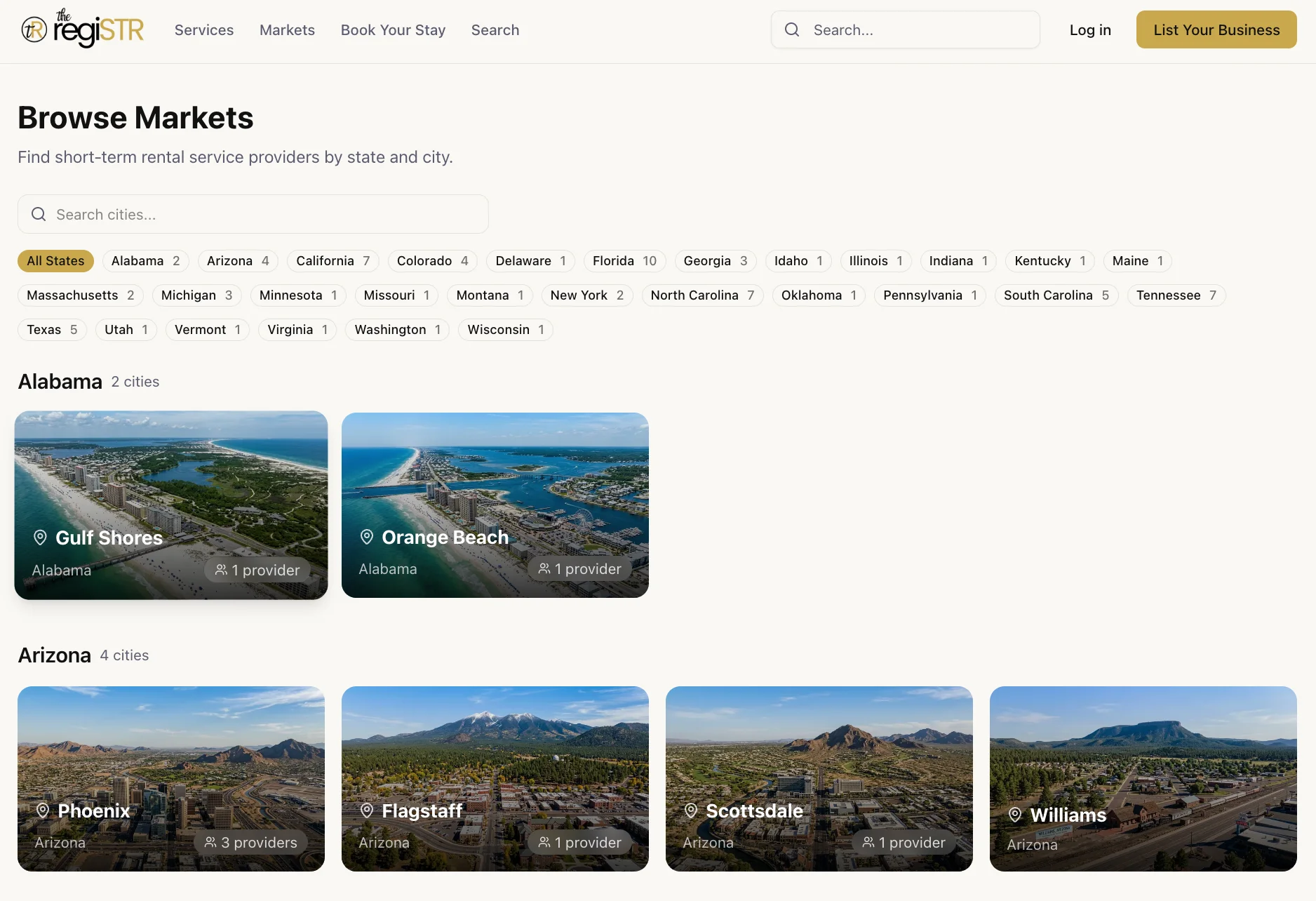
- Software alone does not solve your vendor discovery problem. The regiSTR fills the gap software can't: a vetted directory of STR cleaners, photographers, and property managers by market, so your tech stack has reliable humans behind it.
If you've spent a Saturday afternoon toggling between five browser tabs trying to figure out why your Airbnb calendar shows an open date that Vrbo already booked, you already understand why software matters here. Double bookings, missed turnovers, and manual rate updates are not sustainable once you cross two or three properties.
At the regiSTR, we spend a lot of time talking to operators about their tech stack, not because we sell software ourselves, but because the providers in our network (cleaners, co-hosts, revenue managers) all have to plug into whatever system a host is running. The pattern we consistently see: hosts overbuy on features they don't need and underinvest in the operational vendors who actually execute the plan the software generates.
This guide breaks down what vacation rental management software actually needs to do in 2026, how to evaluate options without falling into the 58% of buyers who regret their purchase, and where software stops and human vendor relationships have to start.
What Software Do Vacation Rental Managers Use to Automate Operations?
Vacation rental managers automate operations using a combination of a channel manager (calendar and rate sync across OTAs), a property management system (central booking, guest, and financial data), a dynamic pricing engine, and task automation tools for cleaning and maintenance dispatch. As of 2026, most professional operators run three to five connected tools rather than a single system.
Specifically, channel management software prevents the double-booking problem that happens when a guest books a date on Airbnb after that same date was already reserved on Vrbo. According to Key Data, 74% of U.S. vacation rental managers already use a channel manager, which tells you this is no longer optional infrastructure for anyone running more than one listing.
Property management systems layer on top of channel managers to handle guest communication threads, financial reporting, owner statements (for co-hosts and PMs managing owned units), and task scheduling. 73% of managers use a dedicated PMS, per the same Key Data research, and the two tools together form the operational core most portfolios run on.
Beyond those two, task and workflow automation tools handle the operational glue: auto-assigning a cleaner after checkout, triggering a maintenance ticket when a guest reports an issue, and sending automated review requests. This is the layer that most self-managing landlords skip first, and it's the one that causes the most burnout when skipped.
Comparing software vendors side by side is exactly what a directory should make easy, and it's the same logic behind browsing all STR services on the regiSTR: you shouldn't have to guess who does what across a fragmented market.
What Is the Best Platform for Vacation Rentals?
There is no single "best" platform for vacation rentals because the right system depends on portfolio size, business model, and budget. A solo host with one property has different needs than a portfolio manager running 40 units across three markets, and the software that serves one poorly serves the other.
For a solo host or first-time Airbnb owner, a lightweight PMS with a built-in channel manager and a basic direct booking website is usually enough. You don't need enterprise reporting or a dedicated revenue management module at this scale. Look for tools with transparent onboarding and month-to-month terms, not long contracts.
For a co-host or small property manager running five to fifteen units, the priority shifts to owner reporting, automated task dispatch for cleaning teams, and multi-calendar sync that doesn't require manual double-checking. At this stage, an analytics layer starts paying for itself; Key Data reports that over 40% of rental managers now use dedicated analytics tools to benchmark occupancy and rate performance against their comp set.
For a portfolio manager or boutique property management company running 20+ units, enterprise features matter: API access for custom integrations, bank reconciliation automation, fraud and chargeback protection, and white-label owner portals. At this scale, software cost is rarely the constraint; integration depth and support responsiveness are.
| Portfolio Size | Core Software Priority | Add Next | Watch Out For |
|---|---|---|---|
| 1 to 4 units | Channel manager + basic PMS | Direct booking site | Overpaying for enterprise features you won't use |
| 5 to 15 units | PMS with owner reporting | Dynamic pricing tool, analytics dashboard | Manual task dispatch eating your evenings |
| 16 to 40 units | Full PMS with automation rules | Revenue management, financial reconciliation | Data migration headaches when switching vendors |
| 40+ units | Enterprise PMS with API access | Custom integrations, dedicated account manager | Contract lock-in and slow support tiers |
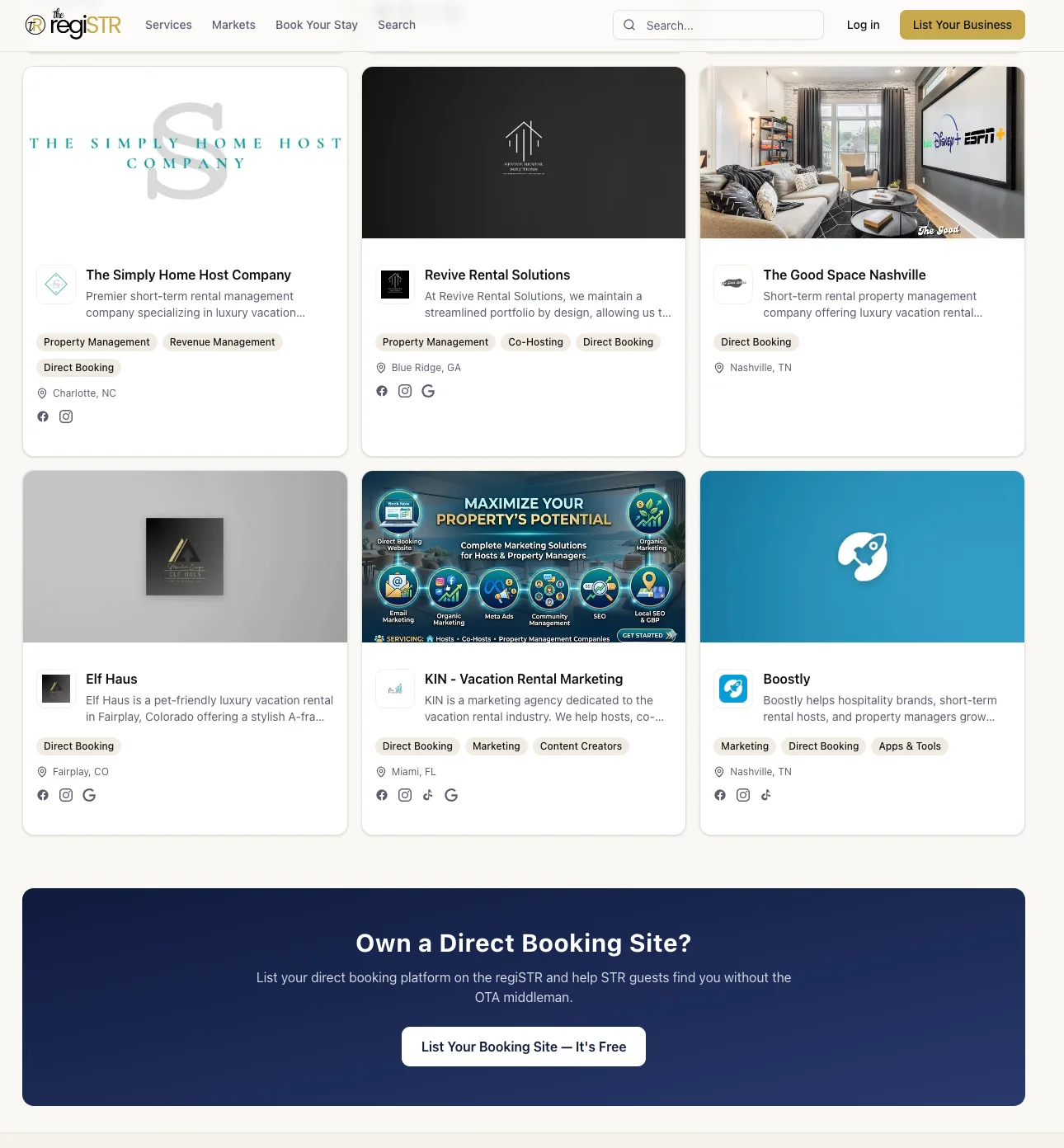
Whatever tier you land in, the software only runs as well as the humans executing your turnover and maintenance workflows. Browsing vetted STR property managers by market is a faster way to close that gap than trying to automate your way around a bad vendor relationship.
What Is the 75-55 Rule for Airbnb?
The 75-55 rule is an informal budgeting guideline some hosts use to sanity-check their pricing strategy: roughly targeting a nightly rate structure where your average occupancy sits near 75% and your break-even coverage sits near 55% of potential nights booked. It functions as a rough benchmark, not a fixed formula every market follows.
In practice, this kind of rule is more useful as a mental model than a literal target. Occupancy and break-even thresholds vary enormously by market, property type, and season. A cabin near the Smoky Mountains books differently in October than a downtown condo in a business-travel-heavy city, and no single ratio applies universally.
What matters more than memorizing a ratio is having software that tracks your actual occupancy and revenue-per-available-night trends over time, so you can see whether you're trending toward profitability or drifting. This is exactly where analytics tools earn their keep. Per Key Data, over 40% of managers already lean on these dashboards instead of gut-checking rules of thumb.
If your current software can't show you a rolling occupancy trend line without exporting to a spreadsheet, that's a red flag worth addressing before your next lease renewal or property acquisition. Rules like 75-55 are shortcuts for people who don't have that visibility yet, not a replacement for it.
Once your pricing strategy is dialed in, the next operational bottleneck is usually execution, specifically, finding a revenue manager or dynamic pricing consultant who can act on the data rather than just report it. That's a service category, not a software feature, and it's one hosts consistently struggle to source locally.
What Is the 80/20 Rule for Airbnb?
The 80/20 rule, applied to short-term rentals, generally refers to the idea that roughly 80% of your revenue or guest satisfaction outcomes come from 20% of your operational effort, most commonly your top-performing listings, your best repeat guests, or your highest-impact maintenance fixes. It's a prioritization lens, not a precise statistical claim for every portfolio.
For a multi-property operator, this usually plays out as: 20% of your units generate 80% of your net revenue, and those are the units that deserve premium photography, faster turnover cleaning, and dynamic pricing attention first. Software that segments performance by property, rather than aggregating everything into one dashboard, makes this prioritization visible instead of guesswork.
Similarly, roughly 20% of guest complaints (a broken HVAC unit, a late cleaner, a bad Wi-Fi signal) tend to drive 80% of negative reviews. Task automation software that flags recurring maintenance issues by property helps you spot that pattern before it costs you five-star reviews across an entire season.
This is also where the 80/20 rule intersects directly with vendor selection. If 20% of your maintenance tickets come from one property with an aging water heater, no amount of software automation fixes that. You need a reliable handyman who actually shows up. Finding STR maintenance and repair providers who understand vacation rental turnaround windows, rather than general contractors unfamiliar with same-day fixes, is the human half of this equation software can't replace.
What Features Should Vacation Rental Management Software Actually Include?
Vacation rental management software should include, at minimum, channel management, unified guest messaging, automated task dispatch, financial reporting, and a direct booking capability. Beyond that baseline, the right additional features depend entirely on your portfolio size and business model, not on which vendor has the longest feature list.
Channel distribution keeps your calendars synced across Airbnb, Vrbo, and Booking.com so a booking on one platform automatically blocks the same date everywhere else. Without this, double bookings become a matter of when, not if, once you're running more than two listings.
Guest messaging automation, including AI-assisted reply suggestions, has become table stakes as of 2026. Guests expect a response within minutes, not hours, and manually monitoring three separate inboxes (Airbnb, Vrbo, direct site) is not sustainable past your first property.
Financial performance tools, including automated bank reconciliation and owner statement generation, matter enormously once you're managing units on behalf of other owners rather than just your own. A software system that can't produce a clean, auditable owner report monthly will cost you client trust faster than almost any other operational failure.
Risk mitigation features, including guest identity verification, damage protection screening, and payment fraud detection, have grown from a nice-to-have into a genuine differentiator among platforms as chargeback fraud has increased across the industry.
None of these features replace the need for a trustworthy cleaner or photographer who understands the platform you've built. Software schedules the turnover; it doesn't clean the unit. This is a distinction we emphasize constantly at the regiSTR, because plenty of hosts assume better software will solve a vendor problem it was never built to solve.
How Do You Choose Between an All-in-One Platform and a Best-of-Breed Stack?
Choosing between an all-in-one platform and a best-of-breed stack of specialized tools comes down to a tradeoff between convenience and depth. All-in-one platforms centralize channel management, messaging, and reporting under one login, while best-of-breed stacks pair a core PMS with specialized apps for pricing, cleaning coordination, or accounting.
An all-in-one platform reduces the number of logins and integrations you manage, which matters most for solo hosts and small co-hosts without dedicated ops staff. The tradeoff: you're often accepting a "good enough" version of each individual feature rather than a best-in-class one.
A best-of-breed stack, pairing a core PMS with a dedicated dynamic pricing tool, a dedicated cleaning/turnover app, and a dedicated accounting tool, tends to serve larger portfolios better because each specialized tool goes deeper on its specific function. The tradeoff here is integration complexity and more vendor relationships to manage.
Neither approach solves the vendor discovery problem. Whether you run an all-in-one platform or a five-tool stack, you still need a real cleaner, a real photographer, and a real property manager behind the scenes. That's the layer general software reviews consistently skip, and it's exactly why hosts end up posting in Facebook groups asking for cleaner recommendations instead of finding one through a system built for it.
Comparing your options shouldn't require cold outreach and crossed fingers. Browsing vetted STR cleaners by city gives you the operational half of your stack that no software subscription provides on its own.
What Should You Watch Out for When Switching Vacation Rental Software?
Switching vacation rental software carries real risk: data migration errors, contract lock-in periods, and disrupted guest communication threads during the transition window. As of 2026, nearly 58% of U.S. companies report regretting at least one software purchase, per Key Data, and switching costs are a big reason why.
First, check how a vendor handles data migration. Ask specifically whether historical reservation data, guest contact information, and financial records transfer automatically or require manual re-entry. A vendor who can't answer this clearly in the sales call is a red flag.
Second, review contract terms carefully. Annual contracts with automatic renewal clauses can trap you in a system that isn't working. Month-to-month terms cost slightly more but preserve your ability to exit quickly if the platform underdelivers.
Third, ask about integration compatibility with tools you already use, particularly your channel manager, your accounting software, and any smart lock or guest access system. A platform that doesn't integrate cleanly with your existing stack creates manual workarounds that defeat the purpose of automating in the first place.
Finally, and this is the part most software comparisons skip entirely: check whether the switch disrupts your vendor relationships. If your cleaner receives task assignments through your current PMS and you switch platforms mid-season, make sure the new system's task dispatch actually reaches them the same way. A software migration that breaks your cleaner's notification workflow during peak season is a self-inflicted wound.
Do You Still Need Human Service Providers If You Have Good Software?
Yes. Software automates scheduling, communication, and reporting, but it does not clean a unit, take listing photos, fix a broken dishwasher, or file a local STR permit application. As of 2026, the most well-run STR operations pair strong software with a reliable roster of human vendors, not one or the other.
Consider the turnover workflow specifically. Your PMS can auto-assign a cleaning task the moment a guest checks out. But if the cleaner assigned to that task doesn't show up, or doesn't understand the two-hour window between an 11am checkout and a 1pm check-in, no software feature fixes that. The task gets marked complete in your dashboard while the unit sits dirty.
The same logic applies to listing photography. Software can host and display your images beautifully across every OTA. It cannot shoot them. Professional STR photography, specifically composed for platform algorithms rather than generic real estate shots, is a service, not a feature toggle.
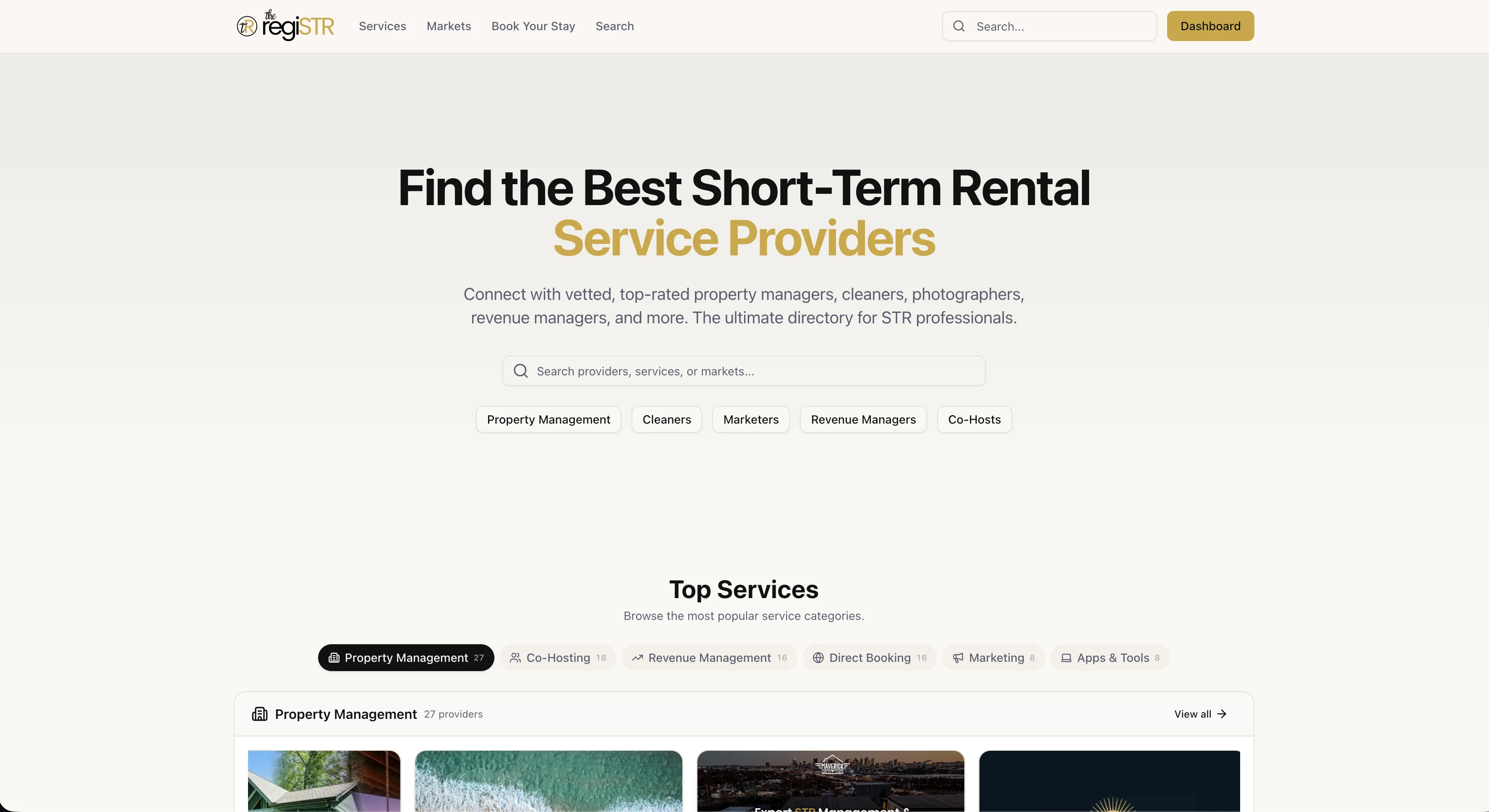
This is the gap the regiSTR exists to close. Our directory organizes STR-specific service providers, cleaners, photographers, property managers, maintenance crews, and revenue consultants, by market, so the human side of your operation is as systematized as your software stack. Every provider in our network was referred in by an existing member, which filters out generalist vendors who've never handled a same-day STR turnover.
If you're building or rebuilding your vendor network alongside a new software rollout, finding STR photographers who understand OTA listing requirements, or STR interior designers who stage for guest appeal rather than resale value, closes the loop your software can't close alone.
How Should STR Service Providers Use Software to Win More Clients?
STR service providers, cleaners, photographers, co-hosts, and property managers, should use software primarily to demonstrate professionalism and reliability to prospective host clients, not just to manage their own internal operations. As of 2026, hosts increasingly expect vendors to operate on systems that integrate with their existing PMS, not spreadsheets and text threads.
A cleaning company that uses task management software to log photo-verified checklists after every turnover has a concrete credibility signal to show a skeptical host during a first call. A photographer who uses a proper delivery platform for staged shots looks more established than one emailing zip files.
But software alone doesn't generate leads. General directories built for home services broadly, rather than short-term rentals specifically, don't filter for hosts actively searching for STR-experienced vendors. That mismatch is exactly why so many capable providers struggle to grow past word-of-mouth referrals.
This is exactly why providers list on the regiSTR: direct visibility to hosts in your market who are actively searching for STR-specific services, not general home services. Every visitor to the directory is already an STR operator, so the audience match is precise rather than diluted. Sign up free and claim a profile to put your business in front of operators who are actively vetting vendors right now.
Vacation Rental Software vs. Vendor Network: The Data and Evidence
The 2026 market data makes the case plainly: software adoption is high, but it hasn't replaced the need for reliable human execution. Precedence Research projects the global vacation rental market reaching USD 101.37 billion in 2026 and climbing toward USD 138.74 billion by 2035, a growth curve that's pulling more software vendors, and more service providers, into the space simultaneously.
Notably, the offline booking segment still accounts for over 70% of market share as of 2026, per Precedence Research, meaning direct relationships, referrals, and repeat guests still drive a majority of business even as software-driven online booking grows fastest. That's a reminder that automation supports the operation; it doesn't replace the trust-based relationships behind it.
| Category | Solves | Doesn't Solve |
|---|---|---|
| Channel manager | Double bookings, calendar sync | Guest communication tone, service quality |
| PMS | Reporting, task scheduling | Whether the cleaner shows up on time |
| Dynamic pricing tool | Rate optimization by demand | Whether photos justify the rate |
| Vendor directory (the regiSTR) | Finding vetted STR cleaners, PMs, photographers by market | Internal reporting and calendar sync |
This is the honest picture: software and vendor discovery solve different problems, and treating them as substitutes is where the 58% software-regret statistic comes from. Buyers expect one purchase to fix an operational gap that actually requires a person, not a feature.
Practical Guidance: How to Evaluate and Avoid a Bad Software Purchase
- Map your actual workflow first. Write down every manual step in your current turnover, booking, and communication process before evaluating any vendor. Software should remove steps, not add new ones.
- Request a live data migration walkthrough. Don't accept "we can migrate your data" as an answer. Ask the vendor to show you exactly how a booking history transfers.
- Confirm integration with your channel manager and payment processor. A PMS that can't talk cleanly to Airbnb, Vrbo, or your payment gateway creates manual reconciliation work every month.
- Test the mobile app before committing. Your cleaner and maintenance vendor will interact with task assignments from a phone, not a desktop. If the mobile experience is clunky, adoption will fail on their end.
- Negotiate a month-to-month trial period. Avoid annual contracts until you've run at least one full turnover cycle on the new system during peak season.
- Separate your software decision from your vendor decision. Don't assume a new PMS solves a bad cleaner or an unreliable maintenance contact. Address those separately through a dedicated STR vendor directory.
Frequently Asked Questions
What is the regiSTR and how does it differ from general home services directories?
The regiSTR is an invite-only directory built specifically for short-term rental service providers, cleaners, photographers, property managers, co-hosts, and revenue consultants. Unlike general home services directories, every provider is referred in by an existing network member and every visitor is already an STR operator, so the match between host need and provider expertise is precise.
Do I need both a channel manager and a full PMS?
If you manage more than one listing across multiple platforms like Airbnb and Vrbo, yes. As of 2026, 74% of U.S. vacation rental managers use channel managers and 73% use a dedicated PMS, per Key Data, because relying on either alone leaves either your calendars or your reporting incomplete.
How much does vacation rental management software typically cost?
Pricing varies significantly by portfolio size, feature tier, and whether you're billed per listing or on a flat platform fee. Rather than quote a specific figure that changes constantly across vendors, request a transparent per-listing quote directly from any platform you're evaluating before committing.
Can software replace a property manager entirely?
No. Software automates scheduling, messaging, and reporting, but it cannot physically clean a unit, resolve a maintenance emergency, or make judgment calls with a difficult guest. Most successful operations pair strong software with a reliable local property manager or co-host rather than choosing one over the other.
What's the biggest mistake hosts make when choosing software?
The most common mistake is buying based on feature count rather than mapping the software to an actual workflow gap. Nearly 58% of U.S. companies report regretting a software purchase, per Key Data, often because the tool solved a problem the buyer didn't actually have.
How do I find reliable STR cleaners or maintenance vendors to pair with my software?
Browse a directory built specifically for short-term rentals rather than general home services listings. The regiSTR organizes vetted cleaners, maintenance providers, and property managers by market, filtering for STR-specific experience that general directories don't screen for.
Is dynamic pricing software worth it for a single property?
It depends on your market's seasonality. In highly seasonal markets, a dynamic pricing tool typically pays for itself quickly by capturing peak-demand rate increases you'd otherwise miss manually. In steadier, low-seasonality markets, the return is less pronounced for a single unit.
Conclusion
The best software for vacation rental managers in 2026 isn't a single app; it's a stack built around your portfolio size, layered with a channel manager, a PMS, and increasingly, analytics tools that over 40% of managers now rely on to benchmark performance. But software alone won't clean a unit, shoot your listing photos, or show up when your water heater fails at 11pm. That operational layer still runs on people, and finding the right ones by market is where most hosts get stuck.
Running a profitable short-term rental in 2026 means pairing the right tech stack with the right vendor network, whether you're managing one cabin or a forty-unit portfolio across three states. The software exists. The vendors exist. What's been missing is a reliable, STR-specific way to find and vet the people behind your systems. That's exactly the gap the regiSTR was built to close.
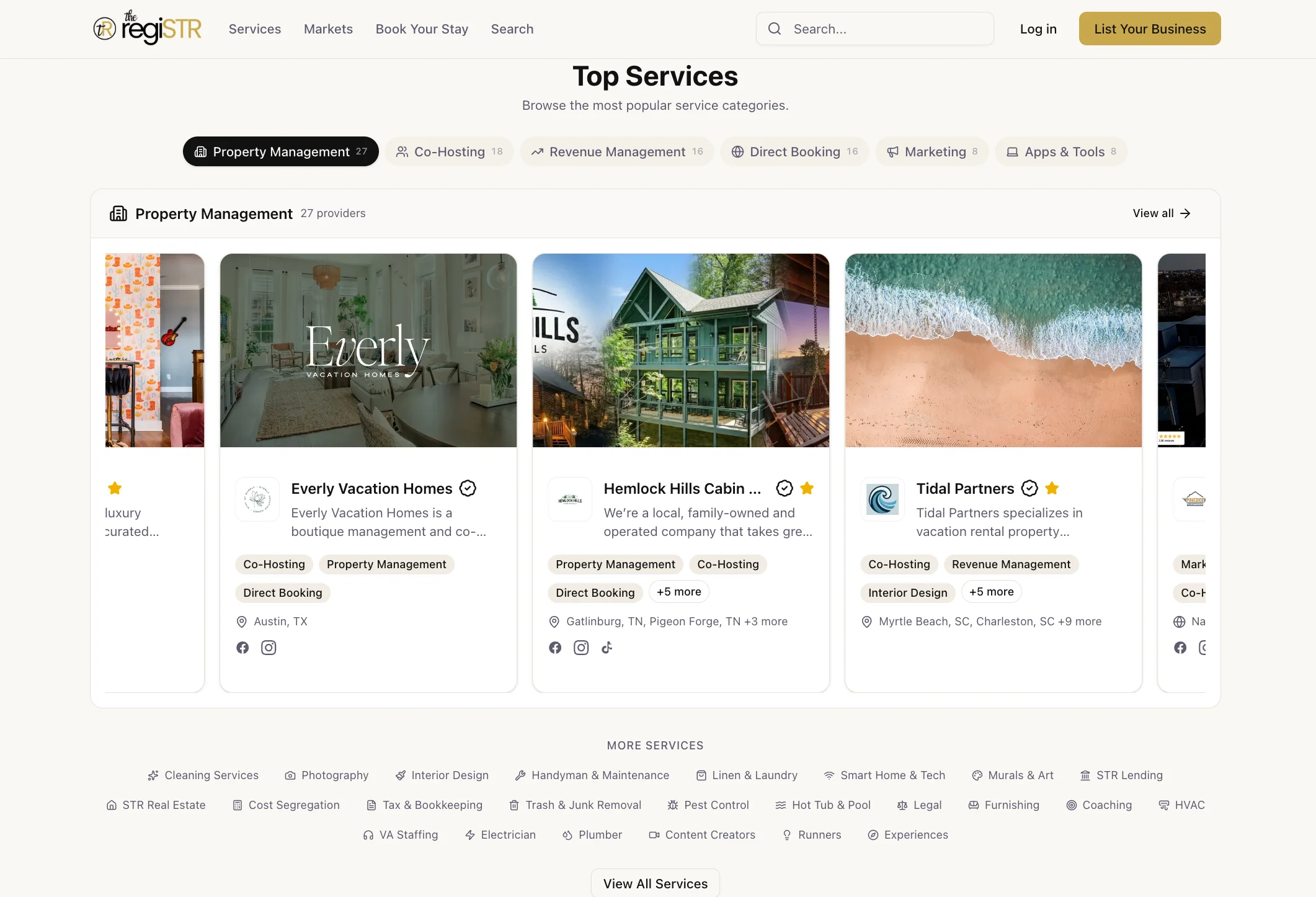
Once your software stack is running smoothly, the next step is closing the vendor gap it can't fill on its own. Browse vetted STR service providers by market and category at https://theregistr.co/services, and sign up free to see who's already working in your market.
Content powered by inkSTR.co