Vacation Rental Cleaning Companies: A Host's Hiring Guide
Vacation rental cleaning companies are cleaning businesses that specialize in same-day turnover service between guest checkout and the next check-in, rather than the once-a-week residential cleaning most cleaning services are built around. The distinction matters because a turnover isn't just tidying up. It's inspection, restocking, staging, and a hard deadline, often under three hours, with a paying guest arriving whether the property is ready or not.
- Turnover cleaning differs fundamentally from residential cleaning because it operates on a fixed checkout-to-check-in window rather than a flexible weekly schedule.
- Professional management companies now control an estimated 42% of active short-term rental listings globally, a shift that's pushed standardized, outsourced cleaning and turnover operations to the center of STR operations.
- Luxury and premium vacation rentals are projected to see roughly 25-40% revenue growth by the end of 2026, which is driving higher demand for premium-tier cleaning and turnover services that match that guest expectation.
- The global vacation rental market is estimated at USD 109.4 billion in 2026, according to Mordor Intelligence, meaning more properties, more turnovers, and more competition for reliable cleaning crews in every market.
- A cleaner without a guaranteed turnaround window, damage-reporting protocol, and STR-specific supply stocking process is a liability, not a convenience, regardless of price.
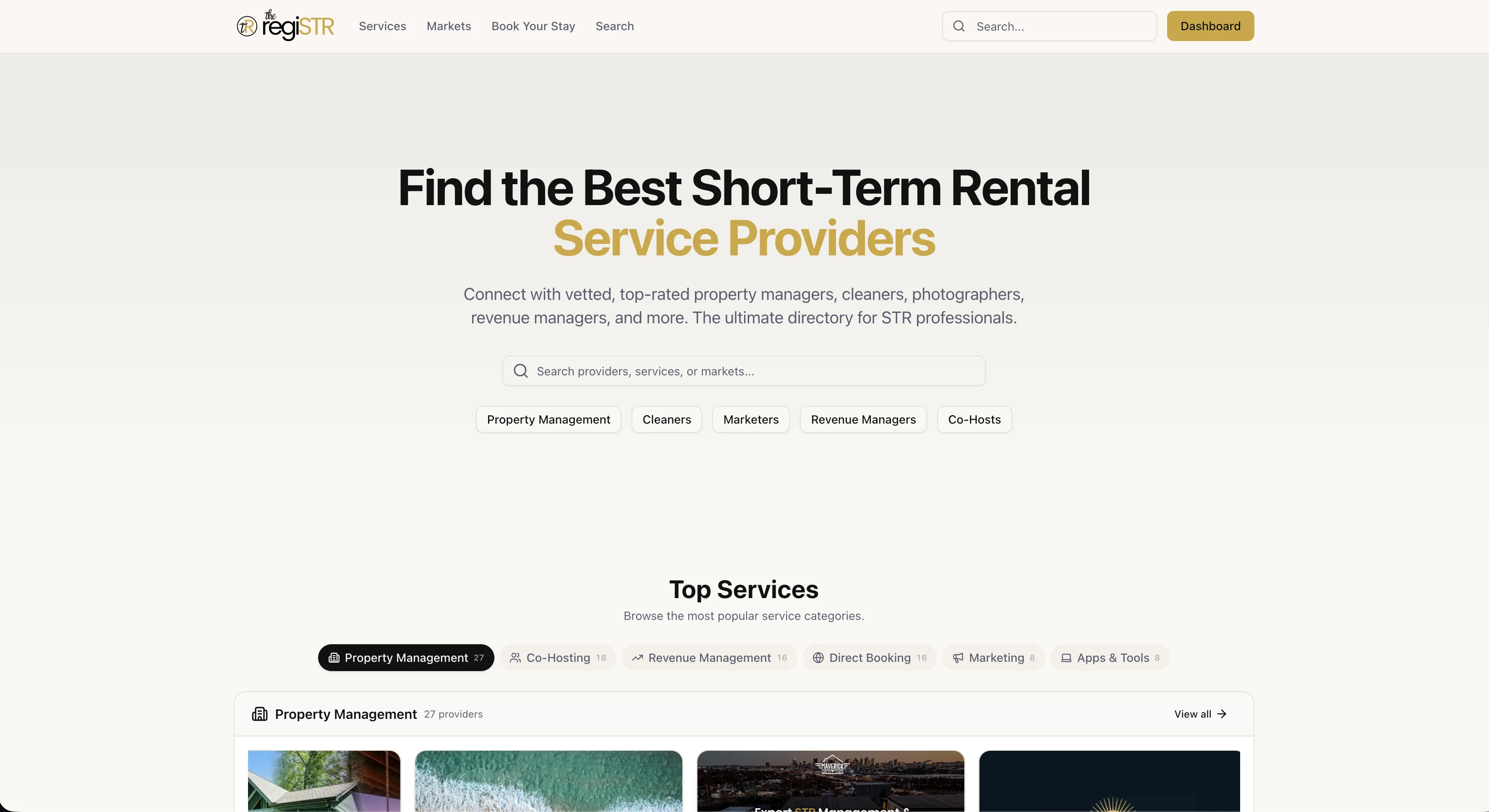
- The regiSTR lists vetted vacation rental cleaning companies by market, filtered by STR experience rather than general residential cleaning history, so you're not vetting from scratch every time you need backup.
If you've ever refreshed your phone at 11:40am waiting to hear from a cleaner who was supposed to finish an hour ago, you already understand why this topic matters more than most hosting advice admits. A missed turnover doesn't just delay a check-in. It triggers a bad review, a refund request, or a guest who walks in on an unmade bed and never comes back.
At the regiSTR, we've indexed hundreds of STR service providers across the country's most active vacation rental markets, and cleaning is consistently the category hosts complain about most. Not because good cleaners don't exist, but because finding one who actually understands STR turnover timelines, rather than a general house cleaner who took on an Airbnb client as a side gig, takes more vetting than most first-time hosts expect.
This guide breaks down what separates a genuine vacation rental cleaning company from a residential cleaner who happens to accept Airbnb work, what a proper turnover actually includes, how much you should expect to budget, and exactly what questions to ask before you hand over a key or a lockbox code. We'll also cover where to find cleaners who've already been through a vetting process, so you're not starting from a cold Google search or a Facebook group post every time you need coverage.
What Makes a Cleaning Company Actually Built for Vacation Rentals?
A vacation rental cleaning company is a cleaning business structured around same-day, deadline-driven turnovers rather than scheduled residential visits. Specifically, it operates with hotel-style bed-making standards, inventory restocking (toiletries, coffee, paper goods), and a damage-and-issue reporting workflow that feeds directly back to the host or property manager.
The difference shows up in the small operational details. A residential cleaner shows up on a set day, works at their own pace, and leaves once the visible surfaces look clean. A turnover cleaner works against a fixed clock: checkout at 10am, check-in at 4pm, and everything in between, laundry, staging, restocking, photo documentation, has to happen inside that window.
Additionally, STR-focused cleaners typically photograph each room after cleaning as proof of condition, both for the host's records and for potential damage disputes with guests. As a result, hosts get a paper trail residential cleaning never provides. Notably, many STR cleaning companies also carry their own supply inventory for linens and toiletries, which matters when you're managing a property remotely and can't restock a hall closet yourself.
This is exactly the vetting criteria the regiSTR applies when listing service providers in the Cleaning and Turnover Services category: does this company demonstrate real STR workflow experience, or are they a general residential outfit hoping an Airbnb client sticks around?
How Do I Find a Reliable Vacation Rental Cleaner in My City?
Finding a reliable vacation rental cleaner starts with searching for STR-specific experience rather than general cleaning services, since generalist directories rarely filter for turnover capability. In practice, this means checking whether a candidate has worked multiple properties in your specific market, not just your neighborhood.
Most hosts start in the wrong place: a general search, a neighborhood Facebook group, or a residential cleaning service that "does Airbnbs too." The problem is that none of these sources filter for the one thing that actually matters, whether the cleaner has managed a same-day turnover under a hard deadline before.
A better approach is to look specifically for companies that list vacation rental cleaning as their primary service, not a side offering. Ask directly how many STR properties they currently service in your market, and how they handle same-day scheduling conflicts when two properties turn over at once.
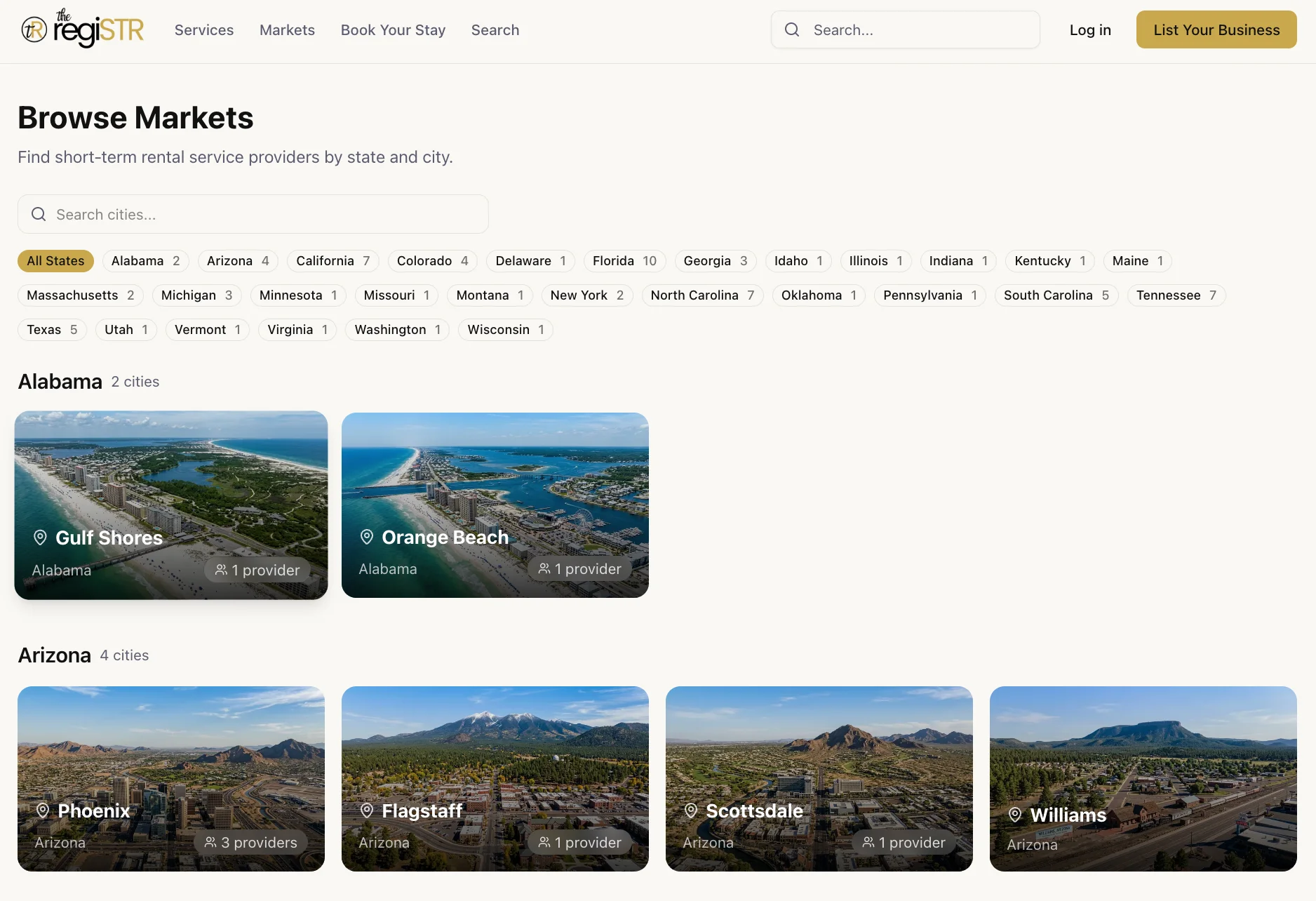
If you're managing a property remotely, this search gets harder. You can't drive by to check a company's van or ask a neighbor for a recommendation. That's precisely the friction the regiSTR's market pages were built to remove: instead of a cold search, you browse cleaning companies already flagged as STR-specific for your exact city or metro.
How Much Does Airbnb Turnover Cleaning Typically Cost?
Turnover cleaning cost varies by property size, market cost of living, and service tier, with larger properties and high-demand markets pushing rates toward the higher end of the range. Rather than a flat national number, pricing should be understood as a function of square footage, bedroom count, and how competitive the local STR market is.
Instead of citing a specific dollar figure that would vary wildly by market, it's more useful to understand what drives the cost up or down. A one-bedroom condo turnover costs meaningfully less than a six-bedroom cabin with three bathrooms and a hot tub deck, because labor time scales directly with square footage and fixture count.
Market cost of living matters too. Turnover cleaning in high-cost coastal or mountain markets tends to run higher than the national average, simply because labor costs more in those areas across every service category, not just cleaning. Meanwhile, same-day turnaround requirements, tight three-hour windows instead of a flexible full-day slot, typically carry a premium, since the cleaner has to prioritize your property over others on their route that day.
| Cost Driver | Impact on Price | What to Ask About |
|---|---|---|
| Property size (bedrooms/baths) | Higher bedroom/bath count increases labor time and cost | Flat rate vs. per-room pricing structure |
| Market cost of living | High-cost metros run above national average | Whether quote is market-adjusted or generic |
| Turnaround window | Same-day, tight windows often carry a premium | Rush fees for back-to-back bookings |
| Supply restocking | Included restocking raises base price but saves host time | What's stocked vs. billed separately |
| Deep clean frequency | Quarterly deep cleans add periodic cost on top of standard turnovers | How deep cleans are scheduled and billed |
Comparing quotes side by side is exactly what the regiSTR's directory enables. Instead of collecting scattered quotes from unrelated sources, you can browse multiple STR-specific cleaning companies in your market and compare what's actually included before you commit.
What Should I Look for When Vetting a Vacation Rental Cleaning Company?
Vetting a vacation rental cleaning company means confirming they can guarantee a turnaround window, communicate in real time, and handle damage reporting, not just checking whether their reviews look decent. A cleaning company that can't commit to a specific turnaround time is not built for STR, full stop.
Here's the checklist we'd apply before hiring any cleaning company for an STR property:
- Guaranteed turnaround window. Ask for a specific time commitment, not "we'll get to it sometime that day." If they hedge, that's a red flag.
- Backup staffing plan. What happens when the assigned cleaner calls in sick on a Saturday? A one-person operation with no backup is a single point of failure.
- Damage and issue reporting process. Do they photograph rooms post-clean? Do they flag maintenance issues (a leaking faucet, a broken lamp) as part of the visit?
- Real-time communication channel. Text, app, or messaging platform, whatever it is, you need to know the moment there's a delay, not after the guest has already texted you.
- Supply restocking capability. Confirm whether linens, toiletries, and coffee restocking are included or billed as add-ons.
- Insurance and liability coverage. Ask directly. A cleaner without liability coverage exposes you if something breaks or goes missing during service.
- References from other STR hosts. Not residential clients, STR hosts specifically, ideally with properties similar in size to yours.
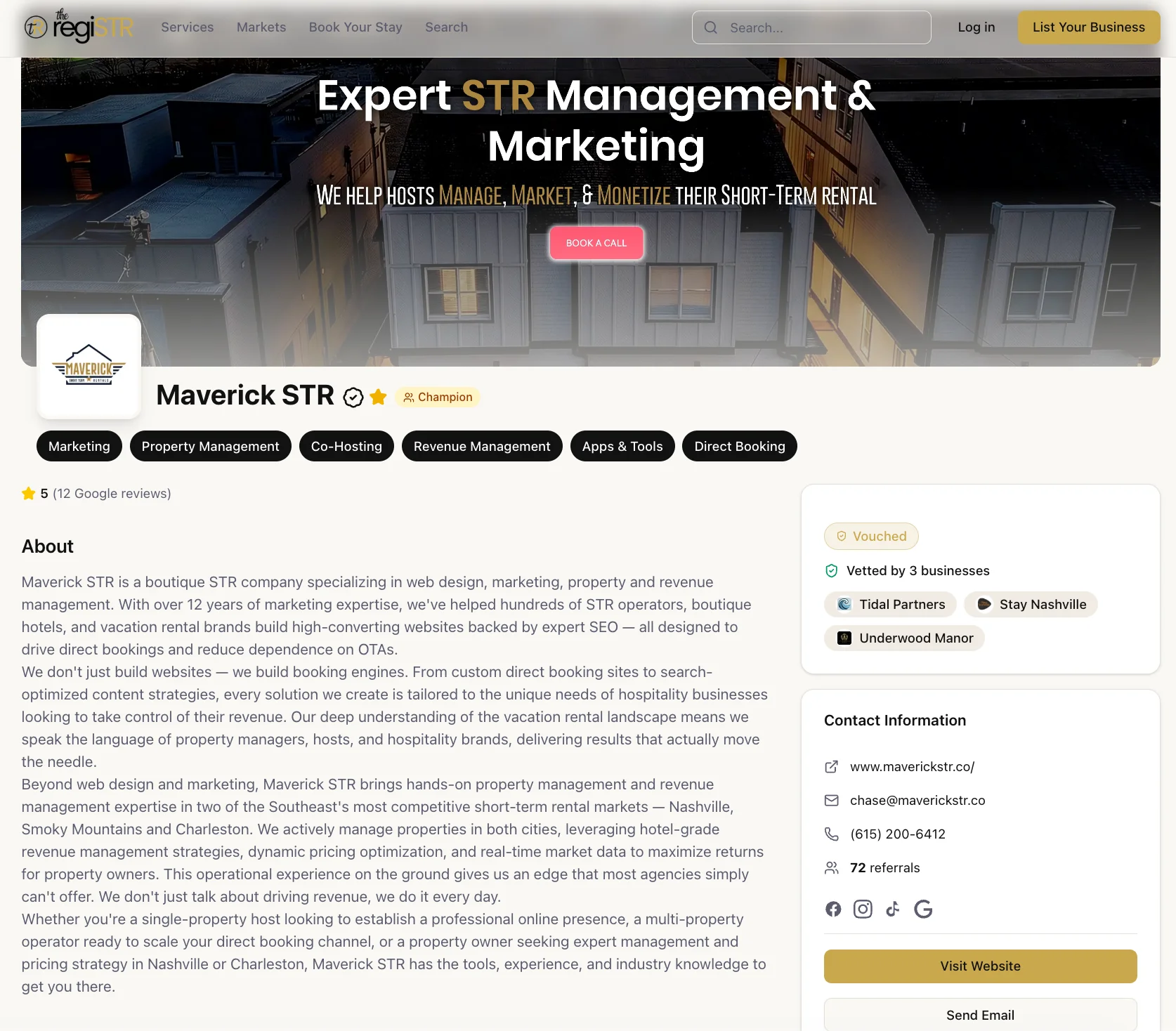
This is precisely the vetting criteria the regiSTR applies when listing service providers, and it's reinforced through the platform's Vouch system, where real STR operators publicly endorse cleaners they've actually hired, with their name attached rather than an anonymous star rating.
How Do I Evaluate STR Cleaning Companies and Avoid Bad Hires?
Avoiding a bad cleaning hire means testing communication and reliability before you're relying on them for a live booking, not after. The single most common mistake we see: hosts hire based on price alone and skip the trial run entirely.
Consider a trial period before committing to a long-term relationship. Book one or two turnovers on lower-stakes dates, midweek stays rather than peak weekend bookings, and evaluate how the cleaner performs under real conditions, not just how they sound on the phone.
Watch for these specific red flags during the trial:
- Vague answers about turnaround time ("we'll try to get there early")
- No clear process for reporting damage or missing items
- Reluctance to provide references from current STR clients
- Communication that goes silent for hours during an active turnover
- No backup plan if the assigned cleaner is unavailable
The pattern we consistently observe: hosts who skip vetting and hire the first available cleaner end up rehiring within 90 days, often after a missed turnover costs them a booking or a bad review. Peer vouching solves part of this problem, because a named endorsement from another operator carries more weight than an anonymous five-star rating that could be gamed. That's the mechanism built into the regiSTR's provider profiles.
Should I Hire One Cleaning Company or Build a Rotating Backup List?
Relying on a single cleaning company works fine until they're unavailable, which is why a backup list matters more as your portfolio grows. A single point of failure in your cleaning operation is one of the most common reasons a turnover gets missed.
If you manage one property, one primary cleaner with a documented backup contact is usually sufficient. But if you're managing multiple properties, particularly across different markets, you need at minimum two vetted options per market so a scheduling conflict or sick day doesn't cascade into a missed check-in.
This is especially true for out-of-state owners managing properties remotely. You can't personally step in to clean a unit three states away when your regular cleaner cancels last minute. Building that redundancy in advance, rather than scrambling during a crisis, is the difference between a minor hiccup and a canceled reservation.
Stop cold-calling contractors and hoping for the best. The regiSTR's market pages let you browse multiple vetted cleaning companies in the same city at once, so building a backup roster takes minutes instead of weeks of trial and error.
What Services Should a Vacation Rental Cleaning Company Include Beyond Basic Cleaning?
A full-service vacation rental cleaning company typically includes linen laundering, restocking of guest consumables, staging for photos, and light maintenance flagging, not just surface cleaning. Understanding what's bundled versus billed separately prevents surprise costs and service gaps.
Beyond wiping counters and vacuuming, look for these services as part of a complete turnover package:
- Linen laundering on-site or off-site, with a clear process for what happens if linens are damaged or stained beyond salvage.
- Consumable restocking, coffee, toiletries, paper towels, dish soap, restocked to a consistent par level every turn.
- Staging touches, fluffed pillows, folded towels, straightened furniture, the small details that make listing photos and in-person impressions consistent.
- Maintenance flagging, noting a broken blind, a flickering bulb, or a slow drain so you can address it before it becomes a guest complaint.
- Periodic deep cleans, quarterly or semi-annual, covering baseboards, inside appliances, and grout that a standard turnover doesn't touch.
Not every property needs every one of these bundled in. A smaller condo with a simple layout might not need the same deep-clean cadence as a six-bedroom mountain cabin with heavy year-round turnover. But knowing what's available lets you negotiate a package that fits your property rather than accepting a generic one-size-fits-all quote.
How Is Cleaning Different From Full Property Management or Maintenance?
Cleaning and turnover service is a distinct category from full-service property management or maintenance, covering only the guest-to-guest reset rather than guest communication, pricing, or repairs. Hosts new to STR sometimes conflate these categories, expecting a cleaner to also handle guest messaging or a handyman to also manage bookings.
Full-service property management typically covers guest communication, pricing, and overall operations, with cleaning coordination as one piece of a larger service. STR managers typically charge 15-25% of gross revenue for this broader scope, excluding cleaning and guest service add-ons, which are usually billed separately or passed through.
Maintenance and repairs, meanwhile, is its own category entirely. A cleaner flags a leaking faucet; a maintenance provider actually fixes it. Confusing the two roles leads to delayed repairs, since most cleaning companies aren't licensed or equipped to handle plumbing, electrical, or HVAC issues beyond basic troubleshooting.
If your operation has grown past what a single cleaning contact and a personal contractor relationship can handle, it may be time to look at co-hosting or full management instead of piecing together separate vendors for every function. That's a different conversation than this article, but it's worth knowing where the line sits.
What Does the Data Say About Demand for Professional STR Cleaning?
Demand for professional STR cleaning services is rising alongside the broader growth of the vacation rental market, with the global vacation rental market estimated at USD 109.4 billion in 2026 and projected to reach USD 136.78 billion by 2031, according to Mordor Intelligence. That growth trajectory, a 4.57% compound annual growth rate, directly correlates with more properties requiring reliable turnover service.
Separately, Grand View Research values the global vacation rental market at USD 101.7 billion in 2026, projecting growth to USD 121.9 billion by 2033. Both estimates point the same direction: more listings, more turnovers, more competition among hosts for a limited pool of qualified cleaning crews in any given market.
Notably, professional management companies now control an estimated 42% of active short-term rental listings globally, a shift toward outsourced, standardized operations that includes cleaning as a core function rather than an afterthought. As a result, cleaning companies that can demonstrate consistent, documented processes have a real advantage over informal operators, because property managers increasingly demand that level of reliability from every vendor in their network.
Additionally, growth in vacation rental software and API-driven integrations is making it easier for cleaning companies to connect with property managers and automate task scheduling and billing. This matters for hosts too, since it means the better cleaning companies are increasingly plugged into the same scheduling systems your channel manager already uses.
What Questions Should I Ask Before Signing With a Cleaning Company?
The right questions before signing with a cleaning company focus on reliability under pressure, not just price. Specifically, you want answers that reveal how the company handles the worst-case scenario, a delayed checkout, a same-day double booking, a no-show cleaner, rather than how they perform on an easy day.
- What's your guaranteed turnaround window between checkout and check-in?
- What happens if the assigned cleaner is unavailable that day?
- Do you photograph each room after cleaning, and will I receive those photos?
- How do you handle damage or missing item reports?
- What's included in a standard turnover versus a deep clean, and how are deep cleans billed?
- Can you provide references from other current STR clients in this market?
- What insurance or liability coverage do you carry?
- How do you communicate during an active turnover, text, app, phone?
A company that answers these questions clearly and specifically, rather than vaguely, is far more likely to perform reliably once you're depending on them for a real booking. This is the exact framework we recommend hosts use before signing any cleaning contract, and it's the same standard applied when providers are vetted for inclusion in the regiSTR's directory.
Frequently Asked Questions
What is the regiSTR and how does it differ from general contractor directories?
The regiSTR is a short-term rental service directory built specifically to connect STR hosts with vetted, STR-experienced providers, including cleaning companies, rather than general residential contractors. Unlike broad directories that list any business regardless of STR experience, every provider on the regiSTR is invite-only and referred in by a network member, which filters for actual vacation rental workflow knowledge.
How do I find a vetted vacation rental cleaner in a market I don't live in?
Browse the regiSTR's market-specific cleaning directory pages, which list companies already flagged as STR-experienced for that exact city or metro, rather than starting a cold search. This removes the guesswork of vetting a residential cleaner's STR capability from scratch when you're managing a property remotely.
Should I hire a local or national vacation rental cleaning company?
Local, market-specific cleaning companies typically understand regional turnover demands and can respond faster to same-day scheduling issues than a national brand managing crews across many markets. That said, both models can work well if the company can demonstrate a guaranteed turnaround window and a documented reliability process.
How does the regiSTR's Vouch system help with vetting a cleaner?
The Vouch system allows real STR operators to publicly endorse a cleaning company they've personally hired, with their name and operator context attached, rather than an anonymous star rating. This gives you peer-verified proof of reliability before you ever make first contact with a provider.
What's the difference between a turnover clean and a deep clean?
A turnover clean resets the property between guests within a fixed checkout-to-check-in window, covering surfaces, linens, and restocking. A deep clean, typically scheduled quarterly or semi-annually, covers baseboards, inside appliances, grout, and other areas a standard turnover doesn't reach.
Can I list my cleaning business on the regiSTR if I already have STR clients?
Yes. Cleaning companies with existing STR experience can join the regiSTR Network to build a public profile, collect Vouch endorsements from clients, and gain visibility to hosts actively searching for cleaning services in their market, beyond word-of-mouth referrals alone.
Conclusion: Getting Your Turnover Right, Every Time
Vacation rental cleaning companies that actually understand STR workflows, guaranteed turnaround windows, damage reporting, real-time communication, are the difference between a smooth guest handoff and a missed check-in that costs you a review. As the vacation rental market continues expanding through 2026 and beyond, with professional management already controlling an estimated 42% of active listings globally, the operators who treat cleaning as a core operational function, not an afterthought, are the ones building sustainable businesses.
The vetting framework in this guide, guaranteed windows, backup staffing, damage protocols, real STR references, applies whether you're hiring your first cleaner or building a redundant roster across a growing portfolio. What's been missing for most hosts isn't a lack of good cleaners. It's a reliable way to find and vet them before you're depending on them for a live booking.
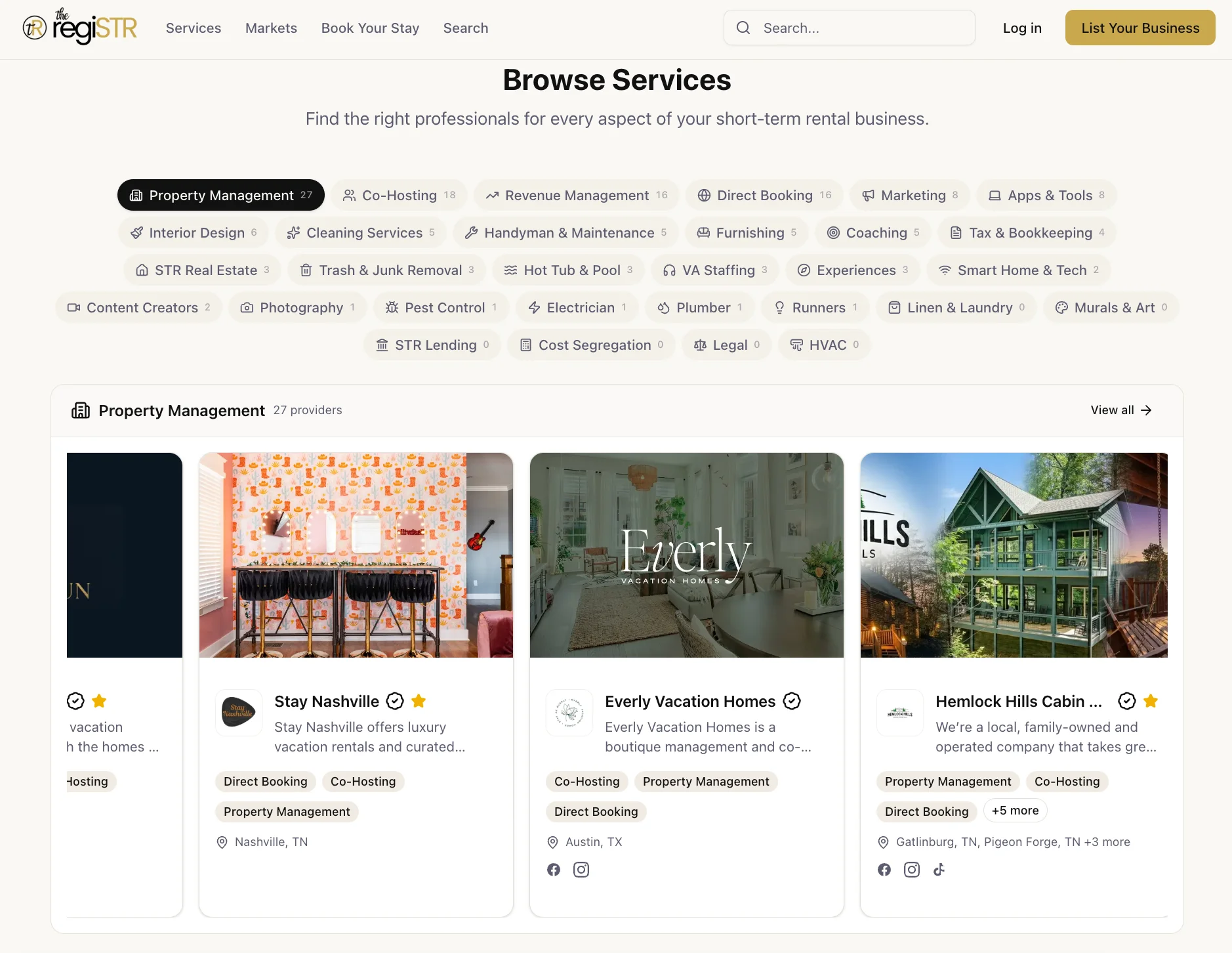
If you're tired of vetting cleaning companies from scratch every time you need coverage, get started with the regiSTR and browse vetted vacation rental cleaning companies by city, complete with peer Vouch endorsements from real STR operators. Sign up free and filter by your exact market at theregistr.co/cleaners.
Content powered by inkSTR.co