
Vacation Home Rental Management: What Owners Should Know
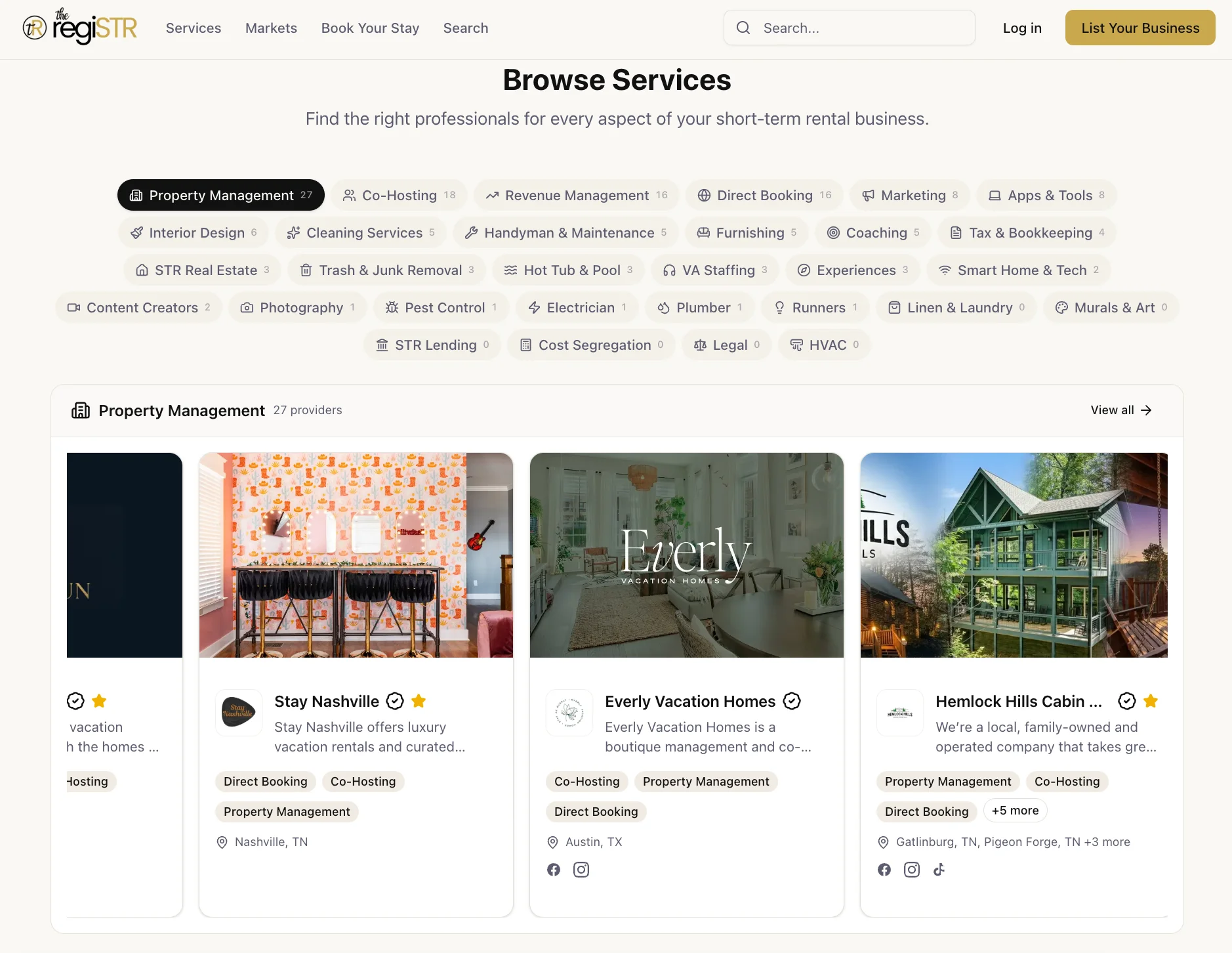
Vacation home rental management is the professional oversight of a short-term rental property, covering pricing, guest communication, cleaning coordination, maintenance, and regulatory compliance, typically in exchange for a percentage of gross booking revenue. Full-service arrangements generally run in the 20 to 35 percent range, according to the HostGenius 2026 Operator Reference, while hybrid or channel-only models tend to land closer to 10 to 15 percent. The right fit depends on how many properties you own, how far you live from them, and how much of the operational grind you actually want off your plate.
Key Takeaways
- Full-service vacation home rental management typically costs 20 to 35 percent of gross booking revenue, with hybrid or marketing-only models running closer to 10 to 15 percent, per the HostGenius 2026 Operator Reference.
- The global vacation rental market is projected to reach roughly USD 106.5 billion in 2026, according to Grand View Research, a sign that professional management demand is not slowing down.
- Property management software, which underpins most professional management operations, is expected to grow from USD 6.53 billion in 2026 to USD 9.93 billion by 2031, per Mordor Intelligence.
- Owners choosing between self-management, hybrid, and full-service models should weigh time cost, local knowledge gaps, and regulatory exposure, not just the percentage fee.
- Regulatory requirements vary sharply by jurisdiction. Washington, DC expects over 5,100 registered short-term rentals, and NYC currently caps listings at two guests, according to the DLCP and the NYC Office of Special Enforcement.
- The regiSTR's directory lets you compare vetted property managers, co-hosts, and revenue managers by market instead of vetting cold leads one by one.
Owning a vacation home is one thing. Running it like a business, with synced calendars, tax remittances, and a cleaner who actually shows up, is another. In 2026, more owners are discovering that the gap between those two things is exactly where professional management earns its keep.
At the regiSTR, we track vacation home rental management from the vendor side: who's actually equipped to run a property well versus who's just added "STR experience" to a residential listing. This guide walks through what management includes, what it costs, the fee structures and rules of thumb hosts search for most, and how to vet a company before you sign a contract.
We'll also cover the parts most guides skip: the actual decision framework for choosing between self-managing, hybrid, and full-service, plus the regulatory landscape that varies wildly depending on where your property sits. If you're managing a cabin in the Smokies or a condo three states away, the rules that apply to your neighbor's beach house may not apply to you at all.
What Does Vacation Home Rental Management Actually Include?
Vacation home rental management refers to the full operational stack required to run a short-term rental profitably: listing optimization, dynamic pricing, guest communication, cleaning coordination, maintenance dispatch, and financial reporting. Most professional managers bundle these into a single monthly fee taken as a percentage of revenue.
Specifically, a full-service manager typically handles professional photography, calendar syncing across Airbnb and Vrbo to prevent double bookings, and 24/7 guest support for issues like lockouts or HVAC failures. Additionally, most managers coordinate housekeeping turnovers and routine maintenance between stays, and many now provide monthly owner disbursement statements with tax documentation for occupancy or transient lodging remittance.
In contrast, hybrid models let you pick and choose: marketing and guest communication from the manager, but you keep control of cleaning contracts and maintenance calls. This matters if you already have a reliable local vendor relationship you don't want to disrupct by handing everything to one company.
As a result, the service scope you actually need depends heavily on how hands-off you want to be, and how many properties you're managing at once. One cabin near a ski resort has different operational demands than four beachfront units across two states.
How Much Does Vacation Rental Property Management Cost?
Vacation rental property management costs typically range from 10 to 35 percent of gross booking revenue, depending on the service tier. According to the HostGenius 2026 Operator Reference, full-service management clusters in the mid-20 percent range, while half-service or channel-only arrangements commonly run 10 to 15 percent.
Specifically, the fee spread reflects what's bundled in. A 25 to 30 percent full-service plan usually includes guest communication, turnover cleaning coordination, dynamic pricing, and maintenance dispatch. A 20 percent hybrid plan often leaves cleaning and maintenance to the owner. Marketing-only arrangements near 10 percent typically cover just listing distribution and calendar management, nothing operational.
Notably, some flat-fee models exist too, where a manager charges a fixed commission regardless of tier, with a higher rate for premium service add-ons. These flexible, often cancel-anytime contracts appeal to owners who want to test a manager without a long lock-in period.
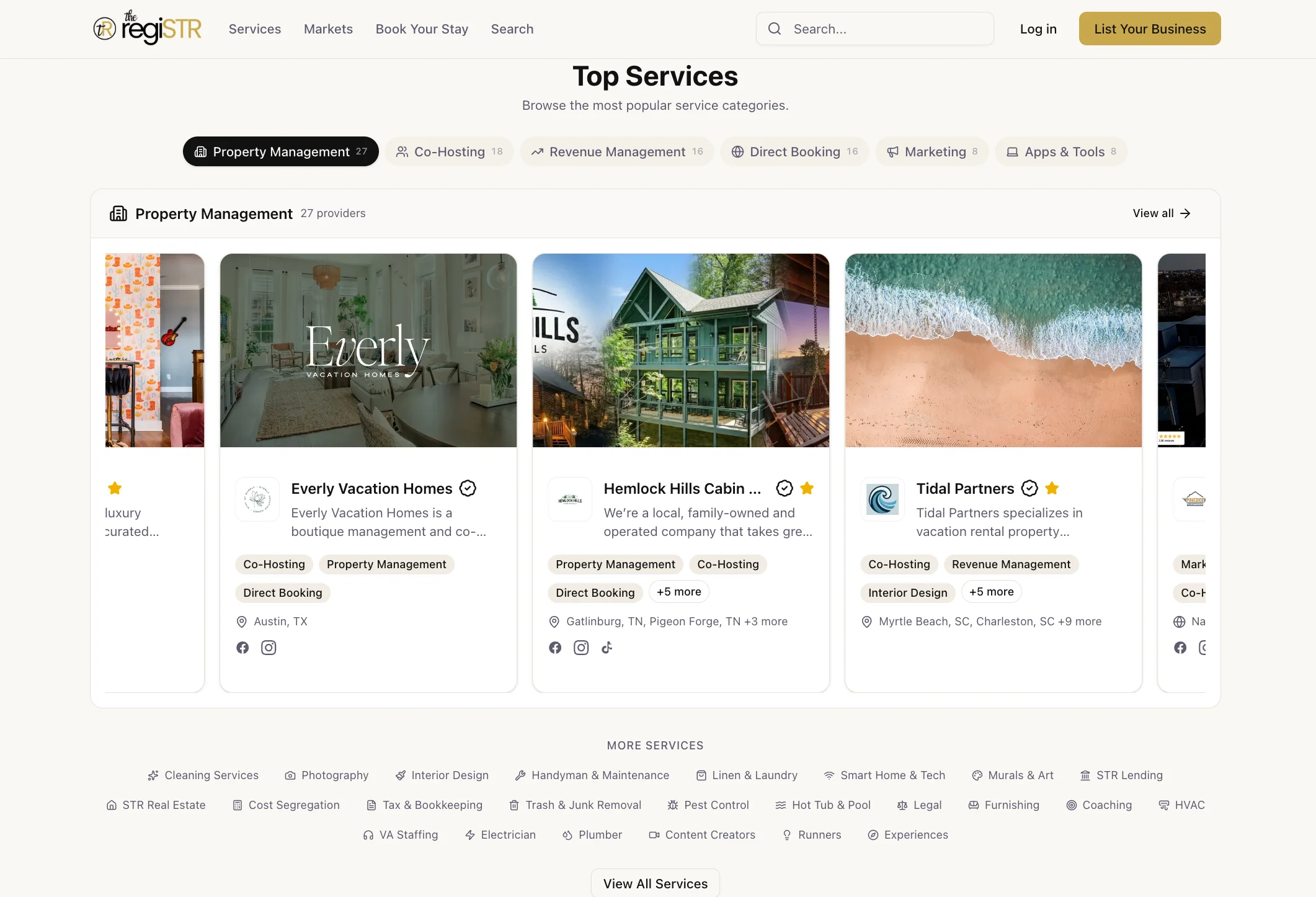
The number that matters isn't just the percentage. It's what you're actually getting for it. A 20 percent fee that excludes maintenance dispatch can cost you more in emergency calls than a 28 percent fee that includes it. This is exactly the math the regiSTR encourages hosts to run before signing anything, and it's why our directory of vetted STR property managers lists what's included at each tier, not just the headline rate.
| Service Tier | Typical Fee Range | What's Usually Included |
|---|---|---|
| Full-service | 20% to 35% of gross revenue | Pricing, guest comms, cleaning coordination, maintenance dispatch, compliance |
| Hybrid | 10% to 20% of gross revenue | Pricing and guest comms; owner handles cleaning/maintenance separately |
| Marketing-only | Around 10% of gross revenue | Listing distribution, calendar sync, basic guest messaging |
| Self-managed with tools | No commission, software cost only | Owner runs everything using a PMS and channel manager |
What Is the 2% Rule for Rental Property?
The 2% rule is a quick screening formula real estate investors use to evaluate whether a rental property is likely to generate positive cash flow: monthly rent should equal at least 2% of the property's purchase price. For a $300,000 property, that means roughly $6,000 in monthly rental income to pass the test.
For vacation home rental management specifically, the 2% rule gets applied loosely, since short-term rental income is seasonal and variable rather than a fixed monthly lease payment. Instead, investors often average projected nightly rate times expected occupancy across the year and compare that blended monthly figure against the purchase price.
In contrast to long-term rental markets, most STR markets in competitive metro or vacation destinations rarely hit a literal 2% threshold once you account for management fees, cleaning costs, and seasonality. That doesn't mean the property is a bad investment. It means the 2% rule is a rough screening tool, not a hard requirement, for vacation rentals specifically.
What matters more for STR investors is running realistic occupancy and ADR (average daily rate) projections for the specific market and property type, not forcing a long-term-rental formula onto a fundamentally different revenue pattern. A revenue manager who understands your comp set will get you a far more accurate number than a spreadsheet rule of thumb.
What Is the 75-55 Rule for Airbnb?
The 75-55 rule is an operator heuristic suggesting a short-term rental property should aim for at least 75% occupancy at an average daily rate that covers at least 55% of the total monthly mortgage and operating costs, though exact thresholds vary by source and market.
Specifically, the rule exists to give new hosts a sanity check before they commit to a property or a management contract: if your realistic occupancy and rate projections fall well below those benchmarks, the property may not cash-flow as a short-term rental in that specific market, even with strong management.
As a result, hosts should treat rules like this as a starting filter, not gospel. A mountain cabin market with heavy winter seasonality might hit 90% occupancy from November through February and 40% in the shoulder months, averaging out very differently than a year-round beach market. Notably, a revenue manager who runs dynamic pricing against a real comp set will catch these seasonal swings far better than a flat rule applied uniformly across 12 months.
This is where a lot of first-time hosts get burned: they run one blended annual number, assume it's stable, and then panic in February when bookings dry up. Vacation home rental management done well accounts for seasonality month by month, not as an annual average.
What Is the Best Short-Term Rental Management Company?
There is no single "best" short-term rental management company, because the right fit depends on your property type, market, portfolio size, and how much operational control you want to retain. What matters more than a company's name is whether it meets specific, verifiable criteria.
Specifically, look for a manager who provides transparent fee structures in writing, references from other owners in your exact market, clear termination clauses, and proof of local licensing or business registration. Additionally, ask how they handle emergency maintenance after hours and whether their guest communication team is in-house or outsourced overseas.
Notably, some companies market themselves as full-service, hotel-style operators handling everything from listing through checkout. Others offer flexible programs where you select individual services like marketing, guest communication, or housekeeping instead of a rigid all-in-one package. Neither model is universally better; it depends on whether you want full delegation or partial control.
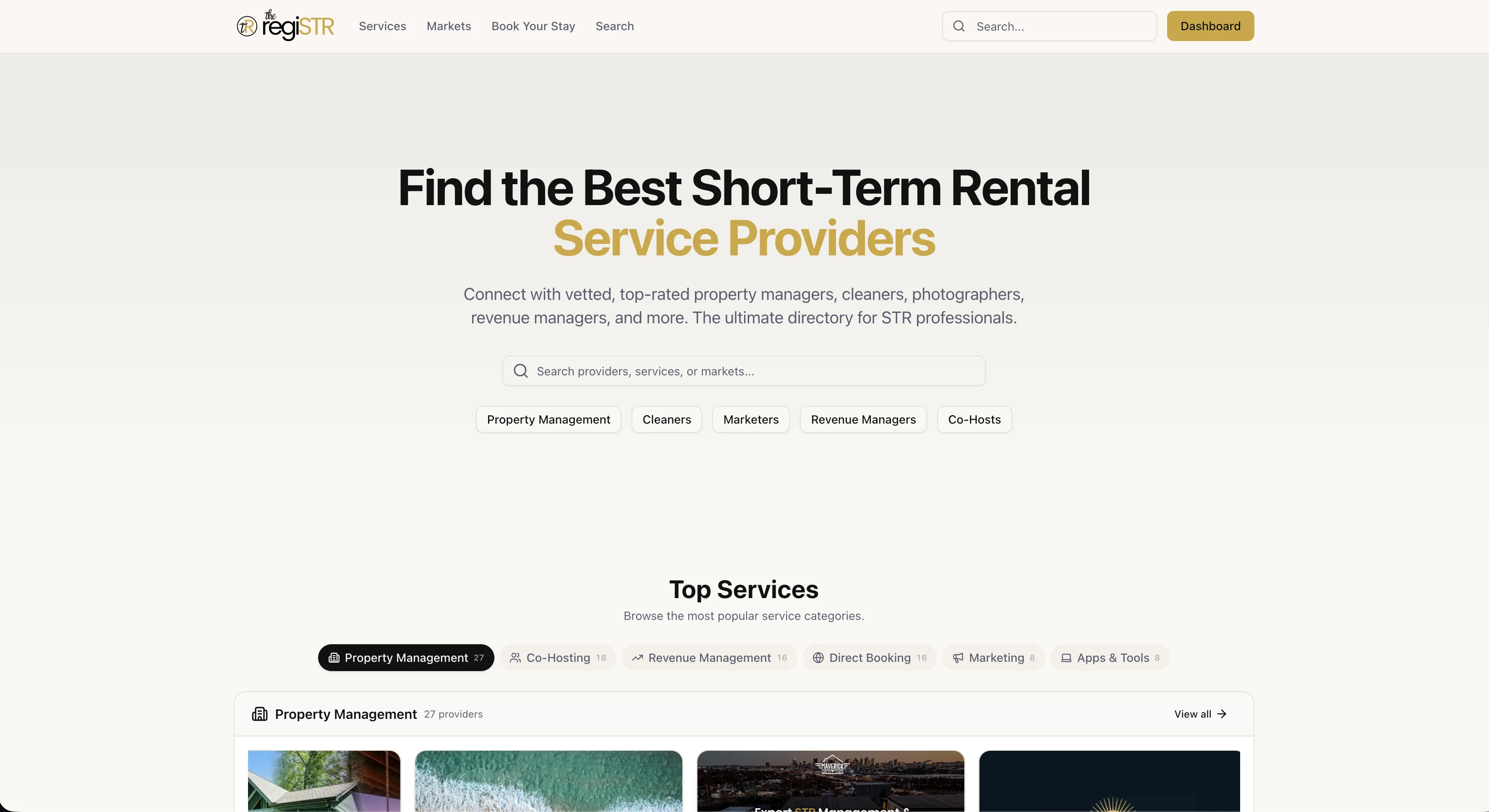
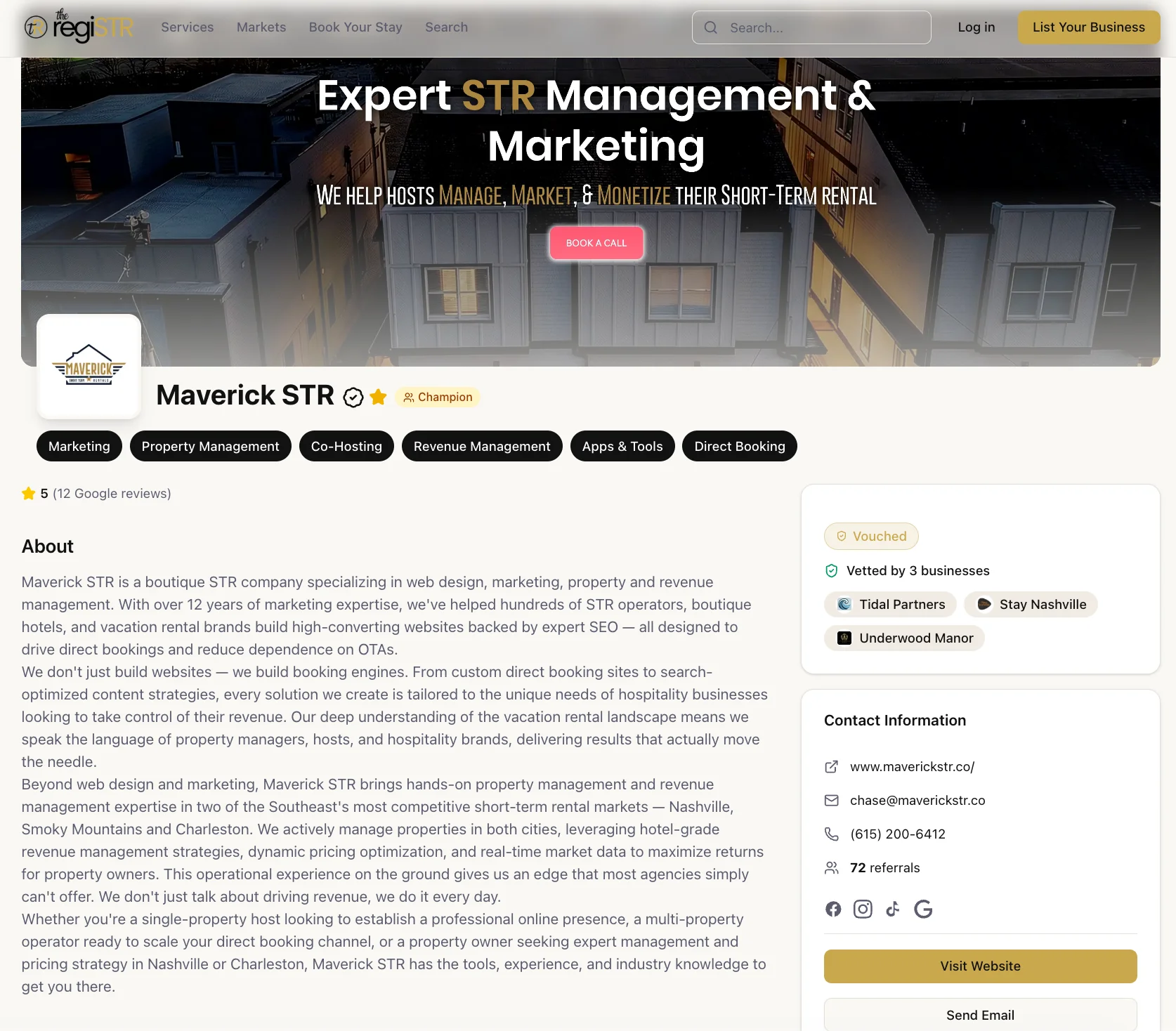
Rather than chasing "best company" rankings, we built the regiSTR around peer-verified vetting. Every property manager in our directory is referred in by an existing network member, and our Vouch system lets real STR operators publicly endorse a manager they've actually hired, by name, with context. That's a stronger signal than an anonymous star rating. You can browse vetted STR property managers by market and compare fee structures side by side instead of relying on a generic "top companies" list that may not even operate in your area.
Full-Service vs. Self-Management vs. Hybrid: Which One Actually Fits Your Situation?
The choice between full-service, hybrid, and self-management comes down to three factors: how much time you have, how far you live from the property, and how much regulatory or operational risk you're comfortable absorbing personally.
When Self-Management Makes Sense
Self-management works when you live close to the property, have time to handle guest messages and cleaner scheduling, and already have a reliable local vendor network. It avoids management fees entirely, but the trade-off is real: you become the 24/7 point of contact.
When Hybrid Makes Sense
Hybrid arrangements suit owners who want professional pricing and guest communication but already trust their cleaning and maintenance vendors. You keep more control and pay less, typically 10 to 20 percent, but you're still on the hook for coordinating turnovers yourself.
When Full-Service Makes Sense
Full-service makes the most sense for out-of-state owners, multi-property portfolios, or burned-out self-managers who have already priced out their own time and decided the 20 to 35 percent fee is worth not fielding a 2am plumbing call. Notably, this is the model where the fee stings the least once you run the math on what your time and stress are actually worth.
A decision matrix helps here. Ask yourself: Do I live within an hour of the property? Do I have a vendor network already? Do I own more than one property? If you answered no to the first two and yes to the third, full-service is almost always the better fit.
Whichever model you choose, the regiSTR's market pages let you browse the specific service categories available in your property's location, so you're comparing real local options rather than guessing at what's available.
What Regulations Should Vacation Home Owners Know Before Hiring a Manager?
Short-term rental regulations vary significantly by city, county, and even HOA, and ignoring them can result in fines or forced delisting regardless of how good your management company is. As of 2026, this patchwork has only gotten more complex, not less.
For example, Baltimore City Council Ordinance 19-217 defines a short-term rental as the rental of all or part of a home for periods of less than 90 consecutive nights, a definition that directly affects how listings must be structured. Washington, DC's Department of Licensing and Consumer Protection caps vacation rentals at 90 nights per calendar year and anticipates more than 5,100 registered short-term and vacation rentals across the District. New York City, meanwhile, currently limits short-term rental listings to no more than two guests, according to the NYC Office of Special Enforcement as of January 2026.
Additionally, trusted management companies often require owners to set up a business entity, such as an LLC, and obtain the appropriate business and property management licenses for their specific state or locality. A separate business bank account is also standard advice, to avoid commingling owner funds with operating accounts.
Notably, a management agreement should spell out exactly who is responsible for permit renewals, occupancy tax remittance, and compliance monitoring. If your prospective manager can't answer basic questions about your local ordinance, that's a red flag, not a minor gap. This is exactly the vetting criteria the regiSTR applies when listing service providers under our Regulatory and Compliance category, so hosts can find consultants who actually track local ordinance changes rather than generalists guessing at the rules.
What Technology Do Vacation Rental Managers Use to Run Properties?
Property management software, commonly called a PMS, and channel managers are the technology backbone of modern vacation home rental management, automating listings, calendar syncing, guest messaging, and task assignment across multiple properties and platforms.
The property management software market reached USD 6.53 billion in 2026 and is projected to climb to USD 9.93 billion by 2031, an 8.74% compound annual growth rate, according to Mordor Intelligence. Separately, the short-term rental management software segment specifically was valued at USD 2.35 billion in 2026 and is expected to reach USD 5.0 billion by 2035, per WiseGuy Reports, roughly doubling in a decade.
Specifically, these platforms typically integrate with Airbnb, Vrbo, and Booking.com to sync calendars in real time, preventing the double bookings that used to be common when owners managed multiple channels manually. Many also connect to smart locks for keyless check-in and dynamic pricing engines that adjust nightly rates based on seasonality, local events, and comp set demand.
For a single cabin, a lightweight PMS and channel manager might be enough. For a five-property portfolio spread across two markets, the software stack needs to talk to your cleaning schedule, your maintenance dispatch, and your accounting system without manual re-entry. That's a different level of technical setup, and it's one reason multi-property operators increasingly hire managers who already run this infrastructure rather than building it themselves.
How Should You Vet a Vacation Rental Management Company Before Signing?
Vetting a vacation rental management company means confirming their fee structure, contract terms, and local track record before you sign, not after your first disappointing month of reporting. A few specific questions separate a real operator from a company that just added "vacation rentals" to their service list.
- Ask for the exact fee breakdown in writing. A verbal "around 25 percent" is not a contract term. Get the specific percentage, what triggers additional charges, and whether cleaning fees pass through to guests or come out of the owner's cut.
- Ask about termination clauses. Some contracts lock you in for 12 months with steep exit penalties. Others are cancel-anytime. Know which one you're signing before you need to exit.
- Ask for references from owners in your specific market. A manager who's great in Scottsdale may have zero experience with Gulf Coast hurricane-season logistics.
- Ask how maintenance emergencies get handled after hours. Is there an on-call local vendor, or does a call center in another time zone just log a ticket for the next business day?
- Ask what's included in monthly owner statements. You want itemized revenue, occupancy tax remittance details, and expense breakdowns, not a lump-sum deposit with no documentation.
Comparing quotes is straightforward on the regiSTR: browse by city and service category, see which providers other operators have vouched for, and skip the cold-call phase entirely. It's a meaningfully different experience than pulling names off a general search and hoping for the best.
Data & Evidence: What the Numbers Say About the Vacation Rental Management Market
The vacation rental management market is expanding steadily, driven by rising traveler preference for alternative lodging over hotels and continued growth in supporting technology. The global vacation rental market was valued at approximately USD 101.7 billion in 2026 and is projected to reach USD 106.5 billion in 2026, according to Grand View Research.
Looking further out, Precedence Research projects the global vacation rental market will grow from around USD 101.37 billion in 2026 to approximately USD 138.74 billion by 2035, a compound annual growth rate of 3.55%. The short-term segment specifically is growing even faster: GMI Insights estimated it at over USD 45 billion in 2023, expecting it to exceed USD 65 billion by 2032.
| Metric | Figure | Source |
|---|---|---|
| Global vacation rental market, 2026 | ~USD 106.5 billion | Grand View Research |
| Global vacation rental market, 2035 projection | ~USD 138.74 billion | Precedence Research |
| Short-term segment, 2032 projection | Over USD 65 billion | GMI Insights |
| Property management software, 2026 | USD 6.53 billion | Mordor Intelligence |
| STR management software, 2026 to 2035 | USD 2.35B growing to USD 5.0B | WiseGuy Reports |
Consumer sentiment data adds context here too. According to Statista, almost 60% of respondents said short-term rentals are advantageous because they provide an additional income source for hosts, and just over 50% felt positively about short-term rentals' impact on residents' quality of life. That said, booked listings on Airbnb and Vrbo have remained 25 to 30 percent below pre-pandemic levels according to Statista, a reminder that growth is not uniform across every market or channel.
Deep Dive: Why "Full-Service" Doesn't Mean the Same Thing at Every Company
The term "full-service" gets used loosely across the vacation home rental management industry, and that inconsistency is exactly why owners get burned. One company's full-service package includes dynamic pricing, in-house cleaning crews, and same-day maintenance dispatch. Another's "full-service" is really just marketing and guest messaging with cleaning outsourced to whoever's available that week.
Specifically, the gap shows up most in maintenance response and cleaning quality control. A company that subcontracts cleaning to whichever vendor is cheapest that month can't guarantee the same turnaround window every time, and that inconsistency shows up in guest reviews within a few stays. Notably, this is the single most common complaint we hear from owners who switched managers after a bad first experience: the sales pitch promised full-service, but the actual cleaning and maintenance execution was inconsistent from month to month.
In contrast, managers who maintain direct relationships with a stable roster of STR-specific cleaners and maintenance techs, rather than rotating through whoever's cheapest, tend to produce more consistent guest experiences and fewer emergency escalations. This is precisely the distinction Awning has documented across the over 1,000 top Airbnb markets it tracks: consistency of vendor relationships correlates strongly with review quality over time.
Pro tip: when you're vetting a manager, ask specifically whether their cleaning and maintenance vendors are employees, dedicated subcontractors, or a rotating pool. The answer tells you more about actual service reliability than any marketing brochure will.
Practical Guidance: How to Choose the Right Management Approach for Your Property
Choosing the right vacation home rental management approach starts with an honest inventory of your time, your local knowledge, and your risk tolerance, not with picking the lowest percentage fee you can find.
- Calculate your realistic time cost. If self-managing means fielding guest messages at 11pm and coordinating cleaners across your work schedule, put a dollar value on those hours before comparing fees.
- Match the service tier to your distance from the property. Out-of-state owners should lean toward full-service or at minimum hybrid, since remote emergency response is nearly impossible without a local team.
- Confirm regulatory compliance is explicitly assigned. Whether it's your job or the manager's, make sure permit renewals and occupancy tax remittance appear in writing in the contract.
- Avoid rigid multi-year lock-ins on your first contract. A cancel-anytime or short-term agreement lets you evaluate actual service quality before committing long-term.
- Check vendor consistency, not just the sales pitch. Ask whether cleaning and maintenance are handled by dedicated STR-specialized vendors or a rotating pool of general contractors.
Common mistakes owners make: signing a 12-month contract before confirming references, assuming a lower fee always means better value, and failing to separate business and personal bank accounts, which complicates tax reporting significantly. Stop guessing on vendors in markets you don't know personally; the regiSTR's directory of vetted STR service providers organizes everything by market and category so you're not relying on a Facebook group post for a decision this important.
Frequently Asked Questions
What is vacation home rental management?
Vacation home rental management is the professional oversight of a short-term rental's pricing, guest communication, cleaning coordination, and maintenance, typically handled for a percentage of gross booking revenue. It can be full-service, hybrid, or limited to marketing and calendar distribution.
Is hiring a property manager worth it for a single vacation rental?
It depends on your distance from the property and your available time. For out-of-state owners, the 20 to 35 percent full-service fee often pays for itself in avoided guest issues and lower vacancy from professional pricing, while nearby owners with time and a local vendor network may do fine self-managing or using a hybrid model.
What's the difference between a co-host and a full-service property manager?
A co-host typically handles specific tasks like guest messaging or listing optimization on a smaller scale, often for a lower fee, while a full-service property manager takes on the entire operational stack, including maintenance dispatch, compliance, and financial reporting.
How does the regiSTR's Vouch system work, and why does it matter?
The Vouch system lets real STR operators publicly endorse a service provider they've actually hired, attaching their name and context to the endorsement. It's a stronger trust signal than an anonymous star rating because the person vouching has real skin in the outcome.
Do I need an LLC before hiring a vacation rental management company?
Many trusted management companies require owners to set up a business entity, such as an LLC, along with appropriate business and property management licenses for their state or locality, before signing a management agreement.
How do I find a vetted vacation rental manager in a market I don't live in?
The fastest way is to browse a directory organized by market and service category rather than searching generically, since general search results won't tell you which providers are actually STR-specialized and locally referenced. The regiSTR's market pages filter property managers by exact city so you're comparing local options with peer endorsements attached.
What should be included in a vacation rental management contract?
A solid contract spells out the exact fee percentage and what triggers it, termination clauses, insurance requirements, who handles permit renewals and tax remittance, and how maintenance emergencies are dispatched after hours.
Conclusion
Vacation home rental management in 2026 isn't one-size-fits-all: the right fee structure and service tier depend on your distance from the property, your portfolio size, and how much operational risk you're willing to carry yourself. Full-service arrangements running 20 to 35 percent of gross revenue make the most sense for out-of-state and multi-property owners, while hybrid and marketing-only models suit hands-on owners with existing local vendor relationships. Whatever you choose, the fee percentage matters less than what's actually included and whether the company can prove it with real references.
The vendors and management companies that fit your specific market exist. The harder problem has always been finding and vetting them without relying on guesswork or a generic search. That's exactly the gap the regiSTR was built to close, with a directory organized by market and service category, and a Vouch system that puts real operator endorsements ahead of anonymous star ratings.
If you're ready to compare vetted property managers instead of cold-calling names off a search results page, browse the property management directory on the regiSTR by city and service tier. Sign up free at theregistr.co and see which providers your fellow operators have actually vouched for in your market.
Content powered by inkSTR.co