How to Hire a Vacation Rental Photographer in 2026

Hiring a vacation rental photographer means finding someone who shoots specifically for OTA listing performance, not generic real estate or wedding work. That means checking their portfolio for other short-term rentals, confirming they deliver 20 to 30 edited images within days, and asking how they stage a space for guest psychology rather than just square footage.
- Professional STR photography typically runs $150 to $500 per property, depending on square footage, location, and whether drone or virtual tour add-ons are included.
- Listings with professional photos see roughly 15 to 20% higher occupancy than listings with amateur or phone-shot photos, based on industry benchmarking.
- Most STR-specialized photographers deliver edited images within 24 to 72 hours of the shoot, faster than typical residential real estate turnaround.
- Platforms recommend 20 to 30 high-quality images per listing, covering every guest-accessible space, not just the primary bedrooms and living areas.
- The global vacation rental market is projected to reach $106.5 billion in 2026 according to Grand View Research, and professional management companies now control an estimated 42% of the roughly 7 million active STR listings worldwide, per Dataintelo, a trend that's pushing photography standards higher across the board.
- The regiSTR's Photography and Virtual Tours directory lists vetted, STR-specialized photographers by market, so you're not gambling on a generalist who's never shot a same-day turnover property.
If you've ever scrolled past your own listing and cringed at the lighting, you already know the stakes. A vacation rental photographer isn't a luxury line item, it's the single biggest lever you control on click-through rate before a guest ever reads your description. At the regiSTR, we've reviewed enough listing photo sets to know the difference between a photographer who understands STR conversion and one who's just pointing a camera at a nice room.
This guide walks through exactly how to find, vet, and hire a vacation rental photographer in 2026, what it should cost, what you should get in return, and the specific staging and psychology mistakes that keep otherwise-decent listings from converting. We'll also cover the gap most hiring guides skip entirely: how to think about photography from the guest's booking decision, not just the owner's Instagram feed.
How Much Does an Airbnb Photographer Cost?
Professional vacation rental photographers typically charge between $150 and $500 per property for a standard shoot, with pricing driven by square footage, number of rooms, location, and travel distance. A one-bedroom condo shoot sits at the lower end; a five-bedroom lake house with a dock and outdoor living space pushes toward the top.
Add-ons change the math fast. Drone photography, Matterport-style 3D virtual tours, and twilight exterior shots each add to the base rate, and video walkthroughs are increasingly requested as a separate line item. Some photographers bundle these into packages; others charge a la carte, which is exactly why comparing quotes side by side matters before you commit.
Notably, cost isn't the only variable that determines value. A $200 shoot from a photographer with zero STR portfolio experience can underperform a $400 shoot from someone who knows how to stage a kitchen island for a family-of-six audience. We consistently see hosts anchor on price first and regret it once bookings don't move.
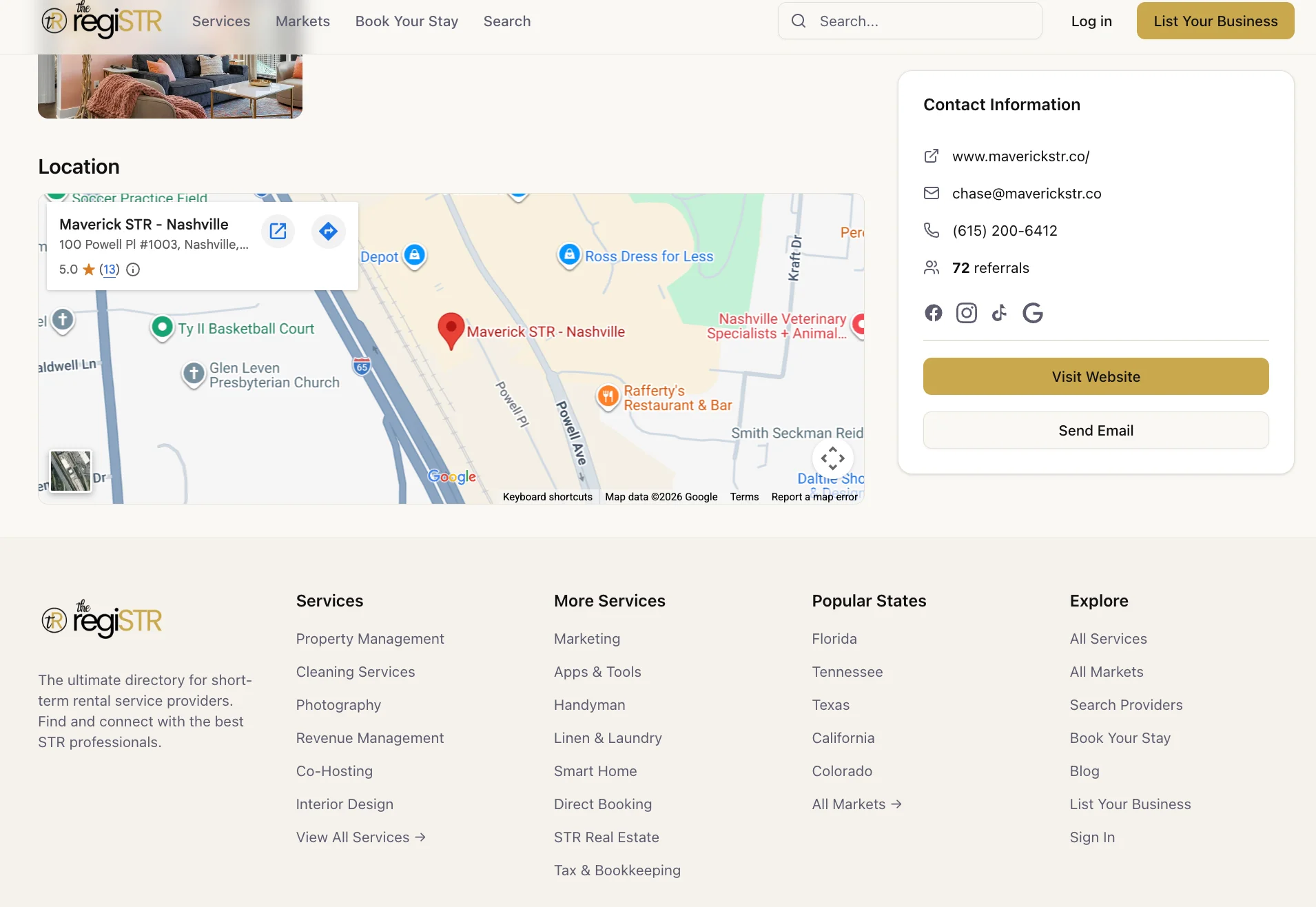
Comparing quotes is straightforward on the regiSTR: browse photographers by market and service category, and you can see pricing tiers, deliverable lists, and portfolio samples side by side instead of collecting scattered quotes from Facebook groups and cold Google searches.
What Is the 80/20 Rule for Airbnb?
The 80/20 rule for Airbnb generally refers to the idea that roughly 80% of a listing's booking performance is influenced by a small set of high-impact factors, chief among them the hero photo, pricing, and location accuracy, while the remaining 20% comes from secondary details like amenity descriptions and house rules.
In practice, this means your photography budget should be weighted toward getting the first three to five images right, since those are what a guest sees before they ever click into the full listing. Airbnb and Vrbo both surface a primary thumbnail and a short image carousel in search results, and if that carousel doesn't hook a guest in the first two or three swipes, they move to the next listing.
Applied to hiring, the 80/20 rule means you shouldn't split your photography budget evenly across every room. Instead, direct your photographer to nail the exterior or hero shot, the primary living space, and the best bedroom first, then treat secondary bedrooms, hallways, and utility spaces as lower priority. A photographer who understands this prioritization will naturally sequence a shoot around it without you having to ask.
This is also where a lot of self-managing landlords waste money. They pay for a full 25-image package but never get feedback on which three images are actually driving clicks. The regiSTR's Find STR Photographers directory highlights providers whose portfolios show this prioritization instinct, not just a folder of evenly-weighted room shots.
What Is the 80 20 Rule in Photography?
The 80/20 rule in photography, distinct from the Airbnb booking version, refers to composition technique: roughly 80% of a strong real estate or vacation rental image comes from correct light, angle, and staging preparation done before the shutter clicks, while only about 20% comes from post-processing edits.
This matters directly when you're evaluating a photographer's portfolio. If every "before and after" sample shows a dramatic transformation through editing, that's often a red flag, it suggests the photographer is compensating in post-production for poor on-site setup, harsh lighting, or rushed staging.
Industry guidance points to two golden windows for interior shoots: mid-morning between 9 and 11 AM, and mid-afternoon between 2 and 4 PM, when natural light is abundant without harsh shadows. For exteriors, the hour before sunset, golden hour, produces the warmest and most flattering light on siding, decks, and pool areas.
A photographer who schedules around these windows, rather than whatever slot fits their calendar, is signaling that they understand the technical side of the craft. Ask directly: "What time of day do you typically shoot interiors, and why?" A vague answer is a red flag worth taking seriously.
How to Get an Airbnb Photographer?
Getting an Airbnb photographer starts with defining your property type and target guest, then searching a niche STR-focused directory rather than a general freelance marketplace, since generalist photographers rarely understand turnover timelines or guest-decision staging.
Step 1: Define your property type and target guest
A beachfront condo aimed at couples needs different staging and framing than a six-bedroom ski chalet aimed at multi-family groups. Tell your photographer this upfront, it changes which rooms get priority and what props get used.
Step 2: Search a directory built for STR, not general freelance work
General freelance marketplaces surface photographers with wedding, portrait, or corporate headshot backgrounds who've never shot a same-day turnover property. That's exactly the gap the regiSTR's Photography and Virtual Tours category was built to close: every photographer listed has been referred in through the network, meaning they've actually worked STR listings before.
Step 3: Review portfolios for consistency, not just single great shots
Look for bright, polished images across an entire property set, not just one standout hero shot. Consistency signals a repeatable process, not a lucky angle.
Step 4: Confirm deliverables and licensing before booking
Get in writing: number of images, turnaround time, whether drone or twilight shots are included, and critically, whether the license covers use across Airbnb, Vrbo, your direct booking website, and social media, not just basic listing rights.
Step 5: Schedule around your turnover calendar
Book the shoot during a vacancy window, ideally with enough runway to stage the property properly rather than rushing between guest checkouts.
How Do You Vet a Vacation Rental Photographer's Portfolio and Style?
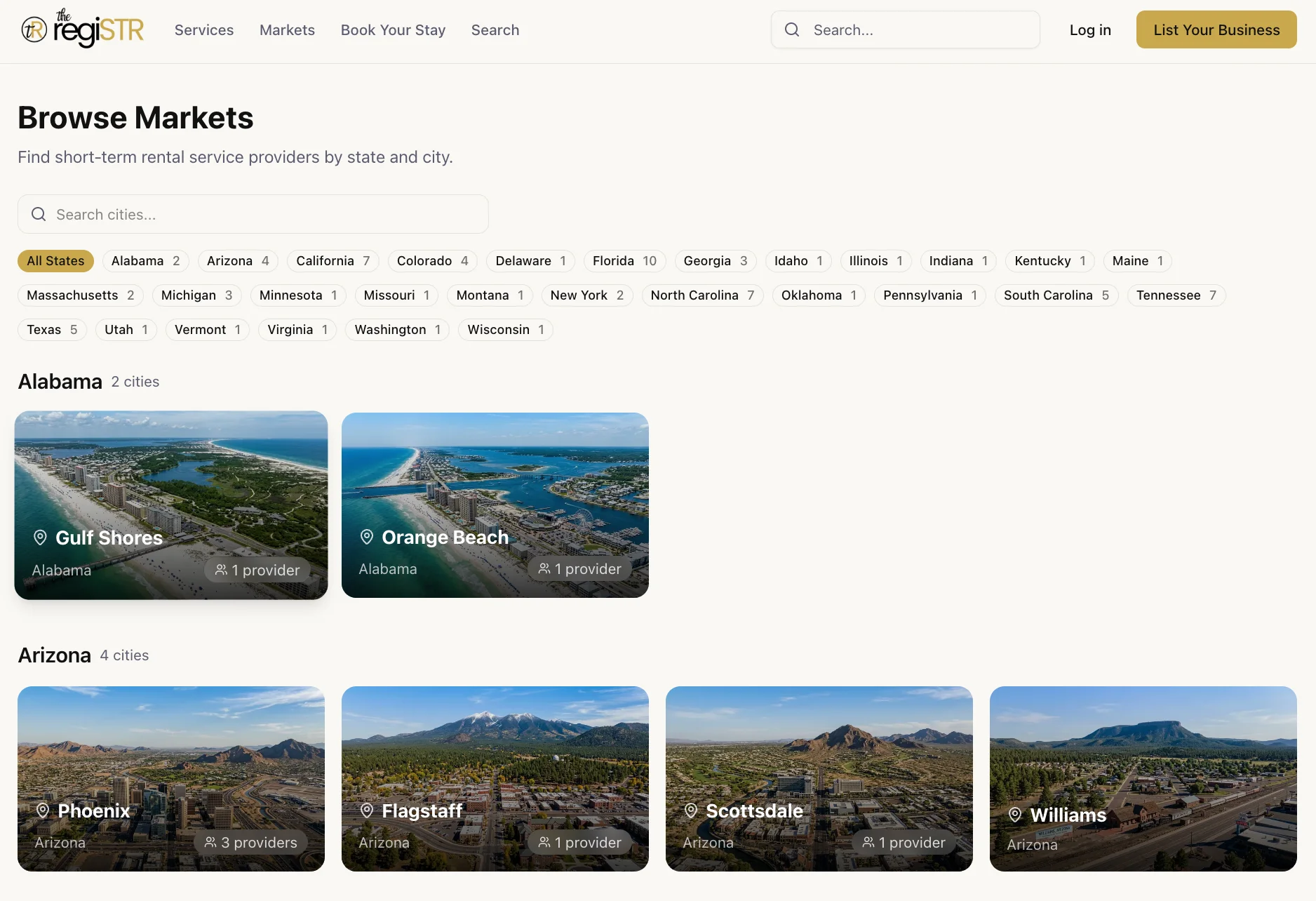
Vetting a portfolio means checking for STR-specific experience, not general real estate work, since the two require different staging instincts and different shot sequencing built around guest booking decisions rather than buyer walkthroughs.
First, look for property types similar to yours. A photographer whose portfolio is entirely downtown condos may not know how to frame a rustic cabin's exposed beams or a beachfront home's dock and water views. Ask to see three to five full property sets, not just cherry-picked hero shots.
Second, check whether the portfolio includes area and lifestyle imagery, not just interiors. Strong STR photographers also capture nearby lakes, marinas, hiking trails, downtown strips, or seasonal scenery like fall foliage or summer lake days. This context helps a guest picture the trip, not just the room.
Third, and this is where most hiring guides stop short: ask the photographer how they think about the guest's booking psychology, not just the owner's aesthetic preferences. A photographer who can explain why they'd frame a kitchen differently for a family-of-six booking versus a couples' romantic getaway is thinking past the shutter click. Few photographers get asked this directly, and the answer separates specialists from generalists fast.
Finally, ask for references from other STR hosts specifically, not general homeowners. A five-star review from a single-family home seller doesn't tell you anything about how this photographer handles a same-day turnover shoot squeezed between an 11 AM checkout and a 3 PM staging deadline.
What Services and Deliverables Should You Expect?
A standard vacation rental photography package should include 20 to 30 edited images covering every guest-accessible space, delivered within 24 to 72 hours, with optional add-ons like drone exteriors, twilight shots, and 3D virtual tours available for an additional fee.
| Deliverable | Typical Inclusion | Why It Matters |
|---|---|---|
| Standard interior/exterior photos | 20-30 images, all rooms | Platforms recommend this range for full listing coverage |
| Multiple angles per room | 2-3 shots per space (wide, mid, close-up) | Helps guests understand layout and flow before booking |
| Drone exterior shots | Add-on, typically 3-5 aerial images | Shows lot size, proximity to water, or neighborhood context |
| 3D virtual tour | Add-on, Matterport-style walkthrough | Reduces guest uncertainty for high-ticket, longer-stay bookings |
| Twilight exterior shot | Add-on, single hero image | Creates a standout thumbnail during golden hour |
| Turnaround time | 24-72 hours edited delivery | Faster listings get to market sooner, capturing seasonal demand |
Notably, not every property needs every add-on. A studio apartment rarely benefits from a drone package, while a lakefront cabin almost always does. In our experience working with operators across the regiSTR network, the properties that convert best pair standard interior coverage with one strategic add-on tied to the property's actual selling point, water views, mountain vistas, or a standout outdoor living space, rather than buying every upsell available.
How Do You Prepare and Stage a Property for the Photo Session?
Preparing a property for a photo session means completing a pre-shoot checklist that opens curtains, removes clutter, smooths beds, and stages simple props that answer one question: who is this photo for?
A widely-referenced pre-shoot routine includes checking the weather forecast, opening every curtain for natural light, turning off lamps that create color-temperature clashes with daylight, removing clutter and personal items, smoothing bedding, closing toilet seats, wiping visible surfaces, and moving cars, hoses, or trash bins out of frame. For pool properties, remove pool covers before the shoot window.
This is also where most staging advice stops, and where hosts leave the most value on the table. Staging shouldn't be generic, it should be tailored to your target guest. A family-of-six audience wants to see a dining table set for a group meal and a stocked game closet. A couples' getaway audience wants a styled bedroom with soft textiles and maybe a bottle of wine on the counter. A pet-friendly cabin should show a dog bed in frame, subtly signaling the amenity without a caption.
Most real-estate-style photographers will want to stage the property themselves and will assume the owner is on board. If a photographer pushes back on staging or seems indifferent to it, ask why directly, that hesitation often signals they're used to shooting vacant homes for sale, not guest-ready vacation rentals.
Share specific requests before the session: must-have angles, excluded areas, or amenities you want emphasized. A photographer who asks you these questions upfront is already thinking about your listing's conversion, not just filling a memory card.
When Should You Refresh Your Vacation Rental Photos?
Vacation rental photos should be refreshed at minimum every two years, and sooner if you've renovated, changed furniture, or want to capture a strong seasonal look tied to your property's peak booking window.
But calendar-based refresh cadence misses something important: guest-driven refresh triggers matter more than seasonal ones. If your booking rate has plateaued or your click-through rate on search results has dropped, that's a signal to test new hero images before waiting two full years.
Few hosts think to A/B test their primary listing photo. But swapping your hero image and tracking booking rate changes over a 30 to 60 day window is a low-cost way to find out whether your current lead photo is actually working, rather than assuming it is because nobody's complained. If you're using a co-host or revenue manager, ask them to track this alongside your pricing adjustments.
This is also the moment to revisit your photography license. If your original agreement only covered basic listing use, and you're now running paid social ads or building a direct booking website, you likely need an expanded license that explicitly covers marketing use across additional channels. Negotiate this upfront on your next shoot rather than discovering the gap after you've already launched a campaign.
How Do You Match a Photographer's Style to Your Property Type?
Matching a photographer's style means confirming their portfolio includes properties similar to yours in category, whether beachfront, ski chalet, urban flat, or pet-friendly cabin, since each category demands different framing choices and guest psychology.
A beachfront condo photographer should understand how to shoot toward the water for context without underexposing the interior. A ski chalet photographer should know how to capture cozy, warm-toned interiors that contrast against snow-covered exteriors. An urban flat photographer needs to make compact spaces feel functional rather than cramped, often using wide-angle lenses carefully to avoid distortion that misrepresents room size.
Pet-friendly properties deserve their own mention, since this niche is rarely covered in generic hiring guides. If your property markets itself as pet-friendly, ask your photographer to include subtle pet-related staging, a dog bed, a water bowl, a fenced yard shot, without making the property look like a kennel. This single detail can meaningfully influence booking decisions from the growing segment of travelers searching specifically for pet-friendly stays.
This is exactly why we built the regiSTR's photographer profiles to show property-type tags and market-specific portfolios, so you're not guessing whether a photographer who's only shot downtown lofts can handle your Smoky Mountains cabin with a wraparound porch and mountain view.
What Should Service Providers Know About Marketing an STR Photography Business?
Marketing a vacation rental photography business successfully means positioning your portfolio specifically toward STR hosts, not general real estate clients, since general directories rarely attract operators who understand and value turnover-specific photography skills.
If you're a photographer trying to grow an STR client base, general contractor directories put you in front of homeowners looking for portrait sessions or one-off real estate listings, not hosts who need repeat shoots across a growing portfolio. That mismatch wastes marketing spend on leads that never convert.
That's exactly why providers list on the regiSTR: it puts you in front of hosts and multi-property operators who are actively searching by market and service category for someone who already understands STR-specific deliverables, turnaround expectations, and staging psychology. Every visitor to the directory is already an STR operator, not a homeowner comparison-shopping for a family portrait.
Building a public profile with a clear portfolio, property-type tags, and peer endorsements from hosts you've already worked with does more for credibility than a generic star rating ever will. If you're building or scaling a photography business focused on this niche, the regiSTR's provider sign-up flow is worth exploring alongside our broader guide on what an STR marketplace is and why hosts need one.
Data and Evidence: Why Photography Investment Pays Off in 2026
The case for professional vacation rental photography is grounded in measurable market growth and occupancy data, not just aesthetic preference. As of 2026, the global vacation rental market is valued at roughly $106.5 billion according to Grand View Research, with continued growth projected through 2033.
| Metric | Data Point | Source |
|---|---|---|
| Global vacation rental market size (2026) | $106.5 billion, projected 3.7% CAGR through 2033 | Grand View Research |
| Occupancy lift from professional photos | 15-20% higher occupancy vs. amateur photos | Industry benchmarking |
| Standard photography cost per property | $150-$500 per shoot | Industry pricing benchmarks |
| Professionally managed listings share | 42% of ~7 million active global STR listings | Dataintelo, early 2026 |
| Recommended images per listing | 20-30 high-quality images | Platform recommendations |
As professional management companies now control an estimated 42% of active short-term rental listings globally, per Dataintelo's 2026 data, the bar for what counts as "good enough" photography keeps rising. Self-managing landlords competing against professionally managed portfolios in the same search results need photography that meets the same standard, not a lower one.
Frequently Asked Questions
How much does an Airbnb photographer cost?
Professional vacation rental photographers typically charge between $150 and $500 per property for a standard shoot. Pricing depends on square footage, number of rooms, travel distance, and whether add-ons like drone photography or virtual tours are included.
What is the 80/20 rule for Airbnb?
The 80/20 rule for Airbnb suggests that roughly 80% of a listing's booking performance comes from a small set of high-impact factors, chief among them the hero photo, pricing accuracy, and location. Prioritizing your photography budget toward the first few carousel images reflects this principle in practice.
What is the 80/20 rule in photography specifically?
In photography terms, the 80/20 rule means roughly 80% of a strong image comes from correct lighting, angle, and staging done before the shutter clicks, while only about 20% comes from editing afterward. Portfolios that rely heavily on dramatic post-processing edits can signal weak on-site execution.
How do I get an Airbnb photographer?
Define your property type and target guest first, then search a directory built specifically for STR photography rather than a general freelance marketplace. Review full portfolio sets, confirm deliverables and licensing in writing, and schedule the shoot around a vacancy window in your turnover calendar.
How often should I refresh my vacation rental photos?
Refresh your photos at minimum every two years, and sooner if you've renovated, changed furniture, or noticed your booking rate plateau. A dropping click-through rate on search results is a stronger signal to refresh than the calendar alone.
Do I need a drone photographer for my vacation rental?
Not always. Drone add-ons make the most sense for properties with strong lot size, waterfront, or mountain views worth showing from above. A downtown condo or small urban flat rarely benefits enough to justify the extra cost.
What's the difference between a real estate photographer and a vacation rental photographer?
A real estate photographer typically shoots vacant homes for buyers evaluating a purchase, while a vacation rental photographer stages lived-in spaces to convert browsing guests into bookings. The two require different staging instincts, shot sequencing, and understanding of guest psychology versus buyer psychology.
Can I negotiate photo licensing for social media and ad use?
Yes, and you should ask before the shoot rather than after. Basic listing licenses often only cover use on platforms like Airbnb or Vrbo, so if you plan to run paid social ads or build a direct booking website, negotiate an expanded license upfront.
Conclusion: Hiring the Right Vacation Rental Photographer Comes Down to Fit and Process
Learning how to hire a vacation rental photographer ultimately comes down to matching their portfolio, pricing, and process to your specific property type and guest audience, not just picking whoever answers fastest. In 2026, with professional management companies controlling roughly 42% of active STR listings worldwide, the photography bar keeps climbing, and generic real estate shots increasingly cost hosts bookings they never see lost.
The fundamentals hold regardless of market: vet the portfolio for STR-specific experience, confirm deliverables and turnaround time in writing, prepare the property with guest psychology in mind, and revisit your photos when performance data, not just the calendar, tells you to. Getting these steps right is what separates listings that convert from listings that just look nice.
Finding a photographer who checks every one of these boxes shouldn't require scrolling through generalist freelance marketplaces or crossing your fingers on a Facebook group recommendation.
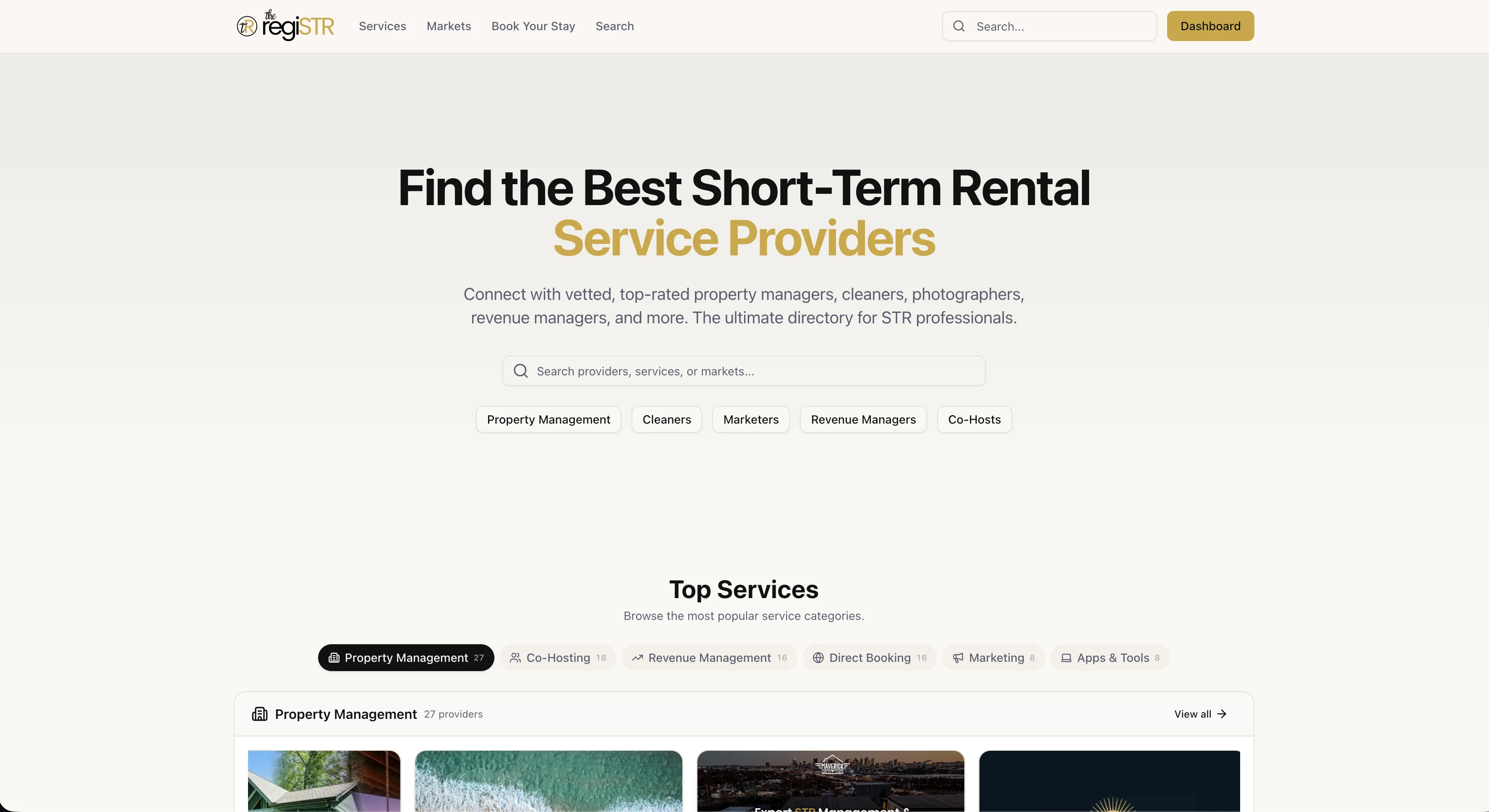
Get started with the regiSTR by browsing vetted photographers filtered by market and property type, so you can compare portfolios and deliverables in one place instead of piecing together quotes from scratch. Sign up free at theregistr.co and see who's already working in your market.
Content powered by inkSTR.co