
Book Direct Vacation Rental: What Hosts Need in 2026
Booking direct means a guest reserves your vacation rental straight from your own website or listing, skipping Airbnb or Vrbo entirely, which typically saves both sides the platform's service fee and gives you full control over the guest relationship from first inquiry to checkout. For hosts, it also means keeping more of every dollar collected and owning the data that makes repeat bookings possible.
Key Takeaways
- Booking direct removes the OTA commission structure entirely, and direct-booking owners typically aim for net margins of about 50 to 60 percent of gross revenue after cleaning, utilities, insurance, and management costs.
- Booking engines built for direct reservations commonly report inquiry-to-booking conversion rates of 30 to 40 percent when owners respond within 24 hours and price competitively.
- The global vacation rental market is projected to reach roughly $106.5 billion in 2026 according to Grand View Research, and direct booking channels are capturing a growing share of that volume as owners look to reduce OTA dependency.
- Local permit numbers, occupancy tax collection, and night caps (often 90 to 180 nights per year in some jurisdictions) still apply to direct bookings just as they do to OTA bookings, and skipping this step is the most common mistake new direct-booking hosts make.
- Verifying an owner-direct listing is legitimate takes a handful of specific checks before you exchange payment, and legitimate operators will never resist those checks.
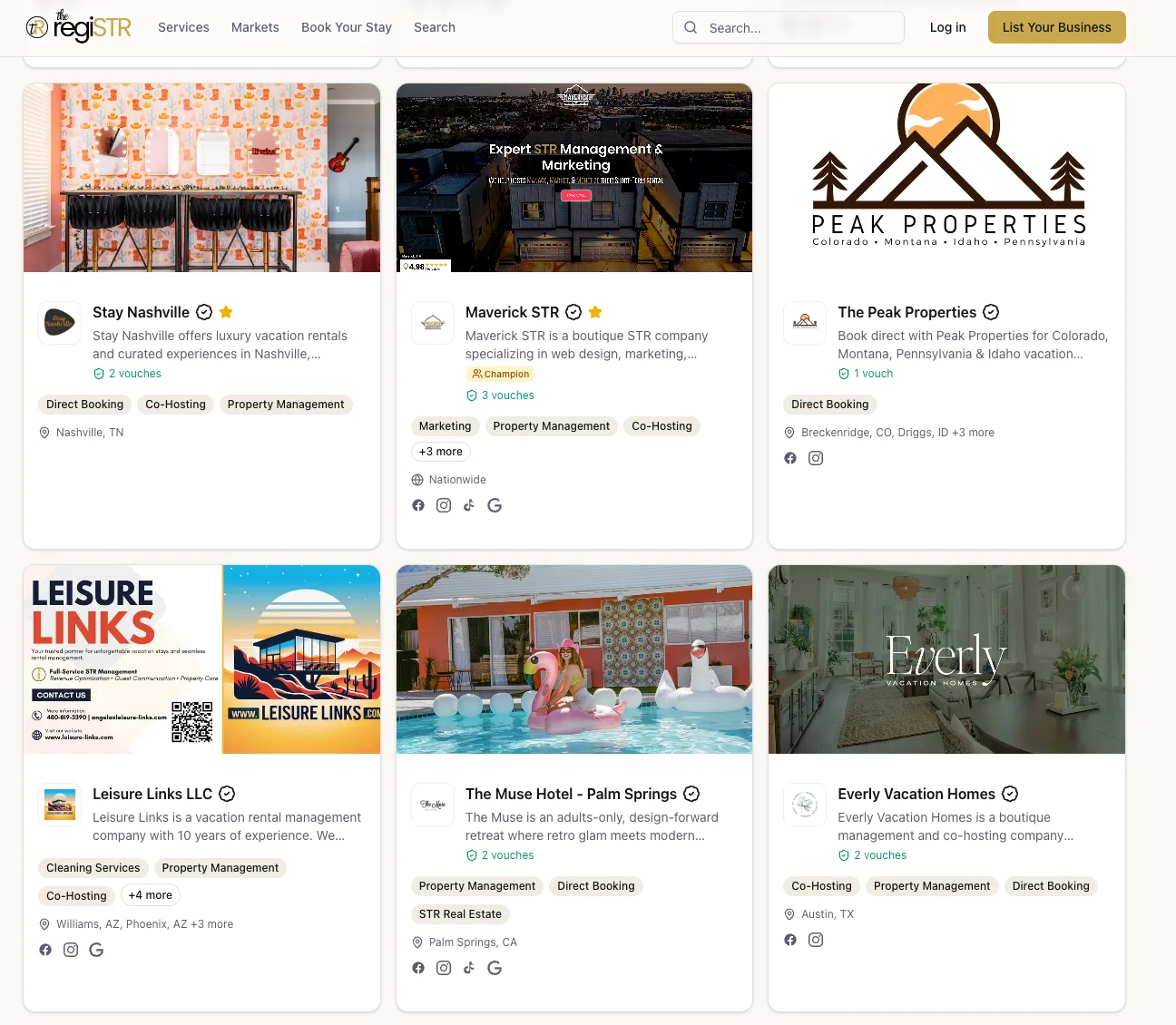
- The regiSTR connects hosts with the website developers, SEO specialists, and revenue managers who actually know how to build a direct booking engine, rather than generalist agencies unfamiliar with the STR fee structure.
If you've spent any time managing a short-term rental, you've watched a healthy chunk of every payout disappear into platform fees before it ever hits your account. That frustration is exactly what's driving more hosts toward a book direct vacation rental strategy in 2026, and it's not a fringe move anymore. At the regiSTR, we work with operators and the service providers who support them across dozens of markets, and direct booking infrastructure is one of the fastest-growing requests we see.
This guide walks through what booking direct actually means operationally, how it compares to booking through Vrbo, whether owner-direct listings can be trusted, and the mechanics of how a direct reservation flows from search to stay. We'll also cover the tax and legal angle most articles skip entirely, because that's where hosts get into trouble.
What Is the Best Site to Book Vacation Rentals?
There isn't a single "best site" for booking vacation rentals in 2026 because the right channel depends on what you're optimizing for: price, selection, or a direct relationship with the host. Airbnb and Vrbo offer the widest inventory and built-in trust signals, while an owner's own direct booking website often offers better pricing and more flexible terms.
For guests who already know which property or management company they want to stay with, a direct booking site is typically the better choice. You avoid the OTA's service fee, which commonly runs in the 5 to 25 percent range depending on the platform and booking value, and you often get more flexible cancellation terms since you're negotiating with the actual decision-maker.
For hosts, this is the crux of the whole conversation. A guest who books direct isn't paying Airbnb a cut, and you're not paying a host service fee either. Specifically, that means more margin per stay and a guest relationship you actually own, not one mediated by a third-party algorithm.
As of 2026, the vacation rental management software market supporting these direct channels is valued around $920 million and growing at an estimated 11.1 percent CAGR through 2034, according to Data Intelo. That growth reflects real demand from owners who want their own booking infrastructure instead of full dependency on OTA discovery.
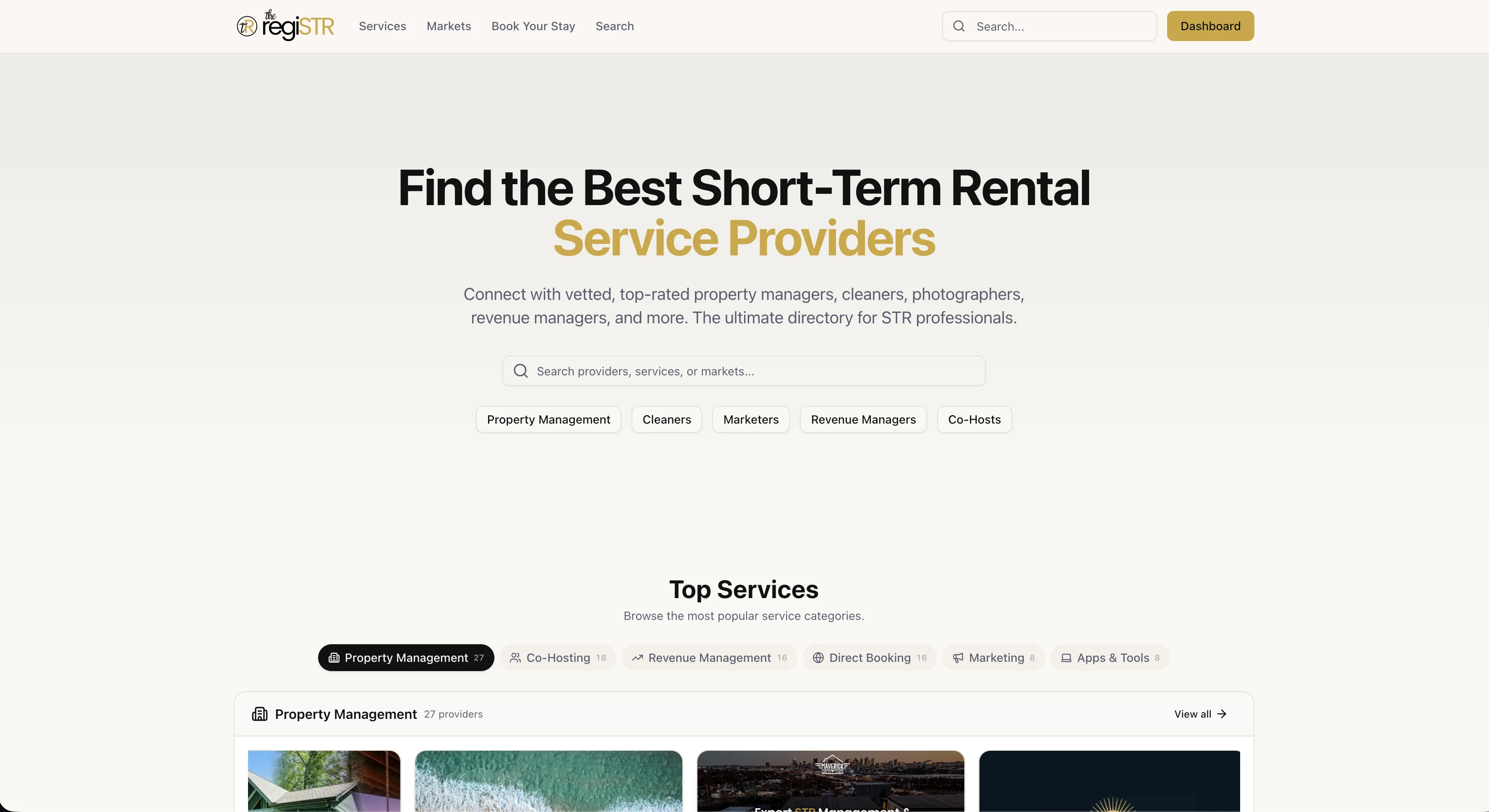
If you're building out that infrastructure yourself, the professionals who specialize in STR-specific website design and content marketing are not the same generalists who build restaurant sites. Browse STR-focused website and SEO providers through the regiSTR's directory rather than hiring a generalist agency that has never touched a booking engine before.
Is It Better to Book Through Vrbo or Direct?
Booking direct is generally better for guests who already trust the host or management company and want the lowest total price, while Vrbo is better for guests who want broader search, buyer protection guarantees, and easy comparison shopping across many properties at once. Neither option is universally superior; it depends on the guest's priorities and the host's operational maturity.
From the host side, the comparison is less ambiguous. Every reservation that comes through Vrbo carries a service fee that's baked into the guest's total price, and Vrbo also takes a host-side commission. A direct booking removes both of those costs from the transaction. Additionally, you control the cancellation policy, the security deposit terms, and the guest communication flow without a platform's messaging system sitting between you.
The tradeoff is discovery. Vrbo puts your property in front of travelers actively searching that platform; a direct booking site only converts guests who already know to look for you. This is why most experienced operators run both channels simultaneously: Vrbo and Airbnb for top-of-funnel discovery, and a direct site for repeat guests, referrals, and anyone who found you through search engine content or social media.
| Factor | Booking Through Vrbo | Booking Direct |
|---|---|---|
| Discovery reach | High, built-in traveler search traffic | Depends entirely on your own marketing |
| Platform fees | Service fee applied to guest and host | None, aside from payment processing |
| Cancellation control | Governed by Vrbo's policy tiers | Set entirely by the host |
| Guest trust signals | Reviews, verified payment, buyer guarantee | Must be built independently, often via reviews or referrals |
| Repeat guest capture | Limited, guest data stays with the platform | Full ownership of guest contact and history |
The strongest direct booking strategies we see across the regiSTR network combine a professional booking website with active social media and search content that captures travelers before they ever open Vrbo. That's a specific skill set, and it's exactly why STR marketing providers listed on the regiSTR exist as a category separate from general marketing agencies.
Is Owner Direct Vacation Rentals Legit?
Owner-direct vacation rentals are legitimate in the vast majority of cases, and the practice has grown substantially as more hosts build their own booking infrastructure in 2026. Legitimacy comes down to verification, not the booking method itself; a direct booking is exactly as safe as the diligence you put into confirming who you're paying.
Here's what separates a legitimate direct booking from a scam listing. First, a real owner or management company will have a verifiable business presence: a working phone number, a physical or registered business address, and often a listed permit number if their jurisdiction requires one. Second, they'll accept payment through a traceable method, not wire transfers to a personal account or gift cards.
Third, look for cross-references. If a property also has an Airbnb or Vrbo listing, the photos, description, and reviews should match what's on the direct site. Fourth, ask for a written rental agreement before paying anything, specifically one that spells out cancellation terms, security deposit handling, and check-in logistics.
Notably, many jurisdictions now require hosts to display a permit or license number on every listing, including direct booking sites, as part of consumer transparency rules. Some cities require it explicitly; others assume compliance but rarely enforce it on direct sites, which is exactly where a guest's own verification matters most.
We've seen firsthand at the regiSTR how much trust matters in this ecosystem, which is part of why our provider directory relies on a referral-gated vouch system rather than anonymous reviews. When you're vetting a management company's direct booking site, ask whether they can be found through an established STR property manager directory as an added layer of verification beyond their own marketing claims.
How Does Direct Booking Work?
Direct booking works by routing the traveler's reservation, payment, and communication entirely through the host's own channels instead of an intermediary platform's checkout flow. The guest finds the property through the host's website, social media, past-guest referral, or search engine results, then books and pays without Airbnb or Vrbo processing the transaction.
Mechanically, the process looks like this. First, the guest discovers the listing, either through direct search, a referral link, or retargeting from a previous stay. Second, they check availability on a booking engine embedded in the host's website, which syncs with a channel manager so dates stay consistent across Airbnb, Vrbo, and the direct site simultaneously.
Third, the guest submits payment directly, usually through a payment processor integrated into the booking engine rather than a third-party escrow system. Fourth, the host confirms the reservation and handles all pre-arrival communication, from check-in instructions to local recommendations, without a platform's messaging restrictions.
As a result, the entire guest relationship, from first contact through post-stay follow-up, stays inside systems the host owns. That matters because direct-booking owners can build an email list, send return-guest offers, and collect reviews on their own terms rather than depending on an OTA's review algorithm.
Booking engines built specifically for this workflow commonly report conversion rates of 30 to 40 percent from inquiry to confirmed booking when the host responds within 24 hours and prices competitively against comparable OTA listings. That's a meaningful number, and it's the reason more hosts are investing in this infrastructure rather than treating it as a side project.
Building this stack, a booking engine, a channel manager, a payment processor, and the content strategy to drive traffic to it, is not a weekend project. We built the regiSTR's service directory specifically because hosts kept asking us the same question: who actually builds this for STR properties, not generic vacation homes or hotels? Search STR website and revenue management providers by market and specialty rather than gambling on a generalist freelancer.
What Does Booking Direct Actually Cost You Versus an OTA?
The cost difference between booking direct and booking through an OTA comes down almost entirely to platform fees, which typically range from 5 to 25 percent of the booking total depending on the platform and pricing tier. On a direct booking, that fee structure disappears, replaced only by payment processing costs that usually run far lower.
Run the math on a single mid-range weekend booking. If an OTA charges a combined guest-and-host fee in the 15 to 20 percent range, a direct booking at the same nightly rate puts that entire margin back in your pocket, minus a payment processing fee that's typically a small fraction of that. Multiply that across a full season of bookings and the gap becomes significant, especially for hosts running multiple properties.
Direct-booking owners typically aim for net margins of about 50 to 60 percent of gross revenue after deducting management fees, cleaning, utilities, insurance, and any remaining platform costs. That range assumes a mix of channels; a property running fully direct with strong repeat-guest volume can push toward the higher end of that band.
Where this gets complicated is tax handling. Occupancy or tourism taxes still apply regardless of booking channel, and in many jurisdictions those taxes run from single digits to mid-teens percentages of the nightly rate. On an OTA, the platform often collects and remits this automatically. On a direct booking, that responsibility shifts entirely to you, and missing it is a compliance risk, not a minor oversight.
For hosts managing multiple markets, keeping tax remittance consistent across direct and OTA channels is exactly the kind of operational detail that a dedicated STR property manager or revenue consultant should be tracking on your behalf, not something to handle from memory during tax season.
What Legal and Tax Details Change When Guests Book Direct?
Booking direct shifts full responsibility for occupancy tax collection, permit display, and regulatory compliance onto the host, since there's no OTA intermediary automatically handling remittance on your behalf. This is the single most overlooked part of a direct booking strategy, and it's where new hosts run into trouble fastest.
Some jurisdictions cap short-term rental usage outright. Washington DC's Department of Licensing and Consumer Protection, for example, restricts certain vacation rentals to no more than 90 nights per calendar year, and the district anticipates more than 5,100 registered short-term and vacation rentals operating under those rules. Whether a guest books through Airbnb or your own site, that night cap still applies.
New York introduced a requirement effective December 22, 2026, mandating that booking services submit quarterly reports to the New York Department of State. That kind of regulatory tightening is a signal, not an isolated event: as direct booking grows, regulators are paying closer attention to how those transactions get reported, not just OTA transactions.
Many jurisdictions also require a permit or license number to be displayed on every listing, direct sites included, which means your book direct vacation rental page needs the same compliance treatment as your Airbnb listing. Skipping this on a direct site because "no one's checking" is a bet most hosts shouldn't make.
If your regulatory picture spans multiple counties or states, this is exactly the kind of compliance question a dedicated STR consultant handles far better than a general business attorney unfamiliar with occupancy tax nuances. Find regulatory and compliance specialists who track these changes market by market rather than piecing it together from outdated blog posts.
How Do You Verify a Direct Booking Site Before You Pay?
Verifying a direct booking site before paying means confirming the owner's identity, cross-checking the property against other listings, and insisting on a written agreement, all before any money changes hands. This isn't paranoia; it's the same diligence you'd apply to any transaction where you're paying in advance for something you haven't seen in person.
Start with a reverse search. Search the property address or the host's name alongside terms like "Airbnb" or "Vrbo" to see if the same property appears on a major platform with existing reviews. If it does, compare photos and descriptions for consistency. A mismatch is a red flag, not necessarily fraud, but worth a direct question.
Next, check payment methods. Legitimate hosts and management companies use secure processors integrated into a booking engine or accept credit cards, which offer chargeback protection. Requests for wire transfers, cryptocurrency, or gift cards to a personal account are the clearest scam indicator in this space, full stop.
Third, ask for the rental agreement in writing before submitting any deposit. It should specify the cancellation policy, security deposit terms, check-in and checkout times, and contact information for someone who will actually be reachable during your stay. A host who resists putting terms in writing is not one to trust with a deposit.
Finally, look for third-party validation. A property manager listed through a vetted directory, with peer endorsements from other operators, carries more credibility than a standalone site with no external references. That's the exact gap the regiSTR's vouch system was built to close: real STR operators publicly endorsing providers and properties they've actually worked with, rather than anonymous star ratings anyone can manipulate.
Should Your Property Even Have a Direct Booking Strategy?
A direct booking strategy makes sense for most established short-term rentals with a track record of positive reviews, but it's not the right first move for a brand-new listing with zero guest history. Direct booking converts best when travelers already have some reason to trust you, whether that's prior reviews, referrals, or strong search visibility.
If you're just launching your first property, lean on Airbnb and Vrbo initially to build review volume and guest trust. Once you have a base of satisfied guests and a repeat-booking pattern starting to form, that's the moment to invest in a direct booking website, an email capture strategy, and content marketing that captures search traffic before guests ever reach an OTA.
For scaling operators managing multiple properties, the calculation shifts. At that point, the OTA fees you're paying across a growing portfolio add up fast, and building direct booking infrastructure once, then applying it across every property, delivers a much faster payback than doing it property by property.
Not every operator needs to build this in-house. Revenue managers, website developers, and SEO specialists who understand the STR-specific booking flow, not generic vacation rental sites, can build and maintain this infrastructure far more efficiently than a host trying to DIY it during off-hours. Browse STR-specialized website and revenue providers on the regiSTR rather than hiring a generalist who's never worked inside a channel manager.
Frequently Asked Questions
Does booking direct mean I lose Airbnb's guarantee protections?
Yes, direct bookings don't carry Airbnb's AirCover or Vrbo's guest guarantee, which is why a written rental agreement and secure payment processing matter more on a direct site. Reputable hosts offset this with clear cancellation terms and traceable payment methods.
Can I run direct booking and OTA listings at the same time?
Yes, most experienced operators run both simultaneously using a channel manager that syncs calendars across Airbnb, Vrbo, and a direct booking site to prevent double bookings. This hybrid approach captures OTA discovery traffic while still converting repeat guests directly.
Do I still need to collect occupancy tax on direct bookings?
Yes, occupancy or tourism tax obligations apply regardless of booking channel, and on a direct booking the responsibility to collect and remit falls entirely on you rather than the platform. This is one of the most commonly missed compliance steps for new direct-booking hosts.
What's the fastest way to find a website developer who understands STR booking engines?
Look for developers who have specifically built vacation rental booking flows before, not generic small business websites, since channel manager integration and calendar syncing require STR-specific experience. The regiSTR's directory filters providers by this exact specialty rather than lumping them in with general web design agencies.
Is a direct booking website worth it for a single-property host?
It can be, once you have enough reviews and repeat interest to drive traffic to it, but a brand-new single property usually gets more value from OTA visibility first. Once you've built a guest history, a direct site becomes a meaningful margin recovery tool.
How do I know if a direct booking property manager is trustworthy?
Check for a verifiable business presence, a displayed permit number where required, and third-party validation such as peer endorsements through a vetted STR directory. A manager who resists providing a written agreement or verifiable references shouldn't be trusted with a deposit.
What percentage of vacation rental bookings still go through OTAs versus direct in 2026?
Exact splits vary widely by market and operator, but professional management companies currently oversee roughly 42 percent of active short-term rental listings globally, with the remainder split between owner-managers using various combinations of OTA and direct channels. The trend is clearly moving toward more direct-booking investment as fee awareness grows.
Conclusion
A book direct vacation rental strategy in 2026 comes down to a simple trade: you give up some OTA discovery reach in exchange for lower fees, full guest data ownership, and control over your own cancellation and pricing terms. For most established properties, that trade pays off once you have the reviews and repeat-guest base to support it.
The infrastructure to do this right, a booking engine, a channel manager, tax compliance tracking, and the marketing to drive traffic, is not something most hosts should build alone from scratch. Get started with the regiSTR to find vetted website developers, revenue managers, and compliance consultants who already understand how STR booking engines work, rather than piecing together a solution from generalist freelancers.

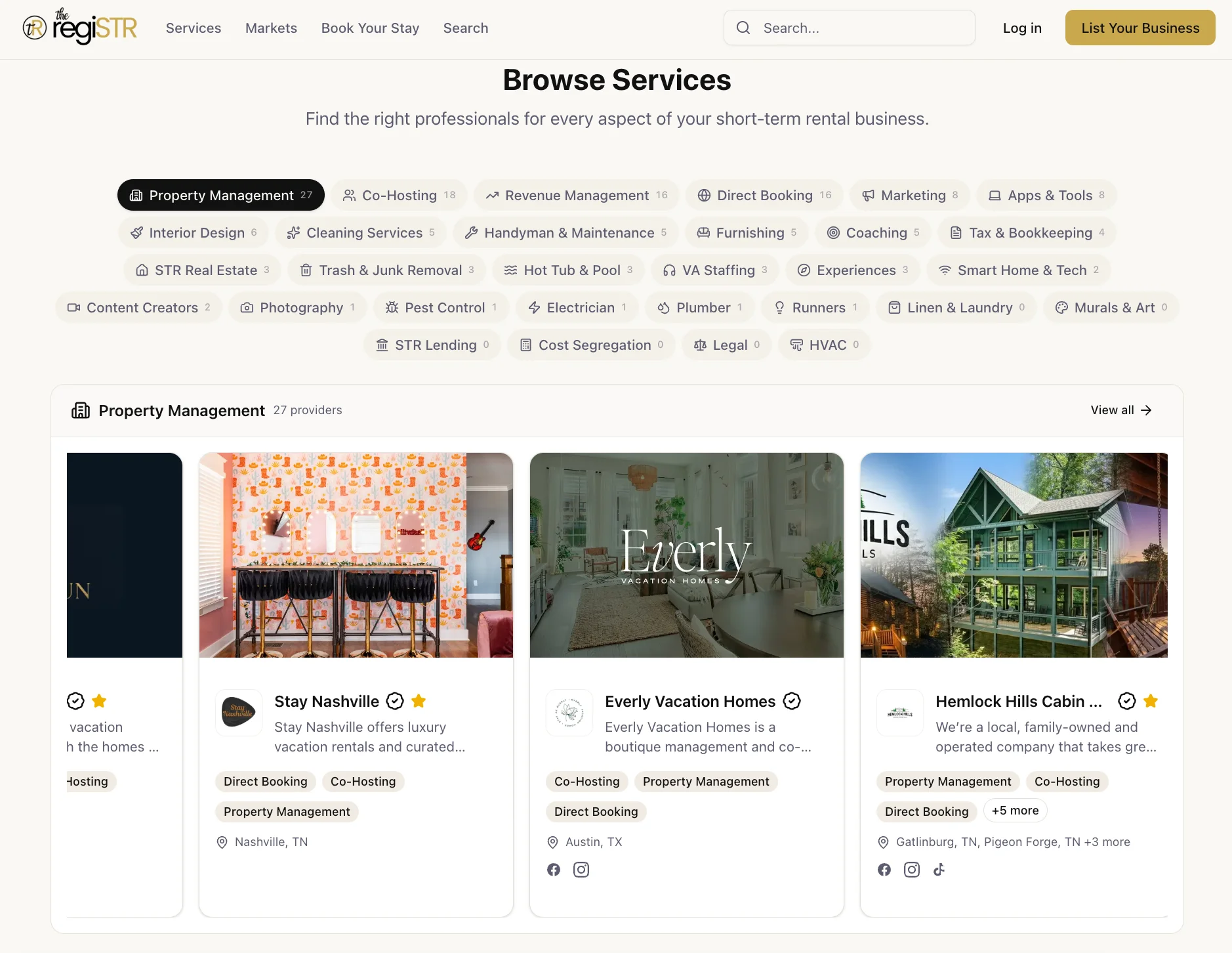
If you're ready to move past OTA-only dependency, the providers who build direct booking systems for properties like Underwood Manor and Hemlock Hills Cabin Rentals are the same type of specialists you'll find across the regiSTR's network. Browse all STR service providers to start building your own direct booking infrastructure this year.
Content powered by inkSTR.co