
STR Interior Design: What It Is and What It Costs
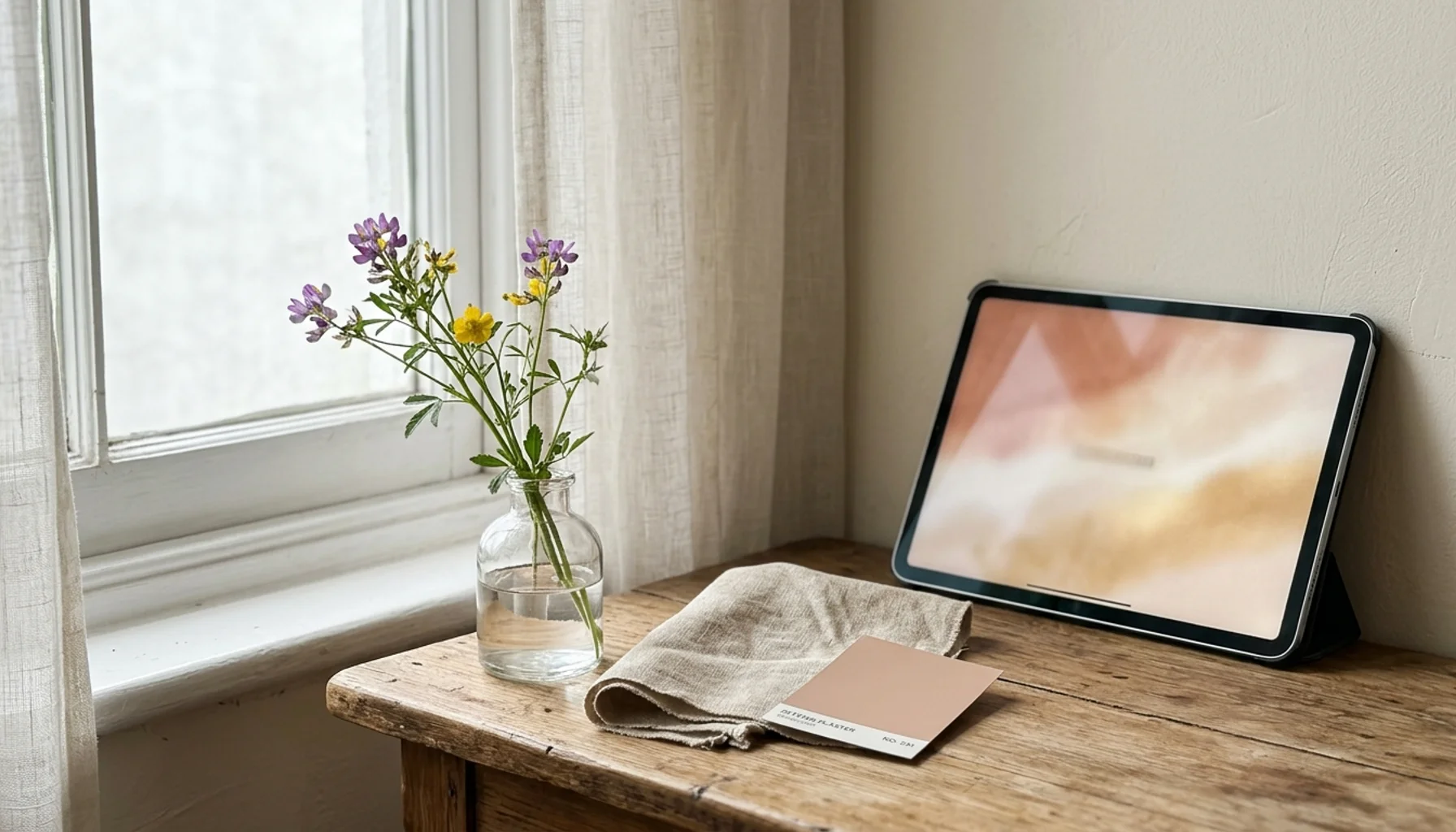
STR interior design is the practice of furnishing and styling a short-term rental property specifically to perform well in Airbnb and Vrbo listing photos, hold up under guest turnover, and convert browsers into bookers. Unlike traditional residential design, it prioritizes photogenic layouts, durable materials, and layouts that photograph well in wide-angle listing shots over purely personal taste.
Key Takeaways
- STR interior design differs from residential design because every decision is filtered through booking performance, not personal comfort alone.
- Industry data shows that operators who invest in STR-specific design and photography commonly see meaningful gains in click-through rate and occupancy, though results vary by market and property type.
- The "75/55 rule" and "3-5-7 rule" are two of the most cited shorthand frameworks STR designers use to guide layout, color, and furniture decisions.
- Professional property managers now control roughly 42% of short-term rental listings globally as of early 2026, a shift that has pushed design standards higher across the industry.
- Interior designer costs for STR properties vary widely based on square footage, scope (full furnish vs. refresh), and whether the designer offers virtual or in-person services.
- the regiSTR maintains a directory of vetted STR-focused interior designers by market, making it easier to compare providers who actually understand turnover-ready design instead of generic home staging.
If you've ever compared two nearly identical cabins on Airbnb and wondered why one books out three months in advance while the other sits half-empty, the answer is almost always design. Not decor for decor's sake, but design built to perform: photos that stop the scroll, layouts that photograph as spacious, and finishes that survive a same-day turnover between a family of six and a couple on their anniversary trip.
At the regiSTR, we track service providers across dozens of active short-term rental markets, and interior design has become one of the fastest-growing categories in our directory. Hosts are catching on to something the data already shows: with the global vacation rental market projected to reach USD 106.5 billion in 2026 and climb toward USD 121.9 billion by 2033 according to Grand View Research, competition for guest attention is only getting steeper. Design is no longer a nice-to-have. It's a revenue lever.
This guide breaks down what STR interior design actually is, the specific frameworks designers use to make small spaces feel bigger and more bookable, what you should realistically expect to pay, and how to find a designer who has actually worked on a vacation rental instead of just a friend's living room.
What Is a STR Designer?
A STR designer is an interior designer who specializes in furnishing and styling properties intended for short-term guest stays, such as Airbnb listings, Vrbo properties, and boutique vacation rentals. Unlike a traditional residential designer, an STR designer optimizes every choice for listing photography, guest durability, and turnover efficiency rather than long-term personal living comfort.
The distinction matters more than it sounds. A residential designer might choose a light linen sofa because it looks elegant in a family's living room where the same three people use it daily. An STR designer will choose a performance fabric in a similar tone because that sofa needs to survive a different family of strangers every three to five days, for years, without visibly aging in photos.
STR designers also think in terms of listing conversion. Specifically, they design the primary photographed rooms, the living room, primary bedroom, and kitchen, to work as "hero shots" that perform well in a grid of thumbnail images on Airbnb search results. That means wide-angle-friendly layouts, strong focal points, and furniture placement that reads well from a corner-mounted camera angle rather than eye level.
Additionally, a good STR designer understands local property character. A mountain cabin in a ski market calls for different material choices, more rugged textiles, warmer wood tones, than a coastal condo where light, breathable fabrics and easy-clean surfaces matter more because of sand and humidity. This is exactly the kind of local specialization the regiSTR's Interior Design and Staging category is built to surface: designers vetted for STR experience, filtered by the markets they actually serve.
What Is the 75/55 Rule for Airbnb?
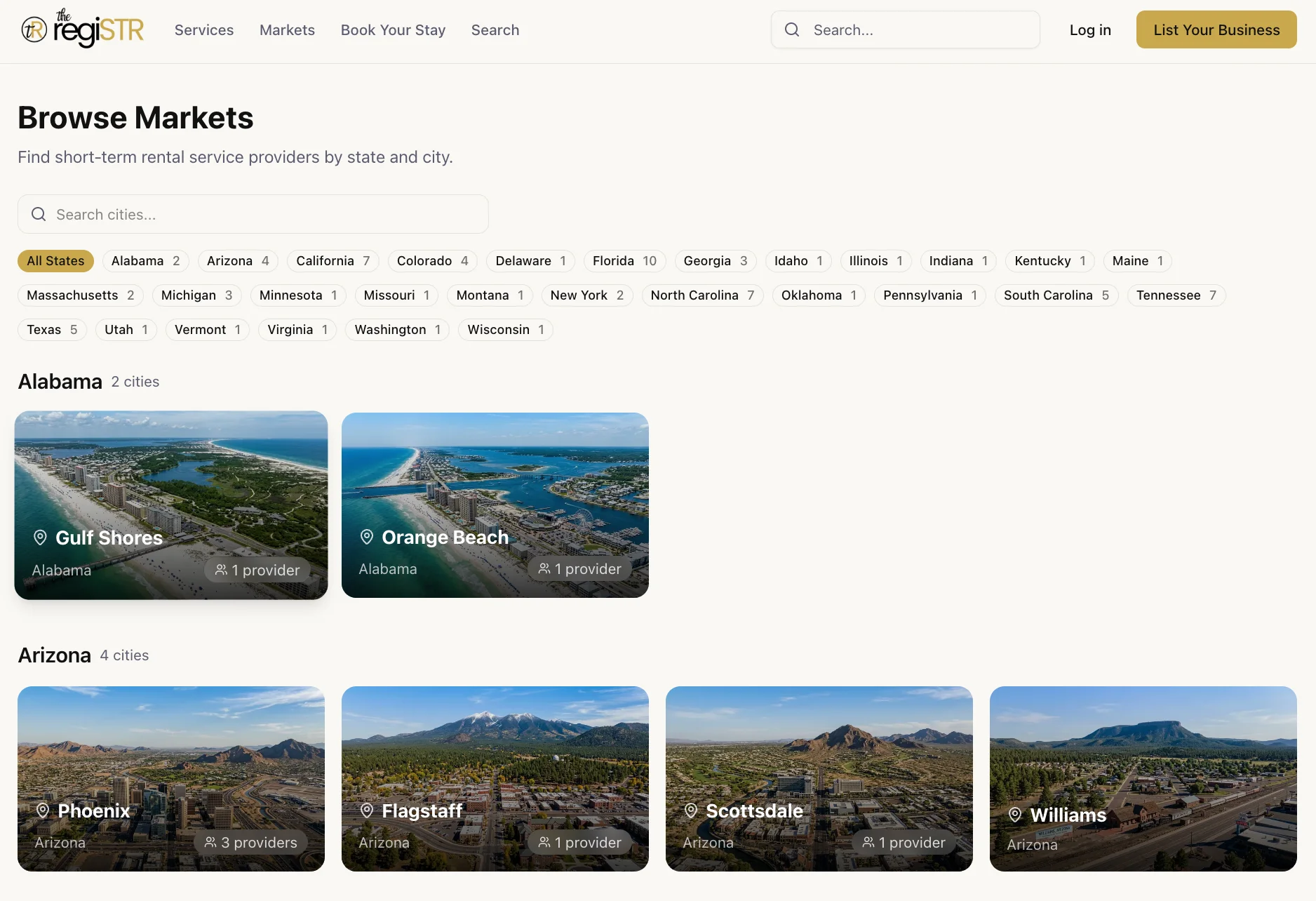
The 75/55 rule is a design guideline used by STR interior designers that suggests allocating roughly 75% of a room's visual weight to foundational neutral elements (walls, large furniture, flooring) and about 55% saturation or intensity in accent colors and decor layers, keeping spaces cohesive without feeling flat or overly busy in photos.
In practice, this means the bulk of a room, walls, sofa, rugs, cabinetry, stays in a controlled neutral range: warm whites, greiges, soft taupes, or muted wood tones. The remaining accent layer, throw pillows, art, ceramics, a statement chair, carries the color and personality. Notably, this ratio prevents the two most common STR design mistakes: an all-white space that photographs as sterile and forgettable, or an over-decorated space that feels chaotic and cluttered on a small phone screen. Specifically, the rule forces discipline. A designer working under 75/55 will resist the urge to add a second bold accent wall or a third pattern of throw pillow because it dilutes the intended focal point. As a result, listing photos read as intentional and elevated rather than assembled piecemeal from a big-box furniture haul.
This ratio also has a practical turnover benefit. Neutral foundational pieces hide wear better between cleanings, while the smaller, swappable accent layer, pillows, art, small decor, can be refreshed seasonally without a full remodel. That's a detail many first-time hosts miss until their second year, when the sofa fabric they loved in photos starts showing every stain.
What Is the 3-5-7 Rule in Interior Design?
The 3-5-7 rule is a styling principle that recommends grouping decorative objects in odd numbers, typically clusters of three, five, or seven items, because asymmetrical groupings read as more visually balanced and intentional to the eye than even-numbered pairs.
For example, a console table styled with two matching lamps and nothing else looks stiff and showroom-generic. The same table styled with a lamp, a stack of two books, and a single ceramic vase, three total elements, creates visual movement and feels curated rather than staged. STR designers lean on this rule constantly for bookshelves, mantels, kitchen counters, and coffee table vignettes because these are exactly the surfaces guests photograph and post to their own social feeds.
The rule scales with room size. A small nightstand vignette might use three objects: a lamp, a small plant, a book. A larger console or open shelving unit in a great room might use five or seven, mixing height, texture, and shape, a taller vase, a stack of coffee table books, a smaller sculptural object, so the eye travels naturally across the grouping instead of resting flat. In contrast to conventional home staging, which often prioritizes symmetry for a sense of formal order, STR designers use the 3-5-7 rule specifically because asymmetry photographs as warmer and more lived-in, which correlates with higher guest trust and, as industry data suggests, stronger booking conversion. This is one of the specific STR-vs-residential distinctions that separates a designer who understands vacation rental photography from one who is simply staging a home for resale.
How Much Should I Expect to Pay for an Interior Designer?
Interior designer costs for short-term rental properties vary significantly based on property size, whether the project is a full furnish-from-scratch or a partial refresh, and whether the designer works in person or remotely. There is no single industry-standard rate, but pricing generally scales with square footage and the number of "hero" rooms being fully styled for photography.
Several structural factors drive the price range you'll encounter when requesting quotes. First, full-service design, where the designer sources furniture, coordinates delivery, and stages the final photo-ready space, costs considerably more than a design consultation where you receive a shopping list and execute it yourself. Second, virtual design services, increasingly common for STR-specific designers who work across multiple markets remotely, tend to run lower than in-person, hands-on staging because they cut out travel and installation labor.
Additionally, property type changes the math. A one-bedroom condo refresh involves far less scope than a five-bedroom cabin with multiple bedrooms, a great room, and outdoor living space, each requiring its own photo-ready vignette. As a result, quotes for larger multi-bedroom STR properties typically run well above single-unit condo pricing, simply because there are more rooms that need to earn their place in the listing photo set.
Here's a practical framework for comparing quotes:
| Project Scope | Typical Deliverables | Best For |
|---|---|---|
| Design consultation only | Floor plan, mood board, shopping list | Hosts on a tight budget who can execute themselves |
| Virtual full design | Complete furniture and decor sourcing, remote coordination | Out-of-state owners managing properties remotely |
| Full-service in-person design | Sourcing, delivery, installation, final styling for photos | Hands-off owners who want a turnkey, photo-ready result |
| Refresh / partial redesign | Targeted updates to key photographed rooms only | Existing properties with dated listing photos and flat bookings |
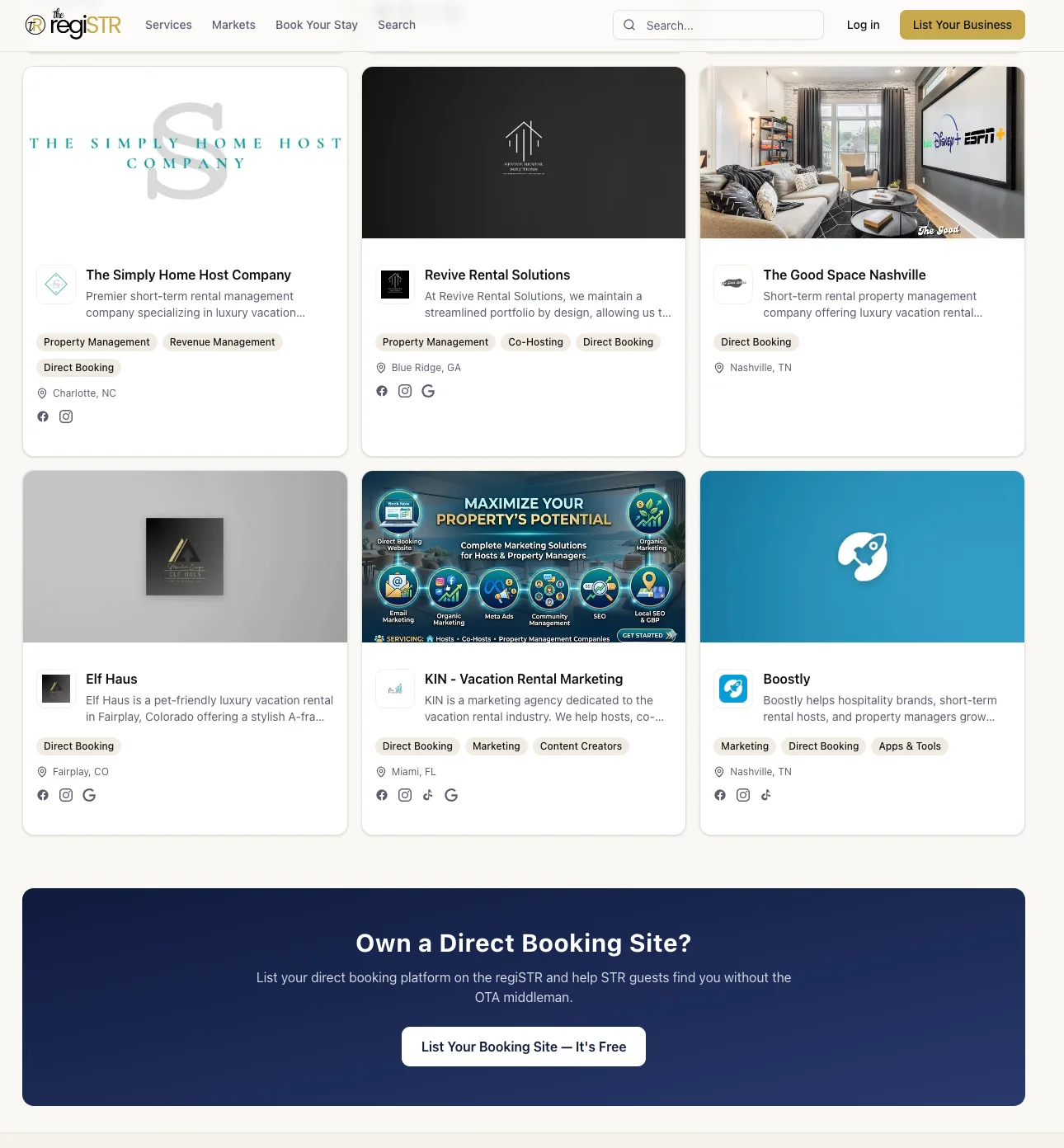
Because pricing varies this much by scope and market, comparing quotes side by side is the smartest first step before committing to any single designer. This is exactly the vetting criteria the regiSTR applies when listing service providers: every interior designer in the regiSTR's Interior Design and Staging directory lists their service scope and coverage area up front, so you're comparing apples to apples instead of guessing from a vague estimate over email.
How Does STR Interior Design Differ Across Property Types?
STR interior design strategy shifts meaningfully depending on property type, because a mountain cabin, a city loft, and a beachfront villa each attract different guest expectations, face different durability demands, and photograph differently in listing photos. Designers who specialize in STR work adjust material choices, color palettes, and layout priorities accordingly, rather than applying one generic aesthetic across every property.
Cabins in mountain and lake markets typically lean into warmer wood tones, layered textiles, and rugged, stain-resistant fabrics because guests expect a cozy, cabin-appropriate atmosphere and because higher foot traffic from ski boots or wet swimsuits demands tougher flooring and upholstery. Notably, cabin design also benefits heavily from the 75/55 rule since a warm neutral base with pops of plaid or forest-green accent lets the natural setting outside the windows do visual work the interior doesn't have to duplicate.
City lofts and condos, in contrast, usually call for a brighter, more minimalist palette because square footage is limited and buyers are searching for a design-forward, boutique-hotel feel rather than a rustic retreat. Vertical storage and furniture on legs, both frequently recommended STR design techniques, matter more here because they visually open up compact floor plans in wide-angle listing photos. Beachfront and coastal villas require yet another approach: breathable, easy-clean fabrics that resist humidity and sand, lighter wood tones, and layouts that draw the eye toward outdoor living space or water views, since outdoor amenity photos often perform as well as interior shots in coastal listings.
This is one of the biggest gaps we see in generic design advice: treating every short-term rental the same regardless of location or property type. A designer who has only worked on urban condos may not understand why a lake house needs different flooring durability, or why a desert-market property benefits from a completely different color temperature than a coastal one. That's precisely why the regiSTR organizes its designer directory by market and property specialization rather than as one undifferentiated national list.
How Does STR Design Interact With Local Regulations and Short-Term Rental Rules?
STR interior design decisions can intersect directly with local short-term rental regulations, particularly around occupancy limits, fire safety, and permitted guest counts, which means design and layout choices should be made with your jurisdiction's rules in mind, not purely for aesthetic impact.
For example, some jurisdictions cap the number of guests a listing can legally host regardless of bedroom count. As of January 2026, the NYC Office of Special Enforcement limits short-term rental listings to no more than two guests, a rule that directly affects how many sleeping arrangements a designer should plan for and photograph, since staging a listing for six guests in a market that legally caps occupancy at two creates a mismatch between your photos and your compliant listing. Beyond occupancy caps, many jurisdictions also require local business licenses or STR permits above certain thresholds, and some states impose ongoing reporting obligations. New York, for instance, requires a non-refundable $25 fee for filing a quarterly report, with the first report for the current filing cycle due December 22, 2026, and subsequent reports due the first day of every January, April, July, and October.
What does this mean practically for your design plan? Before finalizing furniture counts, bedroom configurations, or sleeping capacity in your design brief, confirm your local occupancy rules and permit requirements with your city or county. A designer unfamiliar with your market's regulatory environment may recommend a layout that photographs beautifully but violates your listing's legal guest cap. Regulatory and compliance guidance is its own service category for exactly this reason, and pairing a designer with a compliance-savvy co-host or property manager is a smart move for any host operating in a heavily regulated market.
How Do You Measure ROI on an STR Interior Design Project?
Return on investment for STR interior design should be measured through concrete booking metrics, specifically listing click-through rate, occupancy rate change, average nightly rate, and review score trends before and after the redesign, rather than vague claims of "increased revenue" without supporting data.
Industry sources note that investing in STR-specific interior design can lift revenue by 20% or more in some cases, driven primarily by improved listing photos, higher click-through rates from search results, and stronger guest reviews. But that figure depends heavily on your starting point. A property with outdated, poorly lit photos and mismatched furniture has far more room to improve than one that's already professionally styled.
To actually measure your own ROI, track these specific data points before and after a redesign:
- Listing click-through rate: How often your listing gets clicked relative to impressions in Airbnb or Vrbo search results, available in each platform's host dashboard.
- Occupancy rate: Compare the same season year-over-year, since seasonality skews raw before-and-after comparisons.
- Average nightly rate achieved: Track whether you can push rates higher post-redesign without a drop in booking pace.
- Review mentions of decor or design: Guests frequently comment specifically on aesthetics, "beautifully decorated," "just like the photos," which correlates with repeat bookings and referral traffic.
- Photo engagement: If your photographer or designer provides social content, track saves and shares on platforms where you promote the listing.
This is a gap in most STR design content: everyone quotes a general revenue lift percentage without showing you how to verify it for your own property. Pairing your interior design investment with a specialized STR photographer matters here too, since even the best design work underperforms if it's shot with poor lighting or the wrong lens angle. Design and photography are two halves of the same conversion equation, and treating them separately is one of the most common mistakes we see hosts make.
How Do You Transition From Traditional Residential Design Into STR-Focused Design?
Transitioning from traditional residential interior design into STR-focused design requires shifting your evaluation criteria from personal client comfort and long-term livability toward booking performance, photo optimization, and turnover durability, which changes both your material sourcing and your client conversation from the first consultation onward.
If you're a designer considering this pivot, start by reframing your intake questions. Instead of asking a client "how do you want to feel in this room," ask "what will this room need to look like in a photo taken from a corner with a wide-angle lens, and how many guest turnovers per month will this fabric need to survive." That single mindset shift changes fabric selection, furniture weight capacity, and even paint sheen (matte finishes show scuffs faster than eggshell or satin in high-traffic STR units). Second, build fluency in the frameworks STR clients already expect: the 75/55 rule, the 3-5-7 rule, and turnover-focused material selection. Clients who have researched STR design themselves will ask about these specifically, and a designer who can speak that language immediately signals specialization over generalist residential experience.
Third, and this is the step most transitioning designers skip: build a portfolio specifically showing STR outcomes, not just "after" photos, but before-and-after listing screenshots showing changed occupancy or nightly rate where the client is willing to share that data. Generic staging portfolios don't differentiate you in a crowded field. Concrete before-and-after booking metrics do. Finally, get discoverable where STR hosts actually search for designers. That's exactly why designers list on the regiSTR, because every visitor to that category page is already an STR operator actively looking to hire, not a homeowner browsing generic staging services. It's a direct path into an audience that already understands and values STR-specific design work, rather than competing in a crowded general design marketplace where clients don't yet know to ask for turnover-durable fabric.
Data and Evidence: What the Market Tells Us About STR Design Investment
The case for investing in STR-specific interior design is increasingly backed by broader market data, not just anecdotal claims from individual designers. Understanding where the vacation rental market is heading in 2026 helps explain why design quality is becoming a competitive necessity rather than an optional upgrade.
| Market Data Point | Figure | Source |
|---|---|---|
| Global vacation rental market size, 2026 | USD 106.5 billion | Grand View Research |
| Projected market size by 2033 | USD 121.9 billion (3.7% CAGR) | Grand View Research |
| U.S. short-term rental market, 2026 | USD 76.46 billion | Industry market outlook data |
| Share of listings under professional management, early 2026 | Approximately 42% | Industry benchmark data |
| Year-over-year demand growth for luxury Airbnb properties | 30% | Airbnb and Marriott Homes & Villas 2026 data |
| Forecasted luxury revenue growth industry-wide by end of 2026 | Approximately 40% | Airbnb and Marriott Homes & Villas 2026 data |
These numbers matter for one specific reason: as more listings come under professional management, the average design and photography quality of your competitive set rises. A property that looked competitive in 2023 with basic staging may now sit below the median in a market where nearly 42% of listings are professionally managed and increasingly design-forward. Additionally, the luxury segment's 30% year-over-year demand growth signals that guests are actively willing to pay more for elevated design, not just clean, functional space.
Practically, this means design is no longer a differentiator reserved for luxury cabins and boutique villas. It's becoming table stakes across mid-market properties too, as the overall bar for listing quality rises alongside the market's broader professionalization.
What Should You Look for When Vetting an STR Interior Designer?
Vetting an STR interior designer effectively means confirming actual short-term rental experience, not just general residential or hospitality design credentials, and verifying they understand turnover durability, local market character, and listing photo optimization before signing any contract.
Ask these specific questions before hiring:
- Can you show before-and-after listing photos, not just staged shots? A designer with real STR experience should have actual booking platform screenshots, not just a polished portfolio of styled rooms with no context.
- What fabrics and finishes do you specify for high-turnover properties? The answer should reference performance fabrics, durable flooring, and easy-clean surfaces specifically, not generic "quality materials."
- Do you work virtually, in person, or both? Out-of-state owners need designers comfortable coordinating remotely with local delivery and installation teams.
- How do you approach occupancy and layout given local STR regulations? A designer aware of local permit and occupancy rules will ask about your legal guest cap before proposing bedroom layouts.
- What's your turnaround from design brief to photo-ready installation? This matters enormously if you're trying to relaunch a listing before a specific booking season.
Skip designers who can't answer the fabric and durability question specifically, that's usually the clearest signal of whether someone has actually worked on a property that turns over guests every few days versus someone who has only staged homes for resale, where the furniture never has to survive a second tenant.
Comparing quotes is straightforward on the regiSTR: browse designers by city and service category on the Interior Design and Staging directory, where every listed provider has been vetted specifically for STR experience rather than general home staging work.
Frequently Asked Questions
Is STR interior design worth the investment for a single property?
For most hosts, yes, particularly if your current listing photos are outdated or your furniture doesn't photograph well in wide-angle shots. Industry sources suggest well-executed STR design can meaningfully improve click-through rate and occupancy, though the exact lift depends heavily on how far your starting point is from a photo-ready, market-appropriate design.
Do I need a different designer for every property if I own multiple STR units?
Not necessarily, but you do want a designer comfortable working across different property types and markets if your portfolio spans, say, a mountain cabin and a beach condo. Many STR designers now offer virtual design services specifically so they can serve multi-property owners remotely without needing a separate local designer for every unit.
Can I do STR interior design myself without hiring a professional?
You can, especially for a single small property, by applying frameworks like the 75/55 rule and 3-5-7 rule yourself. But a professional STR designer typically has sourcing relationships and durability knowledge that speed up the process and reduce costly trial-and-error mistakes with fabrics that don't hold up to turnover.
How long does an STR interior design project typically take?
Timeline depends heavily on scope. A design consultation with a shopping list can be delivered in a matter of weeks, while a full-service furnish-and-install project, especially for a multi-bedroom property, often takes longer due to furniture lead times and delivery scheduling. Always ask your designer for a specific timeline before signing.
What's the difference between home staging and STR interior design?
Home staging is designed to help a property sell to a single buyer and typically gets removed after closing. STR interior design is permanent, furniture and decor guests actually use and that must survive repeated turnovers over years, which changes material selection, durability requirements, and long-term maintenance planning significantly.
Do STR designers help with photography too, or is that a separate service?
Design and photography are usually separate services, though the best outcomes happen when they're coordinated together. A well-designed room still needs a photographer who understands STR listing requirements, wide angles, natural light timing, and staging for the shot, to fully capture the design's booking potential.
How do I find an interior designer who specializes in short-term rentals near me?
Search directories organized specifically for STR service providers rather than general contractor or home services sites, since general directories rarely filter for STR-specific design experience. The regiSTR's Interior Design and Staging category filters designers by market and confirms STR specialization before listing them, making it easier to find someone who has actually worked on a vacation rental property rather than only traditional homes.
Conclusion: Design as a Booking Strategy, Not Just Decor
STR interior design in 2026 has moved from an optional upgrade to a genuine competitive requirement, particularly as professional management now covers roughly 42% of listings globally and the luxury segment posts 30% year-over-year demand growth. Frameworks like the 75/55 rule and 3-5-7 rule give hosts and designers a repeatable playbook for photogenic, durable spaces, but the real return comes from matching design decisions to your specific property type, market, and local occupancy regulations.
If you're ready to hire, the fastest way forward isn't another Facebook group post asking for recommendations. It's comparing designers who already have verified STR experience side by side.
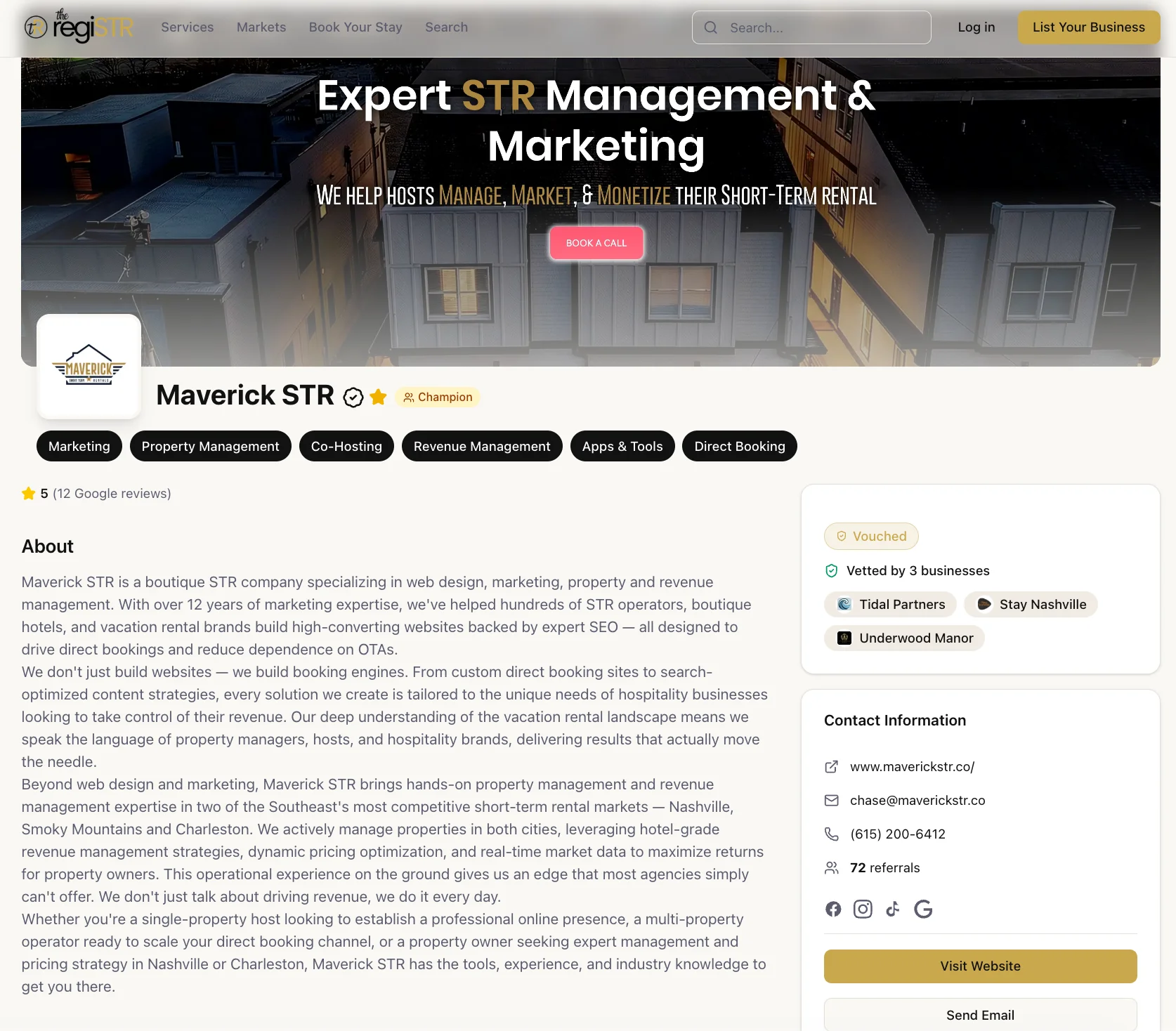
The Good Space in Nashville shows what STR interior design looks like when it's done with booking performance in mind: a layered, photo-ready living and sleeping combination that reads as spacious and elevated in listing photos. Find vetted STR interior designers in your market on the regiSTR and compare providers by service scope, coverage area, and property specialization before you commit to a redesign.
Content powered by inkSTR.co