
Revenue Management Companies: What They Do and Cost

Revenue management companies are firms that set and adjust your short-term rental's nightly pricing, minimum stay rules, and availability strategy using demand data instead of guesswork, aiming to maximize your total booking revenue across the calendar year. Most charge either a flat monthly fee, a percentage of gross booking revenue, or a hybrid of both.
- Revenue management companies combine software and human strategy to adjust nightly rates based on demand, seasonality, and your local comp set, unlike a static flat-rate calendar.
- Pricing structures typically run as a flat fee, a percentage of gross revenue (often 15-25% in the broader vacation rental space), or a hybrid of the two, according to industry benchmark data.
- There are four widely recognized levels of revenue management maturity: reactive pricing, rule-based pricing, dynamic/data-driven pricing, and fully integrated total revenue management.
- Professional management companies now control roughly 40-45% of active short-term rental listings globally as of early 2026, a sign that outsourced pricing and revenue strategy is becoming standard rather than a luxury add-on.
- Properties that adopt dynamic pricing tools have reported revenue increases averaging 15-20% year over year compared to static pricing, according to AirDNA.
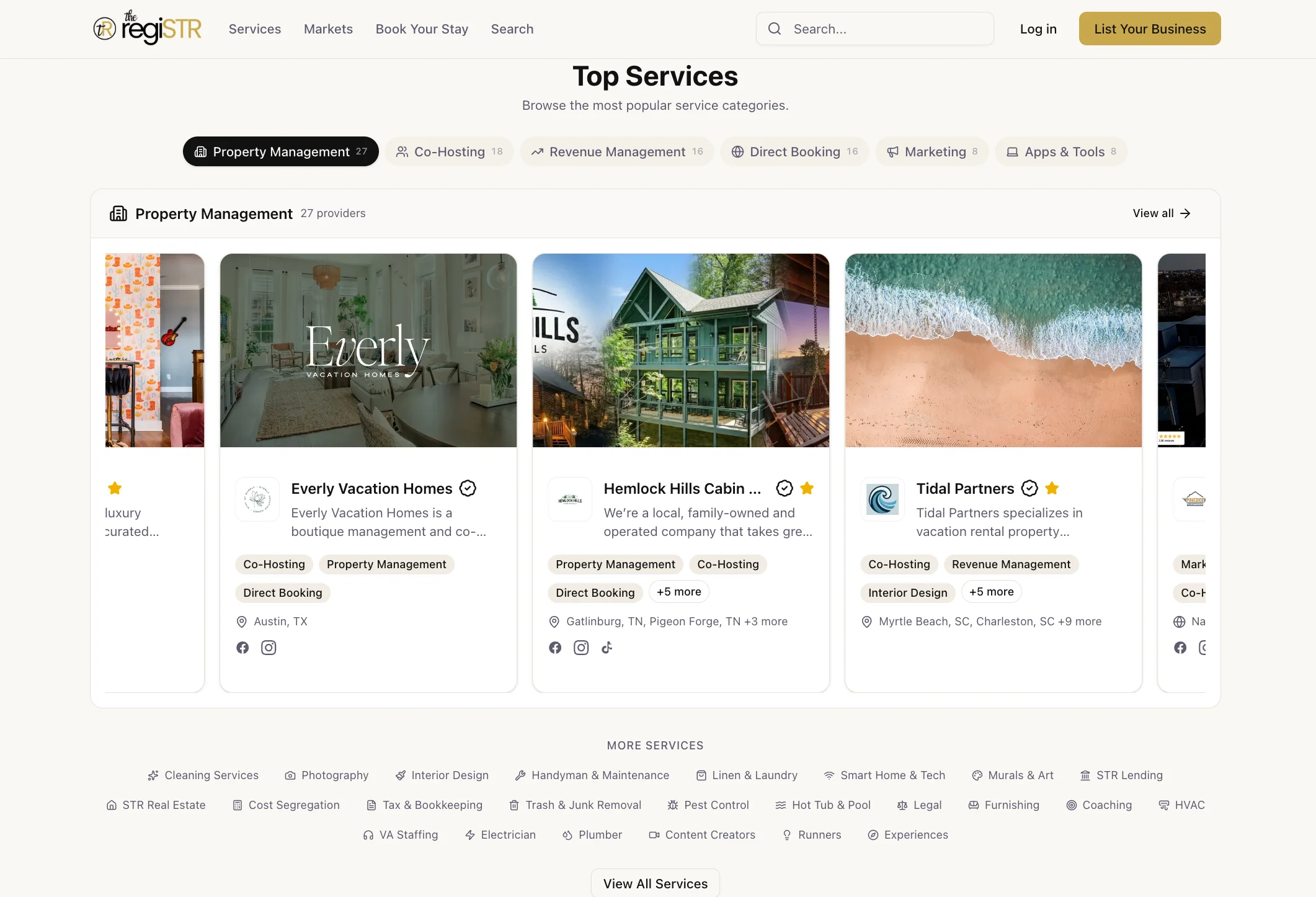
- The regiSTR lists vetted STR revenue management providers by market category, giving hosts a way to compare vendors side by side instead of cold-searching for a specialist who understands vacation rental comp sets.
If you're still setting your nightly rate once a season and leaving it alone, you're almost certainly underpricing your peak weekends and overpricing your slow months at the same time. That's the exact gap the regiSTR was built to help hosts close, by connecting them to revenue management providers who already understand vacation rental demand curves instead of hotel-only pricing logic.
This guide breaks down what revenue management companies actually do, how their pricing structures work, the four recognized levels of revenue management maturity, and what to look for in software or a consulting partner in 2026. We'll also cover a concrete example of revenue management in action so you can see the mechanics, not just the theory.
What Is a Revenue Management Company?
A revenue management company is a business that specializes in setting and continuously adjusting pricing, availability, and stay-length rules for rental properties to maximize total revenue rather than just occupancy or just rate. In the short-term rental context, this means analyzing your local comp set, seasonal demand patterns, and booking pace to decide what to charge tonight, next weekend, and six months from now.
Unlike a full-service property manager who also handles guest communication, cleaning coordination, and maintenance dispatch, a dedicated revenue management company focuses narrowly on the pricing and demand strategy layer. Some operate as pure software platforms with algorithmic pricing engines. Others are consulting firms that pair software with a human strategist who manually reviews your calendar weekly. Notably, the two models solve different problems: software alone works well for hosts who understand pricing logic and just need automation, while consulting-backed revenue management suits owners who want someone else making the judgment calls entirely.
In our experience working with operators across multiple markets, the properties that benefit most from a dedicated revenue manager are the ones with strong seasonality, like ski towns, beach destinations, or event-driven markets, where a flat annual rate leaves serious money on the table during peak weeks. Hosts in stable, low-seasonality urban markets sometimes see a smaller lift from dynamic pricing alone.
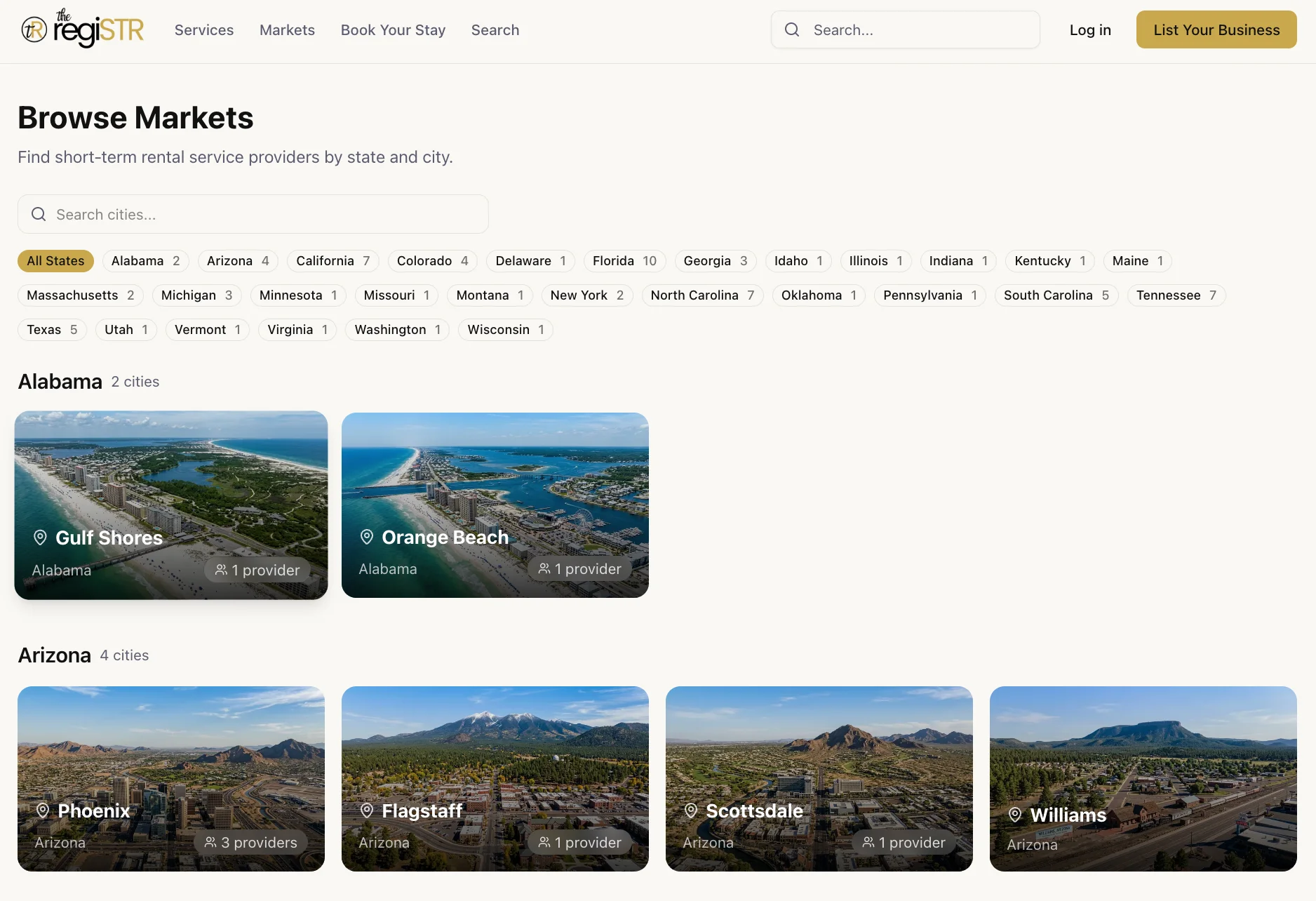
The regiSTR's Revenue Management and Dynamic Pricing category exists specifically because this service sits in a gap: general business directories don't distinguish between a hotel revenue analyst and a vacation rental pricing specialist, and the two require very different skill sets.
What Are the 4 Levels of Revenue Management?
The four levels of revenue management describe a maturity curve that runs from purely reactive, gut-feel pricing to a fully integrated, data-driven strategy that accounts for every revenue stream a property generates, not just the nightly rate. Most STR owners start at level one and never move past it without outside help.
| Level | Name | What It Looks Like | Typical Owner |
|---|---|---|---|
| 1 | Reactive Pricing | Rates are set once, adjusted only when occupancy drops noticeably. No systematic tracking of comp set movement. | New host, first year |
| 2 | Rule-Based Pricing | Fixed seasonal rate tiers and manual weekend or holiday markups, often set on a spreadsheet or basic calendar tool. | Self-managing owner, 1-3 properties |
| 3 | Dynamic, Data-Driven Pricing | Software adjusts rates daily based on booking pace, local demand signals, and comp set pricing in near real time. | Multi-property operator or PM-managed unit |
| 4 | Total Revenue Management | Pricing strategy integrates ancillary revenue (cleaning fees, pet fees, length-of-stay discounts) and channel mix optimization across Airbnb, Vrbo, and direct booking. | Portfolio operators, boutique PM companies |
First-time hosts typically live at level one or two without realizing it. Moving to level three is usually where a dedicated revenue management company or software subscription pays for itself, particularly in markets with defined peak seasons. Level four is where things get genuinely strategic: a property manager thinking about total revenue management is also weighing whether a three-night minimum stay in shoulder season beats a two-night minimum at a slightly lower rate, and whether pushing more bookings to a direct site reduces your effective OTA commission drag. That's the level most multi-property operators are trying to reach, and it's exactly the kind of provider profile you can filter for on the regiSTR's Revenue Management category, where listed firms indicate whether they offer software-only, consulting-only, or the full integrated approach.
Which Revenue Management Software Is Best?
There is no single "best" revenue management software for every short-term rental operator; the right choice depends on your portfolio size, whether you want full automation or a human reviewing recommendations, and which channel manager you already use. What matters more than picking a brand name is understanding the two structural categories these tools fall into.
Algorithmic pricing engines pull comp set data, local event calendars, and your own historical booking pace to auto-adjust rates daily, often with minimal manual override needed. These tend to suit operators with five or more units who need pricing decisions made at scale without a human reviewing every property every day.
Consulting-backed platforms pair software with a strategist who reviews recommendations weekly, adjusts for local nuance like a new competing listing or a canceled festival, and can explain the reasoning behind a rate change. This model costs more but suits owners who want a second set of eyes, especially in smaller or highly seasonal markets where algorithmic tools sometimes overcorrect.
A few evaluation questions worth asking any revenue management vendor before signing a contract:
- Does the pricing engine account for minimum stay strategy, or only nightly rate?
- How frequently is your comp set refreshed, daily, weekly, or monthly?
- Is there a human strategist reviewing the algorithm's output, or is it fully automated?
- What is the fee structure: flat monthly fee, percentage of gross revenue, or hybrid?
- Does the provider have experience specifically in your property type and market, not just hotels?
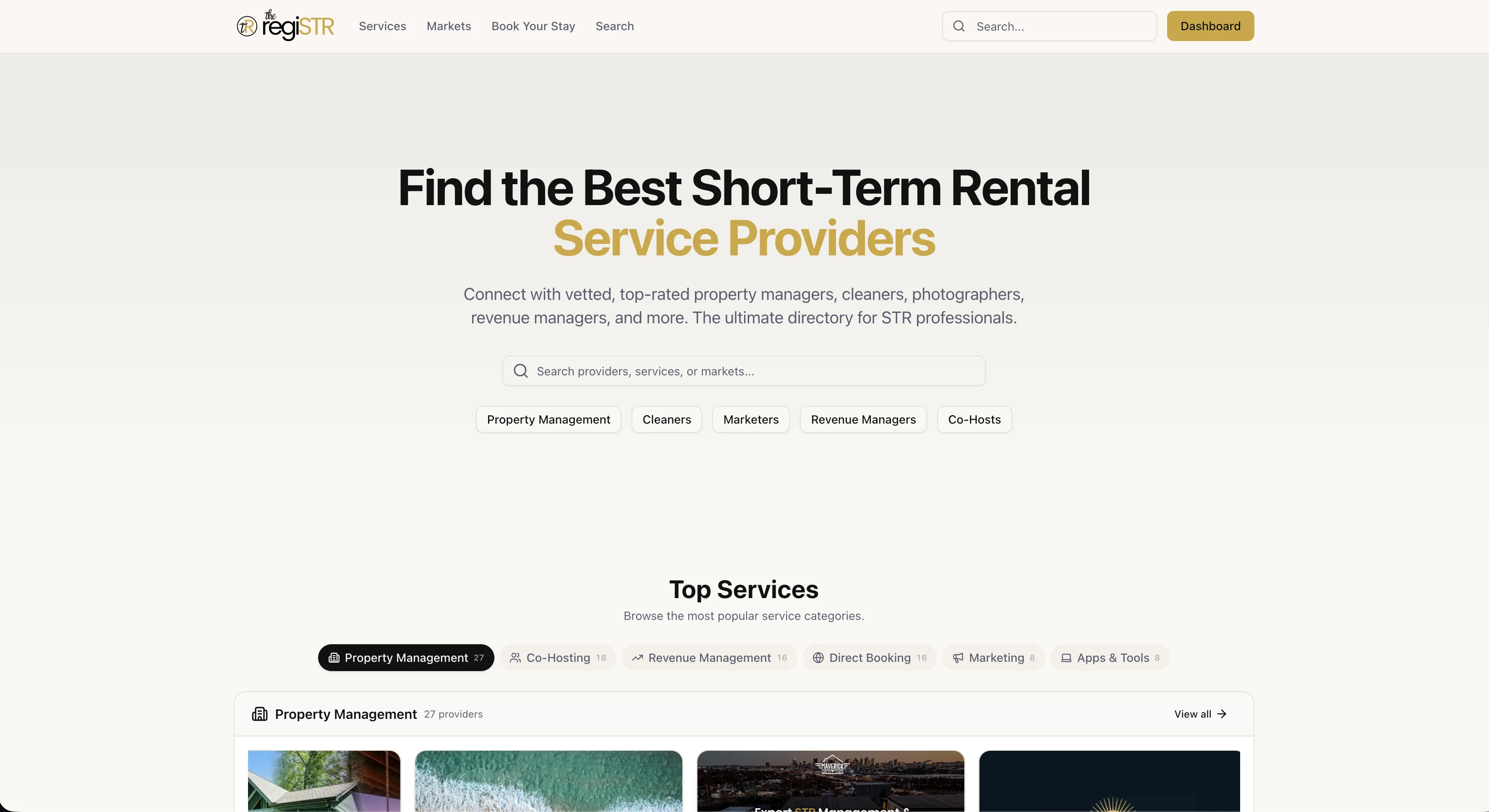
We consistently see hosts sign up for whichever tool a Facebook group recommended without checking whether that vendor has actually worked in a comparable market. This is precisely why the regiSTR organizes revenue management providers by the specific markets and property types they serve, rather than presenting a generic national list. Browse STR service providers filtered by category to compare vendors who actually understand your comp set.
What Is an Example of Revenue Management?
A practical example of revenue management is a beach property owner who notices a three-day music festival has been announced 45 minutes from their listing six months out. A revenue management company would flag that demand signal immediately, raise the nightly rate for those specific dates well above the seasonal baseline, extend the minimum stay to three nights to prevent a costly single-night gap booking, and hold that pricing until booking pace data suggests otherwise.
Compare that to a reactive host: they might notice the festival only when guests start asking about it in inquiries, by which point the best-positioned properties in the comp set have already captured the premium-rate bookings. The revenue gap between reacting and anticipating can be the difference between a break-even weekend and one of the highest-grossing weekends of the year.
A second example plays out over an entire shoulder season. Instead of a flat rate from October through December, a revenue manager might layer in graduated rate drops timed to historical booking pace data, shortening the minimum stay in slower weeks to capture last-minute bookers while protecting rate integrity during weeks with stronger demand signals. This is the kind of granular, calendar-by-calendar decision-making that separates level three and four revenue management from a simple "high season, low season" spreadsheet.
Notably, revenue management also extends beyond nightly rate. A total revenue management approach considers whether raising the cleaning fee slightly while lowering the advertised nightly rate improves search ranking on Airbnb's algorithm without actually reducing your net revenue, a tactic that requires understanding how OTA search results weight displayed price.
What Do Revenue Management Companies Charge?
Revenue management companies typically charge either a flat monthly subscription fee, a percentage of gross booking revenue, or a hybrid combining both, and published industry benchmarks put percentage-based fees in the range of roughly 15 to 25 percent of gross revenue when bundled with broader management services. Software-only tools tend to run on flat monthly pricing instead, scaling with the number of units connected. The fee structure you choose has real tradeoffs. A percentage-of-revenue model aligns incentives, since the revenue manager only earns more when you earn more, but it can get expensive fast on a high-performing property. A flat fee is more predictable for budgeting but doesn't automatically reward the vendor for squeezing out extra rate.
Before signing anything, ask whether the fee is calculated on gross booking revenue or net revenue after OTA commissions, since that distinction alone can shift the effective cost meaningfully. Also confirm whether the fee includes channel management (syncing calendars across Airbnb, Vrbo, and a direct booking site) or whether that's billed separately.
This is exactly the vetting criteria we apply when reviewing providers listed in the regiSTR's directory: fee transparency, clarity on what's included, and whether the provider can point to specific market experience rather than generic hospitality background. Comparing quotes side by side, rather than accepting the first proposal, is the single easiest way to avoid overpaying for a service that's supposed to increase your margin, not shrink it.
How Does Revenue Management Differ Across Industries?
Revenue management as a discipline originated in the airline industry decades ago, and has since spread into hotels, telecom, healthcare, and now short-term rentals, but the core principles translate differently depending on the inventory being sold. Airlines and hotels sell a fixed, perishable inventory (a seat or room that's worthless once the flight departs or the night passes), which is the same core dynamic short-term rentals share.
Where vacation rental revenue management diverges from hotel revenue management is in the complexity of the comp set. A hotel chain competes against other branded hotels with standardized room types. A vacation rental competes against individually unique properties, meaning a strategist has to weigh location, amenities, photography quality, and review scores as pricing variables, not just square footage and star rating.
Vacation rental revenue management also has to account for minimum stay requirements and turnover logistics in a way hotels rarely do, since a one-night gap between two multi-night bookings represents lost revenue a hotel wouldn't experience with nightly-only inventory. As a result, a revenue manager with only hotel experience may not fully anticipate how gap-night risk should influence rate strategy on a seven-night minimum-stay mountain cabin during ski season.
We regularly see STR owners hire a provider with impressive hotel-industry credentials, only to discover the strategist doesn't understand how OTA search algorithms weight vacation rental listings differently than hotel inventory. This is one of the exact filtering problems the regiSTR's directory structure is designed to solve, by letting hosts see whether a listed provider's stated experience is specifically in short-term or vacation rentals rather than adjacent hospitality sectors.
How Should You Structure a Revenue Management Contract?
A short-term rental revenue management contract should clearly define the fee structure, the KPIs both parties agree to track, the cancellation or opt-out terms, and exactly what pricing authority the vendor has versus what requires your approval. Skipping this step is the single most common reason owners end up frustrated with a revenue management relationship within the first 90 days.
Specifically, your contract should address:
- Fee basis: flat fee, percentage of gross revenue, or hybrid, and whether gross means before or after OTA commissions.
- Performance benchmarks: what metrics define success, RevPAR, occupancy rate, average daily rate, or a blended total revenue figure.
- Pricing authority: can the vendor adjust rates unilaterally, or does anything below a certain threshold require your sign-off?
- Reporting cadence: monthly, weekly, or real-time dashboard access to see what changes were made and why.
- Termination terms: notice period required to exit the contract, and any data or historical pricing records you retain on exit.
- Channel scope: does the agreement cover Airbnb and Vrbo only, or does it extend to a direct booking site as well?
Owners who skip performance benchmarks in their contract often can't tell six months later whether the revenue manager is actually adding value or simply collecting a fee while the market carried the growth on its own. Tie the contract to specific, measurable outcomes from day one. If you're comparing multiple revenue management proposals, the regiSTR's directory listings note which providers offer performance reporting as a standard feature versus an upsell, which is worth confirming before you sign anything.
Data and Evidence: How Big Is the Revenue Management Market in 2026?
The vacation rental management software market, which includes the revenue management and dynamic pricing tools discussed throughout this guide, was valued at approximately USD 0.92 billion in 2026 and is projected to reach roughly USD 2.38 billion by 2034, growing at a compound annual growth rate of about 11.1 percent, according to Data Intelo. That growth trajectory reflects how quickly outsourced pricing strategy has moved from a niche add-on to a standard operating expense for serious STR operators.
Separately, the broader short-term rental management software market is forecast to reach approximately USD 2.35 billion by 2026, growing at roughly 14.5 percent annually between 2026 and 2033, according to Data Insights Market. As a result, revenue management functionality is increasingly bundled directly into channel management platforms rather than sold as a standalone service.
| Market Segment | 2025-2026 Value | Projected Value | CAGR | Source |
|---|---|---|---|---|
| Global Vacation Rental Market | ~$101.4B (2026) | ~$138.7B by 2035 | ~3.55% | Research and Markets |
| Vacation Rental Management Software | ~$0.92B (2026) | ~$2.38B by 2034 | ~11.1% | Data Intelo |
| Short-Term Rental Management Software | ~$2.35B (2026) | N/A | ~14.5% | Data Insights Market |
| Property Management Software (broader) | ~$6.53B (2026) | ~$9.93B by 2031 | ~8.74% | Mordor Intelligence |
What this data tells us practically: professional management companies now control roughly 40 to 45 percent of active short-term rental listings globally as of early 2026. That means nearly half the competing inventory in most markets is already running on some level of professional revenue management, not gut-feel pricing. If your comp set is increasingly professionalized, self-managing on a flat rate puts you at a structural disadvantage against neighbors who adjust daily.
Deep Dive: Why Do Luxury and Seasonal Markets Need Specialized Revenue Management?
Luxury and higher-end vacation rental listings have seen demand growth that dramatically outpaces the broader market, with some reports citing roughly 30 percent year-over-year demand increases for luxury listings and projected luxury revenue growth of 25 to 40 percent by the end of 2026. That growth rate makes generic, one-size-fits-all pricing tools poorly suited to this segment, since luxury guests are far less price-sensitive to small rate changes and far more sensitive to perceived scarcity and exclusivity. A revenue manager working a luxury ski chalet or a beachfront estate has to think differently than one working a standard two-bedroom condo. Minimum stay requirements tend to be longer, cancellation policies tend to be stricter, and the pricing ladder often needs wider gaps between shoulder season and peak season to protect the property's premium positioning. Underpricing a luxury listing can actually hurt bookings, because guests searching in that segment often associate low price with lower quality.
Seasonal markets present a different but related challenge. A ski town property might generate the majority of its annual revenue in a twelve-week window between December and March. A revenue manager working that property needs granular, near-daily rate adjustment during that window, since even a single mispriced holiday week can represent a meaningful percentage of total annual income. Compare that to a year-round urban market, where the cost of a mispriced week is comparatively small relative to annual revenue. This is exactly why we recommend hosts in highly seasonal or luxury markets prioritize a revenue management provider with direct experience in that specific property type, not a generalist. The regiSTR's directory structure lets you filter by market and specialty, which matters far more in luxury and seasonal segments than in stable, moderate-demand markets.
Practical Guidance: How Do You Choose the Right Revenue Management Company?
Choosing the right revenue management partner starts with an honest assessment of your own bandwidth and portfolio size, not with picking the vendor with the flashiest dashboard. A single-property owner with time to check pricing weekly has different needs than a fifteen-property operator who needs full automation.
- Assess your portfolio size and seasonality first. One property in a stable urban market may not justify a full-service revenue manager. Five properties in a high-seasonality beach or mountain market almost always will.
- Decide between software-only and consulting-backed. If you understand pricing logic and just want automation, a software subscription may be enough. If you want someone else making judgment calls, look for a consulting-backed provider.
- Confirm market-specific experience. Ask for examples of properties they've priced in a comparable market and property type, not just general hospitality background.
- Compare fee structures apples to apples. Calculate what a flat fee versus a percentage-of-revenue model would actually cost you at your current revenue level before signing.
- Request a trial period or month-to-month term. Avoid long-term lock-in contracts with providers who won't demonstrate results first.
- Check reporting transparency. You should be able to see exactly what rate changes were made, when, and why, not just a monthly revenue summary.
Common mistakes we see repeatedly: owners who hire a revenue manager and then never look at the reporting dashboard, owners who sign a percentage-of-revenue contract without modeling what it costs at their actual revenue level, and owners who assume every "revenue management" provider understands vacation rentals specifically rather than hotels or general hospitality. Rather than sorting through generic search results, browsing vetted providers by service category on the regiSTR gives you a starting shortlist of vendors who have already been referred into the network by other STR operators, which cuts down significantly on the trial-and-error most hosts go through on their first hire.
Frequently Asked Questions
What is the difference between a revenue management company and a property manager?
A revenue management company focuses specifically on pricing strategy, minimum stay rules, and demand forecasting. A full-service property manager handles that plus guest communication, cleaning coordination, and maintenance dispatch. Some property managers include revenue management as one part of a broader service package, while others outsource pricing to a specialized revenue management firm.
Do I need a revenue management company if I only own one property?
Not necessarily. A single property in a stable, low-seasonality market may see limited return from a dedicated revenue management contract, especially a percentage-of-revenue arrangement. However, one property in a highly seasonal market, like a ski cabin or beach house with defined peak weeks, often benefits significantly from dynamic pricing since a single mispriced holiday week can represent a large share of annual revenue.
How is revenue management different from dynamic pricing software?
Dynamic pricing software is a tool that algorithmically adjusts nightly rates based on demand signals. Revenue management is the broader discipline that includes dynamic pricing plus decisions on minimum stay, cancellation policy, channel mix, and ancillary fee strategy. Some revenue management companies use dynamic pricing software as one component of a larger strategy.
What KPIs should a revenue management company report on?
The core metrics to expect are occupancy rate, average daily rate, RevPAR (revenue per available room), and total gross revenue compared to the prior period or a comparable set of properties. A strong provider will also report on booking pace and lead time trends, not just historical performance.
Can revenue management software replace a human revenue manager entirely?
For straightforward, high-volume portfolios in stable markets, software-only pricing tools can work well without a human strategist reviewing every decision. In highly seasonal, luxury, or unusually shaped markets, a human strategist typically adds value the algorithm alone misses, particularly around local events, new competing inventory, or nuanced minimum-stay decisions.
How much does revenue management typically cost for a short-term rental?
Revenue management companies typically charge a flat monthly fee, a percentage of gross revenue often in the 15 to 25 percent range when bundled with broader management services, or a hybrid of both. Software-only tools tend to charge flat monthly fees that scale with the number of connected units rather than a percentage of revenue.
Is professional revenue management worth it if I'm already using a channel manager?
A channel manager syncs your calendar and listings across platforms like Airbnb and Vrbo, but it doesn't typically make strategic pricing decisions on its own unless it includes a built-in dynamic pricing engine. If your channel manager's pricing tool is basic or rule-based, a dedicated revenue management layer can still add meaningful value, particularly in seasonal or competitive markets.
Conclusion: Getting Revenue Management Right in 2026
Revenue management companies exist to solve a specific problem: static pricing leaves money on the table in a market where nearly half of professional listings now adjust rates dynamically. Whether you choose a software-only tool, a consulting-backed provider, or build toward a total revenue management approach that accounts for fees and channel mix, the goal is the same, moving off level one reactive pricing before your comp set outpaces you. As short-term rental management software adoption grows at double-digit rates through 2026 and beyond, the operators who treat pricing as a strategic discipline rather than an afterthought will keep pulling ahead of those who don't.
Finding the right revenue management partner shouldn't mean sorting through generic hospitality consultants who've never priced a vacation rental. Get started with the regiSTR to browse vetted revenue management and dynamic pricing providers organized by market and specialty, so you can compare options based on actual STR experience rather than a polished sales pitch.
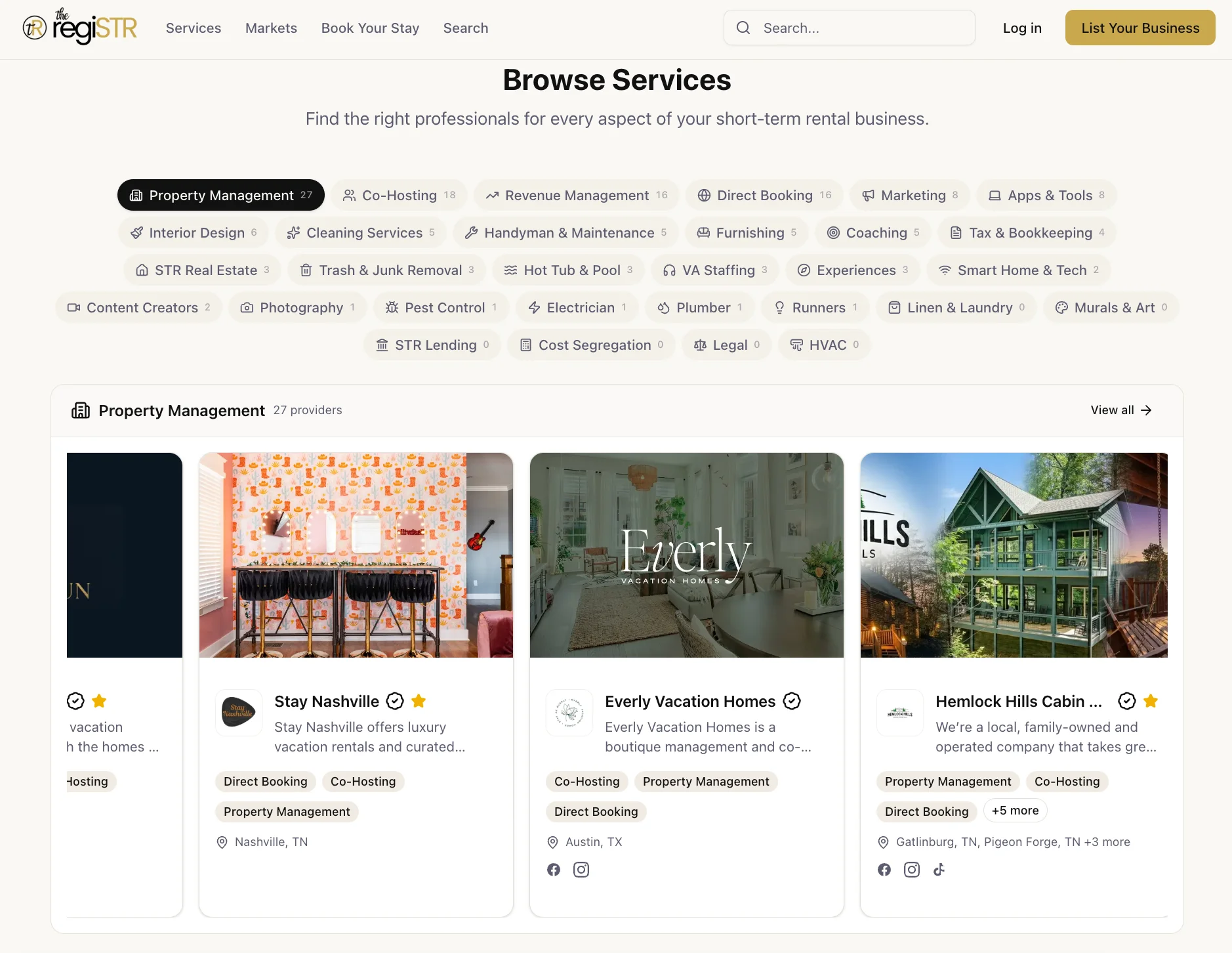
If pricing strategy has been the piece of your operation running on autopilot, the regiSTR's Revenue Management and Dynamic Pricing category is built to change that: browse providers by market, compare fee structures, and find a partner who already understands how comp set dynamics work in vacation rentals rather than hotels. Browse All STR Services to see the full directory across every category your property needs.
Content powered by inkSTR.co