
New Orleans Short-Term Rental Rules and Hiring Guide 2026
A New Orleans short-term rental is legal only if the property holds an active permit issued through the city's Short Term Rental Administration, and even then, entire neighborhoods including most of the French Quarter remain off-limits to whole-home STR use. Owner-occupied permits, non-owner-occupied permits, and commercial permits each carry different residency, zoning, and cap requirements, and enforcement since 2026 now includes direct verification checks with Airbnb and Vrbo listing data.
Key Takeaways
- New Orleans requires an active city permit before any short-term rental listing goes live, and the permit type you qualify for depends on whether you live on-site.
- Most of the French Quarter is zoned to prohibit whole-home short-term rentals entirely, a restriction that predates and has survived multiple rounds of citywide policy revision.
- The city caps how many STR permits can exist on a given block or square in many residential zones, which means demand for permits in popular neighborhoods often outpaces available slots.
- Professional short-term rental managers nationally typically charge 15 to 25 percent of gross rental revenue, a benchmark worth knowing before you compare local New Orleans property management quotes.
- Platform verification between the city and Airbnb and Vrbo has tightened since 2026, meaning unpermitted listings are now flagged and removed faster than in prior years.
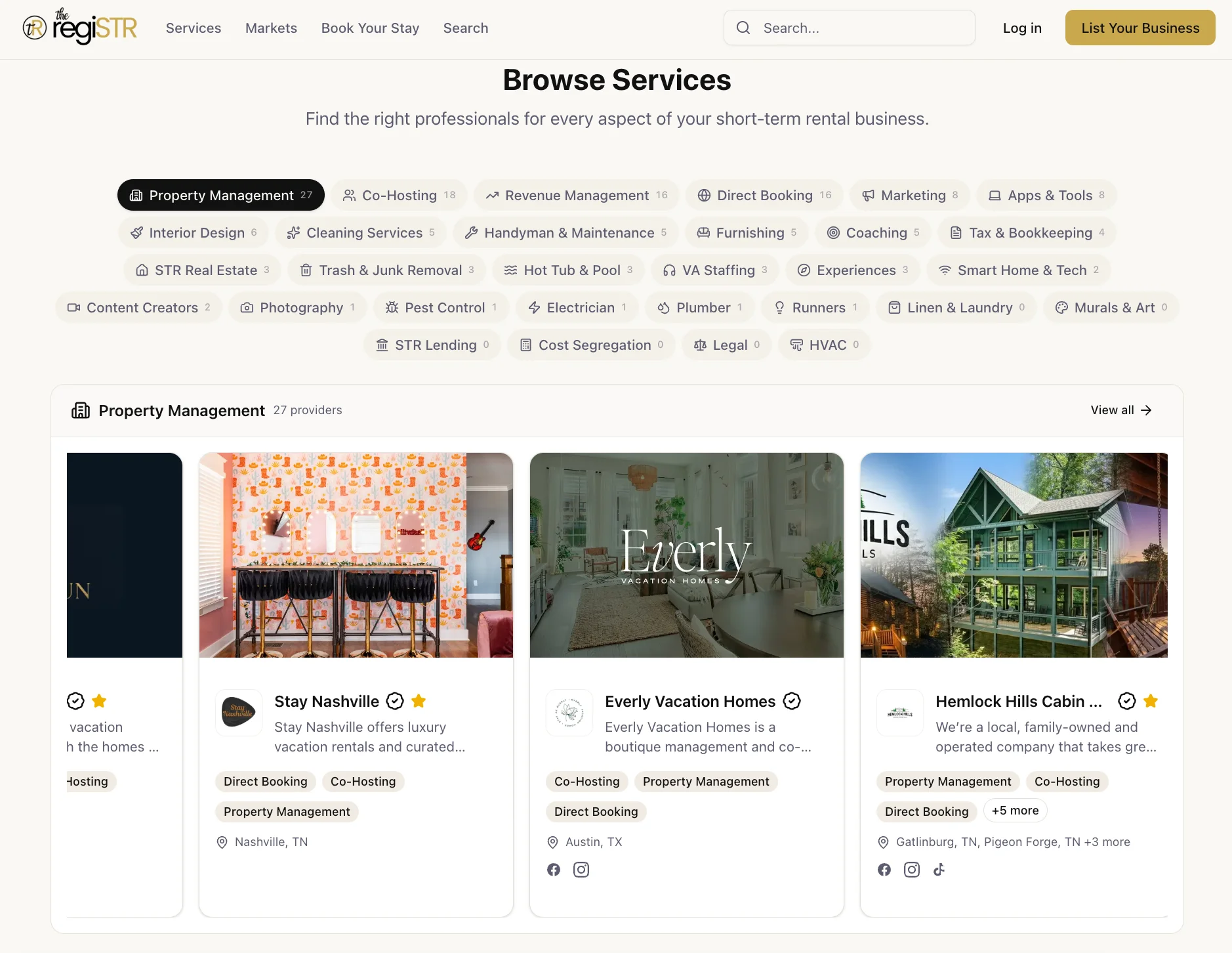
- The regiSTR's directory lets New Orleans hosts filter vetted local cleaners, co-hosts, and property managers by market, cutting through the guesswork of Facebook group recommendations and cold-calling.
Running a compliant, profitable short-term rental in New Orleans in 2026 means understanding a permit system that is genuinely more restrictive than what hosts encounter in most Sun Belt markets. This isn't Scottsdale or Gulf Shores, where a business license and a tax account get you most of the way there. New Orleans treats STR permitting as a zoning issue first and a hospitality issue second, and that distinction shapes everything from which block you can operate on to who you're allowed to rent to.
At the regiSTR, we track how operators in permit-heavy markets build their vendor teams, and New Orleans consistently ranks among the cities where hosts most need a trustworthy local network before they need a pricing strategy. A permit gets your listing live. A reliable cleaner, a responsive maintenance contact, and a property manager who already understands the city's inspection cycle are what keep it live.
This guide walks through what's actually legal, where the hard no-go zones sit, what the so-called 75-55 rule means for your listing, and how to build the local service team that makes operating here sustainable past your first busy season.
Are Short-Term Rentals Legal in New Orleans?
Short-term rentals are legal in New Orleans, but only with an active permit issued by the city's Short Term Rental Administration, and only in zones where STR use is allowed. The city recognizes multiple permit types, each tied to specific residency and property conditions, and operating without one is a compliance violation subject to enforcement.
The permit structure generally separates owner-occupied rentals from non-owner-occupied rentals, and commercial-zoned properties fall under a separate track entirely. If you live in the home and rent a portion of it, your compliance path looks different from an investor who owns a whole-home unit and never sets foot in the neighborhood. Notably, permit type determines occupancy limits, inspection frequency, and how many other STR permits can coexist within your immediate area.
Enforcement has changed meaningfully since 2026. The city now works directly with platforms including Airbnb and Vrbo to cross-reference active listings against its permit database, so an unpermitted listing that once might have run for months before drawing attention is now more likely to be flagged quickly. As of 2026, hosts should treat permit renewal as an ongoing operational task, not a one-time application.
For hosts who inherited a property already listed, or who bought a unit assuming a prior owner's permit would transfer, confirm directly with the city rather than assuming continuity. Permits in New Orleans are generally tied to the person and property combination, not just the address. Check current requirements directly through nola.gov's Short Term Rental Administration page before listing anything.
Is New Orleans a Good Short-Term Rental Market?
New Orleans is a strong short-term rental market for operators who can secure a permit, given consistent year-round tourism demand driven by festivals, conventions, and a culinary and music scene that draws repeat visitors across nearly every season. The constraint isn't guest demand; it's the limited and competitive permit supply.
Unlike seasonal mountain or beach markets where occupancy swings hard between peak and off-season, New Orleans sees a more distributed demand curve. Mardi Gras, Jazz Fest, and a steady convention calendar create multiple peak windows rather than one long summer season. That said, the professionalization trend playing out nationally applies here too: industry data shows professional management companies now control an estimated 42 percent of active short-term rental listings globally, a share that keeps climbing as STR portfolios scale and owners look for hands-off operations. That professionalization matters for New Orleans specifically because permit scarcity raises the value of each unit you're able to legally operate. If you only get one shot at a permit in a desirable zone, self-managing with an unreliable vendor network is a riskier bet than in a market where you could simply add another unit if one underperforms.
For out-of-state investors eyeing New Orleans, the math still needs to work against realistic fee structures. Full-service property management nationally typically runs 15 to 25 percent of gross rental revenue, and that range holds in competitive tourist markets like New Orleans where demand for experienced local managers outstrips supply. Hosts weighing self-management versus hiring can compare providers directly through the regiSTR's property manager directory, filtering by market to see who actually operates in this city rather than sorting through generic national ads.
Are Airbnbs Illegal in the French Quarter?
Whole-home short-term rentals are effectively illegal in most of the French Quarter under current New Orleans zoning rules, which restrict STR use in this historic district far more heavily than in neighborhoods like Bywater or the Marigny. This restriction has held through multiple rounds of citywide STR policy revision, making the French Quarter one of the most consistently off-limits zones in the city.
The reasoning behind this comes down to the district's residential density and historic preservation status. City policymakers have repeatedly prioritized limiting the conversion of French Quarter housing stock into full-time visitor accommodation, which is why the restriction has proven durable even as other parts of the STR ordinance have shifted over time.
If you own or are considering buying property in the French Quarter for STR purposes, verify current zoning status before closing, not after. A property's location on a historic map doesn't guarantee its permit eligibility, and boundary lines for STR-restricted zones don't always match the tourist-facing definition of "French Quarter." The city's official STR Administration resources are the only reliable source for confirming a specific address's eligibility. Operators who find their target property sits in a restricted zone often pivot to nearby neighborhoods where whole-home STR permits remain available, then lean on a property manager or co-host who already knows which blocks in those areas still have open permit slots. That local knowledge is worth more in New Orleans than in almost any other market we track at the regiSTR, given how block-by-block the restrictions run.

What Is the 75-55 Rule for Airbnb in New Orleans?
The 75-55 rule refers to distance and density limitations that historically shaped how close short-term rental permits could be issued relative to each other, functioning as part of the city's broader effort to prevent STR concentration from displacing long-term residential housing in any single block or square. Specific numeric caps and spacing requirements have been adjusted over multiple ordinance revisions, so the exact figures in effect can shift.
Rather than treat any specific number as fixed, the practical takeaway for hosts is this: New Orleans limits how many STR permits can cluster in a given residential area, and that cap has real teeth. Unlike cities that cap total citywide permits and stop there, New Orleans has built spacing and concentration rules directly into its zoning framework for STRs. For a property owner, this means permit availability isn't just about your individual eligibility. It's about whether your specific block, square, or zone still has open capacity under the current cap. Two identical homes a few blocks apart can have completely different permit outcomes depending on how many STRs already operate nearby.
Because the exact percentage figures and spacing thresholds get revised periodically, confirm the current version of this rule directly with the city's Short Term Rental Administration before assuming a property qualifies. Do not rely on secondhand summaries, including this one, for the specific numeric threshold in effect at the time you apply. Verifying with the primary source is the only way to avoid a rejected application after you've already invested in inspection prep or renovation work.
How Do I Find a Reliable Vacation Rental Cleaner in New Orleans?
A reliable New Orleans vacation rental cleaner is one who understands the city's humidity-driven maintenance demands, can commit to a guaranteed turnaround window between checkout and check-in, and has actual experience with STR-specific tasks like linen resets and amenity restocking, not just standard residential tidying. A cleaner without STR experience will underestimate how much a Gulf Coast humidity climate accelerates linen wear and mildew risk between turnovers.
New Orleans' climate is a real operational factor here. High humidity means towels and linens need faster rotation, HVAC filters clog more quickly, and mold prevention in bathrooms requires more attention than in drier markets. A cleaner who's only worked long-term residential jobs typically won't flag these issues proactively; an STR-specialized cleaner will. Most hosts we talk to start their cleaner search in Facebook groups or through word of mouth, which works until that one cleaner goes on vacation or takes on too many clients and stops answering texts. That's exactly the gap the regiSTR was built to close: our STR cleaner directory lists vetted providers by market, so you're choosing from operators who already understand same-day turnover pressure instead of gambling on an unknown recommendation.
When vetting a New Orleans cleaner, ask directly about backup coverage. A one-person cleaning operation with no backup plan is a liability during peak festival weekends when a sick day can mean a missed check-in. Also ask how they handle post-Mardi Gras or post-Jazz Fest turnovers specifically, since those events generate above-average cleanup demands that a generalist cleaner may not anticipate.
What Services Do STR Property Management Companies Provide in New Orleans?
STR property management companies in New Orleans typically handle guest communication, pricing strategy, cleaning coordination, maintenance dispatch, and permit renewal tracking, bundled into a single monthly or per-booking fee. The best New Orleans-based managers also actively monitor city ordinance changes, since permit rules here shift more frequently than in many other STR markets.
Full-service management differs meaningfully from co-hosting. A full-service manager typically takes on pricing decisions, guest screening, and 24/7 issue resolution, while a co-host generally works alongside you, handling specific tasks like messaging or cleaning coordination while you retain more control. In a permit-restricted market like New Orleans, the added value of a full-service manager includes tracking your renewal deadlines and inspection schedule, tasks easy to let slip if you're managing remotely. Nationally, full-service property management fees typically run 15 to 25 percent of gross revenue, and New Orleans sits within that range given the competitive demand for experienced local operators. That percentage stings until you calculate what a missed permit renewal or a botched guest situation during Jazz Fest actually costs in lost bookings and platform penalties.
For out-of-state owners specifically, a New Orleans-based manager solves a problem no software can: knowing which contractor actually shows up when a French Quarter-adjacent property's ancient plumbing acts up on a Saturday night. Compare property managers who already operate in this specific market through the regiSTR's property manager listings, where every provider is filtered by the cities they actually serve.
Should I Hire a Property Manager or Self-Manage My New Orleans Short-Term Rental?
Self-managing a New Orleans short-term rental makes sense if you live locally, have flexible availability during peak festival periods, and are comfortable tracking permit renewal deadlines yourself. Hiring a property manager makes more sense for out-of-state owners, multi-property investors, or anyone who has already missed a compliance deadline once and doesn't want to repeat it. The burned-out self-managing host is a pattern we see repeatedly: someone starts strong, handles the first few bookings personally, and then a permit inspection notice arrives during a week they're traveling for work. New Orleans specifically punishes inattentiveness here because its permit system requires more active maintenance than a simple annual renewal in most other cities.
If you're self-managing but starting to feel the strain, a co-host is often a lower-commitment first step than full property management. A co-host can take over guest messaging and cleaning coordination while you retain pricing control and the final say on maintenance decisions. Whichever direction you choose, the decision shouldn't be made blind. Browse all STR service providers serving New Orleans on the regiSTR to compare co-hosting, full-service management, and hybrid arrangements side by side before committing to a contract.
Data and Regulatory Snapshot for New Orleans Hosts
The table below summarizes the core compliance and operational factors every New Orleans short-term rental host needs to track in 2026, drawn from the city's permit structure and national STR management benchmarks.
| Factor | New Orleans Specific Detail |
|---|---|
| Permit requirement | Active permit required through the city's Short Term Rental Administration before listing |
| Permit types | Owner-occupied, non-owner-occupied, and commercial, each with different residency and zoning rules |
| French Quarter status | Whole-home STR use restricted in most of the district under current zoning |
| Permit density limits | Caps on STR concentration per block or square in many residential zones |
| Platform verification | Airbnb and Vrbo cross-reference listings against city permit data as of 2025-2026 |
| Typical management fee | 15-25% of gross rental revenue nationally, applicable range in this competitive market |
| Peak demand periods | Mardi Gras, Jazz Fest, and a recurring convention calendar create multiple annual peaks |
Notably, global market data shows professional management companies now control an estimated 42 percent of active short-term rental listings across major platforms, a share that continues climbing as portfolios scale. In permit-restricted cities like New Orleans, that professionalization trend is likely to accelerate faster than in open markets, simply because each permit slot is more valuable and worth protecting with better operational oversight.

How Do I Find STR Maintenance and Handyman Services in New Orleans?
Finding STR maintenance support in New Orleans means prioritizing contractors who understand the city's older housing stock, since much of the French Quarter, Marigny, and Uptown housing predates modern plumbing and electrical standards. A handyman experienced with historic New Orleans architecture will diagnose issues faster than a generalist unfamiliar with shotgun house layouts or century-old wiring. This is a market where "handy with tools" isn't enough. You want someone who has actually worked on properties with the same age and construction quirks as yours, and ideally someone available on short notice, since a plumbing failure during a festival weekend can cost you a five-star review and a rebooking headache.
For out-of-state owners, this is one of the hardest vendor categories to source remotely. You can't drive by and vet a contractor's van, so you're relying entirely on reputation. That's precisely the friction the regiSTR's maintenance directory is designed to remove, surfacing New Orleans-specific handyman and repair providers who are already familiar with STR turnaround urgency rather than treating your call like any other home repair job.
What Should I Look for When Vetting a New Orleans Cleaning Company?
Vetting a New Orleans cleaning company means confirming their guaranteed turnaround window, backup staffing plan, and specific experience with the city's climate-related maintenance demands, before signing any agreement. A cleaner unable to commit to a firm turnaround window during peak season isn't the right fit for STR operations here. Ask specifically how they handle back-to-back Saturday turnovers during Jazz Fest or Mardi Gras, when checkout and check-in windows compress citywide and every cleaning company in the city is stretched thin. A cleaner who has a plan for exactly this scenario is worth significantly more than one who simply says they'll "figure it out."
Also confirm supply management. A good New Orleans STR cleaner restocks toiletries, coffee, and linens as part of the standard turnover, not as a separate billed task you have to remember to request. This is standard practice among providers listed on the regiSTR's cleaning category, where profile details spell out exactly what's included in a base turnover versus what costs extra.
Practical Steps for Building Your New Orleans STR Service Team
Building a reliable New Orleans short-term rental operation requires assembling the right vendors in the right order, starting with compliance and ending with revenue optimization. Skipping steps, especially the permit and cleaning steps, creates the most common and costly mistakes we see hosts make in this market.
- Confirm your property's zoning eligibility and permit type directly with the city's Short Term Rental Administration before listing anything.
- Secure a cleaner with committed turnaround windows and backup staffing, verified through references or a platform that filters by STR experience.
- Line up a maintenance contact familiar with New Orleans' historic housing stock, ideally with same-week availability.
- Decide between self-management, co-hosting, or full-service property management based on your location and available time.
- Set a calendar reminder for permit renewal well ahead of the deadline, since New Orleans enforcement has tightened noticeably since 2026.
- Compare quotes across multiple vetted providers rather than accepting the first recommendation from a host forum.
Common mistakes to avoid: assuming a permit transfers with property ownership, underestimating humidity-related cleaning frequency, and treating French Quarter zoning rules as flexible when they've historically been among the most rigid in the ordinance. Each of these mistakes has cost hosts real money in missed bookings or rejected applications.
Frequently Asked Questions
Do I need a permit to run an Airbnb in New Orleans in 2026?
Yes. Every short-term rental in New Orleans requires an active permit issued through the city's Short Term Rental Administration before it can legally list on any platform, and enforcement now includes direct data verification with Airbnb and Vrbo.
Can I rent my French Quarter property as a whole-home short-term rental?
In most cases, no. Zoning in the majority of the French Quarter restricts whole-home short-term rental use, a rule that has remained largely consistent through multiple ordinance revisions. Confirm your specific address with the city before assuming eligibility.
What's the difference between owner-occupied and non-owner-occupied STR permits in New Orleans?
An owner-occupied permit applies when the host lives on-site and rents a portion of the property, while a non-owner-occupied permit applies to whole-home rentals where the owner doesn't reside there. Each permit type carries different eligibility, occupancy, and zoning requirements.
How much does professional STR property management cost in New Orleans?
Nationally, full-service property management typically runs 15 to 25 percent of gross rental revenue, and New Orleans falls within that range given strong demand for experienced local operators who can also track permit compliance.
Is the 75-55 rule still in effect for New Orleans STR permits?
Concentration and spacing limits on STR permits within a given block or square remain part of New Orleans zoning policy, though exact thresholds are periodically revised. Confirm the current specific figures with the city's Short Term Rental Administration before applying.
How do I find a vetted cleaner or property manager in New Orleans?
The fastest way is through a directory built specifically for STR service providers rather than general contractor listings. The regiSTR's New Orleans category pages let you filter cleaners, maintenance providers, and property managers by the exact services they offer in this market.
What happens if I operate without a permit in New Orleans?
Operating without an active permit is a compliance violation subject to city enforcement, and since 2026 the city cross-references listing platforms directly against its permit database, meaning unpermitted listings are identified and removed faster than in prior years.
Conclusion
A compliant New Orleans short-term rental starts with a valid permit and a clear understanding of which zones, including most of the French Quarter, are simply off the table for whole-home use. Beyond compliance, the operators who thrive here are the ones who build a dependable local team early, before a missed cleaning window or an unexpected repair during Jazz Fest turns into a lost booking and a bad review. Whether you're self-managing your first unit or scaling a portfolio across multiple squares, the vendors you need exist in this market. Finding them shouldn't require another round of Facebook group posts and unanswered texts. Get started with the regiSTR to browse vetted New Orleans cleaners, property managers, and maintenance providers by market, all in one place.
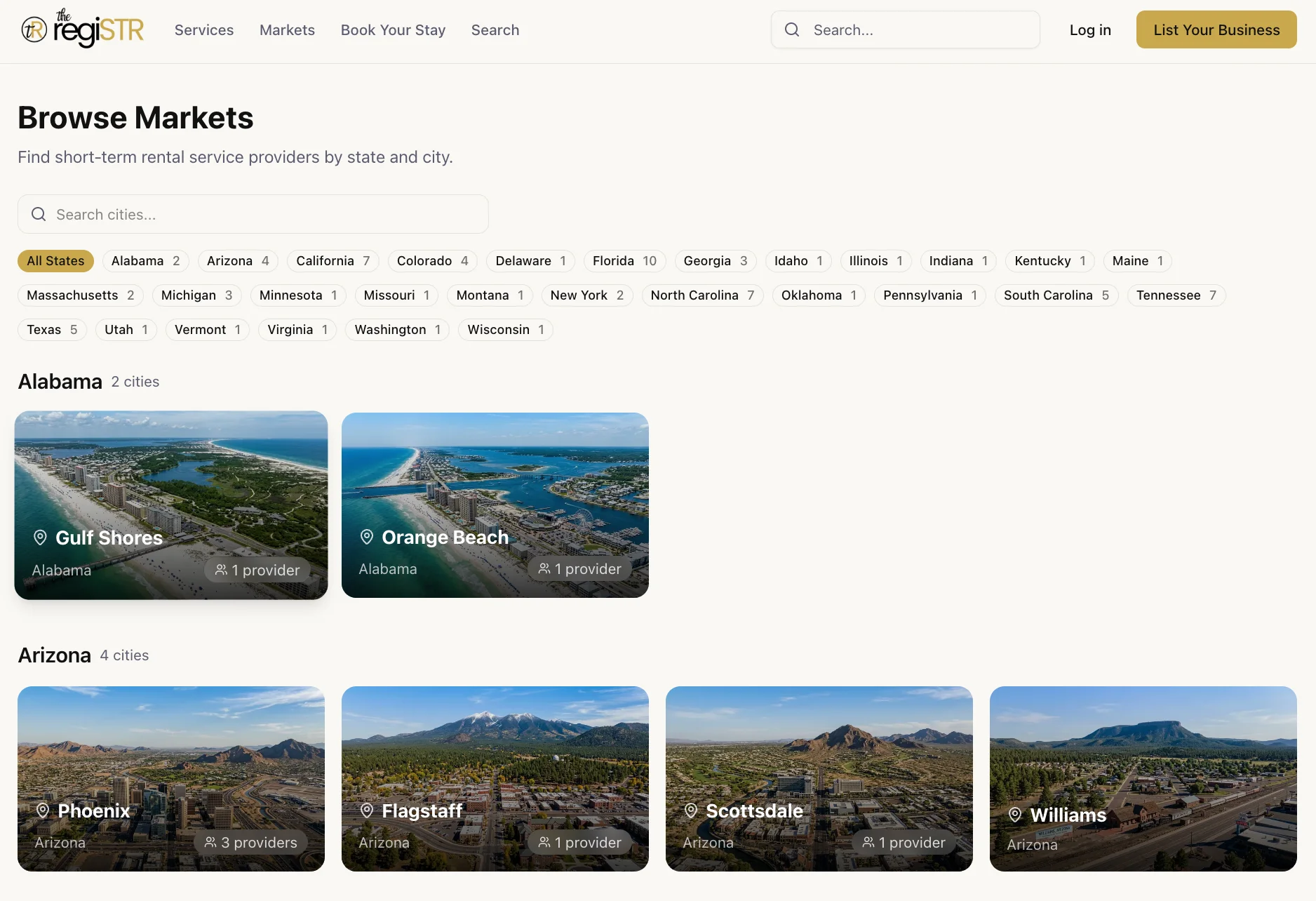
If you're ready to stop guessing on vendors and start comparing actual New Orleans-based providers, browse STR service providers filtered by market and category, from cleaning and turnover to full-service property management. Sign up free at theregistr.co and see who's already vetted in your neighborhood.
Content powered by inkSTR.co