15 Must-Have Tools for Lean Short-Term Rental Managers
The must-have tools for short-term rental managers running lean operations fall into five categories: a channel manager, a dynamic pricing engine, a guest messaging automation system, a cleaning and turnover coordination system, and a vetted vendor network. Skip any one of these and something breaks down under volume, usually your calendar accuracy, your nightly rate, or your turnover window.
Key Takeaways
- Lean STR operations depend on five tool categories: channel management, dynamic pricing, guest messaging automation, turnover coordination, and vendor discovery, not a single all-in-one platform.
- Offline booking still accounts for over 70% of the vacation rental market as of 2026, according to Precedence Research, which means digital tools must work alongside phone and walk-in reservation workflows in many markets.
- The homes segment represents roughly 48-49% of vacation rental accommodation types, the largest share among property categories, according to Precedence Research market data.
- Regulatory complexity is rising: many cities have added licensing schemes, occupancy caps, and reporting requirements that STR managers must track alongside their operational tools.
- A tool stack without a reliable local vendor network, cleaners, maintenance techs, photographers, still leaves a gap that software alone cannot close.
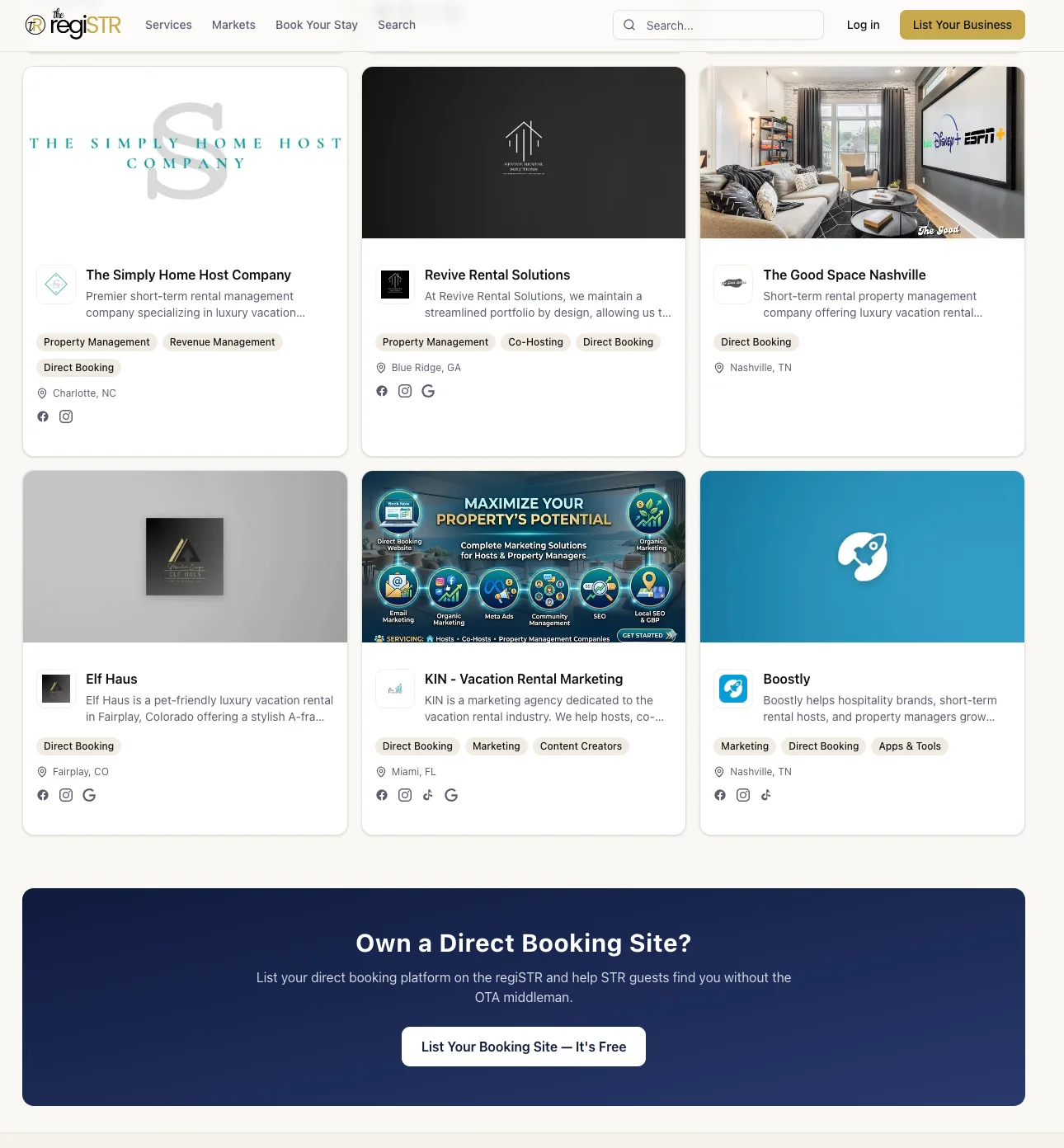
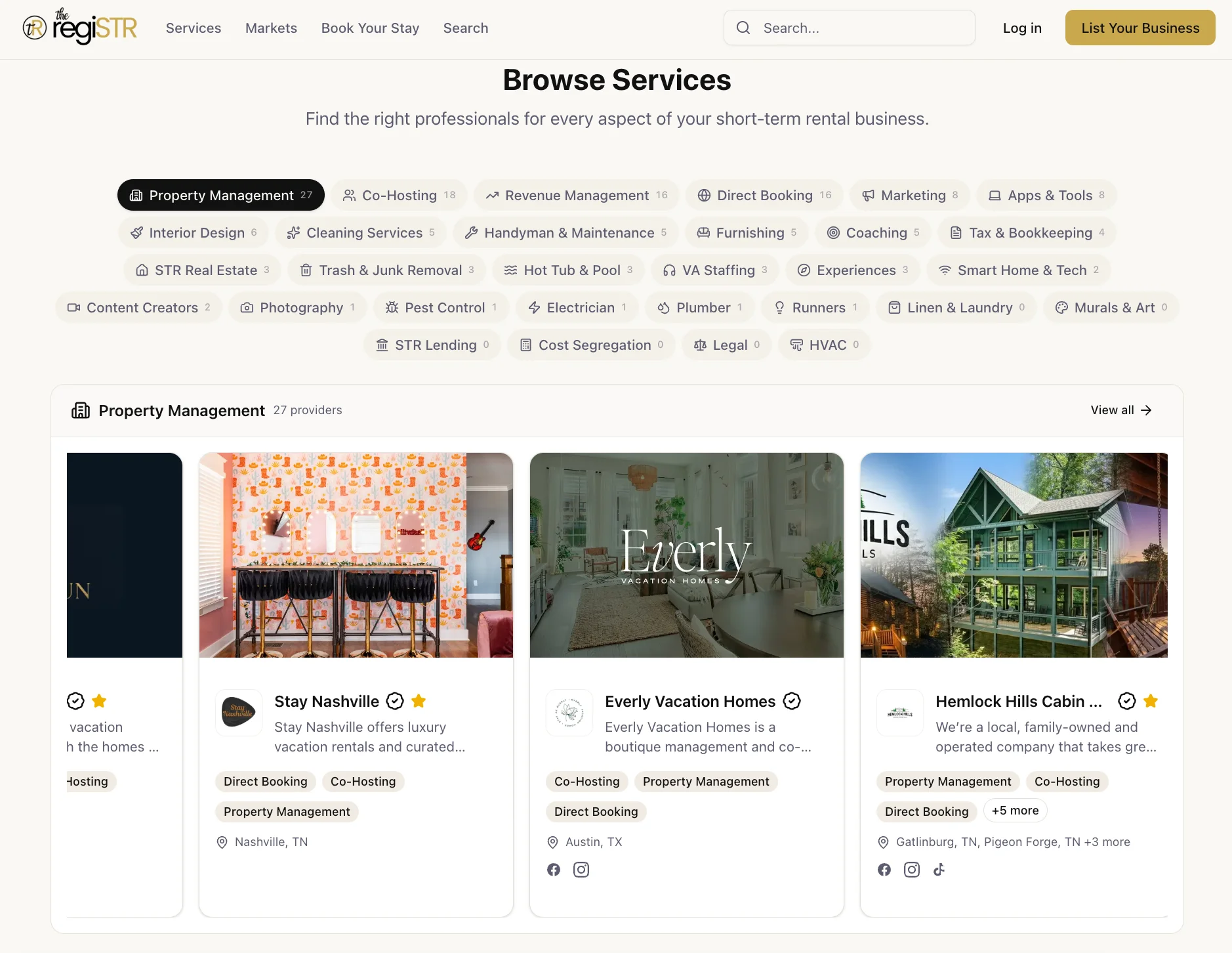
- The regiSTR fills that vendor gap by listing vetted, STR-specific service providers by market, so your tool stack has a human network behind it instead of a spreadsheet of cold contacts.
Running a lean short-term rental operation, whether that's one cabin or a twelve-property portfolio managed solo, means every tool you adopt has to earn its place. You don't have a back office. You don't have a dispatcher. You have your phone, a laptop, and whatever software you've stitched together to keep bookings, cleaners, and guest messages from colliding.
At the regiSTR, we've tracked the patterns across hundreds of STR operators in our network, and the operators who stay lean without burning out share a specific tool stack. It's not the biggest stack. It's the right stack, matched to where the operational friction actually happens: double bookings, missed turnovers, pricing left flat during peak weekends, and vendor relationships that fall apart the moment an owner moves out of state.
This list covers the fifteen tools and tool categories that matter most for lean STR management in 2026, why each one earns its spot, and where the software stack still needs a human vendor network to actually function.
1. What Channel Manager Software Do STR Managers Actually Need?
A channel manager is software that syncs your listing's calendar, rates, and availability across Airbnb, Vrbo, and Booking.com so a booking on one platform automatically blocks the dates everywhere else. Without one, you risk double bookings the moment you list on more than one platform.
Platforms like Hospitable, Hostaway, and Lodgify handle this calendar sync layer well, and most lean operators managing three or more units need one regardless of portfolio size. Specifically, look for a channel manager that supports two-way messaging integration, not just calendar sync. That way guest inquiries from Airbnb and Vrbo land in one inbox instead of three separate apps.
What most first-time hosts miss: a channel manager doesn't replace the need for a local vendor team. It tells your cleaner when a turnover is due; it doesn't guarantee the cleaner shows up. That's a separate, and arguably more important, piece of the stack.
2. Why Do STR Managers Need Dynamic Pricing Software?
Dynamic pricing software adjusts your nightly rate automatically based on demand signals like local events, seasonality, day of week, and booking lead time, instead of leaving your calendar on one flat rate year-round. Operators who still price manually tend to leave money on the table during peak weekends and price themselves out of shoulder-season bookings.
As of 2026, increasing adoption of AI and machine learning by platforms and individual owners is reshaping how pricing decisions get made, according to Precedence Research's vacation rental market analysis. Tools like PriceLabs and Wheelhouse pull comp set data and suggest rate adjustments daily; some go further with automatic rule-based repricing tied to occupancy thresholds.
Not every STR needs a dedicated revenue manager on day one. But even a solo operator with two properties benefits from automated pricing rules, because manually checking comp rates every morning is not a sustainable habit past your first ninety days.
If pricing feels like more than you want to manage solo, that's exactly the kind of specialized service the regiSTR's Revenue Management and Dynamic Pricing category was built around, connecting operators with STR-focused pricing consultants by market rather than generic revenue consultants unfamiliar with OTA comp sets.
3. What Guest Messaging Automation Tools Reduce Response Time?
Guest messaging automation tools send pre-scheduled check-in instructions, house rules, and FAQ responses automatically, cutting the number of manual messages a lean operator has to type each day. Airbnb and Vrbo both reward fast response times in search ranking, so automation directly affects booking visibility.
Most channel managers, including Hospitable and Hostaway, bundle messaging automation with calendar sync. But the tool only works if your automated messages are specific: door code timing, parking instructions unique to that property, wifi network name. Generic templated messages generate more follow-up questions, not fewer.
A good automation setup still needs a human escalation path. If a guest reports something broken at 11pm, automated messaging can acknowledge the issue instantly, but you still need someone, a co-host, a maintenance contact, who can actually respond. That's the layer software alone never solves.
4. How Does Turnover Cleaning Coordination Software Work?
Turnover cleaning coordination software schedules and tracks cleaner assignments automatically based on your booking calendar, alerting your cleaning team the moment a checkout triggers a turnover window. Properly.ai's cleaner scheduling feature and Breezeway are common examples built specifically for this workflow.
Here's the problem this software doesn't solve: it can notify a cleaner that a turnover is due, but it can't make that cleaner show up, and it can't tell you whether that cleaner actually understands STR turnover pressure versus standard residential cleaning. A same-day turnover with checkout at 11am and check-in at 3pm gives a cleaner a four-hour window at best, tighter if that cleaner is also covering other properties that day.
This is where software and vendor discovery split into two separate problems. Scheduling software tells you when. Finding a cleaner who reliably delivers on that timeline, especially in a market you don't live in, is a vendor discovery problem, and it's the specific gap the regiSTR's Find STR Cleaners directory addresses, filtering by market so you're not guessing which residential cleaning company has ever handled a same-day STR turnover.
5. What Property Management Software Handles Multi-Property Operations?
Property management software (PMS) centralizes reservations, owner statements, financial reporting, and task assignments across a portfolio, functioning as the operational hub that channel managers and pricing tools plug into. Guesty, Hostfully, and OwnerRez are examples built for STR-specific workflows rather than long-term residential leasing.
For a lean operator managing three to eight units, a PMS often replaces a patchwork of spreadsheets tracking cleaning fees, owner payouts, and maintenance requests. It becomes essential once you're managing properties for other owners and need transparent reporting, or once a single spreadsheet stops scaling with your unit count.
A PMS is software, not a management team. If you're the one physically fielding every maintenance call and guest complaint regardless of what software you're running, the tool hasn't actually solved your labor problem. That's a decision point covered more in the next section: whether to keep self-managing or bring in a property manager.
6. Should I Hire a Property Manager Instead of Using Software Alone?
Hiring a property manager makes sense once the time cost of self-managing exceeds what you'd pay in management fees, typically once an operator is juggling multiple properties across markets or fielding maintenance calls outside normal working hours. Full-service property management fees vary significantly by market and service tier, and that cost stings less once you account for the hours it replaces.
Software can automate messaging and pricing, but it cannot show up when an HVAC unit fails on a Saturday night in a market where you've never set foot. A property manager, or a co-host handling a narrower scope, fills that gap with actual local presence.
What separates a good property manager from a bad one usually comes down to communication cadence and reporting transparency, not price alone. Ask about response time commitments and how often you'll receive owner statements before signing anything.
Comparing management options is exactly what our Find STR Property Managers directory is built for: browse by city, see which providers other operators have vouched for, and compare service scope before committing to a contract.
7. What Maintenance and Handyman Tools Keep Lean Operations Running?
Maintenance ticketing tools, like Breezeway's maintenance module or a simple shared task board, log repair requests and track resolution status so nothing falls through the cracks between a guest complaint and an actual fix. For a lean operator, this is often the difference between a five-minute fix and a three-star review over a broken lock.
Software logs the ticket. It doesn't fix the garbage disposal. And in a market you don't live in, finding a handyman who understands STR turnaround urgency (a broken AC in July can't wait a week) is a separate, ongoing challenge that a maintenance app alone never resolves.
That's the exact friction our Find STR Maintenance category was built to remove, listing vetted local maintenance providers by market so remote owners aren't cold-calling contractors who've never dealt with a same-day STR repair request.
8. How Do Smart Lock and Access Control Systems Support Lean STR Operations?
Smart lock systems, like August, Schlage Encode, or RemoteLock, generate unique time-limited access codes for each guest stay, removing the need for physical key handoffs or in-person check-ins. For a lean operator managing self check-in remotely, this single tool eliminates one of the most time-consuming manual tasks in the entire operation.
Most smart lock platforms integrate directly with a PMS or channel manager, auto-generating a new code for each reservation and revoking the previous guest's access automatically at checkout. This closes a security gap that manual lockboxes and shared codes leave wide open.
The tradeoff: smart locks need battery maintenance and occasional firmware updates, and a dead battery at check-in time is a real, if infrequent, failure mode. Keep a physical backup key on-site regardless of how confident you are in the tech.
9. What Photography and Listing Tools Improve Booking Conversion?
Professional STR listing photography, wide-angle hero shots, natural light staging, and detail photography, directly affects click-through rates on Airbnb and Vrbo search results, since listing photos are the first and often only signal a guest evaluates before clicking into a property. Photographers who specialize in short-term rentals consistently outperform generalist real estate or wedding photographers on booking conversion, because they understand which angles and staging choices actually drive OTA algorithm visibility.
Beyond hiring a photographer, tools like Matterport for 3D virtual tours and simple listing photo download utilities help operators keep their photo library current as furniture or decor changes. A stale listing photo set, even a good one from three years ago, underperforms a current one that reflects the actual property condition.
An amateur photo set is one of the fastest ways to lose bookings to a competing listing with sharper photography. If your current photos were shot on a phone in portrait mode, it's worth the investment. The regiSTR's Find STR Photographers directory lists vetted photographers by market who've specifically worked STR listings, not generalist portrait or event photographers unfamiliar with what OTA search algorithms reward.
10. What Revenue Reporting and Analytics Tools Track Portfolio Performance?
Revenue reporting and analytics tools track occupancy rate, average daily rate, and RevPAR (revenue per available rental) across a portfolio, giving operators a single dashboard instead of manually reconciling numbers across platforms. Most PMS platforms bundle basic reporting, but dedicated analytics tools go deeper on comp set comparison and seasonal trend visualization.
For a lean operator, this matters less for vanity metrics and more for one specific decision: knowing which property in your portfolio is underperforming and why. A property with low occupancy but strong ADR might have a pricing problem. A property with high occupancy but weak ADR might be underpriced relative to comp set. The reporting tool only tells you the number; the interpretation still requires operator judgment or a revenue manager's eye.
Portfolio operators managing five or more units across markets often find that centralized reporting becomes the tool they check daily, more than messaging or pricing dashboards, because it's the fastest signal for where attention is needed that week.
11. What Interior Design and Staging Resources Matter for Lean Operators?
Interior design and staging services position a property for both photography performance and guest satisfaction, focusing on durable, photogenic furnishings that hold up under high-turnover guest traffic rather than residential-grade decor that wears out fast. STR-specific interior designers understand the difference between staging for a home sale and staging for repeat guest traffic every three to five days.
A lean operator doesn't need a full redesign for every property. But even targeted staging updates, a statement headboard, better lighting, a refreshed accent wall, can shift a listing's photo performance meaningfully without a full renovation budget.
Not every STR needs a dedicated designer on day one, particularly for a first property. But scaling operators managing multiple units benefit from a consistent design partner who understands the durability and photogenic requirements unique to vacation rentals, which is exactly the niche our Find STR Interior Designers category was built to serve.
12. What Direct Booking and Website Tools Reduce OTA Fee Dependency?
Direct booking website tools, built on platforms like Lodgify or a custom WordPress build with a booking engine plugin, let guests reserve directly with an operator instead of exclusively through Airbnb or Vrbo, reducing the commission percentage paid on every reservation. Building this infrastructure requires more than a website; it requires SEO and content marketing that actually captures search traffic before a traveler reaches an OTA.
Most lean operators underestimate how much OTA commission adds up annually across a full booking calendar. A meaningful shift toward direct bookings, even a modest percentage improvement, changes the math on annual revenue significantly over a full season.
Building that infrastructure solo, website design, SEO, ongoing content, is a heavier lift than most lean operators have bandwidth for. This is a specific service gap where general marketing agencies fall short, because they don't understand OTA dependency or STR search behavior the way STR-focused providers do.
13. What Regulatory and Compliance Tools Track Changing STR Rules?
Regulatory compliance tracking has become a non-negotiable part of the STR tool stack as of 2026, since many cities have added licensing schemes, occupancy caps, and reporting requirements with real financial consequences for non-compliance. In New York City, for example, the NYC Office of Special Enforcement's rules limit registered listings to no more than two guests at any one time as of a January 7, 2026 update. Baltimore requires property owners to respond to emergencies within 30 minutes and maintain guest records for three years, per STR Profit Map data, and the city's Department of Licensing and Consumer Protection requires a Certificate of Clean Hands issued within the prior 30 days for STR license applicants.
These are city-specific, not universal rules, and the patchwork nature of STR regulation, city versus county versus HOA versus state, means what applies in one market may not apply thirty miles away. Regulatory hurdles and frequent policy changes are cited by Precedence Research as a genuine restraint on vacation rental market growth, not a minor footnote.
A compliance calendar or reminder tool tracking your specific city's renewal dates and reporting deadlines is table stakes at this point. But keeping current on the actual rule changes usually requires a local compliance consultant rather than a generic legal service unfamiliar with STR-specific ordinances, which is the exact function of the regiSTR's Regulatory and Compliance category, connecting operators with STR-focused advisory professionals who track ordinance changes by market.
14. What Social Media and Marketing Tools Support Direct Booking Growth?
Social media management tools, like Later or Buffer for scheduled posting, help STR operators build a following that eventually converts to direct bookings, supplementing OTA visibility rather than replacing it. This matters more now: younger generations and millennials are expected to represent around 75% of the traveler population by 2026, according to Airbnb data cited in Precedence Research's market analysis, and this demographic responds more to visual, story-driven content than traditional advertising.
For a lean operator, social media rarely justifies daily manual effort without automation. Scheduling tools that batch content a month at a time keep a presence active without eating into daily operational time.
Where this tends to fall apart: most operators start strong and abandon the channel within a few months once booking volume increases and attention shifts elsewhere. A dedicated social media manager who understands STR content, property showcases, local area highlights, guest experience stories, tends to sustain the channel longer than a solo operator juggling it alongside everything else.
15. What Vendor Discovery Tools Replace Cold Calling and Facebook Groups?
Vendor discovery platforms built specifically for the STR industry solve a problem general business directories were never designed to handle: filtering service providers by short-term rental experience rather than generic residential or commercial service history. A general contractor directory doesn't tell you whether a cleaner has ever managed a same-day turnover, or whether a handyman understands why a broken AC unit in a July booking is an emergency, not a next-week job.
This is the layer that ties every other tool in this list together. A channel manager and pricing engine keep your calendar accurate and your rates competitive. But none of that matters if you can't find a reliable cleaner, a responsive maintenance contact, or a property manager who actually answers the phone.
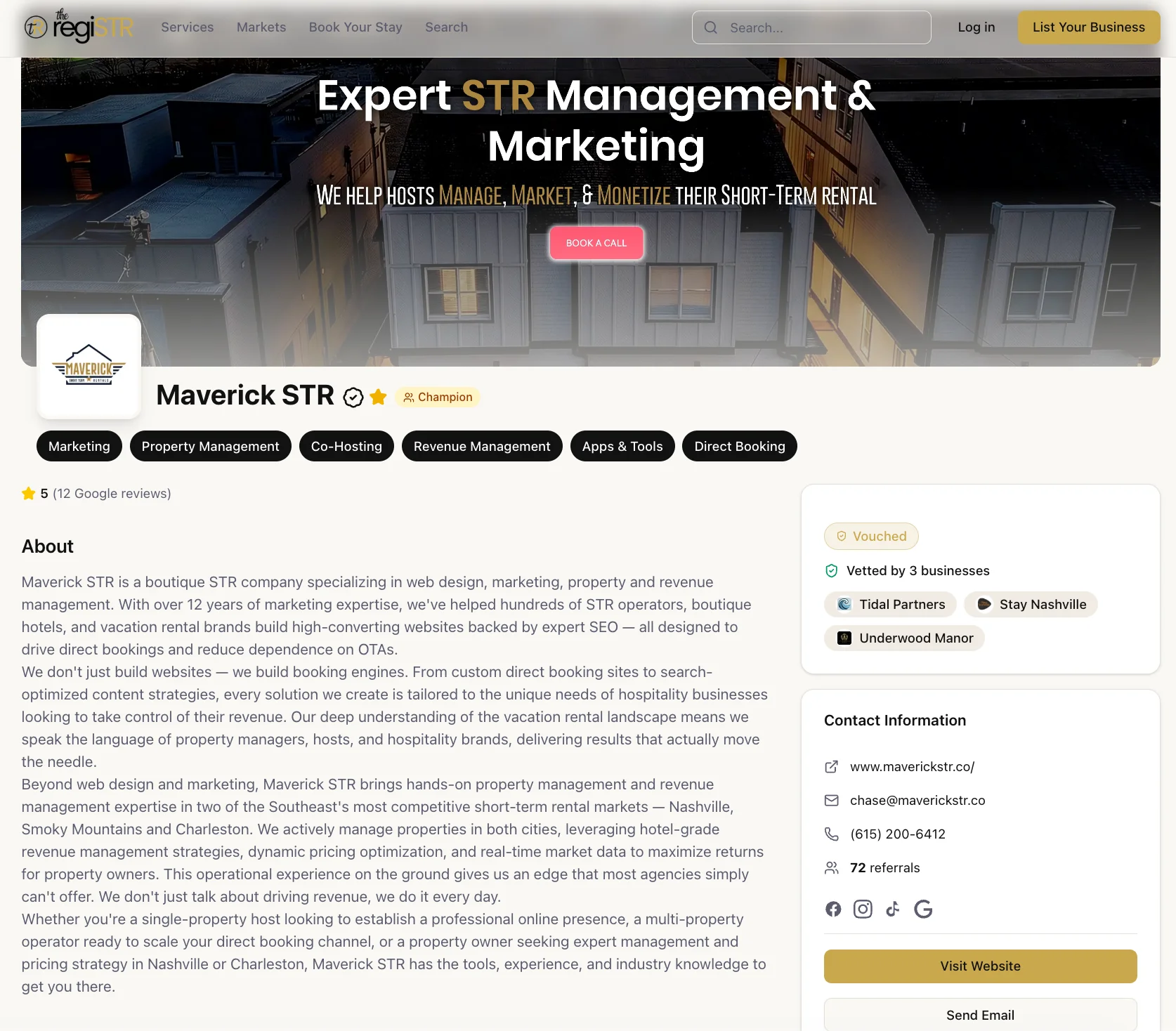
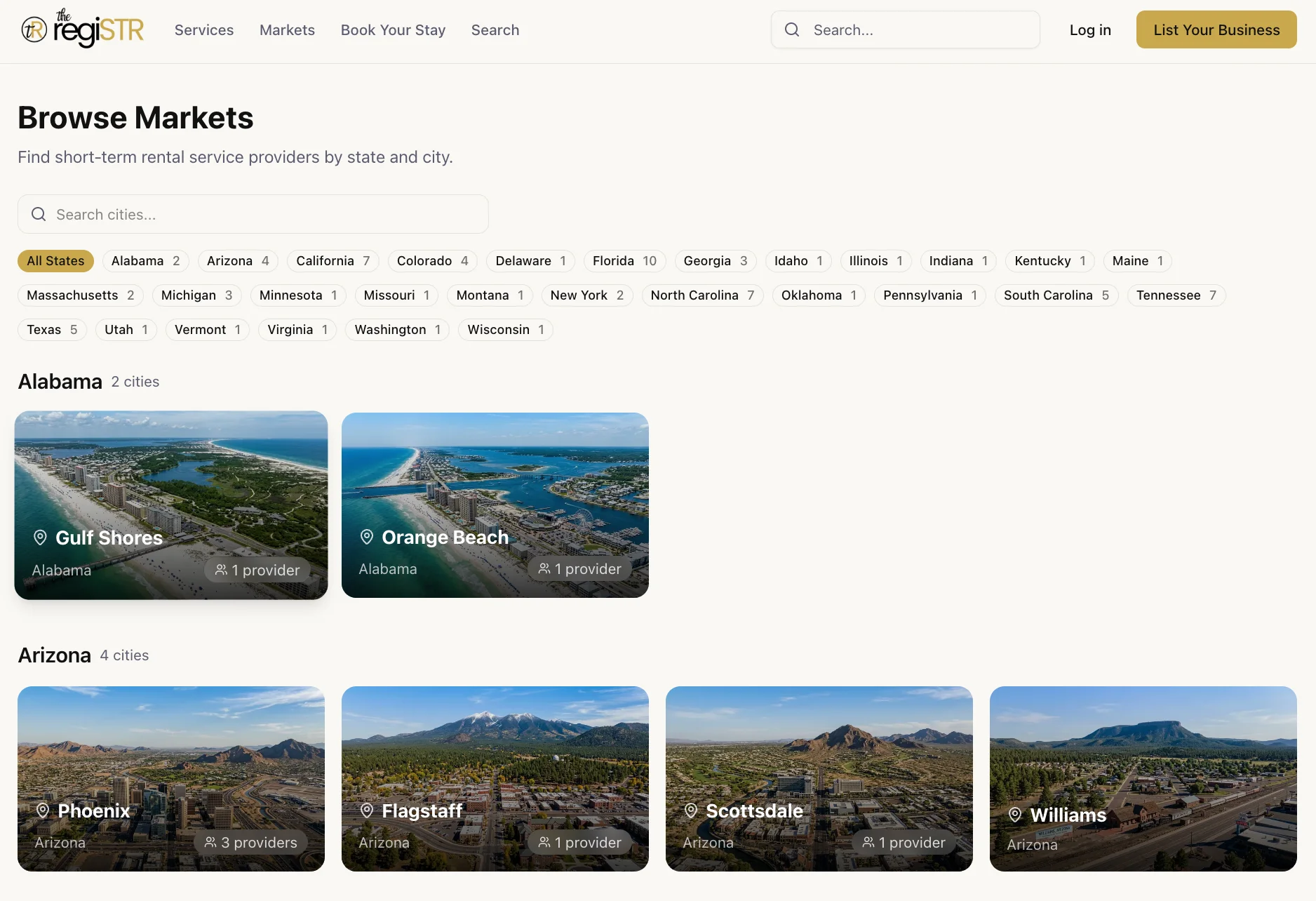
The regiSTR was built specifically for this gap: an invite-only directory of STR service providers, organized by market and service category, where every listed provider was referred in by an existing network member. Instead of anonymous star ratings, the regiSTR uses a Vouch system, real STR operators publicly endorsing providers they've actually hired, so you're not gambling on a five-star review that could be fabricated. Browse the full Browse All STR Services directory by city and category to see what's available in your specific market.
Data and Evidence: How the Tool Categories Compare
The table below breaks down each tool category by what it solves, what it doesn't, and where a human vendor network becomes necessary regardless of software sophistication.
| Tool Category | Solves | Doesn't Solve | Human Layer Needed |
|---|---|---|---|
| Channel Manager | Calendar sync across platforms | Guest service, cleaning, maintenance | Co-host or self-managed response team |
| Dynamic Pricing | Rate optimization by demand signal | Comp set accuracy in thin markets | Revenue manager for complex portfolios |
| Turnover Scheduling | Cleaner notification timing | Cleaner reliability and STR experience | Vetted local cleaning provider |
| PMS Platform | Reporting, owner statements, task tracking | Local maintenance response, guest escalation | Property manager or co-host |
| Smart Locks | Remote check-in access codes | Battery failures, physical lockouts | Local backup contact |
| Direct Booking Site | OTA fee reduction potential | Building search traffic and SEO | STR-focused web and SEO provider |
| Compliance Tracking | Renewal date reminders | Interpreting new city ordinances | Local regulatory consultant |
Practical Guidance: How to Build Your Lean STR Tool Stack Without Overspending
Building a lean tool stack in the wrong order is one of the most common mistakes new operators make, typically overinvesting in pricing software before they've even solved a reliable turnover cleaning process. Prioritize in this order:
- Lock in a channel manager first, before you list on a second platform, to prevent double bookings from day one.
- Set up turnover coordination and a vetted cleaner relationship before you enable instant booking, since a missed turnover damages your review score faster than a slightly-off nightly rate.
- Add dynamic pricing once you have at least sixty days of booking history to benchmark against, not before.
- Bring in a maintenance contact and property manager conversation once you're managing more than two properties or living outside the market.
- Invest in photography and staging refresh every twelve to eighteen months, or sooner if furniture or decor visibly changes.
- Layer in compliance tracking continuously, not as a one-time setup, since city rules change more frequently than most operators expect.
Common mistakes to avoid: subscribing to three overlapping software tools that all claim to do messaging automation, skipping a vendor vetting process because a Facebook group recommendation felt convenient, and assuming a PMS replaces the need for an actual local human network when something breaks.
Frequently Asked Questions
What is the single most important tool for a lean STR manager?
A channel manager is typically the first tool a lean operator needs, since it prevents double bookings the moment a property is listed on more than one platform. But a reliable turnover cleaning relationship is arguably just as critical, since a missed cleaning does more review damage than any software gap.
Do I need a property management system if I only manage one property?
A full PMS is often overkill for a single property; a channel manager with built-in messaging and basic reporting usually covers the need. PMS platforms become worth the cost once you're managing three or more units or reporting to outside property owners.
How do I find a reliable cleaner for my short-term rental?
Look for a cleaner who explicitly confirms STR turnover experience, same-day availability, and a guaranteed response window, not just general residential cleaning history. The regiSTR's Cleaning and Turnover directory filters providers by market specifically for this vetting process, reducing the guesswork of cold outreach.
Is dynamic pricing software worth it for a small portfolio?
Yes, even a two-property operation benefits from automated pricing rules, since manually checking comp rates daily is not sustainable past the first few months. Tools like PriceLabs or Wheelhouse handle this without requiring a full-time revenue manager for smaller portfolios.
What's the difference between a co-host and a full-service property manager?
A co-host typically handles a narrower scope, guest messaging, coordination with a cleaner, occasional local check-ins, while a full-service property manager handles the entire operation including pricing, maintenance oversight, and owner reporting. The right choice depends on how much operational control you want to retain versus hand off.
How does the regiSTR differ from general directories like Angi or Thumbtack?
General directories aren't filtered for STR experience, so a cleaner or handyman listed there may have never handled a same-day turnover or understood short-term rental urgency. The regiSTR is invite-only and organized specifically by STR service category and market, with a Vouch system where real operators endorse providers by name.
Should I build a direct booking website if I'm just starting out?
Direct booking infrastructure usually makes more sense once you have booking history and repeat guests to build from, rather than as a day-one investment. New operators typically get more value focusing first on turnover reliability and listing photo quality before investing in SEO and a standalone booking site.
Conclusion
The must-have tools for short-term rental managers running lean operations in 2026 come down to five categories working together: channel management, dynamic pricing, guest messaging automation, turnover coordination, and a vetted local vendor network. Software solves the scheduling and visibility problems. It doesn't solve who shows up when a turnover is due or a repair call comes in at 9pm.
That's the gap that separates a tool stack that looks complete on paper from one that actually holds up under real operational pressure. Whether you're managing your first cabin or scaling a multi-market portfolio, the software half of this stack is largely solved. The vendor half still requires a directory built specifically for STR, not a general contractor site hoping a listed handyman has ever dealt with a same-day turnover.
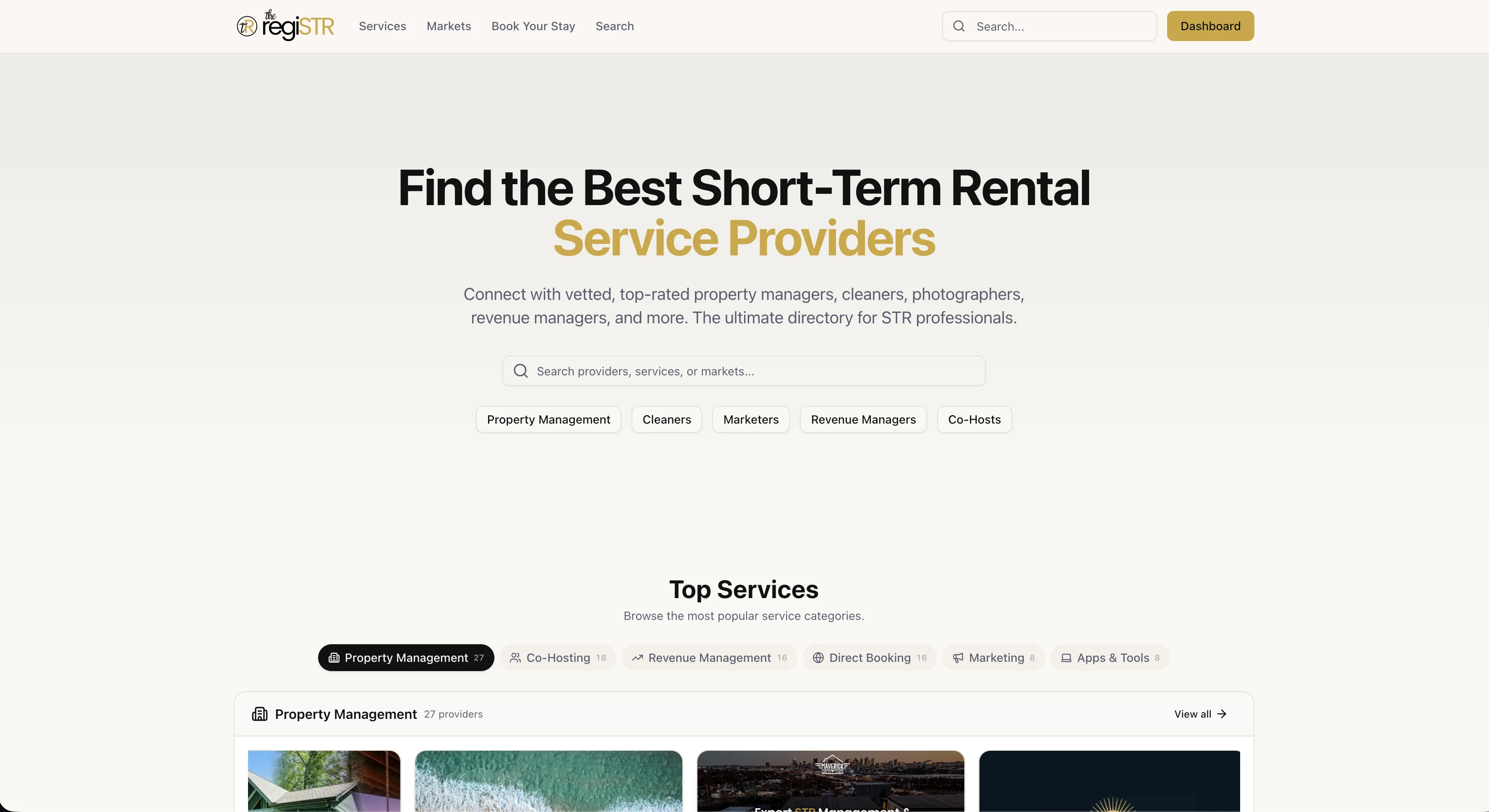
If your tool stack is solid but your vendor relationships still feel like guesswork, that's the exact gap Get started with the regiSTR was built to close, connecting you with vetted cleaners, property managers, photographers, and maintenance providers by market. Sign up free and browse by city and service category at theregistr.co.
Content powered by inkSTR.co