How to Promote Direct Bookings to Past Guests in 2026
Promoting direct bookings to past guests means using the contact information and trust you built during their stay, collected through your PMS, post-stay survey, or guest WiFi login, to bring them back to your own booking site instead of Airbnb or Vrbo on their next trip. The fastest path is a structured follow-up sequence: thank-you message, mid-year touchpoint, and a pre-anniversary offer with a specific incentive.
Key Takeaways
- Past guests already trust your property, so re-marketing to them converts at a higher rate than cold traffic acquired through paid ads or OTA search.
- According to McKinsey research cited by hospitality marketing platforms, 71% of customers expect some level of personalization when a brand communicates with them, which applies directly to post-stay guest follow-up.
- The global short-term rental industry is projected to reach $108 billion in 2026, per StayFi's 2026 vacation rental statistics report, meaning OTA commission exposure is growing right alongside it.
- Framing direct booking around added value (late checkout, a welcome basket, flexible cancellation) converts better than framing it around a lower price, according to a study out of the International Hellenic University on hotel booking psychology.
- Most STR marketing content treats "direct bookings" as one broad audience; treating past guests as a distinct segment with their own email cadence and offer structure is where most hosts leave money on the table.
- Building the technical side of a direct booking follow-up system, from your website's booking engine to your email automation, is exactly the kind of work you'll find STR-specialized providers for on the regiSTR, a directory built specifically to connect hosts with vetted marketing and consulting professionals.
If you've ever watched a five-star review roll in and thought "I wish this guest would just book with me next time instead of paying Airbnb's service fee again," you're not alone. Every host who has been in this business more than a season has felt that specific frustration: a guest who loved the stay, said so publicly, and then vanished back into the OTA search funnel for their next trip.
That gap between guest satisfaction and guest retention is where direct booking strategy actually lives. Most articles on this topic lump past guests in with brand-new prospects and give you generic advice about website speed and SEO. That's useful, but it skips the highest-converting audience you already have: people who slept in your beds, used your kitchen, and left happy. In 2026, with OTA commissions still eating into your margin on every repeat stay booked through the platform, building a system to re-market specifically to past guests is one of the highest-leverage moves available to you.
This guide walks through how to collect the right guest data, what your email and SMS sequence should actually look like, what incentives work without devaluing your listing, and where the compliance lines are. We'll also flag where a specialized marketing provider, the kind you can find through the regiSTR's directory of STR-focused website and content professionals, can build the infrastructure you don't have time to build yourself.
What Does "Promoting Direct Bookings to Past Guests" Actually Mean?
Promoting direct bookings to past guests means deliberately re-engaging people who already stayed at your property through targeted, permission-based outreach that routes their next booking to your own site or channel rather than back through Airbnb or Vrbo. It's a retention strategy, not an acquisition strategy, and the two require different playbooks.
Acquisition marketing is built to reach strangers who don't know your property exists. Retention marketing to past guests skips that step entirely: you already have their email, you already know their travel dates or preferences, and you already have social proof in the form of their own stay. That's a fundamentally different, and easier, conversion problem.
Specifically, this means three connected activities: capturing guest contact data during or immediately after the stay, building a follow-up communication cadence (email, and increasingly SMS), and structuring an incentive that makes booking direct feel like an upgrade rather than a discount hunt. As a result, hosts who treat past guests as their own audience segment, rather than folding them into general marketing, see meaningfully higher response rates than cold outreach.
How Do I Collect Past Guest Contact Information Legally?
Collecting past guest contact information legally starts with getting it directly from the guest, not by scraping it from a booking platform's messaging system, since Airbnb and Vrbo both restrict hosts from exporting guest contact details for outside marketing use. The clean sources are your own property management system, a post-stay survey, and guest WiFi login capture.
First, your PMS or channel manager (tools like Guesty, Hostaway, or Hospitable) typically stores guest profiles from direct inquiries and prior direct bookings; that data is yours to use. Additionally, a well-timed post-stay survey, sent after checkout when satisfaction is highest, is one of the most reliable ways to collect an email address with explicit consent, especially if you frame it as feedback rather than marketing.
Guest WiFi capture platforms are another growing source: guests log into your property's network with an email address, which you can then use for future marketing if your WiFi terms of service disclose that use. Notably, this only works for direct or platform-agnostic capture, since Airbnb's terms specifically prohibit using in-platform messaging to solicit guests for future direct bookings during an active or completed reservation on their system.
Second, always keep a compliance layer in mind. The Controlling the Assault of Non-Solicited Pornography And Marketing Act (commonly known as CAN-SPAM) governs commercial email in the US, requiring a clear opt-out mechanism and accurate sender information, and the Telephone Consumer Protection Act (TCPA) governs SMS marketing consent. Check current requirements with the Federal Trade Commission or Federal Communications Commission before launching an SMS campaign, since the exact consent language changes periodically.
What Should a Past Guest Email Sequence Look Like?
A past guest email sequence is a scheduled series of three to five touchpoints, spaced across the months following a guest's stay, that moves from gratitude to information to a specific direct booking offer. The sequence works because it mirrors how real travel planning happens: guests don't rebook a week after checkout, but they do think about their next trip 60 to 90 days out.
The Core Sequence Structure
- Day 1 to 3 (Thank-you message): No sales pitch. Thank them for the stay, ask how it went, and include a soft mention that you offer returning guests a direct booking option. This message has the highest open rate of the entire sequence because it's expected and welcome.
- Day 30 (Soft nurture): Share something useful tied to the property or destination, a seasonal update, a new amenity, or a local event calendar. No offer yet. This keeps your name in their inbox without feeling like a pitch.
- Day 60 to 90 (Direct booking offer): This is where you introduce a specific perk for booking direct: a flexible cancellation policy, early check-in, or a small added amenity. Frame it as a benefit of booking with you directly, not as a discount versus the OTA price.
- Pre-anniversary (10 to 11 months out): Guests who traveled for a specific occasion, a family reunion, an anniversary trip, a ski week, tend to repeat around the same time next year. A reminder timed just before that window converts well because it matches their actual planning cycle.
- Win-back (12+ months, no rebooking): For guests who haven't rebooked within a year, a dedicated "we miss you" message with a slightly stronger incentive, similar to a seasonal discount, can reactivate a cooling relationship before you write them off entirely.
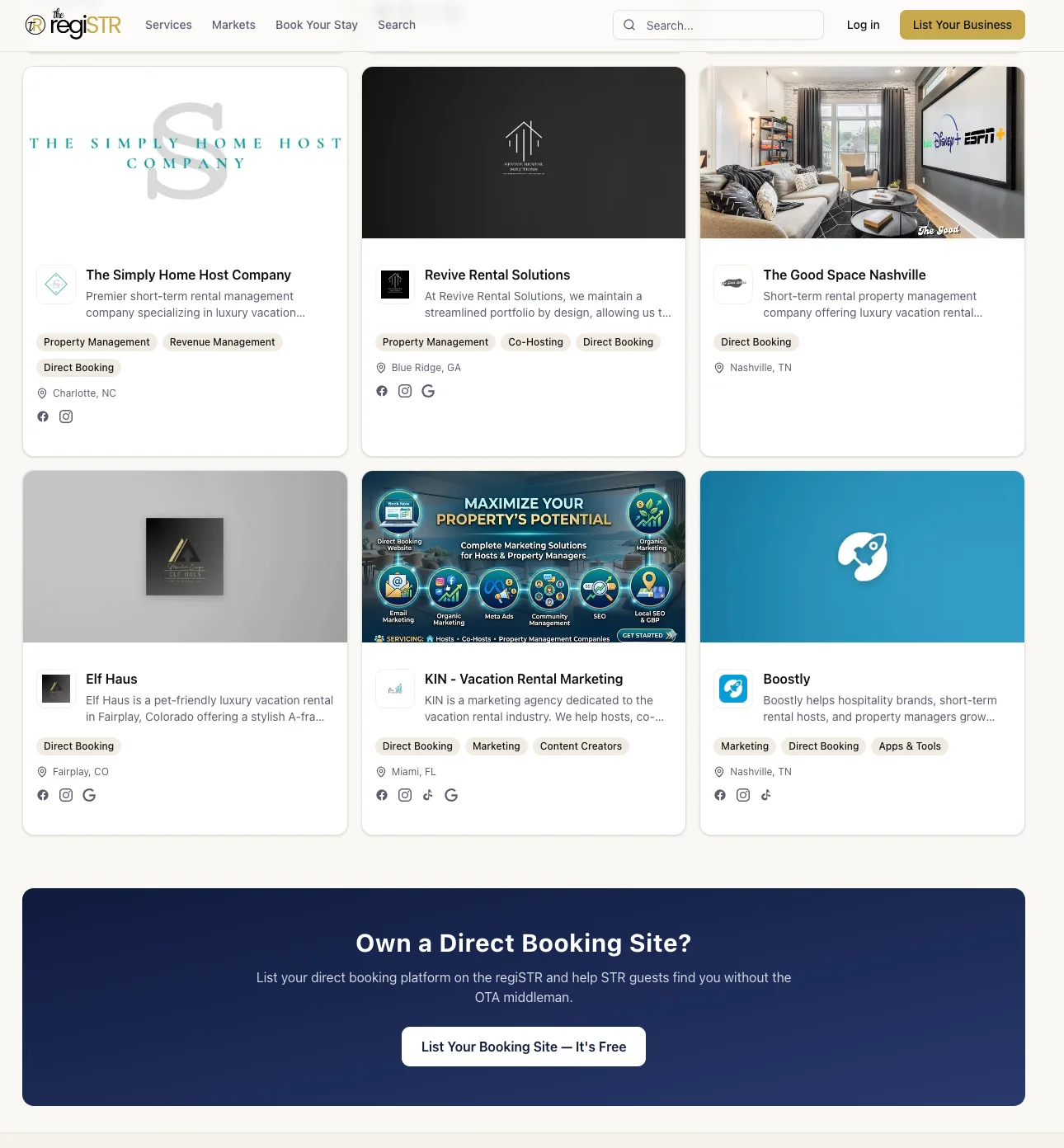
Some vacation rental operators run this manually through a general email tool, but that gets unwieldy past a handful of properties. Building this system properly, meaning integrated with your PMS and triggered automatically off checkout dates, is exactly the kind of project an STR-specialized marketing consultant handles well. This is where browsing SEO and content marketing providers on the regiSTR saves you from cobbling together a workaround with generic email software that wasn't built for STR guest lifecycles.
Should I Use SMS Marketing to Reach Past Guests?
SMS marketing to past guests can work well for time-sensitive offers, but it requires explicit opt-in consent under the Telephone Consumer Protection Act and carries a lower tolerance for frequency than email. Text messages get opened faster, often within minutes, which makes them useful for last-minute availability alerts or short-window promotions, but guests unsubscribe from SMS campaigns much faster than email when message volume feels excessive.
Specifically, treat SMS as a secondary, high-value channel rather than your primary sequence. A good rule most operators land on: reserve texts for genuinely time-sensitive moments, like a last-minute cancellation opening up a date they inquired about previously, rather than routine nurture content. For example, a text sent two weeks before a holiday weekend announcing a rare open date converts better than a generic "book direct" reminder.
Additionally, consent has to be collected separately from email opt-in in most interpretations of current guidance, so don't assume a guest who gave you their email during checkout also consented to texts. Confirm current TCPA consent requirements with the Federal Communications Commission before building this into your workflow, since the specifics of written versus verbal consent and required disclosures change periodically.
What Incentives Actually Get Past Guests to Book Direct?
The incentives that get past guests to book direct are added-value perks, not lower advertised prices. Academic research from the International Hellenic University on hotel booking psychology found that businesses should generally avoid promoting a lower direct price explicitly, since guests can interpret a cheaper direct rate as a signal of lower quality or hidden catches. Instead, frame the value as something extra they get by skipping the OTA, not something they save.
Incentive Options That Work Well for Past Guests
| Incentive Type | Best For | Why It Works |
|---|---|---|
| Flexible or free cancellation | Repeat guests with uncertain travel plans | Removes the biggest OTA advantage (buyer protection) without discounting the room rate |
| Early check-in / late checkout | Families, groups arriving after a long drive or flight | Low cost to you, high perceived value to the guest |
| Local welcome amenity | Destination or leisure-focused properties | Reinforces the personal, direct relationship versus a faceless platform booking |
| Loyalty punch structure (e.g., 3rd stay perk) | Multi-property portfolios or frequent seasonal renters | Rewards the pattern of returning rather than a single transaction |
| Direct-only availability window | Guests on your email list specifically | Creates a reason to check your site first instead of defaulting to habit |
Notably, none of these require you to slash your nightly rate, which protects your positioning across every channel. Loyalty program research in the broader hospitality space suggests that a meaningful share of repeat business comes from members of structured loyalty programs, not one-off promotions, which supports building a recurring perk structure rather than a single-use discount code.
How Do I Build a Loyalty Structure for Repeat STR Guests Without Overcomplicating It?
A loyalty structure for repeat STR guests is a simple tiered system, typically two or three tiers, that rewards guests for each additional direct booking with escalating perks rather than a generic points system borrowed from hotel chains. For an independent host or small portfolio, an overengineered points program creates more admin work than value.
Here's a workable structure many STR operators default to once they see two or more repeat bookings from the same guest:
- First direct rebooking: Small welcome perk (locally sourced treat, bottle of wine, early check-in if the schedule allows).
- Second direct rebooking: Slightly larger perk, such as a complimentary add-on service (late checkout guaranteed, a discount on an add-on like a grocery stocking service if you offer one).
- Third-plus rebooking: This is your "VIP" tier. Consider a small percentage discount, first access to new dates before you open them publicly, or a direct line to you for special requests.
As a result, you don't need software to run this at a one or two-property scale, a simple tag in your CRM or spreadsheet tracking booking count per guest email is enough. At a portfolio scale of five or more properties, this is where a revenue management or marketing consultant earns their fee, since tracking loyalty status across multiple properties and channel managers by hand becomes error-prone fast.
What's the Real Cost of Relying on OTA Bookings Instead of Direct Bookings?
The real cost of relying on OTA bookings instead of direct bookings is the recurring commission paid on every single booking a guest makes through Airbnb or Vrbo, a cost that compounds every time a guest who already trusts your property rebooks through the same paid channel instead of coming to you directly. Vrbo's fee structure, for example, runs roughly 8 to 10% as a guest service fee plus around 5% as a host fee, a structure that particularly affects multi-property families booking repeat stays.
Specifically, that fee applies to first-time guests and repeat guests equally on the platform. A guest who has already stayed with you three times and pays the same OTA commission on the fourth booking represents pure margin loss, since you already covered your acquisition cost on their first stay. Additionally, with the global short-term rental industry projected to reach $108 billion in 2026 according to StayFi's vacation rental statistics report, the aggregate commission volume flowing to platforms rather than operators is only growing.
In contrast, a direct booking from a past guest costs you essentially nothing beyond the marketing infrastructure to reach them, since you've already paid the acquisition cost once. This is the math that makes past-guest direct booking campaigns worth the setup time even for a single-property host. If building that infrastructure, a booking engine, an email automation system, a properly optimized website, feels like more than you want to take on solo, that's precisely the gap website design and SEO providers listed on the regiSTR are built to close, since every provider in that category works specifically within STR platforms rather than generic small business marketing.
How Do I Track Whether My Past Guest Campaign Is Actually Working?
Tracking whether a past guest campaign is working means measuring direct booking rate among your past guest list specifically, not just overall direct booking percentage, since blending new and repeat traffic hides whether your re-engagement sequence is the thing actually driving results. The clearest signal is a rising ratio of bookings originating from guests already in your CRM or email list, tracked against total direct bookings.
First, tag every direct booking by source in your PMS or booking engine, distinguishing "past guest email," "past guest SMS," and "new visitor" so you can see which channel and which touchpoint in your sequence actually converts. Second, monitor your email sequence's open and click rates at each stage; a thank-you message with strong opens but a booking offer with weak clicks tells you the incentive itself, not the outreach, needs work.
Notably, drop-off in your booking funnel often happens at the payment or date-selection step rather than at the email open stage, so if your click-through rates look healthy but bookings don't follow, the problem is likely your booking engine's usability, not your marketing message. As of 2026, most channel management and booking engine platforms include native analytics for this, but if yours doesn't, a lightweight UTM tagging system on every campaign link gets you most of the way there.
Practical Guidance: Building Your Past Guest Direct Booking System Step by Step
Building a working past-guest direct booking system follows a specific sequence: capture the data, segment the list, build the outreach cadence, attach the right incentive, and then measure and adjust. Skipping the segmentation step is the most common mistake we see, since past guests and cold prospects need entirely different messaging.
Common Mistakes to Avoid
- Treating all past guests the same. A family that stayed for a week-long vacation and a business traveler who stayed one night have different rebooking triggers and timelines. Segment by trip type if you have more than one guest profile.
- Leading with price instead of value. As the International Hellenic University research suggests, an explicit lower direct price can undercut perceived quality. Lead with the perk, not the discount.
- Ignoring mobile experience. A significant majority of vacation rental site traffic now comes from phones, so a booking engine that isn't mobile-optimized loses conversions at the exact moment a past guest clicks your email link.
- Skipping compliance. Not confirming current CAN-SPAM and TCPA requirements before launching email and SMS campaigns creates real legal exposure, not just a spam complaint.
- Never following up on the win-back stage. Most hosts stop after the initial thank-you email. The guests who haven't rebooked in over a year are often the easiest group to reactivate with the right nudge.
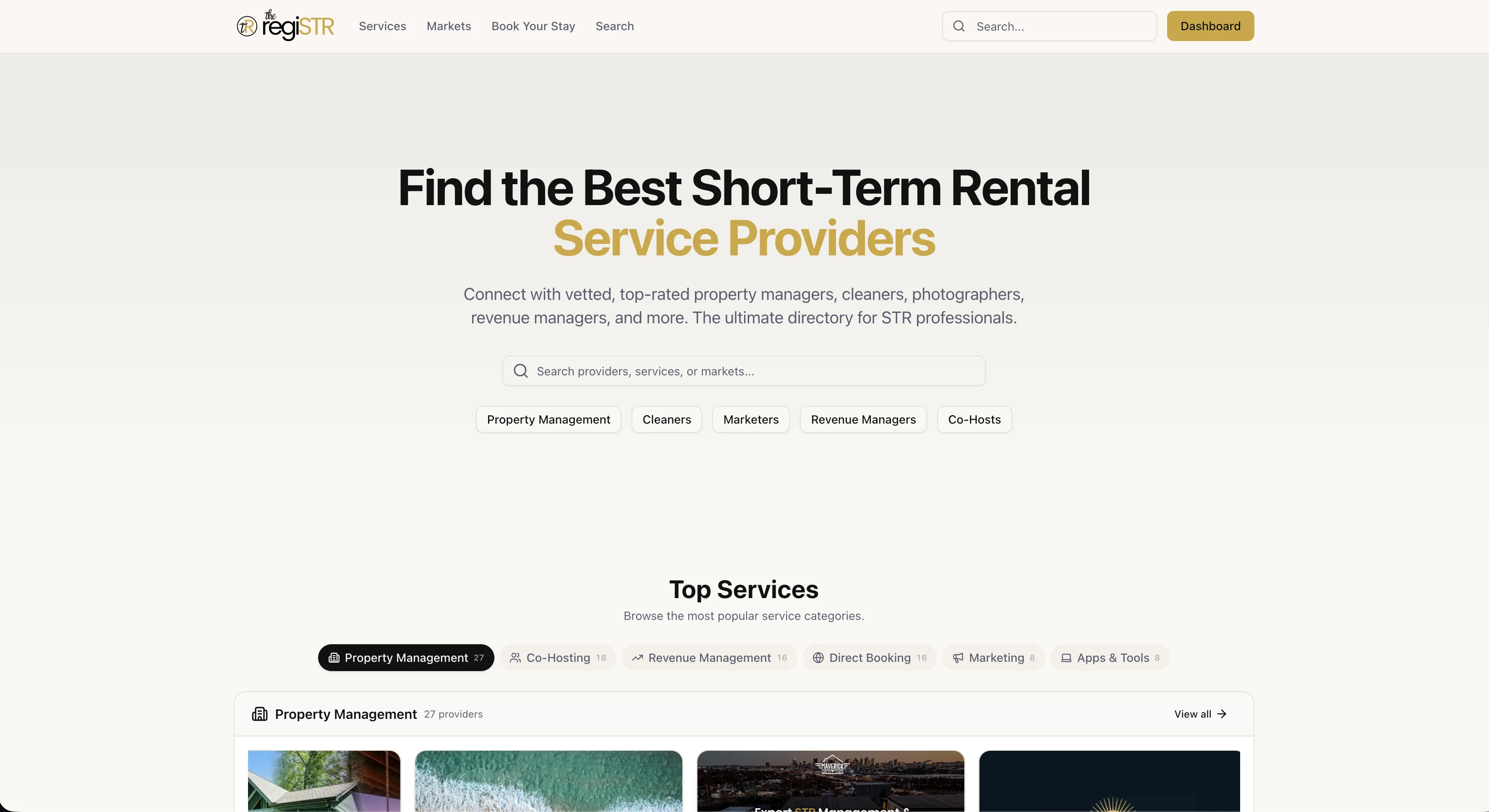
If this entire system, the CRM tagging, the email automation, the compliance checks, sounds like more operational lift than you have bandwidth for on top of running your property, that's a completely normal reaction. This is precisely why we built the regiSTR around connecting hosts to STR-specific marketing and consulting professionals rather than leaving you to adapt generic small business marketing advice to a booking-and-turnover business model that works nothing like a typical retail brand.
Data & Evidence: What the Broader Vacation Rental Market Tells Us About Direct Bookings
The broader vacation rental market context supports why past guest direct booking strategy matters more in 2026 than it did five years ago. According to Precedence Research's Vacation Rental Market Size, Share, and Trends Report, the global vacation rental market was valued at approximately $97.85 billion in 2026 and is projected to reach roughly $138.74 billion by 2035, growing at a compound annual growth rate of 3.55% from 2026 to 2035.
Notably, homes accounted for around 48 to 49% of the accommodation segment share in this same period, according to Precedence Research, meaning the individual vacation home category (your competitive set) is the single largest slice of a growing market, not a shrinking niche. Additionally, the report notes that offline booking modes still captured roughly 70% of market share in 2026, while online booking is expected to be the fastest-growing segment through 2035, a signal that digital direct booking infrastructure has real room to expand relative to where it stands today.
In contrast to this growth, regulatory complexity is rising in parallel. Many cities have implemented licensing schemes, rental bans, zoning changes, and increased taxes on vacation rentals to address housing concerns, per Precedence Research's analysis, adding operational friction that makes an efficient, low-cost booking channel even more valuable to protect margin. Comparing providers who understand this regulatory and marketing landscape together is exactly what browsing STR consulting and advisory listings on the regiSTR is built for, rather than piecing advice together from generalist sources unfamiliar with STR-specific compliance.
Frequently Asked Questions
How soon after checkout should I send my first direct booking message to a past guest?
Send your first message within 1 to 3 days of checkout, while the stay is still fresh and satisfaction is highest. This message should be a thank-you and feedback request, not a sales pitch, since leading with an offer immediately after checkout tends to feel transactional rather than genuine.
Can I use guest emails from Airbnb or Vrbo messaging for direct booking marketing?
No, both Airbnb and Vrbo restrict hosts from using their internal messaging systems to solicit guests for outside direct bookings, and violating platform terms can risk your listing standing. Instead, collect contact information through your own channels: a post-stay survey, guest WiFi capture, or direct inquiries made outside the platform.
Do I need to offer a discount to get past guests to book direct?
Not necessarily, and research on hotel booking psychology suggests explicit discounting can actually hurt perceived quality. Added-value perks like flexible cancellation, early check-in, or a small welcome amenity tend to convert better than a lower advertised price while protecting your rate positioning across every channel.
Is SMS marketing worth setting up for past guest outreach?
SMS works well for time-sensitive offers like last-minute availability, since text messages get opened much faster than email, but it requires separate, explicit consent under TCPA rules and tolerates lower message frequency than email. Treat it as a secondary channel for urgent updates rather than your main nurture sequence.
How many past guests typically need to be in my list before this is worth automating?
There's no universal threshold, but once you're manually tracking rebooking status across more than a handful of guests or multiple properties, spreadsheet tracking becomes error-prone. At that point, a CRM-integrated email sequence, often built by an STR marketing specialist, saves more time than it costs to set up.
What's the difference between a direct booking website and just promoting direct bookings to past guests?
A direct booking website is the technical infrastructure, the booking engine, payment processing, and listing pages, that lets guests book without going through Airbnb or Vrbo. Promoting direct bookings to past guests is the marketing layer on top of that infrastructure that drives specific past guests back to it through email, SMS, and targeted incentives.
How does a loyalty program for STR guests differ from a hotel loyalty program?
An STR loyalty program is typically much simpler than a hotel chain's points system, often just a two or three-tier structure tied to number of direct rebookings rather than an accumulating points balance. Kalibri Labs data on hotel loyalty programs shows a substantial share of hotel room nights come from loyalty members, which supports the logic of building even a lightweight version for your own repeat guests.
Conclusion
Promoting direct bookings to past guests comes down to three moves: collect contact data the right way, run a structured follow-up sequence timed to how people actually plan travel, and offer value instead of a discount. Guests who already trust your property are your lowest-cost, highest-conversion audience, and with the vacation rental market projected to keep growing through 2035 per Precedence Research, protecting that margin only gets more important from here.
You don't have to build the CRM tagging, the email automation, and the compliance checks alone. Whether you need a direct booking website built, an email sequence set up, or ongoing SEO to keep new and past guests finding you first, the regiSTR connects you with STR-specialized marketing, website, and consulting providers who already understand how this business works.
If your Nashville property has the kind of repeat-guest appeal that comes from a genuinely well-designed space, like the modern living and sleeping combination at The Good Space Nashville, a direct booking follow-up sequence is what turns that first great stay into a standing habit. Browse vetted marketing and website providers who build these systems at theregistr.co/services.
Content powered by inkSTR.co