
Handyman Near Me for STR Hosts: A Vetting Guide
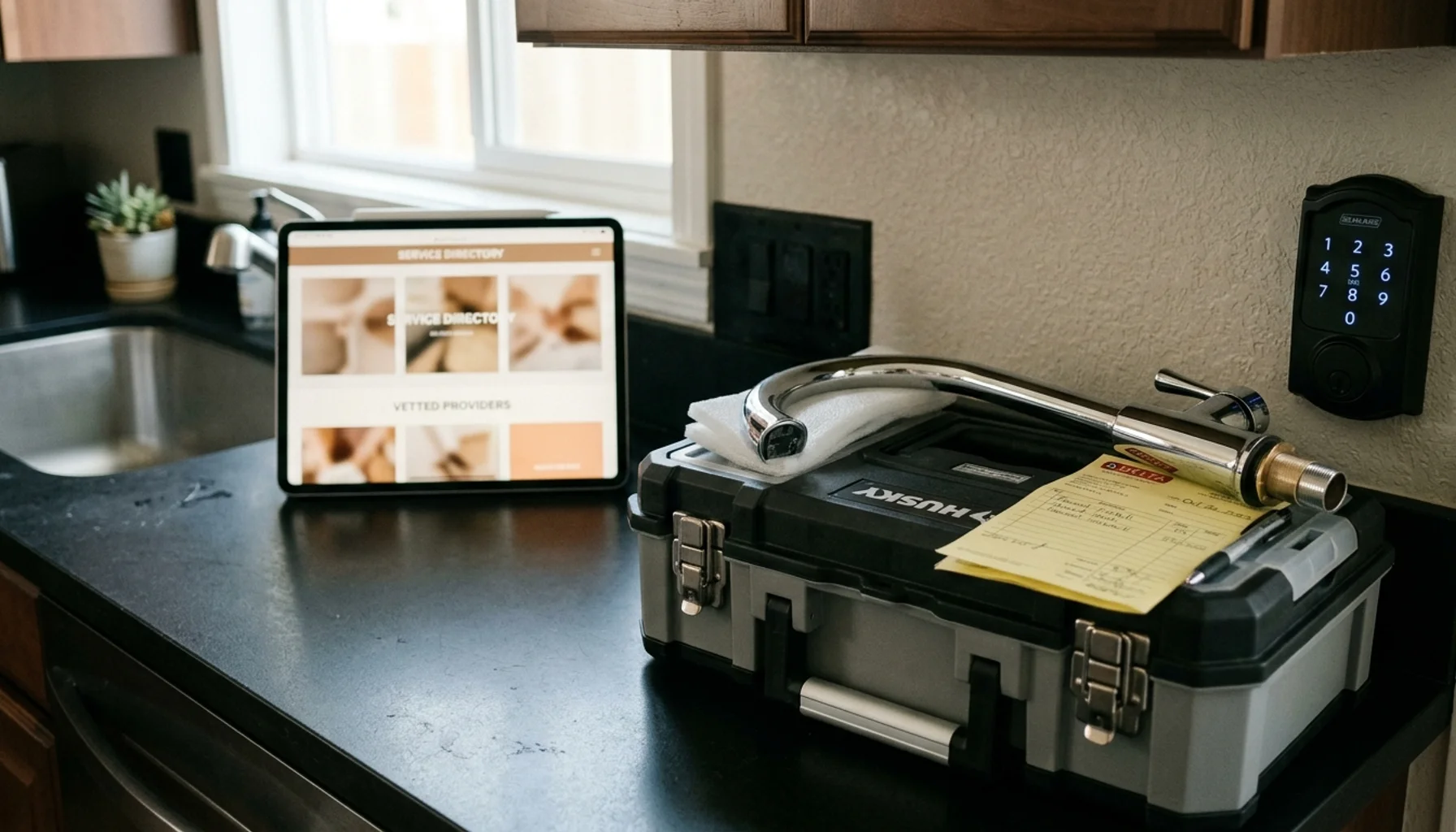
Typing handyman near me into Google works fine for a homeowner who needs a shelf hung once a year. It works badly for an STR host who needs someone on call for a broken lockbox at 9pm on a Friday check-in. The right search starts with STR-specific criteria: same-day availability, familiarity with smart locks and turnover timelines, and a track record with vacation rentals, not just residential repairs.
Key Takeaways
- Most handyman work for STR properties runs between roughly $50 and $120 per hour depending on complexity and region, with flat rates common for standard jobs like faucet or fixture replacement.
- Red flags include vague verbal estimates, no proof of insurance, and an unwillingness to commit to a response window for emergency repairs between guest stays.
- Licensing thresholds vary significantly by state. California's small-job exemption under Business and Professions Code section 7048 caps handyman work at $500 in combined labor and materials before a contractor's license is required.
- The most requested handyman service for short-term rentals isn't cosmetic repair. It's emergency turnaround work: broken locks, HVAC issues, and appliance failures that threaten a same-day check-in.
- Renters and STR co-hosts operating under a landlord's property face different repair authority than owner-operators, and that distinction changes who can legally authorize and pay for work.
- The regiSTR's Maintenance and Repairs directory lists STR-familiar handyman providers by market, so you're not gambling on a general contractor who's never dealt with a same-day turnover deadline.
Running a short-term rental means your maintenance needs don't look like a typical homeowner's. You're not scheduling a handyman for a Tuesday afternoon that works around your calendar. You're scheduling around a checkout at 11am and a check-in at 4pm, with zero room for a no-show or a vague "I'll get to it sometime this week."
At the regiSTR, we've reviewed maintenance providers across dozens of STR markets, and the pattern is consistent: hosts who search generically for "handyman near me" end up with residential contractors who don't understand turnover pressure. They quote you a week out for a repair that needs to happen before your next guest arrives tonight.
This guide covers what handyman services actually cost for STR properties in 2026, the red flags that separate a reliable maintenance provider from a risky one, and where to find someone who already understands how vacation rentals operate. We'll also cover the gaps most guides skip: how to structure a written estimate, what changes based on your state's licensing rules, and how renters versus owner-operators should handle repair authority differently.
What Do Handymen Usually Charge Per Hour?
Handyman rates typically range from $50 to $120 per hour as of 2026, with most jobs falling in the $60 to $100 range depending on task complexity and regional labor costs. Simple tasks like hanging shelves or fixing a squeaky door sit at the lower end. Electrical, plumbing-adjacent, or multi-step repairs push toward the top of that range.
Flat-rate pricing is common for predictable jobs. Industry data shows typical flat rates running around $150 for attic ladder replacement, $75 for toilet replacement, $75 for ceiling fan and light fixture installs, and $125 for faucet replacement. For STR hosts, flat rates are often easier to budget against than hourly billing, especially for recurring turnover-related fixes like garbage disposal resets or fixture swaps.
Some providers charge a higher flat rate for the first hour, for example $90, and then bill in smaller increments after that, such as $33 per half hour. This structure rewards handymen who work efficiently and can penalize you if a job runs long. Ask upfront which billing model a provider uses before you agree to anything.
For complex jobs, hourly rates can climb toward $100 or more, particularly when a task requires specialized tools or licensed subcontractor coordination. If you own multiple properties, the math changes fast: a $75 per hour handyman doing four hours of work across two properties in one week adds up differently than a single fixed-fee visit.
Comparing quotes side by side is exactly the problem the regiSTR's Find STR Maintenance directory solves. You can browse vetted maintenance providers by market and see how their pricing structures compare before you commit to anyone.

What Are Some Red Flags When Hiring a Handyman?
Red flags when hiring a handyman include vague verbal-only estimates, no proof of liability insurance, reluctance to provide references, and an inability to commit to a specific arrival window. For STR properties specifically, add one more: any handyman who can't work around a guest checkout and check-in schedule isn't the right fit.
Here's what we consistently flag when evaluating maintenance providers for the regiSTR network:
- No written estimate. A legitimate handyman gives you a scope of work, materials cost, labor cost, and a total, in writing, before starting. A verbal "should run about $200" with nothing documented leaves you with no recourse if the final bill is double that.
- No insurance documentation. Ask directly for proof of liability coverage. If a handyman damages your property or gets injured on the job without coverage, you're financially exposed as the property owner.
- Unclear licensing status for the job size. In California, for example, Business and Professions Code section 7048 allows unlicensed handyman work only when combined labor and materials stay under $500. Above that threshold, the job legally requires a licensed contractor. Other states set different thresholds, so confirm the current limit for your state before hiring for larger repairs.
- No fixed response time for emergencies. If a handyman won't commit to same-day or next-day response for something like a broken lock before a check-in, that's disqualifying for STR use, even if their rates are competitive.
- Reluctance to provide past client references. Especially references from other property owners or STR hosts, not just single-family homeowners.
- Lowest quote in the group. Industry guidance consistently recommends gathering at least three quotes and being wary of the cheapest one. A bid dramatically below the others usually means corners get cut somewhere, whether that's materials, insurance, or time on the job.
One more thing we see trip up new hosts: no request for a labor warranty. A reputable handyman should stand behind their work for at least a year. If a provider balks at that, treat it as a signal.
What's the Best Way to Find a Handyman for a Vacation Rental?
The best way to find a handyman for a short-term rental is through a directory that filters specifically for STR experience, not a general home services search. General contractor directories don't ask whether a provider has ever worked around a same-day turnover deadline. That distinction matters more than most first-time hosts realize.
Here's the practical sequence we recommend:
- Start with STR-specific referrals. Ask other hosts in your market who they use, or check a directory built for vacation rental operators rather than a general home services app.
- Verify service area match. A handyman who technically "covers" your county but is based an hour away is a liability when you need someone same-day. Confirm their actual service radius before you need them urgently.
- Request three written estimates. This is standard advice across the industry, and it holds for STR maintenance too. Compare not just price but response time commitments and warranty terms.
- Check for STR-specific experience. Ask directly: have you worked on short-term rentals before? Do you understand turnover windows? A handyman who's only done work for owner-occupied homes may not grasp why a delayed repair costs you a guest's entire stay, not just an inconvenienced afternoon.
- Confirm after-hours or weekend availability. Guest turnovers happen on weekends. A handyman who only works Monday through Friday, 9 to 5, isn't going to help you on a Saturday morning emergency.
Building a maintenance vendor relationship from scratch through cold outreach and Facebook group posts can take weeks, and that's assuming you get lucky. This is exactly why we built the regiSTR's Find STR Maintenance category: every provider listed has been referred in by a network member who's already vetted them for STR-specific reliability, and you can filter by market instead of scrolling through generic listings that have never seen a lockbox code.
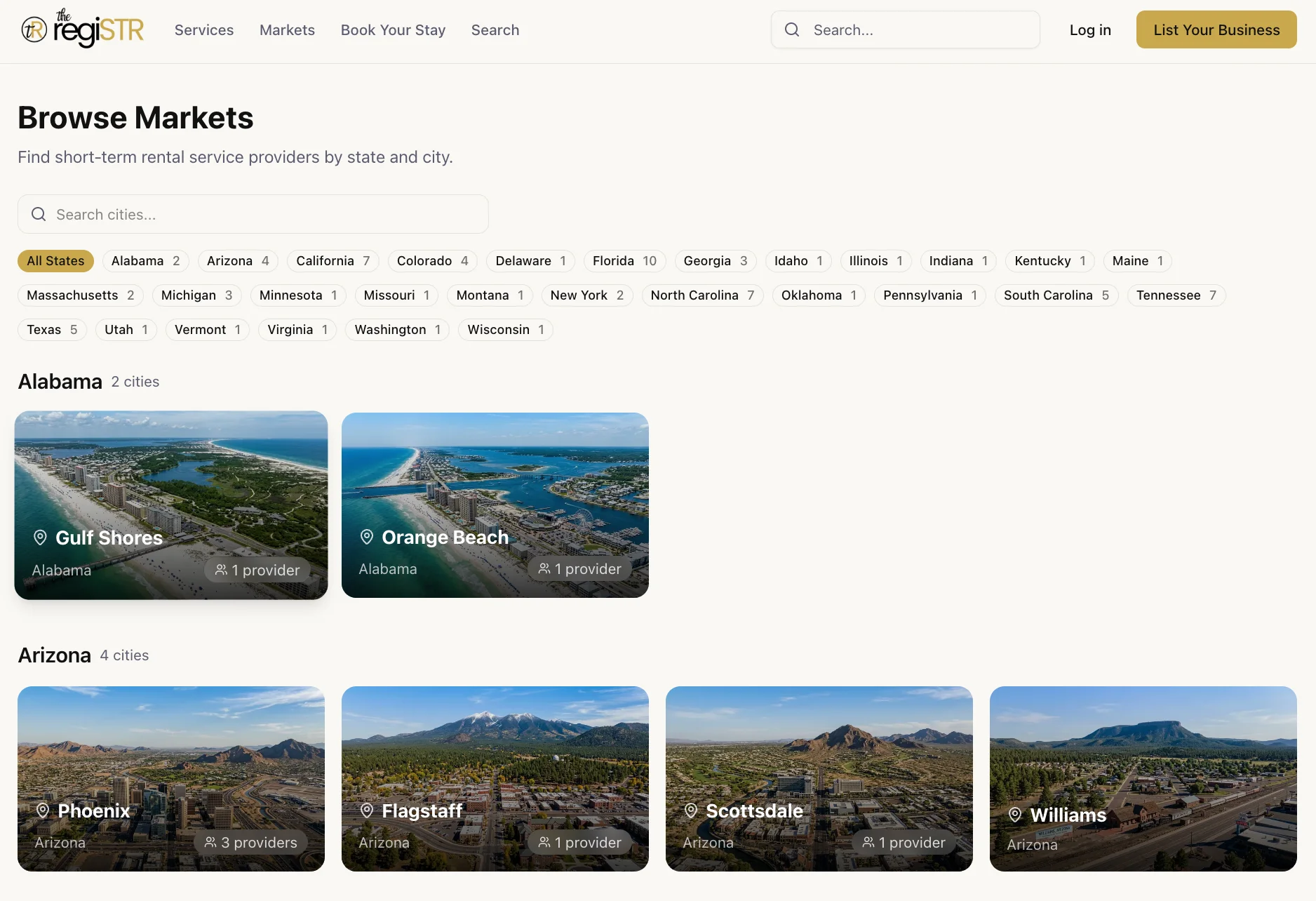
If you manage properties in a market you don't live in, this problem compounds. Cross-referencing a local handyman's reputation from three states away is nearly impossible without a trusted network. Our Markets section organizes providers by metro so remote owners can build a maintenance bench without ever setting foot in the property's city.
What Is the Most Requested Handyman Service for Short-Term Rentals?
The most requested handyman service for STR properties is emergency turnaround repair, meaning fixes that need to happen inside the gap between a guest checkout and the next check-in. This differs sharply from typical residential handyman demand, which skews toward planned, non-urgent cosmetic work like painting or furniture assembly.
Common STR-specific requests we see across the network include:
- Lock and smart lock troubleshooting. Keypad locks fail, batteries die, and codes get corrupted. This is arguably the single most time-sensitive repair category in the entire STR maintenance stack.
- Appliance hookups and repairs. Washers, dryers, dishwashers, and refrigerators that stop working mid-stay generate immediate guest complaints and refund requests if not addressed same-day.
- Plumbing fixture replacement. Faucets, toilets, and garbage disposals wear out faster in high-turnover properties than in owner-occupied homes, simply due to guest volume.
- HVAC troubleshooting. A broken thermostat or unit in summer or winter is a five-star review killer if not resolved within hours, not days.
- General fence, door, and trim repair. Less urgent but still frequent, especially for properties with high guest traffic wearing down entry points faster than a typical single-family home would.
Notably, a handyman can legally perform tasks like assembling furniture, painting interiors and exteriors, repairing fences, fixing broken doors, replacing trim, hanging lights, and hooking up appliances in most jurisdictions without a contractor's license, provided the job stays within the applicable small-job cost threshold for that state.
Because emergency response is the top driver of demand, we weight response-time commitments heavily when providers list on the regiSTR's maintenance category. A handyman who can't guarantee same-day availability for lock and HVAC emergencies isn't ranked the same as one who can.
How Do State Licensing Rules Change What a Handyman Can Legally Do?
Handyman licensing thresholds vary by state, and knowing the applicable cap in your market determines whether you can legally hire a general handyman or need a licensed contractor for a given repair. This is one of the most overlooked details in STR maintenance planning.
California sets its threshold under Business and Professions Code section 7048: unlicensed handyman work is permitted as long as combined labor and materials stay under $500 for that job. Cross that line, and the law requires a licensed contractor, regardless of how simple the task seems. Other states, including those with heavy STR concentrations like Florida and Texas, use different thresholds and licensing categories entirely. For multi-property portfolio owners operating across state lines, this means the same repair might be legal for a general handyman in one state and require a licensed sub in another. Don't assume the rules that applied to your last property automatically apply to a new market.
Before hiring, ask your handyman directly: are you licensed, and if not, does this job fall under your state's small-job exemption? A provider who can answer that confidently is more trustworthy than one who shrugs. Always confirm the current dollar threshold with your state's contractor licensing board rather than relying on a number you saw in an old blog post, since these figures are periodically updated.
This is a gap most host-facing content skips entirely, and it's exactly the kind of regulatory nuance that trips up hosts scaling into new markets. If compliance questions extend beyond maintenance thresholds into permitting or occupancy rules, the regiSTR's broader network also includes STR-focused compliance consultants who track these state-by-state distinctions.
How Should Renters and Co-Hosts Handle Repair Authority Differently Than Owners?
Repair authority for STR maintenance depends entirely on whether you own the property or manage it under a lease or co-hosting agreement. Owners can authorize and pay for handyman work directly. Renters, co-hosts, and property managers working under someone else's ownership need explicit written authorization before committing to any repair spend. If you're a co-host or renter-operator subletting or managing under a master lease, your management agreement should specify a repair spend threshold, for example, anything under $150 can be authorized without owner sign-off, while anything above requires approval first. Without that clause, you risk either fronting money you can't recover or delaying a critical repair while you chase down approval. For landlords who allow STR subletting, this distinction also determines who's financially responsible for wear-and-tear repairs versus damage caused by guest turnover volume. A faucet that fails from heavy guest use is a different conversation than one that fails from age, and your lease or management agreement should address which category triggers landlord reimbursement. We recommend every co-hosting or management contract include a maintenance authorization clause with a specific dollar threshold, a defined response time expectation, and a named point of contact for emergency approvals outside business hours. Most disputes we see between hosts and property owners trace back to this clause being missing or vague, not to the actual repair itself.
How Do You Structure a Written Estimate and Contract for Handyman Work?
A proper handyman estimate for STR work should include a written scope of the repair, an itemized breakdown of labor versus materials, a total cost ceiling, a start and completion date, and a stated warranty period. Skipping any of these five elements increases your risk of a billing dispute or unfinished work. Specifically, your estimate should document: the exact task (e.g., "replace kitchen faucet and shutoff valve"), materials cost separate from labor cost, whether the quote is a flat rate or hourly estimate with a not-to-exceed cap, and a completion deadline tied to your next guest arrival if the timing is urgent. For recurring maintenance relationships, which is common for STR hosts with a regular handyman on call, consider a standing agreement rather than negotiating a new estimate every time. This can include a pre-agreed hourly rate, a guaranteed response window (for example, four hours for emergencies, 48 hours for non-urgent work), and a quarterly review of rates. If a job runs over the estimate, your contract should specify that any overage above a set percentage, commonly 10 to 15%, requires your approval before work continues. Without that clause, a "quick faucet fix" can turn into a $600 surprise with no way to dispute it after the fact. This is precisely the kind of documentation gap that separates hosts who get burned from hosts who don't. It's also exactly the kind of vetting criteria we apply before any provider gets listed under Maintenance and Repairs on the regiSTR: providers who won't commit to written, itemized estimates don't make the cut.
Handyman Pricing and Structure Comparison for STR Hosts
The table below summarizes typical pricing structures, when each makes sense, and what to watch for as an STR host in 2026.
| Pricing Model | Typical Range | Best For | Watch Out For |
|---|---|---|---|
| Hourly rate | $50 to $120 per hour | Complex, unpredictable repairs (HVAC, plumbing diagnostics) | No cap on total hours; ask for a not-to-exceed ceiling |
| Flat rate per job | $75 to $150 typical (faucet, toilet, fixture swaps) | Predictable, recurring turnover repairs | Confirm materials are included, not billed separately |
| First-hour plus increment | e.g., $90 first hour, $33 per half hour after | Short visits with uncertain duration | Rewards efficient handymen; can penalize slow jobs |
| Standing maintenance retainer | Negotiated flat monthly or per-visit rate | Multi-property portfolios with recurring needs | Requires clear response-time guarantees in writing |
Comparing these models side by side is exactly what the regiSTR's Find STR Maintenance directory is built for. Instead of collecting quotes one phone call at a time, you can review provider pricing structures by market and pick the model that fits your portfolio size.
Practical Guidance: How to Choose the Right Handyman for Your Rental
Choosing the right handyman for an STR property comes down to matching their availability and experience to your operational reality, not just comparing hourly rates. Here's the framework we recommend:
- Prioritize response time over price. A handyman charging $10 more per hour who guarantees same-day emergency response is worth more than a cheaper option who can't get to you for three days.
- Confirm STR-specific experience directly. Ask how many vacation rental clients they currently serve and what their typical response time looks like for those clients specifically.
- Get everything in writing. No verbal-only estimates, ever, regardless of how small the job seems.
- Check licensing against your state's actual threshold. Don't assume a $500 cap applies everywhere; confirm the current number with your state's contractor licensing office.
- Build a backup relationship, not just a primary. Every host needs at least two maintenance contacts. Relying on a single handyman means a single point of failure when they're unavailable during a guest emergency.
- Review the contract's overage clause. Confirm what happens, and who approves it, if a job exceeds the original estimate.
Common mistakes we see: hosts who hire based purely on the lowest bid, hosts who skip insurance verification because "it's just a small job," and hosts who don't clarify weekend or after-hours availability until they actually need it and discover their handyman doesn't offer it.
Finding a reliable vacation rental cleaner follows a similar vetting logic to hiring a handyman: same-day availability, STR-specific experience, and written commitments matter more than the lowest quote. If your maintenance search has you thinking about your broader vendor stack, our Find STR Cleaners directory applies the same vetting standard to turnover cleaning providers.
Frequently Asked Questions
How much should I budget monthly for handyman services on one STR property?
Budgets vary widely based on property age and guest volume, but many single-property hosts allocate a modest monthly reserve for routine fixes plus a separate emergency fund for unplanned repairs like lock failures or appliance breakdowns. Portfolio owners often negotiate a standing retainer rate instead of paying per-visit rates every time.
Can I use the same handyman for multiple properties in different states?
Generally no, since handyman licensing thresholds and rules are set at the state level. A provider licensed or exempt to work in one state may not meet the requirements in another. You'll typically need a separate, locally licensed handyman for each state where you operate.
Do I need a licensed contractor instead of a handyman for larger repairs?
Yes, once a job's combined labor and materials cost exceeds your state's small-job exemption threshold, such as the $500 cap under California's Business and Professions Code section 7048, the work legally requires a licensed contractor. Confirm your state's specific threshold before hiring for larger projects.
What's the difference between hiring a handyman directly versus through the regiSTR?
Hiring directly through a general search means you're vetting insurance, licensing, and STR experience entirely on your own with no verification. Providers listed on the regiSTR have been referred in by network members and vetted for STR-specific reliability, which reduces the guesswork significantly.
Should renters or co-hosts pay for handyman repairs themselves?
It depends entirely on the management or lease agreement in place. Owners should specify a repair spend threshold and reimbursement policy in writing so co-hosts or property managers know exactly what they can authorize without prior approval.
How do I avoid handyman scams when searching online?
Request at least three written quotes, verify insurance documentation before work begins, check for a labor warranty of at least one year, and avoid selecting the lowest bid without understanding why it's lower than competing quotes.
Is same-day handyman availability realistic for STR emergencies?
Same-day availability is realistic when you've pre-established a relationship with a handyman who specifically services STR properties and understands turnover deadlines. Cold-calling a general handyman during an active emergency rarely produces same-day results, which is why building the relationship before you need it matters.
Conclusion
Searching handyman near me is only the first step for an STR host. What actually matters is whether that handyman understands turnover windows, carries proper insurance, and will commit to a written estimate with a real response-time guarantee. Rates in 2026 typically run $50 to $120 per hour, with flat rates common for predictable jobs like fixture replacement, but price should never outweigh reliability when a broken lock stands between you and a guest's check-in.
The vendors who meet this bar exist in every market. The challenge has always been finding them without weeks of trial and error. Get started with the regiSTR to browse vetted maintenance providers by city, compare pricing structures side by side, and stop gambling on a general contractor who's never dealt with a same-day turnover.
If you're building your maintenance bench market by market, the regiSTR's browse markets page lets you filter vetted handyman and repair providers by city, so you're comparing STR-experienced options rather than starting from a blank search every time you open a new property. Browse vetted maintenance providers here.
Content powered by inkSTR.co