Get More Airbnb Bookings Without Spending on Ads
You can get more Airbnb bookings without ads by fixing the three things Airbnb's search algorithm and human guests actually weigh: listing quality, response behavior, and review velocity. None of that costs a media budget. It costs discipline, a few hours of setup work, and a willingness to treat your listing like a storefront instead of a spreadsheet entry. the regiSTR works with short-term rental operators across the country who ask the same question every quarter: how do I fill my calendar without paying Airbnb, Google, or Instagram for visibility? The answer sits inside your listing, your guest communication habits, and how well you turn past guests into referral sources.
- Photo order matters more than photo quality alone: the strongest "wow" shot should lead your gallery, and the bedroom should never be your cover image, according to widely cited listing optimization guidance.
- Response speed is a ranking signal, not just a courtesy: Airbnb's search algorithm rewards hosts who reply within an hour, and slow responses measurably hurt placement.
- Calendar length affects discoverability: keeping your availability open 90 days or more out is a commonly recommended baseline for appearing in more search results.
- Early pricing strategy accelerates review velocity: a common industry recommendation is pricing 15 to 20 percent below comparable listings for your first 5 to 10 bookings to generate reviews faster.
- The global vacation rental market is valued at roughly USD 101.7 billion in 2026, projected to reach about USD 106.5 billion in 2026 according to Grand View Research, meaning more competition for the same search real estate.
- the regiSTR connects hosts with STR-specialized photographers, marketers, and revenue managers who know how to execute these tactics correctly the first time, instead of hosts learning by trial and error over several booking cycles.
Every host who messages us at the regiSTR asking about marketing budgets is usually surprised to learn that the highest-leverage moves in 2026 cost time, not money. Airbnb's own search algorithm still rewards operational behavior over advertising spend: response time, calendar openness, review recency, and photo quality all factor into where your listing lands. Paid ads on Airbnb barely exist for individual hosts anyway. What you're really asking is how to win the organic game.
This guide walks through the specific, unglamorous levers that move a listing from invisible to algorithm-favored, without a single dollar spent on promotion. We'll also cover the parts most guides skip entirely: building a guest contact list you actually own, turning old reviews into new bookings, and a week-by-week plan for the next 30 days. If you're managing this across multiple markets or you're the burned-out landlord who's done winging it, we'll point you toward the specific service categories, cleaners, photographers, revenue managers, that make execution faster.
What Is the 75-55 Rule for Airbnb?
The 75-55 rule is a pricing and occupancy benchmark some hosts use as a rough target: aim for roughly 75 percent occupancy at an average nightly rate that keeps your revenue efficient, with 55 often referenced as a floor percentage for weekday fill in secondary markets. It's not an official Airbnb policy, it's an operator heuristic for balancing rate against occupancy.
In practice, the rule matters less as an exact formula and more as a mental check. If your occupancy is far below what comparable listings in your market are achieving, your price is probably too high, your photos are underselling the space, or your calendar restrictions (minimum stays, blocked dates) are cutting you out of searches. Airbnb's search results favor listings that convert, and a listing sitting empty at 30 percent occupancy sends a weak signal regardless of price.
Notably, this is exactly where a revenue manager earns their fee. Dynamic pricing tools adjust nightly rates against real demand instead of a static number you set once and forget. Browse STR revenue management providers on the regiSTR if you're spending more time second-guessing your rate calendar than actually running your property. For a self-managed host without that expertise, applying the 75-55 logic manually, checking your occupancy weekly against your comp set, and adjusting rate in 5 to 10 percent increments, gets you most of the way there without paying for software you don't yet need.
How to Generate More Bookings on Airbnb Without Paid Promotion?
Generating more Airbnb bookings without ads means optimizing the three things guests and the algorithm both respond to: your listing content, your responsiveness, and your review count. These are controllable, free, and compound over time, unlike ad spend, which stops working the moment you stop paying.
First, your photos. Lead with your strongest exterior or "money shot," not the bedroom. Guests scroll fast, and the first image is what earns the click from search results. Second, your title and first three sentences of description need to work as hard as any headline: name the neighborhood, the standout view or feature, and the traveler type you're built for, "family-friendly retreat near downtown" reads differently to a search algorithm and a human than a generic description does.
Third, respond within the hour whenever possible. Airbnb's ranking system tracks response time as a behavioral signal, and hosts who reply fast consistently outrank hosts who don't, all else equal. Fourth, keep your calendar open at least 90 days out. A calendar that only shows availability two weeks ahead signals limited inventory to the algorithm and gives serious travelers, who often book 60 to 90 days in advance, nothing to book.
Fifth, enable Instant Book and pair it with a flexible cancellation policy where your market allows it. This single change measurably increases booking conversion because it removes the friction of waiting for host approval. As a result, listings with Instant Book frequently see faster booking velocity than request-only listings in the same comp set.
Sixth, cross-list. Vrbo and Booking.com both index for the same traveler intent, and a listing that only lives on one platform is leaving visibility on the table. None of this requires an ad budget. It requires you to actually complete every field in your listing profile, since incomplete profiles get filtered out of amenity-based searches entirely.
What Is the 80/20 Rule for Airbnb?
The 80/20 rule applied to Airbnb hosting means roughly 80 percent of your bookings and revenue typically come from 20 percent of your effort, usually concentrated in a handful of high-leverage actions: photo quality, pricing discipline, and guest experience during the stay. It's the Pareto principle applied to short-term rental operations.
For most hosts, that 20 percent breaks down into three categories. Specifically, professional daylight photography that shows every major space, kitchen, bathrooms, common areas, bedrooms, consistently gets cited as the single highest-impact change a host can make. Second, disciplined pricing that tracks your local comp set weekly instead of a rate you set once at launch. Third, a guest experience tight enough to generate five-star reviews without you having to ask twice.
The remaining 80 percent, things like elaborate welcome baskets, custom branded merchandise, or hours spent on social media content that nobody sees, delivers diminishing returns relative to the time invested. That doesn't mean those extras are worthless. It means they're not where a time-constrained host should start.
Notably, this is why so many multi-property operators eventually hire out photography and pricing specifically, and keep guest communication in-house or with a co-host, because those three levers carry the most weight relative to the labor required. If you've been spreading effort evenly across every part of your operation, the 80/20 rule is a useful reason to stop. Concentrate on photos, pricing, and guest experience first. Everything else is secondary.
What Is the 25 Percent Rule on Airbnb?
The 25 percent rule generally refers to the practice of pricing new listings, or listings needing to rebuild momentum, around 25 percent below the local comp set for an initial stretch of bookings, in order to generate reviews and booking history quickly. Some hosts apply it more conservatively at 15 to 20 percent, but the underlying logic is identical.
A brand-new listing with zero reviews is invisible to risk-averse travelers regardless of how good your photos are. Discounting aggressively for your first 5 to 10 bookings is a deliberate trade: you sacrifice margin short-term to buy review volume, and review volume is what actually drives long-term organic visibility and booking confidence.
Once you clear that initial review threshold, typically somewhere around 10 to 15 reviews, you can raise rates back toward market level. The mistake we see hosts make constantly is either skipping the discount phase entirely (and sitting empty for months while a new listing struggles for traction) or never raising rates back up once the reviews arrive, leaving money on the table indefinitely.
Additionally, this rule pairs directly with response speed and guest experience. A discounted early booking that gets a mediocre review because the host was slow to communicate or the cleaning fell short defeats the entire purpose. If you're not confident your turnover process can deliver a five-star experience consistently during this critical early window, that's exactly the moment to bring in a specialized cleaner rather than handling it yourself under pressure. Find STR cleaners vetted specifically for short-term rental turnover timelines through the regiSTR's directory, rather than gambling your first reviews on a residential cleaning service that's never worked a same-day turnaround.
What's the Fastest Way to Turn a Listing From Low Visibility to Algorithm-Favored in 30 Days?
A 30-day visibility turnaround plan works by front-loading the changes with the highest algorithmic weight, first photos and title, then response behavior, then review generation, in that specific sequence, rather than tackling everything simultaneously. Most hosts skip the sequencing and wonder why nothing improves.
| Week | Primary Focus | Specific Actions |
|---|---|---|
| Week 1 | Listing content overhaul | Reshoot or reorganize photo gallery with strongest shot first, rewrite title and opening description sentences with neighborhood and traveler-type keywords, complete every amenity field |
| Week 2 | Pricing and calendar structure | Extend calendar to 90+ days, enable Instant Book, set introductory pricing 15 to 25 percent below comp set, add length-of-stay discounts for weekly and monthly stays |
| Week 3 | Guest experience and communication | Set up automated but personalized check-in messaging, commit to sub-hour response times, prepare a laminated or digital house manual to reduce mid-stay questions |
| Week 4 | Review capture and social proof | Send review requests within 24 hours of checkout, screenshot strong reviews for use in local Facebook groups and Instagram, begin cross-listing on Vrbo |
By day 30, you've addressed the listing content Airbnb's algorithm scans first, restructured your calendar to remove artificial visibility limits, and built the communication habits that keep your response-time metric strong. This sequence consistently outperforms hosts who try to fix everything at once and burn out by week two.
In our experience working with operators scaling past their first property, this exact 30-day framework is also where a lot of hosts realize they don't have the bandwidth to execute all four weeks alone, particularly the photo reshoot and the review-capture workflow. That's a fair moment to bring in outside help rather than let the plan stall. Find STR photographers who specialize in vacation rental listings on the regiSTR if week one is where you're stuck.
How Do You Build a Guest Contact List Without Relying on Airbnb's Messaging System?
Building an owned guest contact list means capturing email addresses or phone numbers outside Airbnb's platform, so you can market directly to past guests for repeat stays and referrals without paying Airbnb a booking fee on the return visit. This is one of the most underused, zero-cost tactics available to hosts in 2026.
The simplest method is a Wi-Fi login page that requires an email address before granting network access, a tactic almost no host-facing content covers in depth. Guests already expect to enter information to get online; capturing an email at that moment is frictionless and doesn't feel intrusive. Pair that with a printed card in the welcome guide inviting guests to join a "returning guest" list for direct-booking discounts on future stays.
From there, a simple email sequence, sent quarterly or before peak season, works better than most hosts expect. You don't need a marketing platform with automation triggers and segmentation logic. A basic email service with a guest list segment and two or three seasonal sends per year is enough to generate meaningful repeat and referral business, particularly from guests who already left five-star reviews.
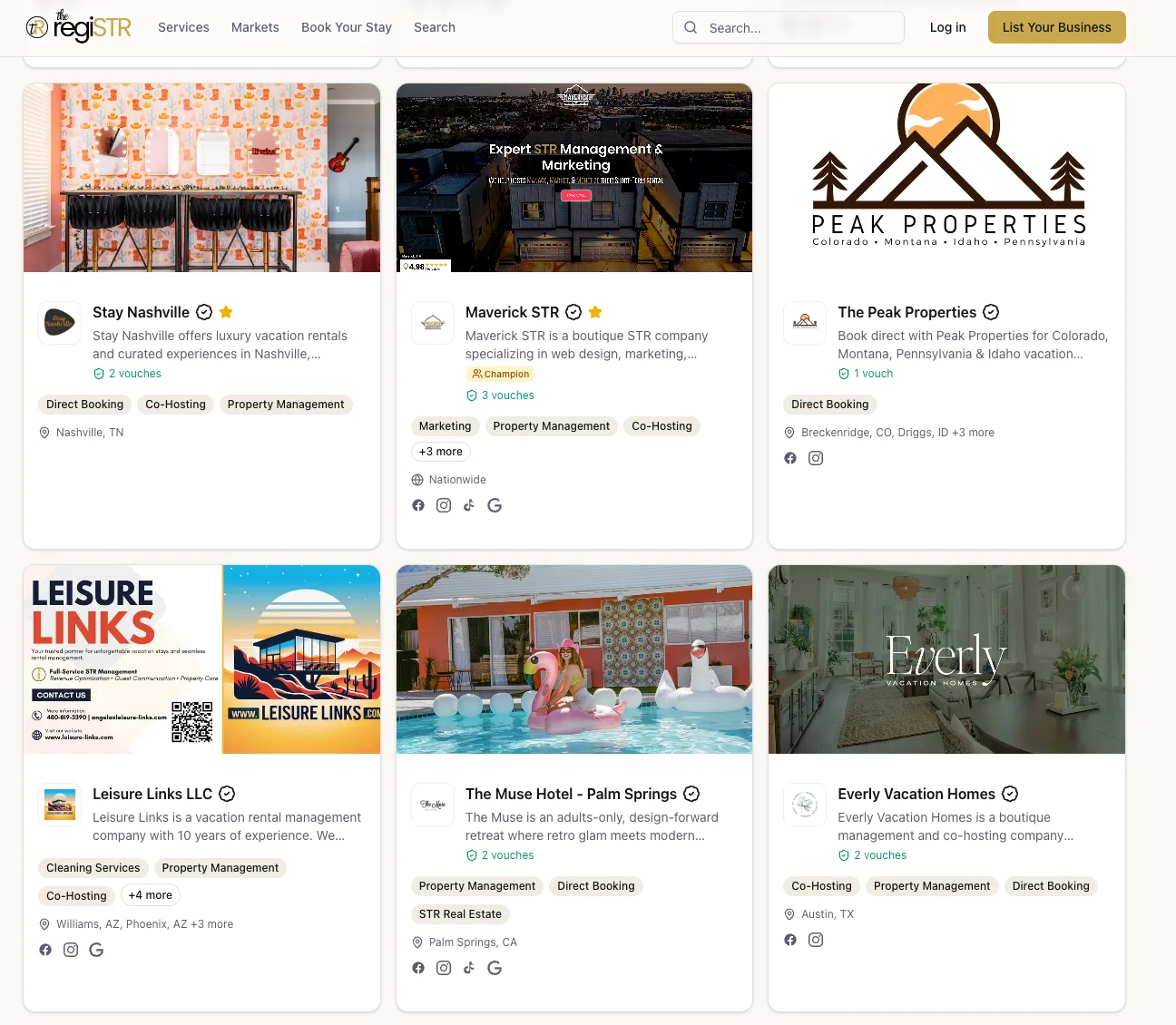
This tactic sits squarely in the content gap most Airbnb marketing guides never touch, probably because it requires slightly more technical setup than "post on Instagram." If building direct booking infrastructure, a simple landing page, an email capture flow, feels outside your skill set, this is exactly the kind of work STR-focused website and marketing specialists handle daily. Browse all STR services on the regiSTR to find providers who build this infrastructure specifically for vacation rental hosts, not generic small business marketing agencies unfamiliar with OTA dynamics.
How Do You Turn Existing Reviews Into Free Marketing Instead of Letting Them Sit on Your Listing?
Repurposing guest reviews as marketing content means pulling your strongest five-star quotes and turning them into social proof for channels outside Airbnb, Instagram posts, a direct booking page, local Facebook groups, rather than letting that praise sit buried on your listing page where only people already viewing your property see it.
Most hosts have accumulated a dozen or more strong reviews and never use a single one outside the platform. A quote like "the cleanest cabin we've stayed in" or "walking distance to everything downtown" is a testimonial you already own for free. Screenshot it, credit the guest by first name only, and post it.
Local Facebook groups and regional travel or tourism groups are consistently underused by hosts, despite being one of the few genuinely free channels with high local intent. When someone posts asking for accommodation recommendations in your area, a direct reply with your listing link and a strong review screenshot converts far better than a cold post nobody asked for.
Additionally, short video content, 15 to 30 second clips showing the space or a guest testimonial, performs well on Instagram and requires no ad spend to reach a local audience organically, particularly when tagged with location-based hashtags. This is a low-cost, high-effort tactic rather than a low-effort one, but it's genuinely free.
Partnering with local businesses, wedding venues, hospitals with traveling staff, universities hosting visiting families, is another channel most hosts overlook entirely. These organizations regularly need accommodation referrals and rarely have a formal vendor relationship with a host. A short introductory email to a local venue coordinator costs nothing and can produce a steady referral stream that compounds over years, not weeks.
What Mistakes Cost Hosts Bookings Without Them Realizing It?
The most common mistake is treating the listing as "done" after initial setup instead of revisiting photos, pricing, and description quarterly as market conditions and competitor listings shift. A listing that hasn't been touched in 18 months is competing against listings updated last month.
- Ignoring response time metrics: a host who checks messages twice a day is quietly losing search placement to hosts who respond within the hour, even if their properties are otherwise comparable.
- Restrictive minimum-stay settings: a two-night minimum during a period when your market is seeing more one-night weekday demand cuts you out of bookings the algorithm would otherwise surface.
- Stale photos that no longer match the space: renovated kitchens, new furniture, or seasonal staging that isn't reflected in your gallery creates a mismatch between expectation and arrival, which shows up in reviews.
- Slow or inconsistent review requests: waiting more than 24 hours after checkout to prompt a review measurably reduces the odds a guest follows through, since travel fatigue and life move on fast.
- Incomplete amenity fields: skipping fields like parking type, pet policy, or workspace availability removes your listing from filtered searches guests use to narrow results, even if you actually offer that amenity.
Notably, these mistakes compound. A slow responder with an outdated photo gallery and a restrictive calendar isn't losing bookings to one problem, they're losing them to all three simultaneously, and each one reinforces the others in how the algorithm scores the listing.
Data Snapshot: What Actually Moves the Needle Without Ad Spend
| Tactic | Cost | Typical Impact Timeline |
|---|---|---|
| Professional photo reshoot with reordered gallery | One-time cost, no recurring spend | Immediate click-through improvement, booking impact within 2 to 4 weeks |
| Sub-hour response time commitment | Time only | Gradual ranking improvement over 4 to 8 weeks |
| Introductory pricing 15 to 25 percent below comp set | Margin trade-off, not cash cost | Fast review accumulation within first 5 to 10 bookings |
| 90+ day calendar extension | No cost | Immediate eligibility for longer-lead-time searches |
| Wi-Fi login email capture | Minimal setup cost | Builds owned audience over months, compounds long-term |
| Cross-listing on Vrbo and Booking.com | No cost beyond listing time | Additional booking channel visible within days |
The global vacation rental market's growth to an estimated USD 106.5 billion in 2026, according to Grand View Research, means the field of listings competing for the same search results keeps expanding every year. That makes the free, organic levers above more valuable, not less, because they're the difference between blending in and standing out in a crowded comp set.
Frequently Asked Questions
Does Airbnb offer paid advertising for individual hosts?
Airbnb does not offer a self-serve paid ads platform for individual hosts the way Google or Meta does. Airbnb's own promotions tool exists but functions more like a discount mechanism than traditional advertising, which is exactly why organic ranking factors, photos, response time, reviews, matter so much more for hosts than for businesses on other platforms.
How many reviews does a listing need before raising rates back to market level?
Most hosts target somewhere around 10 to 15 reviews before returning to full market pricing after an introductory discount period. There's no fixed Airbnb rule here, but this range reflects the point where a listing has enough social proof that price becomes less of a barrier to booking.
Is cross-listing on Vrbo worth the extra calendar management?
Cross-listing on Vrbo and other OTAs is generally worth it for hosts who can manage calendar sync reliably, since it adds a second discovery channel at no additional cost. The risk is double-booking if you're not using a channel manager or syncing calendars manually and consistently.
How quickly should I request a review after checkout?
Requesting a review within 24 hours of checkout consistently produces better response rates than waiting several days, since guests are more likely to follow through while the stay is still fresh in memory. Automating this reminder, rather than relying on manually remembering, removes the risk of forgetting entirely.
What is the regiSTR and how does it help with getting more Airbnb bookings?
The regiSTR is a short-term rental service directory connecting hosts with vetted photographers, revenue managers, cleaners, and marketing specialists who execute the listing optimization and guest experience tactics that drive organic bookings. Rather than a generic contractor marketplace, every provider listed understands STR-specific workflows like turnover timelines and OTA search behavior.
Should I hire a co-host if I can't keep up with guest response times myself?
A co-host makes sense once slow response times start visibly affecting your booking rate or you're missing messages during work hours, since Airbnb's ranking algorithm weighs response speed heavily. Co-hosting typically costs a percentage of revenue rather than a flat fee, and it's worth comparing that cost against the bookings you're likely losing to slow replies.
Can partnering with local businesses really replace paid advertising?
Local partnerships with wedding venues, hospitals, or universities can generate a steady referral stream at no cost, though it typically takes several months of relationship-building to see consistent volume. It works best as a complement to strong listing fundamentals, not a replacement for them.
Conclusion
Getting more Airbnb bookings without ads comes down to sequencing: fix your photos and title first, tighten response time and calendar openness second, then build review velocity and an owned guest list you control outside the platform. None of it requires a media budget, but it does require consistency most hosts abandon after the first few weeks. The listings winning search placement in 2026 aren't the ones spending the most, they're the ones executing the fundamentals better than their comp set, week after week.
If you've read this far and realized you don't have the time to reshoot photos, build a Wi-Fi capture flow, or manage a review-response cadence on top of everything else running your rental, that's a normal place to land. The vendors who specialize in exactly these tactics exist, you just need a faster way to find the ones who actually understand short-term rental operations rather than general small business marketing.
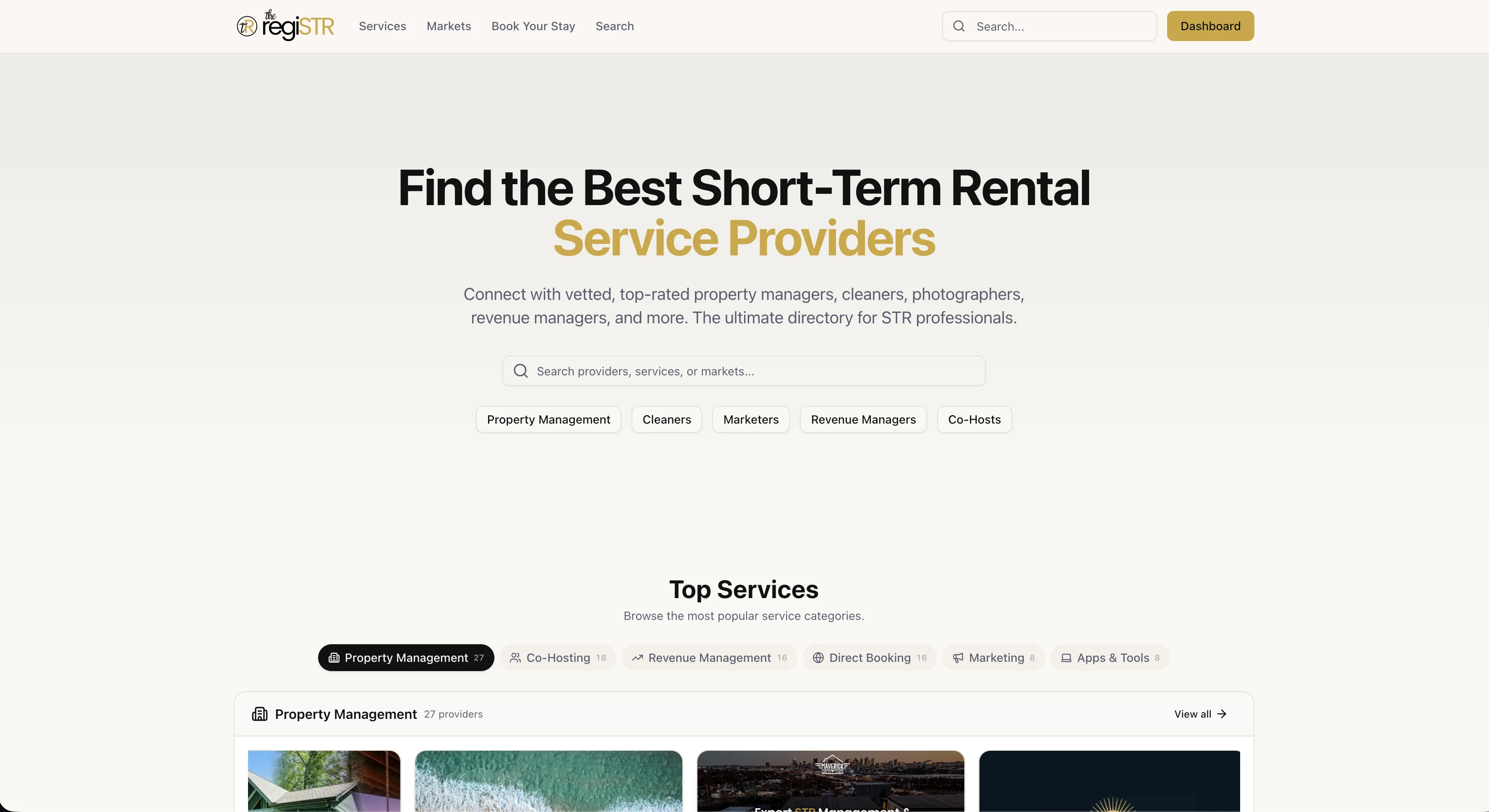
Get started with the regiSTR to browse vetted photographers, revenue managers, and marketing specialists who already know how to execute the organic booking strategies covered in this guide. Sign up free and search by market and service category in under two minutes, no ad budget required to get moving.
Content powered by inkSTR.co