Do You Need a Real Estate License for Property Management?

In most states, yes: managing rental property for someone else, for compensation, requires a real estate broker or salesperson license. The main exceptions are owners managing their own property, employees managing a single owner's portfolio, and on-site apartment managers who live in the building. Requirements vary significantly by state, so the exact answer depends on where the property sits and what tasks you're performing.
Key Takeaways
- Most U.S. states treat leasing, rent collection, and lease negotiation for a third party as licensed real estate activity, according to state-by-state legal analyses referenced by industry sources like the Institute of Real Estate Management (IREM).
- Managing property you own outright, including through an LLC where you're a principal, does not require a license in any state.
- A handful of states, including Montana, Oregon, South Carolina, South Dakota, and the District of Columbia, offer a dedicated property management license as an alternative to a full broker license.
- States including Idaho (for residential activity), Maine, Massachusetts, and Vermont, along with certain activities in Maryland and Kansas, do not require a real estate license for property management.
- Operating without a required license can result in fines, criminal exposure, and lease agreements that courts refuse to enforce.
- Whether you're an STR host trying to hire compliant help or a property manager building a legitimate practice, the regiSTR connects you with vetted, market-specific property management providers who already understand the licensing rules where your property sits.
If you own a short-term rental and you're trying to figure out whether you (or the person you're about to hire) needs a real estate license to manage it, you're asking the right question at the right time. Licensing enforcement for STR management has tightened in several states over the past two years, and the rules are not uniform. What's legal for a co-host in Idaho can get an unlicensed manager fined in California.
This guide breaks down when a license is required, who's exempt, and what happens if you skip this step. We built the regiSTR because we kept seeing hosts hire "property managers" who turned out to be unlicensed individuals operating in states that required licensure, exposing both the host and the manager to real legal risk. What follows draws from the patterns we've tracked across property management categories in our directory, state licensing statutes, and the compliance gaps that trip up first-time hosts most often.
By the end, you'll know exactly what triggers a license requirement, which states let you skip it, and how to vet a property manager's credentials before you sign a management agreement in 2026.
Do You Need a Real Estate License to Manage Rental Property?
You need a real estate license to manage rental property in most states if you're handling leasing, rent collection, or lease negotiation for someone else's property in exchange for compensation. This applies whether the property is a long-term rental or a short-term vacation rental, and it applies regardless of whether you call yourself a "property manager," "co-host," or "rental agent."
The licensing trigger isn't the job title. It's the combination of three factors: whose property you're managing, what specific tasks you perform, and which state the property sits in. Managing a property that isn't yours, for pay, while advertising it, showing it, negotiating terms, or collecting rent, is treated as licensed real estate activity in the majority of U.S. states.
Notably, this rule catches a lot of STR co-hosts off guard. A co-host who lists a property on Airbnb, communicates with guests, and collects a percentage of nightly revenue is functionally doing rent collection and lease negotiation, even if the "lease" is a two-night booking instead of a twelve-month tenancy. States haven't fully caught up to how short-term rental co-hosting maps onto traditional property management statutes, which creates real ambiguity for hosts building a co-hosting side business in 2026.
Can I Be a Property Manager Without a License in Texas?
Texas generally requires a real estate license for anyone who manages rental property for another party and performs licensed activities like leasing, negotiating rental terms, or collecting rent for compensation. Texas is one of the stricter states on this point, and the Texas Real Estate Commission (TREC) has historically drawn a firm line between owner-managed property and third-party management.
Where Texas gives some flexibility is with salaried employees. If you're a full-time, salaried employee of the property owner (not an independent contractor, not paid per transaction), you can typically perform management functions without a separate license because you're acting as the owner's direct agent, not a third-party broker. This distinction matters for anyone building an in-house property management team versus hiring an outside firm.
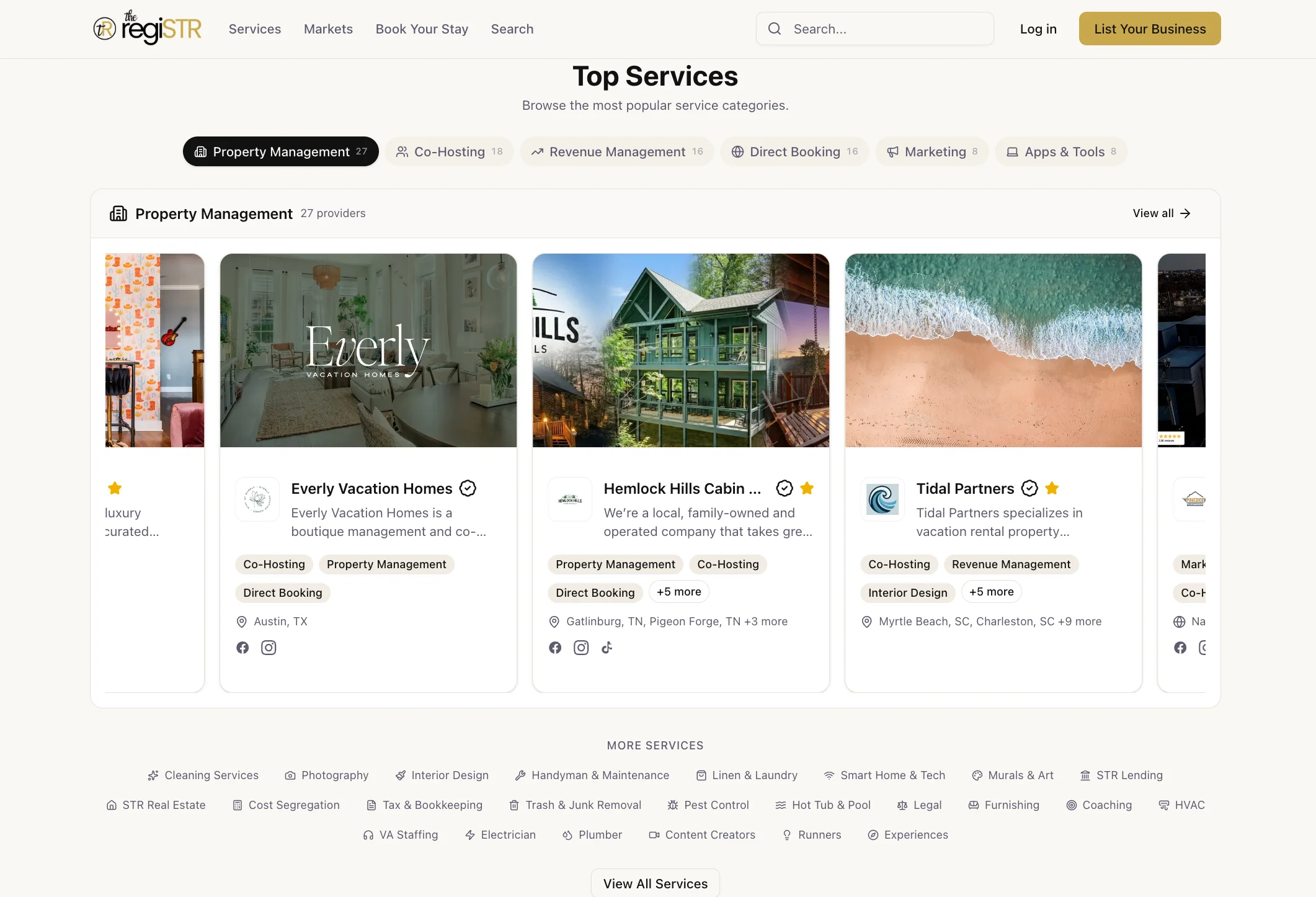
For STR hosts scaling a Texas portfolio, this means the co-host or property manager you hire needs either a Texas real estate license or a legitimate salaried-employee relationship with you as the owner. A contractor arrangement where you pay a flat fee or percentage to an unlicensed individual for full-service management is the exact structure that triggers TREC scrutiny. This is precisely the vetting criteria the regiSTR applies before listing property management providers, confirming license status matches the activity level a provider is offering in a given market.
Who Is Exempt From Needing a Real Estate License?
Exemptions from real estate licensing requirements generally fall into three categories: owners managing their own property, employees of a single property owner, and specific on-site roles defined by state statute. These exemptions exist across nearly every state, though the exact wording and scope varies.
The clearest universal exemption is self-management. If you own the property, personally or through an LLC where you're a principal, you can manage it yourself without any license, in any state. This is true whether you're managing one cabin or a twelve-property portfolio, as long as you're not managing property on behalf of someone else.
The second common exemption covers salaried, full-time employees who work exclusively for one property owner. A regional manager who oversees five properties owned by a single LLC and receives a W-2 salary typically doesn't need a license, because they're acting as an extension of the owner rather than as an independent third-party agent.
Third, most states exempt on-site apartment managers who live in the building in exchange for reduced or free rent. This exemption specifically covers residential multifamily settings and generally does not extend to single-family short-term rentals or commercial property, which is a distinction many STR operators miss when they assume a live-in caretaker arrangement automatically clears them of licensing obligations.
Utah's statute offers a useful, well-documented model here. Under Utah's Real Estate Licensing and Practices Act, exemptions cover owners managing their own property, employees of a single owner, on-site apartment managers living in the building for reduced rent, full-time salaried HOA employees, and certain short-term lodging arrangements under 30 consecutive days. Utah also created a separate stand-alone property manager license category, though that requirement doesn't become mandatory until January 1, 2027, giving Utah operators a runway to get compliant.
What Can a Non-Licensed Property Manager Do in Ohio?
A non-licensed individual in Ohio can generally handle maintenance coordination, guest communication, and day-to-day operational tasks for a rental property, but cannot legally negotiate leases, collect rent on behalf of an owner, or advertise the property for rent in exchange for compensation without a real estate license. Ohio, like most states, draws the licensing line at the point where an activity crosses from operational support into agency representation of the owner.
This creates a workable structure for STR hosts who want to keep some tasks in-house or delegate to unlicensed help. A cleaner, maintenance contractor, or guest-communication assistant who is paid a flat fee for specific tasks and has no authority to negotiate terms or collect funds on your behalf typically doesn't need a license. The moment that same person starts setting nightly rates, negotiating extended-stay discounts, or depositing guest payments into their own account before remitting to you, the activity looks a lot more like licensed property management.
For hosts trying to structure a compliant team in Ohio, the safest approach is keeping unlicensed help limited to clearly operational roles. Full-service oversight, including rate negotiation, listing management, and direct rent or booking-fee collection, should sit with either you as the owner, a licensed real estate professional, or a management company operating under proper licensure. Browsing STR property managers by market on the regiSTR is a faster way to confirm you're working with a provider whose scope of services already matches Ohio's licensing lines.
Do You Have to Have a License to Be a Property Manager in Oklahoma?
Oklahoma generally requires a real estate license for individuals or companies managing rental property for compensation on behalf of another owner, particularly when the role includes leasing, rent collection, or tenant negotiation. Like most states, Oklahoma's licensing framework treats third-party property management as a real estate brokerage activity rather than a separate, lightly regulated service category.
Oklahoma does not currently offer a stand-alone property management license the way Montana, Oregon, South Carolina, and South Dakota do. That means anyone providing full-service management in Oklahoma, including for short-term rentals, typically needs to hold or work under a real estate broker license rather than a lesser-tier credential.
This matters for out-of-state investors who own Oklahoma vacation rentals but live elsewhere. Hiring a local manager without confirming license status isn't just a compliance risk; contracts formed by an unlicensed party performing licensed activity can become unenforceable in a dispute, which means you could lose your ability to recover unpaid fees or enforce contract terms if something goes wrong. Confirming license status before signing a management agreement is one of the first things we tell hosts to check when comparing providers listed under full-service property management on the regiSTR.
What Activities Actually Trigger the License Requirement?
Licensed real estate activity generally includes four specific tasks: advertising a property for rent, showing the property to prospective tenants or guests, negotiating lease or booking terms, and collecting rent or fees on the owner's behalf. Performing any one of these tasks for someone else's property, in exchange for compensation, is what most state statutes use to define "acting as a property manager" in the licensing sense.
It's worth being precise here because a lot of confusion comes from assuming that "doing property management work" is a single activity. It's actually a bundle of separate tasks, and states license the bundle differently. Advertising and showing a property typically require licensure everywhere. Negotiating lease terms, including nightly rate adjustments or extended-stay discounts for an STR, is almost universally licensed activity when done for a third-party owner. Collecting rent or guest payments and remitting them to the owner, minus a management fee, is the activity most frequently cited in enforcement actions against unlicensed managers.
| Activity | Typically Requires License | Common Exemption |
|---|---|---|
| Advertising a rental listing for an owner | Yes, in most states | Owner advertising their own property |
| Showing the property to prospective tenants/guests | Yes, in most states | Salaried employee of a single owner |
| Negotiating lease or nightly rate terms | Yes, in nearly all states | Owner negotiating their own terms |
| Collecting rent or guest payments for an owner | Yes, in most states | On-site manager for reduced rent (residential multifamily) |
| Turnover cleaning and maintenance coordination | Generally no | Task-based contractor work, no agency authority |
| Guest communication without booking authority | Generally no | Purely operational, no negotiation or fund collection |
This is exactly the distinction hosts miss when they hire a "co-host" thinking it's a purely operational role. If that co-host is setting your nightly rates on Airbnb and collecting a percentage of bookings directly, you're likely looking at licensed activity depending on your state.
What's the Difference Between a Real Estate License and a Property Management License?
A real estate license authorizes someone to represent buyers, sellers, landlords, or tenants in real estate transactions broadly, including sales, leasing, and property management. A dedicated property management license, where states offer one, is a narrower credential that authorizes only property management activities without the broader sales and brokerage authority.
Montana, Oregon, South Carolina, South Dakota, and the District of Columbia currently offer this narrower property management license as an alternative path. The appeal for someone who only wants to manage rentals, not sell homes, is that a property management license typically involves a shorter education and exam track than a full broker license, though the exact requirements and timelines vary by state and you should confirm current details with the relevant state licensing board.
For STR-focused professionals, this distinction matters when deciding how to structure a career or business. If your state offers a stand-alone property management license and your goal is exclusively managing vacation rentals rather than brokering sales, that narrower path is often the more direct route to compliance. If your state only offers a full broker license, as is the case in Oklahoma and Texas, you'll need to complete broker-level requirements even if you never intend to sell a house.
How Do You Audit Your Current Management Tasks Against State Law?
Auditing your property management setup means listing every task you or your team performs, then checking each one against your state's specific licensing statute for advertising, showing, negotiating, and rent collection. This is the step most hosts skip, and it's the one that actually determines whether you're compliant.
Start with a simple worksheet. List every task involved in running your STR: writing and posting the listing, setting nightly rates, responding to booking inquiries, adjusting prices for seasonal demand, collecting payment through the platform, remitting funds to an owner if you're not the owner, coordinating cleaning, and handling maintenance requests. Next to each task, mark who performs it and whether that person is the property owner, a salaried employee of a single owner, or an independent contractor.
Then compare that list against your state's licensing statute or a current state-by-state resource such as the property management laws table maintained by industry directories. Pay close attention to negotiation and fund-collection tasks specifically, since those are the two activities most consistently classified as licensed work across state lines.
If your audit reveals that an independent contractor is negotiating rates or collecting guest payments on your behalf without a license in a state that requires one, you have three options: get that person licensed, restructure their role to remove negotiation and collection authority, or hire a licensed property management company instead. This is a natural moment to compare options through the regiSTR's property management directory, where listed providers are organized by market so you can confirm licensing posture before signing anything.
How Can You Structure Help Without Crossing Into Licensed Activity?
You can structure unlicensed help for your STR by limiting their role to task-based, operational work that excludes negotiation, advertising, and fund collection. This typically means hiring for cleaning, maintenance, and guest communication that doesn't include rate-setting or payment handling, while you retain licensing-triggering tasks yourself as the owner.
A practical structure looks like this: you, as the owner, keep control of the listing, pricing, and financial collection. You pay contractors flat fees for defined deliverables, a cleaning company for turnover service, a maintenance provider for repairs, a virtual assistant for guest message drafting that you review and send yourself. None of those roles involve negotiating on your behalf or collecting funds that belong to someone else.
Where this gets complicated is co-hosting arrangements where the co-host is paid a percentage of revenue and has authority to adjust pricing or communicate directly with guests about booking terms. That structure edges much closer to licensed activity in states that define property management broadly. If you want that level of delegated authority, either confirm your co-host holds the required license in your state, or work with a licensed full-service property management provider who already carries that credential and liability coverage.
For hosts who'd rather not manage this compliance question directly, that's exactly why providers list on the regiSTR: hosts get direct visibility into which local property managers are properly licensed for the specific market and scope of work they need, without having to research state statutes themselves.
How Do Licensing Rules Apply to Remote or Out-of-State Owners?
Licensing requirements are based on where the rental property is physically located, not where the owner or manager lives. An out-of-state owner managing their own property, personally, remains exempt from licensing under the owner exemption regardless of what state they reside in. But an out-of-state property manager working for someone else's property must be licensed in the state where the property sits, not just their home state.
This trips up a lot of remote investors building multi-market STR portfolios. If you own properties in three different states, and you hire local managers in each, those managers need licensure specific to the state where their assigned property is located. A single license generally does not transfer across state lines, since each state maintains its own real estate licensing board and reciprocity agreements vary widely and change periodically.
For scaling investors, this is one of the strongest arguments for using a market-organized directory rather than relying on a single national management company that may not have properly licensed staff in every state you operate in. Browsing property managers by city on the regiSTR lets you confirm local licensing and market familiarity at the same time, which matters more as your portfolio spans more states in 2026.
What Happens If You Operate Without a Required License?
Operating without a required real estate license when the law demands one can result in state fines, cease-and-desist orders, and in some jurisdictions criminal misdemeanor charges. Beyond regulatory penalties, unlicensed management activity can also render your management agreements unenforceable in civil court, meaning you may not be able to collect unpaid fees or enforce contract terms against a client or owner.
This risk cuts both ways. If you're a host who hired an unlicensed manager, and that manager mishandles funds or breaches the agreement, you may have limited legal recourse because the underlying contract could be voided due to the licensing violation. If you're the manager operating without a license, you're exposed to direct enforcement action from your state's real estate commission, independent of any dispute with a client.
This is precisely why licensing verification belongs at the top of any hiring checklist, not as an afterthought after you've already negotiated fees and signed paperwork. A property manager who can't produce a license number or clear explanation of their exemption status is not someone you want managing a revenue-generating asset. This is exactly the vetting criteria the regiSTR applies before featuring a property management provider in our directory, confirming licensing posture matches the services they're offering to hosts.
Data Snapshot: State Licensing Approaches Compared
State licensing frameworks for property management fall into roughly four categories: full broker license required, dedicated property management license available, limited exemptions for specific activities, and general exemption for most residential property management. Understanding which category your property's state falls into is the fastest way to determine your compliance path.
| State Approach | Example States | What It Means for Hosts |
|---|---|---|
| Full real estate broker license required | Texas, Oklahoma, Alabama | Managers need full broker credentials even if they never sell property |
| Dedicated property management license available | Montana, Oregon, South Carolina, South Dakota, District of Columbia | A narrower, often faster credential path exists specifically for management activity |
| New licensing requirement phasing in | Utah (mandatory stand-alone license by January 1, 2027) | Operators have a defined runway to get compliant before the deadline |
| General exemption for residential management | Idaho (residential), Maine, Massachusetts, Vermont | Property management can often proceed without a real estate license, but confirm current rules |
| Partial exemptions by activity type | Maryland, Kansas (select activities) | Some tasks are exempt while others still trigger licensing; audit task-by-task |
Notably, this table reflects general patterns rather than a complete state-by-state reference. Licensing statutes change, and Utah's 2025-2027 phase-in is a clear example of a state actively rewriting its rules right now. Always verify current requirements directly with your state's real estate licensing board before making a hiring or business decision based on this information.
How Should You Vet a Property Manager's Licensing Before You Hire?
Vetting a property manager's licensing means asking for their license number, verifying it directly through your state's real estate licensing board database, and confirming the license covers the specific scope of services they're proposing. A vague answer like "we're fully compliant" without a verifiable license number is a red flag, not reassurance.
Here's a practical sequence for hosts evaluating a management company or independent manager in 2026:
- Ask directly whether the individual or company holds a real estate broker license, a dedicated property management license, or is operating under a documented exemption.
- Request the license number and verify it through your state's official licensing board lookup tool, not just a screenshot the manager provides.
- Confirm the license is active and in good standing, not expired or under disciplinary review.
- Ask how they structure delegated tasks like co-hosting, and whether any subcontractors handle negotiation or fund collection without their own licensure.
- Get the licensing confirmation in writing as part of your management agreement, not as a verbal assurance during the sales call.
This is exactly the vetting standard we apply before listing a provider under full-service property management on the regiSTR. Every provider in that category is expected to operate within the licensing requirements of the markets they serve, which takes this verification step off your plate as a host comparing options.
Frequently Asked Questions
What does STR mean in real estate?
STR stands for short-term rental, referring to a property rented to guests for brief stays, typically under 30 days, through platforms like Airbnb or Vrbo. In real estate and property management contexts, STR distinguishes this business model from traditional long-term leasing, which usually involves month-to-month or annual tenancy agreements.
What is an STR in real estate investing specifically?
An STR in real estate investing is a property purchased and operated primarily to generate income through short-term guest stays rather than long-term tenant leases. Investors often evaluate STRs differently than traditional rentals because revenue depends on nightly rates, occupancy, and seasonal demand rather than a fixed monthly lease payment.
How do I find a hotel management company for my property?
If you're looking for professional oversight of a short-term rental rather than a traditional hotel, the equivalent service is full-service STR property management, not a hotel management company designed for larger commercial lodging operations. You can browse vetted STR property managers organized by market on the regiSTR to find providers whose licensing and services match your specific property type.
Do I need a real estate license to co-host an Airbnb for someone else?
In many states, yes, particularly if you're setting nightly rates, negotiating booking terms, or collecting guest payments on the owner's behalf for compensation. Purely operational co-hosting, limited to guest messaging without negotiation authority or cleaning coordination, is less likely to trigger licensing, but you should confirm the specific rules in the state where the property sits.
Can an LLC manage its own rental property without a real estate license?
Yes. If you're a principal or member of the LLC that owns the property, managing that property yourself does not require a real estate license in any state. The exemption applies to owner-managed property regardless of whether ownership sits with an individual or an entity like an LLC.
Is a property management license the same as a real estate license?
No. A real estate license, whether salesperson or broker level, authorizes a broader range of activities including sales, leasing, and management. A dedicated property management license, offered in states like Montana, Oregon, South Carolina, South Dakota, and the District of Columbia, authorizes only management activities and is generally a narrower credential.
What should I do if I'm not sure whether my state requires a license for my situation?
Contact your state's real estate licensing board directly and describe the exact tasks involved, since licensing determinations depend heavily on specific activities like negotiation and rent collection rather than job titles. You can also compare your situation against resources like the property management laws table maintained by industry directories, though direct confirmation from your state board is always the safest final step.
Conclusion
Whether you need a real estate license for property management comes down to three questions: whose property is it, what tasks are you performing, and which state is the property in. Most states require licensure for anyone managing someone else's property for pay, especially when negotiation or rent collection is involved, while owners managing their own property and salaried employees of a single owner remain broadly exempt across the country.
As STR regulation continues to mature into 2026, more states are likely to clarify how these traditional property management statutes apply to short-term rental co-hosting specifically, following Utah's lead in creating dedicated licensing pathways. Getting this right now, before a dispute or audit forces the question, protects both your business and your management contracts.
If you're building or scaling an STR portfolio and want to work with property managers who already carry the right credentials for your market, that's exactly the gap the regiSTR was built to close.
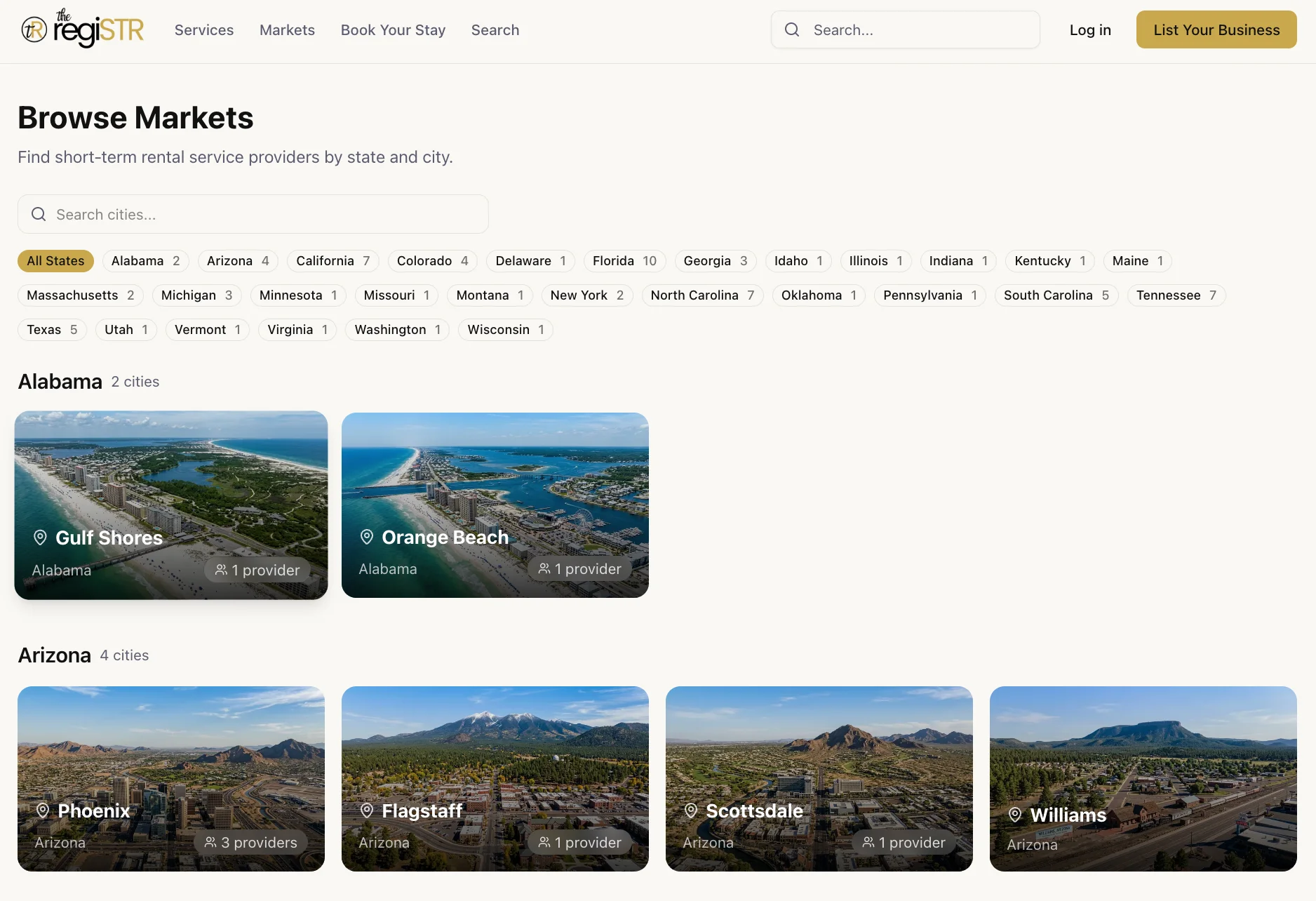
Instead of taking a property manager's word for it on licensing, browse vetted providers organized by market and confirm their credentials before you sign anything. Get started with the regiSTR and search full-service property management providers by city at theregistr.co.
Content powered by inkSTR.co