
Arizona Vacation Property: A Host's Market Guide for 2026
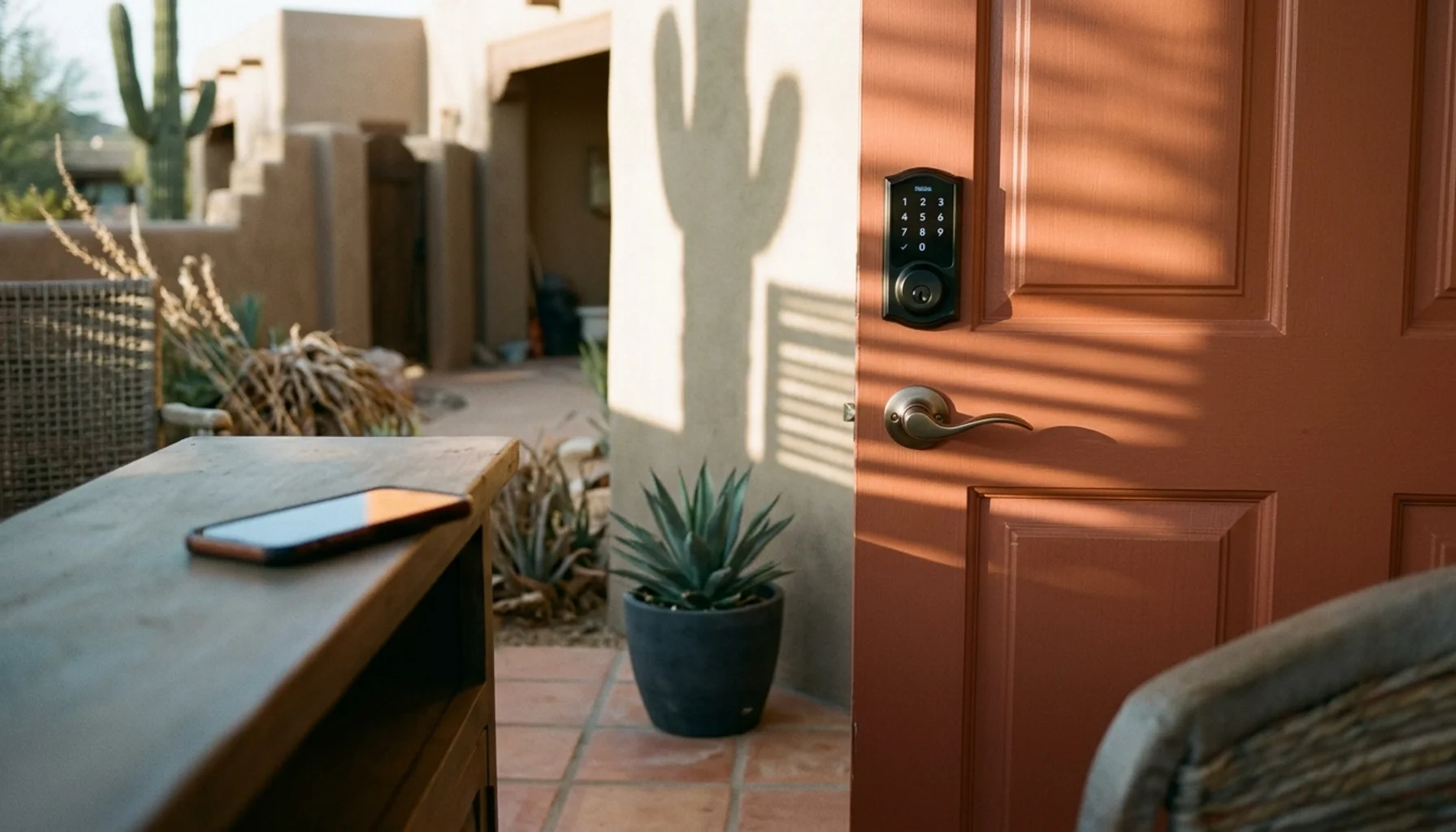
An Arizona vacation property is a short-term rental home, condo, or casita located in a Arizona market such as Phoenix, Scottsdale, Sedona, Tucson, or Flagstaff, operated as a nightly or weekly rental rather than a long-term lease. Statewide, these properties averaged 59.47% occupancy, a $198 average daily rate, and $44,538 in annual revenue per listing in 2026, according to Airbtics' 2026 Arizona Airbnb market analysis.
Key Takeaways
- Arizona's short-term rental market generated roughly $1.8 billion annually across more than 40,000 active listings in the state's major metros, per market research cited across Arizona tourism industry data.
- Statewide revenue per listing grew 16.23% year-over-year in 2026, while supply grew 16.76%, meaning more owners entered the market but demand kept pace.
- Phoenix carried 9,344 active listings as of May 2026, averaging about $44,904 in annual revenue and 59.4% occupancy in April 2026.
- Sedona properties averaged $6,143 in monthly revenue at a 49.0% occupancy rate in 2026, a smaller but higher-margin market than Phoenix.
- Arizona removed transaction privilege tax filing requirements for rentals of 30 days or longer starting in 2026, but stays under 30 nights still require transient occupancy tax collection.
- Vetting reliable local vendors, cleaners, photographers, and property managers, matters more in Arizona's climate-stressed, seasonally volatile market than in almost any other region, which is exactly the gap the regiSTR was built to close.
Owning an Arizona vacation property in 2026 means operating in one of the country's most seasonally lopsided markets. Snowbird season runs roughly December through March, when occupancy in many desert markets climbs to 75-85%, then drops sharply once temperatures hit triple digits by June. That swing changes everything about how you staff turnovers, price nightly rates, and choose a property manager.
This guide breaks down where Arizona's vacation rental performance actually concentrates, what regulations changed in 2026 and 2026, and what separates owners who hit statewide revenue benchmarks from those who quietly underperform their market. We also cover the operational side almost no other Arizona rental guide touches: how to actually vet the cleaners, photographers, and managers your property depends on once the booking calendar fills up.
At the regiSTR, we track service provider patterns across dozens of short-term rental markets, and Arizona has a specific quirk worth naming upfront: extreme heat cycles put more mechanical and cosmetic wear on a property than almost any other climate zone. HVAC failures, pool equipment issues, and sun-damaged furnishings are a routine part of Arizona ownership, not an edge case. That reality should shape every hiring decision covered below.
What Is the Best Vacation Spot in Arizona for Rental Investment?
Phoenix and Scottsdale carry the largest inventory and revenue base for Arizona vacation properties, but Sedona delivers stronger per-listing economics on a smaller supply footprint. As of 2026, Phoenix reports roughly 9,344 active listings generating about $44,904 in average annual revenue, while Sedona listings average $6,143 monthly at a leaner 49.0% occupancy rate.
The distinction matters for how you plan. Phoenix and Scottsdale work as volume markets: high supply, steady year-round demand from business travel, golf tourism, and spring training crowds, plus a deep pool of service providers to draw from. Sedona works as a scarcity market: fewer available short-term rental permits in some zoning districts, higher average daily rates driven by red-rock scenery and hiking access, and guests willing to pay a premium for a specific type of property.
Tucson sits between the two, with a lower cost basis for acquiring a property and steady demand tied to the University of Arizona, winter visitors, and the Tucson Botanical Gardens as a nearby draw. Flagstaff pulls a different guest profile entirely: summer heat refugees from Phoenix, ski season traffic to the San Francisco Peaks, and proximity to Grand Canyon day-trippers. Northern Arizona University adds a modest but steady demand floor in Flagstaff outside peak tourist windows.
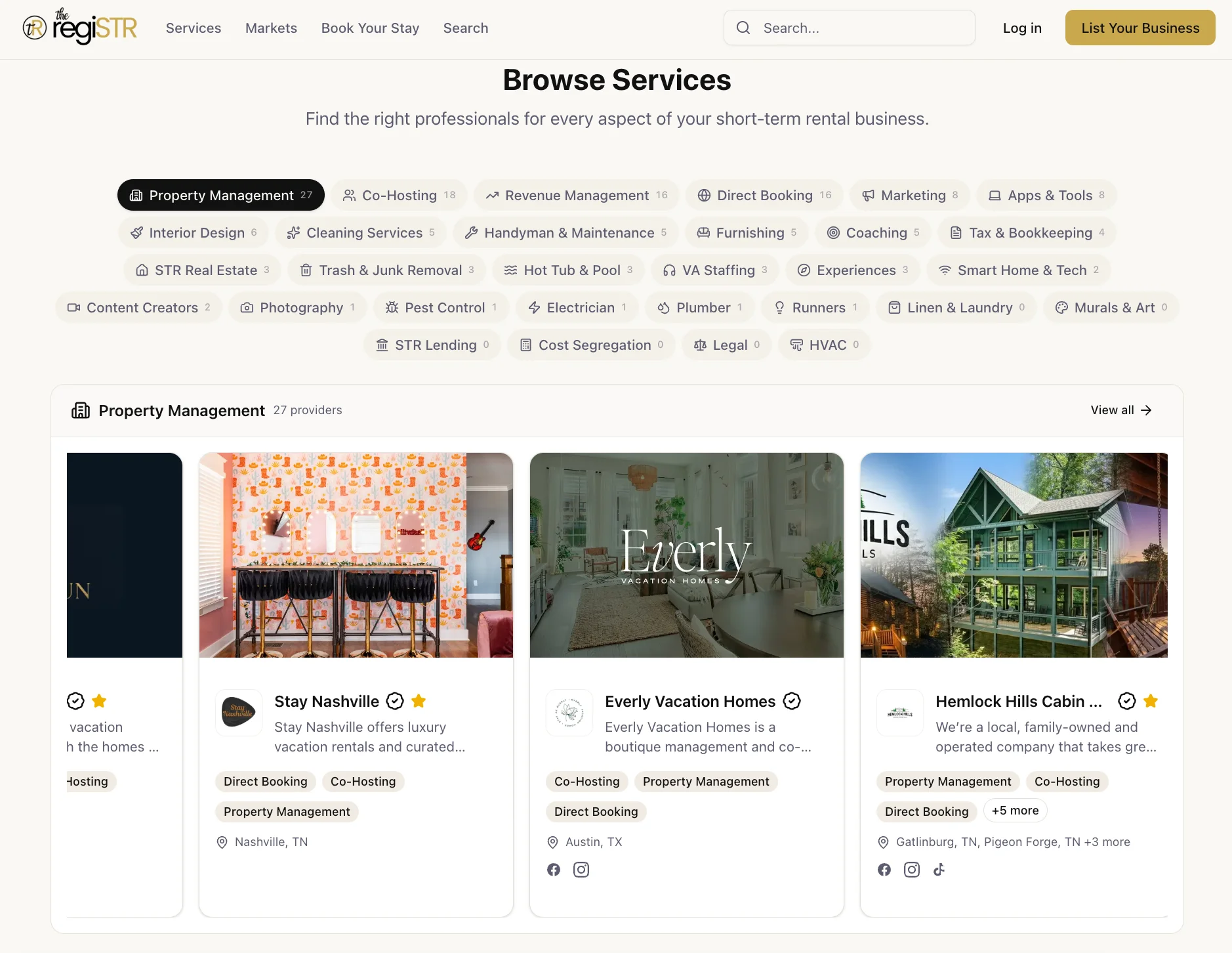
If you're deciding where to buy or convert a property, match the market to your operating style. Phoenix and Scottsdale reward owners who can manage volume and want a deep bench of vetted property managers to choose from. Sedona and Flagstaff reward owners who can tolerate lower occupancy in exchange for higher nightly rates and lower turnover volume.
What Is the Best Month to Vacation in an Arizona Rental Property?
December through March is Arizona's peak short-term rental season, when snowbird demand and mild desert temperatures push occupancy to 75-85% in many markets, according to seasonal demand patterns tracked across the state. March specifically runs about 37% higher in pricing compared to baseline months, based on aggregated vacation rental search data.
January, by contrast, functions as a pricing low point even within peak season, with search data showing roughly a 21% price drop compared to the surrounding months. That's a useful detail for owners setting dynamic pricing rules: don't assume every winter month behaves the same. Demand curves inside the snowbird window are uneven, and a flat winter rate leaves money on the table in February and March while overpricing early January.
Summer tells a different story depending on elevation. Phoenix, Tucson, and lower-desert markets see occupancy fall off sharply once daytime highs pass 100 degrees, typically starting in May and running through September. Flagstaff and Sedona see the opposite pattern: their higher elevation and cooler summer temperatures make June through August a secondary peak season, as Phoenix-area residents and out-of-state visitors seek relief from the heat.
Weekday pricing also matters more than most first-time owners expect. Data on rental pricing patterns shows Wednesday nights running cheapest and Saturday nights running most expensive, a gap owners can exploit with weekday specials aimed at remote workers and retirees, or ignore at the cost of empty midweek nights. A revenue manager who understands this seasonal and weekly rhythm specifically for Arizona, not just generic STR pricing theory, is worth the fee difference over a generalist consultant.
Where's the Cheapest Place to Rent an Arizona Vacation Property?
East Mesa and outlying Phoenix-metro suburbs generally offer the lowest acquisition and rental cost basis among Arizona's established short-term rental markets, trading proximity to downtown attractions for a lower price point and less competitive permitting environment. Tucson also runs meaningfully cheaper than Scottsdale or Sedona on a per-night and per-property basis.
Cheap, though, is relative to what you're optimizing for. A lower-cost Mesa property might generate less absolute revenue than a Scottsdale unit, but it can post a stronger return relative to purchase price, especially for first-time owners working with a tighter acquisition budget. Statewide annual revenue per listing averaged $44,538 in 2026, and that figure includes both high-cost, high-revenue markets and lower-cost, lower-revenue ones averaged together.
Seasonally, August and January consistently rank as the cheapest months to book an Arizona vacation rental, per aggregated search pricing data. If you're evaluating a market for acquisition, look at how a property performs specifically in those shoulder windows, not just peak season numbers a seller might highlight. A property that only pencils out during the December-to-March window carries more risk than one with a workable baseline in slower months.
Cheaper markets also tend to have thinner service provider networks. Fewer STR-specialized cleaners and photographers operate in outlying suburbs compared to Scottsdale or central Phoenix, which is exactly the discovery problem a market-organized directory solves. Instead of cold-calling residential cleaning companies that have never handled a same-day turnover, you can filter by market on the regiSTR's cleaning and turnover directory and see who's already working in your specific zip code.
What Is the Nicest Place in Arizona to Live and Operate a Rental?
Scottsdale consistently ranks as Arizona's most desirable market for both livability and vacation rental performance, combining upscale amenities, golf course communities, and a walkable downtown district with strong tourism demand from destination weddings, business conferences, and winter visitors. Sedona rivals it on natural setting but with a smaller, more tightly regulated inventory of legal short-term rental units.
Livability and rental performance don't always align perfectly. A neighborhood that's genuinely pleasant to live in year-round, quiet, well-maintained, good schools, may have HOA restrictions or municipal zoning rules that cap or prohibit short-term rentals entirely. Before buying an Arizona vacation property in a desirable residential pocket, confirm the specific short-term rental permitting rules for that municipality and any HOA covenants that apply, since Arizona cities vary significantly on licensing requirements and unit caps per neighborhood.
Tucson offers a strong middle path for owners who want livability without Scottsdale's price tag, anchored by proximity to the Tucson Botanical Gardens, the University of Arizona, and El Con Mall for guest convenience. Flagstaff appeals to owners who want a four-season mountain-town feel inside Arizona's borders, with cooler summers and genuine ski access nearby.
Whichever market you land in, the properties that perform best long-term tend to have owners who invest in professional photography and interior staging that matches the local aesthetic, whether that's Scottsdale's desert-modern look or Sedona's red-rock rustic style. Generic staging photographed with a phone camera underperforms specialized STR photography across every Arizona market we've reviewed.
What Do Arizona Vacation Property Owners Actually Pay for Management?
Full-service property management for Arizona vacation rentals typically runs 15-25% of gross revenue in competitive markets like Phoenix and Scottsdale, a range consistent with national benchmarks for professionally managed STR portfolios. That fee usually covers guest communication, cleaning coordination, dynamic pricing, and maintenance dispatch.
Self-managing owners who handle their own bookings and vendor coordination typically target 55-65% annual occupancy to hit statewide revenue benchmarks, since they're trading a management fee for their own time and risk tolerance. That math changes fast once you own more than one property or live out of state, since coordinating cleaners, HVAC repair, and guest issues across time zones eats far more hours than most first-time owners budget for.
Here's a simple framework for the decision:
| Factor | Self-Manage | Full-Service Property Manager |
|---|---|---|
| Typical fee | None (your time instead) | 15-25% of gross revenue |
| Best for | Local owners, single property | Out-of-state owners, multi-property portfolios |
| Occupancy target needed | 55-65% to hit statewide averages | Varies; manager typically pushes toward peak-season optimization |
| Emergency response | You or a backup contact | Manager's maintenance network |
| Compliance handling | Owner's responsibility | Often included or coordinated |
Professional management companies control an estimated 40-50% of active listings on major platforms globally, which tells you something important: most successful operators, even experienced ones, eventually outsource at least part of the operation rather than running everything solo indefinitely. Comparing management quotes side by side is exactly what the regiSTR's property manager directory is built for, filterable by Arizona market so you're not comparing a Scottsdale specialist against a generic statewide firm with no local presence.
How Do Arizona Short-Term Rental Regulations Work in 2026?
Arizona short-term rental regulation operates at the municipal level rather than through a single statewide licensing system, meaning requirements for permits, unit caps, and zoning vary significantly by city as of 2026. A change effective in 2026 removed transaction privilege tax filing obligations for rentals booked at 30 nights or longer, but stays under 30 nights still require transient occupancy tax collection at rates that vary by city and county.
This creates a genuine operational fork for owners. If your property leans toward extended snowbird stays of a month or more, you may have fewer state-level tax filing obligations than a purely nightly rental operation. If you're running a true short-term calendar with frequent 2-7 night bookings, you're still on the hook for transient occupancy tax collection and remittance in whichever Arizona city and county your property sits in.
Many Arizona cities also impose their own licensing requirements and zoning restrictions that cap the number of short-term rental units allowed per neighborhood or require specific dwelling-type designations. Phoenix and Tucson have both increased regulatory scrutiny in higher-density areas as of 2026, pushing more operators to formalize documentation and registration processes rather than operating informally. Airbnb and Vrbo platform rules also require hosts to display registration numbers in listing descriptions wherever local law mandates it.
None of this is legal advice, and the specific rules for your address should be confirmed directly with your city's planning or licensing office before you list a property. What we can tell you from the vendor side: this is exactly the kind of shifting, city-specific compliance landscape where a specialized STR consultant earns their fee. General business attorneys rarely track Arizona's municipal STR ordinance changes closely enough to advise confidently, which is why we list dedicated compliance specialists on the regiSTR rather than folding that category into general legal services.
How Do I Find a Reliable Cleaner for My Arizona Vacation Property?
Finding a reliable Arizona vacation rental cleaner means looking specifically for STR-experienced turnover crews, not general residential housekeepers, since same-day checkout-to-checkin windows demand a different workflow than a standard weekly clean. In Arizona's desert climate, cleaners also need to manage dust accumulation, pool-area debris, and AC filter checks as part of a standard turnover, tasks a generalist cleaner may not think to include.
A cleaner who can't commit to a guaranteed turnaround window isn't the right fit for a short-term rental operation, especially in Phoenix or Scottsdale where back-to-back same-day bookings are common during peak season. Ask any candidate directly: how many other STR properties do they service on a typical Saturday, and what happens if a prior job runs long? If they don't have a clear backup plan, that's a red flag worth taking seriously.
Supply stocking is another Arizona-specific wrinkle. Higher water usage for pool maintenance, dust-prone surfaces that need more frequent wipe-downs, and sun-faded linens that need replacing more often than in milder climates all add up. A cleaner quoting a flat residential rate without accounting for these realities is likely underestimating the job.
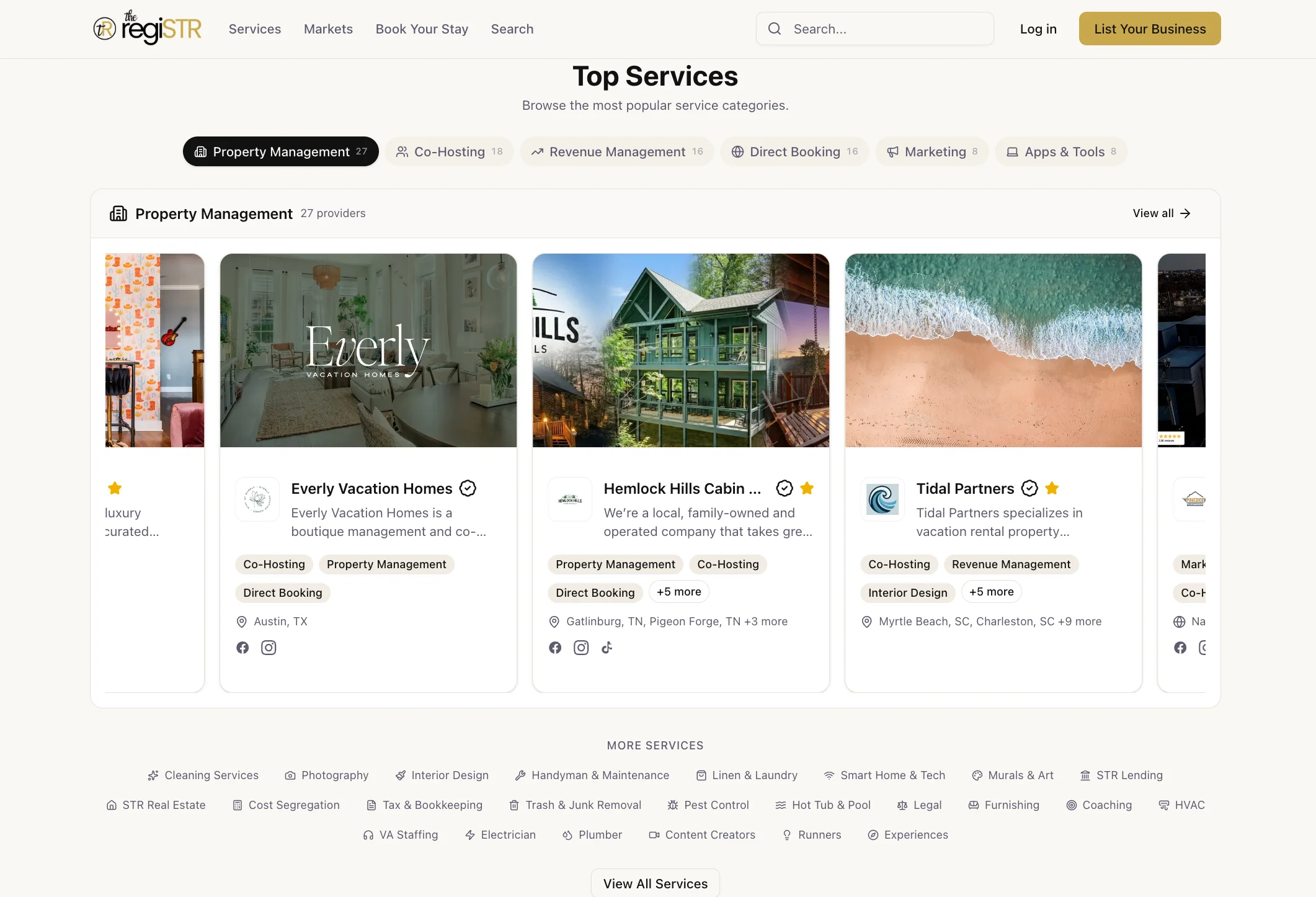
Instead of posting in Facebook groups and hoping for a recommendation, browse vetted STR cleaners filtered by Arizona market on the regiSTR's cleaning directory. Every provider was referred in by an existing network member, and the Vouch system shows which Arizona operators have personally worked with each cleaner, so you're not relying on anonymous star ratings alone.
What Should I Look for in an Arizona Vacation Rental Photographer?
An Arizona-specialized vacation rental photographer understands how to shoot desert-modern architecture, pool areas, and mountain-view backdrops in a way that translates into strong click-through rates on Airbnb and Vrbo listings. Harsh midday desert light is a real technical challenge; the best STR photographers in Arizona markets shoot during golden hour or use specific lighting techniques to avoid blown-out exteriors and overly dark interiors.
Generalist photographers, wedding or portrait specialists picking up STR work as a side gig, frequently miss the specific shot list that converts bookings: wide-angle hero shots of the main living space, detail shots of amenities like a pool or hot tub, and exterior shots that establish the property's setting against Arizona's landscape. A portfolio full of headshots and family photos with one or two property listings mixed in is a signal to keep looking.
For properties in Sedona or Flagstaff, the landscape itself is part of the selling point, and photographers who know how to frame red rock or pine-forest backdrops without overexposing the sky add real value to a listing. For Scottsdale and Phoenix desert-modern properties, clean architectural lines and pool photography carry more weight than scenic backdrops.
Find STR-specialized photographers filtered by Arizona market through the regiSTR's photography directory, where every listed provider has direct short-term rental portfolio experience rather than a generalist background.
Data & Evidence: How Arizona Vacation Property Performance Compares by Market
Arizona's short-term rental performance varies meaningfully by city, and comparing hard numbers side by side is more useful than relying on general reputation. The table below reflects verified 2025-2026 data points for the state's major markets.
| Market | Active Listings | Avg Annual/Monthly Revenue | Occupancy Rate |
|---|---|---|---|
| Statewide Arizona | 40,000+ | $44,538/year | 59.47% |
| Phoenix | 9,344 (May 2026) | $44,904/year | 59.4% (April 2026) |
| Sedona | Smaller, permit-restricted supply | $6,143/month | 49.0% |
The gap between Phoenix's roughly 59% occupancy and Sedona's 49% is worth sitting with. Sedona's lower occupancy doesn't mean weaker performance; monthly revenue of over $6,000 with fewer nights booked implies a materially higher average daily rate, likely well above $400 in peak season, consistent with luxury and amenity-rich properties in high-demand Arizona markets outperforming the state average.
Statewide revenue growth of 16.23% year-over-year in 2026 outpaced supply growth of 16.76%, a near-even race that suggests the market absorbed new inventory without materially diluting per-listing revenue. That's a healthier signal than markets where supply outpaces demand and per-listing revenue erodes. As of 2026, Arizona's vacation rental sector still looks like a market with room for well-positioned new entrants, provided they compete on property quality and operational execution rather than just adding undifferentiated inventory.
How Do I Convert My Arizona Home Into a Vacation Rental?
Converting an Arizona primary residence or long-term rental into a short-term vacation property starts with confirming your municipality's zoning and permitting rules, since requirements differ city by city across the state as of 2026. Start there before spending money on furnishings or photography, because a property that can't legally operate as a short-term rental in its current zoning designation is a dead end regardless of how well it's staged.
- Confirm zoning and licensing requirements with your specific city's planning or licensing office, since Arizona has no single statewide STR permit.
- Check HOA covenants if applicable; many Arizona communities restrict or prohibit short-term rentals even where city zoning allows them.
- Budget for climate-specific upgrades: reinforced AC capacity, pool equipment servicing, and sun-durable furnishings and window treatments.
- Register for transient occupancy tax collection if your stays will run under 30 nights, since that exemption only applies to 30-day-plus bookings.
- Line up your vendor stack before your first listing goes live: a turnover cleaner, a maintenance contact, and either a self-managed pricing plan or a property manager.
- Invest in professional photography before launch; first-listing photos set the tone for your review trajectory and initial booking velocity.
- Decide whether you'll self-manage or hire a co-host or full property manager, based on your proximity to the property and available time.
Owners converting a property from long-term to short-term use often underestimate the vendor coordination lift required in the first 60 days. That's a common mistake: launching a listing before you've actually lined up a reliable cleaner and a maintenance contact, then scrambling reactively once the first booking issue hits. Building that vendor bench before launch, not after your first bad review, is what separates smooth conversions from chaotic ones. Browse the full service stack, from maintenance and repair providers to interior designers who specialize in STR staging, across the regiSTR's Arizona market pages.
Frequently Asked Questions
What is the average revenue for an Arizona vacation property?
Arizona vacation properties averaged $44,538 in annual revenue per listing in 2026, with a 59.47% occupancy rate and $198 average daily rate statewide, according to Airbtics' 2026 Arizona market analysis. Individual market performance varies significantly, with Phoenix tracking close to the state average and smaller luxury markets like Sedona posting higher rates on lower occupancy.
Do I need a permit to operate a short-term rental in Arizona?
Requirements vary by city, since Arizona doesn't operate a single statewide short-term rental permit system as of 2026. Many municipalities impose their own licensing rules, zoning restrictions, or unit caps per neighborhood, so you need to confirm the specific requirements with your city's planning or licensing department before listing a property.
Is Phoenix or Sedona better for a vacation rental investment?
Phoenix offers higher volume with roughly 9,344 active listings and steady year-round demand, while Sedona offers a smaller, more tightly permitted market with higher per-night rates and monthly revenue around $6,143 at lower occupancy. Phoenix suits owners who want a deep vendor network and consistent bookings; Sedona suits owners targeting a premium, lower-volume niche.
How much does property management cost for an Arizona vacation rental?
Full-service property management in competitive Arizona markets like Phoenix and Scottsdale typically runs 15-25% of gross revenue. That fee generally covers guest communication, turnover coordination, pricing adjustments, and maintenance dispatch, though exact scope varies by management company and contract terms.
What is the cheapest month to book an Arizona vacation rental?
August and January consistently rank as the cheapest months for Arizona vacation rental pricing, according to aggregated seasonal search data. January is notable because it falls within peak snowbird season overall, yet still shows roughly a 21% price dip compared to surrounding months.
Do I still owe taxes on short-term stays under 30 nights in Arizona?
Yes. While Arizona removed transaction privilege tax filing requirements for rentals of 30 nights or longer starting in 2026, stays under 30 nights still require transient occupancy tax collection and remittance, with rates varying by city and county. Confirm the exact current rate with your local tax authority.
How do I find vetted service providers for my Arizona vacation property?
The regiSTR organizes vetted cleaners, photographers, property managers, and maintenance providers by market, including Arizona cities like Phoenix, Scottsdale, and Sedona. Every listed provider was referred in by an existing network member, and the platform's Vouch system lets other operators publicly confirm they've worked with a given provider before you hire them.
Conclusion
An Arizona vacation property in 2026 performs best when the owner matches their market choice to their operating capacity, whether that's Phoenix's high-volume, deep-vendor-bench environment or Sedona's lower-volume, premium-rate niche. Statewide revenue per listing hit $44,538 in 2026, and the gap between top and average performers usually traces back to vendor quality: the cleaner who shows up on time, the photographer who understands desert light, the manager who knows the local regulatory landscape.
Vetting those vendors one by one, city by city, is the part almost no Arizona rental guide actually addresses. That's the specific gap the regiSTR fills: a market-organized directory of STR-specialized cleaners, photographers, property managers, and maintenance providers across every Arizona market covered, each one vouched for by operators who've actually hired them.
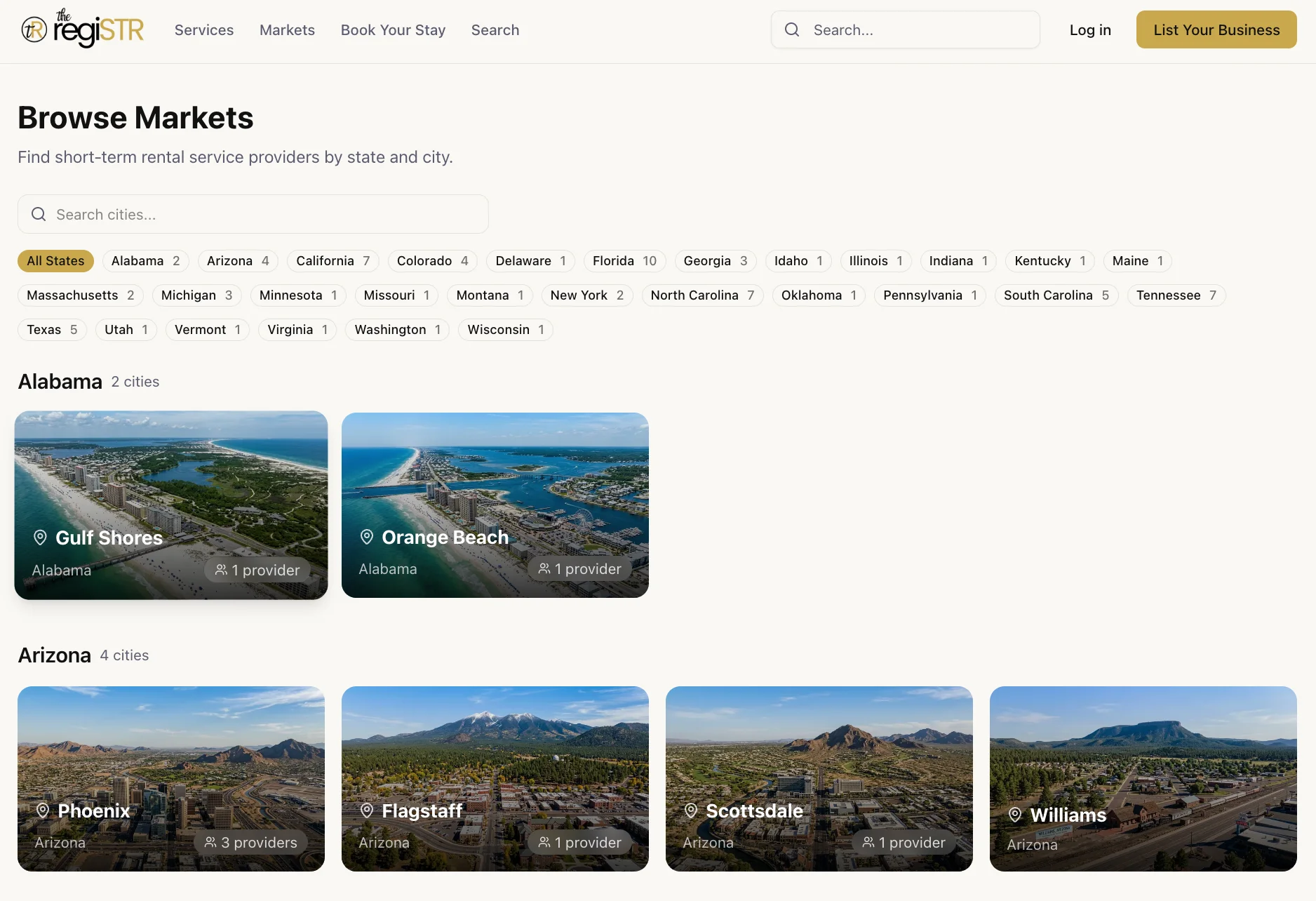
If you're building out the vendor stack for a Phoenix, Scottsdale, or Sedona property right now, start with the category that matters most for your next booking cycle. Browse vetted Arizona STR service providers on the regiSTR and filter by market and service type to find who's already working successfully in your specific city.
Content powered by inkSTR.co