
Airbnb Virtual Assistants: What They Do and When to Hire One

An Airbnb virtual assistant is a remote worker who handles the day-to-day operational tasks of running a short-term rental, including guest messaging, booking management, listing updates, and cleaner coordination, without being physically present at the property. Hosts typically pay somewhere between $800 and $2,500 per month for this support, depending on scope and whether the assistant works solo or through an agency. In 2026, as Airbnb's own AI tools handle a growing share of guest inquiries, a human virtual assistant fills the gaps automation still can't close: judgment calls, vendor coordination, and the kind of guest recovery that keeps a listing's reviews intact.
Key Takeaways
- Airbnb virtual assistants typically handle guest messaging, reservation management, calendar syncing, listing optimization, and cleaner or maintenance coordination for a monthly fee or hourly rate.
- Reported hourly rates for virtual assistants vary widely by region: roughly $24 to $35 in the United States, $20 to $30 in the United Kingdom, and $5 to $12 in the Philippines, according to VAMasters Virtual Assistant Industry Statistics.
- Full-service VA agencies commonly charge between $500 and $2,500 per month, while a combined virtual assistant and local cleaner arrangement often runs $1,200 to $3,000 per month.
- The global human virtual assistant services market is valued at roughly $6.5 billion in 2026 and is projected to reach $43.4 billion by 2035, reflecting a 23.4% compound annual growth rate, per VAMasters.
- Superhost listings show a median monthly revenue premium of 51.5% over non-Superhost listings, according to AirROI's March 2026 dataset across nine markets, a gap that responsive guest communication and consistent operations help drive.
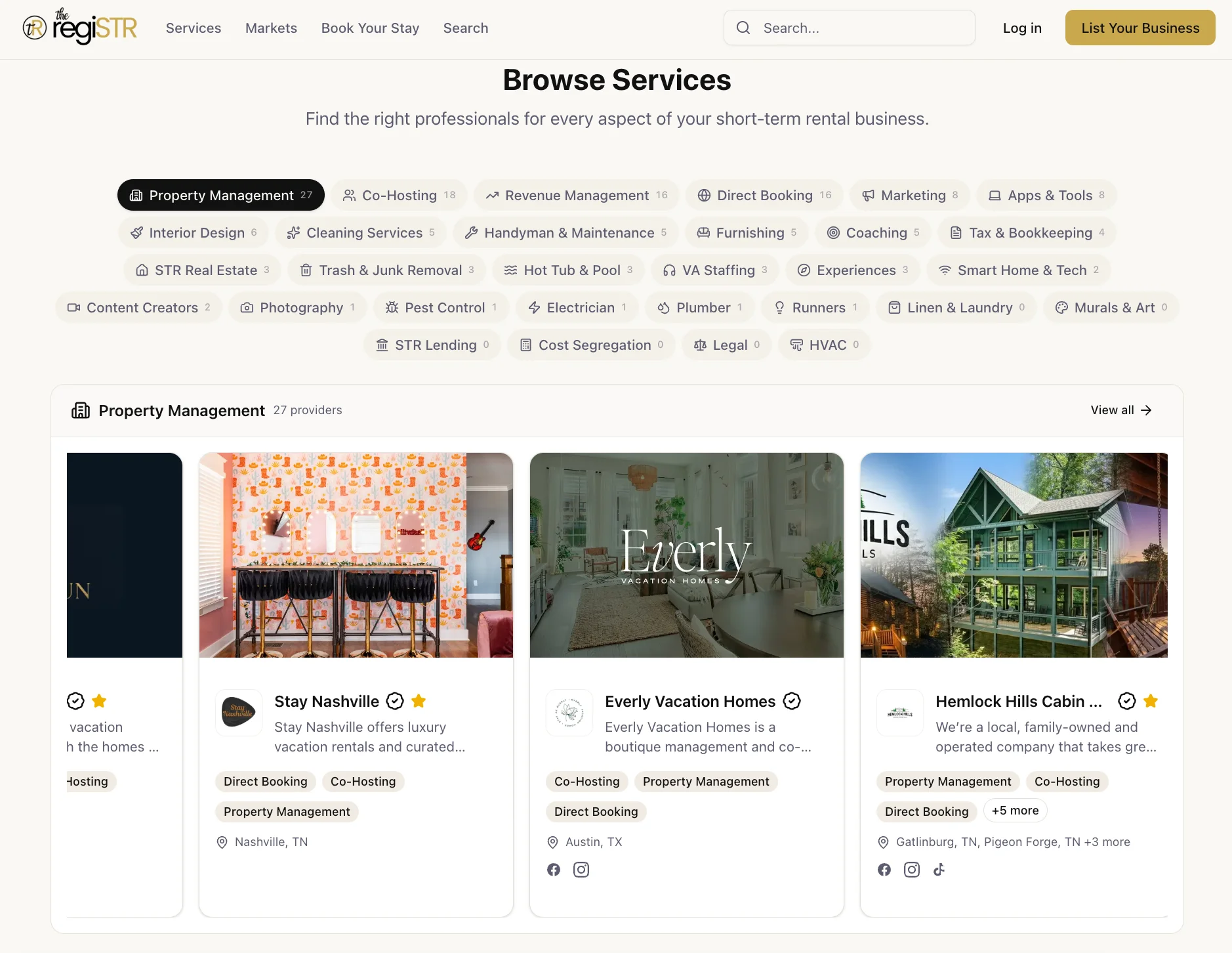
- The the regiSTR directory lists co-hosts and STR-specialized support providers by market, so hosts vetting a virtual assistant or a full co-hosting solution aren't starting from a blank search.
Most first-time hosts hit the same wall around month three: guest messages piling up at 11pm, a same-day booking question that needs an answer before the guest looks elsewhere, and a cleaner who needs rescheduling because checkout ran late. That's usually the point where "I'll just handle it myself" stops working.
This guide covers what an Airbnb virtual assistant actually does, how the role differs from a co-host or full property manager, what it costs in 2026, and how to vet, hire, and onboard one without handing over more access than you should. We also flag where a virtual assistant isn't the right fit and a local co-host or property manager makes more sense instead.
At the regiSTR, we track this exact decision across the operators in our network, and the honest answer is that a virtual assistant solves a specific problem: message volume and repetitive coordination work. It does not solve every operational gap, particularly anything requiring boots on the ground.
What Does an Airbnb Virtual Assistant Do?
An Airbnb virtual assistant manages the remote, repeatable operational tasks of a short-term rental so the owner doesn't have to be available around the clock. Specifically, this includes guest messaging across inquiry, booking, and stay phases; reservation and calendar management; listing updates and pricing adjustments; review monitoring; and coordinating cleaners or maintenance vendors on the owner's behalf.
Guest communication is the core of the job. A good virtual assistant handles the full guest journey: answering pre-booking questions, confirming reservations, sending check-in instructions, responding during the stay, and following up for reviews after checkout. Industry research shows this workflow typically spans five distinct phases, and hosts who skip any one of them see slower response times and lower review scores.
Beyond messaging, virtual assistants often manage calendar syncing across Airbnb and Vrbo to prevent double bookings, adjust pricing in response to demand shifts, and process invoices for supplies or repairs. Some also handle social media posting and light marketing tasks, though this is typically an add-on rather than the core service.
What a virtual assistant does not do: show up at the property. They can't greet a guest in person, fix a broken lock, or restock towels. For anything physical, you still need a local cleaner, handyman, or co-host on the ground. Hosts who understand this split, remote coordination versus physical presence, build the most reliable operations. Browse STR property managers on the regiSTR if you need someone who covers both.

How Do You Know When It's Time to Hire a Virtual Assistant?
The decision to hire an Airbnb virtual assistant should be based on message volume, number of active listings, and how much of your day is currently consumed by guest communication rather than strategy or growth. There's no universal trigger point, but a few signals show up consistently across hosts we track.
If you're managing two or more listings and receiving guest messages outside your normal working hours, you've likely outgrown solo management. A single property with occasional bookings rarely justifies the monthly cost of a dedicated assistant. But once you're fielding same-day inquiries, mid-stay issues, and checkout logistics simultaneously across multiple units, response times start slipping, and that shows up in reviews.
Consider these specific triggers before hiring:
- You're regularly missing the guest messaging response window Airbnb tracks for Superhost status.
- You have a day job or other business and can't respond to guest inquiries during business hours.
- You're scaling from one property to a small portfolio and coordination is becoming a full-time task.
- You want 24/7 coverage but can't personally staff overnight messaging.
On that last point, reported industry data shows that 24/7 messaging coverage using two virtual assistants working staggered shifts typically costs $1,400 to $2,400 per month. That's a meaningful expense for a single-unit host, but it becomes proportionally cheaper as you add properties. A host running four or five units often finds the per-property cost comparable to what they were losing in missed bookings from slow responses.
If your bottleneck is specifically messaging and coordination rather than physical presence, a virtual assistant is the right fit. If your bottleneck is local vendor reliability or you're managing a property in a market you've never visited, you likely need a co-host or property manager instead. This is exactly the kind of fit assessment we help hosts work through by browsing all STR service categories side by side on the regiSTR.
What Is the 75-55 Rule in Airbnb?
There is no established, verifiable "75-55 rule" documented by Airbnb or any recognized short-term rental industry body. Hosts researching Airbnb operational benchmarks sometimes encounter references to numbered rules like this, but we can't confirm this specific framework as an official Airbnb standard or industry convention.
What is verifiable: Airbnb does track measurable host performance metrics that affect ranking and Superhost eligibility, including response rate, response time, cancellation rate, and overall rating. If you've seen a numbered rule referencing specific percentages, treat it skeptically unless you can trace it to Airbnb's own host resource pages directly.
What we can say with confidence, based on verified data: Superhost listings carry a real financial advantage. According to AirROI's March 2026 dataset covering more than 27,000 Superhost listings and nearly 34,500 non-Superhost listings across nine markets, Superhost properties show a median monthly revenue premium of 51.5% over non-Superhost listings. That gap is driven substantially by the consistency behind Superhost status: fast response times, low cancellation rates, and high review scores.
A virtual assistant supports exactly the metrics that drive Superhost qualification and, by extension, that revenue premium. Fast, consistent guest messaging response is the single most controllable input in the Superhost equation. If your response times are the reason you're not hitting Superhost thresholds, that's a concrete, measurable case for hiring support rather than a vague productivity argument.
Can I Hire Someone to Run My Airbnb?
Yes, hosts can hire several different types of professionals to run an Airbnb, ranging from a virtual assistant who handles remote tasks to a full-service property manager who covers everything including on-site operations. The right choice depends on whether your gap is communication-and-coordination or physical, local presence.
Here's how the main options compare in terms of scope and typical cost structure:
| Option | What They Cover | Typical Cost Structure | Best Fit |
|---|---|---|---|
| Virtual assistant (freelance) | Guest messaging, calendar, listing updates | Roughly $6-$20/hour for one or two units | Single host with message overload, no local gap |
| Virtual assistant (agency) | Messaging, coordination, backup coverage | Roughly $500-$2,500/month | Hosts wanting reliability and trained backups |
| Co-host | Remote and some local tasks, vendor coordination | Roughly 10%-25% of revenue | Hosts needing a hybrid of remote and hands-on help |
| Local property manager | Full operations including on-site presence | Roughly 20%-35% of revenue | Out-of-state owners, larger portfolios |
| VA plus local cleaner (combined) | Remote coordination with dedicated local turnover | Roughly $1,200-$3,000/month | Hosts who want control but need both remote and physical coverage |
Notice the gap between a virtual assistant and a full property manager isn't just cost, it's physical presence and local accountability. A virtual assistant can reschedule your cleaner over text. They cannot check that the cleaner actually showed up and did the job correctly. For that, you need someone in the market. Hosts managing properties they don't live near should browse STR property managers filtered by city on the regiSTR, where every listed provider serves a specific, named market rather than claiming to cover "anywhere."
For hosts who want a middle path, co-hosting is worth understanding on its own terms. A co-host typically splits revenue with the owner in exchange for a broader scope than a pure virtual assistant, often including some local errands or vendor oversight, without the full management fee of a traditional property manager.
Freelancer, Agency, or Co-Host: Which Hiring Model Actually Fits Your Operation?
Choosing between a freelance virtual assistant, a VA agency, and a co-host comes down to how much continuity, backup coverage, and accountability your operation needs, not just price per hour. Each model carries different tradeoffs around control, data security, and what happens when your one point of contact goes on vacation.
Freelance Virtual Assistant
A single freelance VA is the cheapest entry point, often $6 to $20 per hour for a host with one or two units and a manageable message volume. The tradeoff: no backup. If your VA gets sick or takes time off, you're back to answering messages yourself with zero notice. You're also solely responsible for training them on your property's specific quirks, since there's no institutional process behind a single freelancer.
VA Agency
An agency-model VA service, typically priced from $500 to $2,500 per month depending on scope, provides trained backups and a documented process. If your assigned assistant is unavailable, someone else on the team steps in with access to your standard operating procedures. This matters more than most first-time hosts expect. Continuity is the actual product you're buying, not just message-answering.
Co-Host
A co-host typically takes 10% to 25% of revenue in exchange for a hybrid scope that can include local coordination beyond pure messaging, such as checking in with cleaners directly or handling minor guest issues that require some local knowledge. This model works well for hosts who want more accountability than a remote VA but aren't ready for a full management fee.
Whichever model you choose, data security deserves real attention. Whoever handles your guest communication may also see payment details, ID verification information, and smart lock codes. Before granting access, confirm exactly what permissions you're extending and whether the provider has documented handling procedures for guest personal data. This is precisely the kind of vetting criteria we apply before listing any co-hosting or virtual support provider in the the regiSTR directory, and it's worth applying the same scrutiny yourself regardless of where you find your hire.
Why Are People No Longer Using Airbnb?
Some travelers and hosts have shifted away from Airbnb in certain markets, but the platform's own Q1 2026 performance data shows continued growth rather than decline: gross booking value reached $29.2 billion, up 19% year over year, with nights and seats booked climbing to 156.2 million, a 9% increase, according to StayFi Vacation Rental Statistics.
That said, the broader short-term rental market has not fully returned to pre-pandemic booking patterns. Statista data shows booked listings on Airbnb and Vrbo have remained roughly 25% to 30% below pre-pandemic levels in certain measures, reflecting a more selective, higher-scrutiny travel environment rather than outright abandonment of the platform.
Regulatory enforcement is a bigger factor than platform dissatisfaction in most declining markets. In New York City, active Airbnb and Vrbo listings dropped from more than 22,000 to fewer than 3,000, roughly a 70% collapse, following local enforcement action, according to Awning. That's a regulatory story, not a guest experience story. When cities tighten short-term rental rules, supply disappears regardless of how well individual hosts run their operations.
For hosts still active on the platform in 2026, the competitive bar has risen. With more than 5.5 million hosts and over 2.5 billion recorded guest arrivals on Airbnb, differentiation now comes from response speed, review consistency, and operational polish, exactly the areas a virtual assistant or co-host is built to support. Hosts worried about staying competitive rather than platform viability should focus energy on guest experience consistency, not platform anxiety.
How Do You Vet and Hire an Airbnb Virtual Assistant Without Overextending Access?
Vetting an Airbnb virtual assistant properly means testing their communication skills under realistic conditions before granting full account access, and structuring permissions on a least-privilege basis from day one. Most hosts skip this and hand over full login credentials on the first day, which is the single most common mistake we see.
Start with a paid trial period rather than jumping straight to a full engagement. A short test project, handling a week of guest messaging under supervision, reveals more about tone, response speed, and judgment than any interview answer. Ask candidates to draft sample responses to common scenarios: a guest asking for early check-in, a complaint about noise, a request for a refund.
On access and security, apply these specific safeguards:
- Use a channel-specific login or delegated access feature rather than sharing your primary Airbnb password.
- Grant messaging and calendar permissions separately from financial or payout access.
- Never share smart lock codes or camera access as a default; provide temporary codes tied to specific dates instead.
- Document a clear escalation path for anything involving refunds, safety concerns, or AirCover claims that requires your direct sign-off.
- Require written confirmation of how the assistant or agency handles guest personal data, including ID verification documents and payment information.
Set up your tools before day one, not after. Most operators run guest communication through a shared inbox tool with Slack or WhatsApp for internal coordination, standard operating procedure documents for recurring scenarios, and a task board like Trello or Asana for weekly assignments. Handing a new assistant your process on day one, rather than building it as you go, cuts ramp-up time significantly.
For the first 30 days, run a structured onboarding: week one covers property documentation and message templates under your review, week two shifts to independent messaging with daily check-ins, week three introduces calendar and pricing tasks, and week four evaluates full independent operation against your original KPIs. Track response time, guest satisfaction in post-stay reviews, and how often issues get escalated to you unnecessarily.
What Does an Airbnb Virtual Assistant Actually Cost in 2026?
Airbnb virtual assistant costs range widely based on hiring model, geographic location of the assistant, and scope of work, from roughly $4 per hour for a single freelancer to $2,500 or more per month for a full-service agency covering multiple properties. Location of the assistant, not the property, is the biggest cost driver.
Reported hourly rates vary sharply by region: roughly $24 to $35 in the United States, $20 to $30 in the United Kingdom, $5 to $12 in the Philippines, $4 to $10 in India, $8 to $18 in Latin America, and $10 to $22 in Eastern Europe, according to VAMasters Virtual Assistant Industry Statistics. Full-time monthly costs follow a similar pattern, ranging from roughly $350 to $1,700 in India up to $4,000 to $5,800 in the United States.
Some hosts default to the cheapest hourly rate available and regret it within a month. A lower rate often means less STR-specific experience, weaker English-language guest communication for markets with primarily domestic guests, and no backup coverage. The cheapest hourly rate is rarely the cheapest total cost once you factor in guest complaints from slow or unclear responses.
Here's a rough framework for what different budgets typically buy:
| Monthly Budget | What You Typically Get |
|---|---|
| Under $500 | Part-time freelance messaging support, limited hours, no backup coverage |
| $500-$1,500 | Dedicated part-time to near full-time assistant, some agency options with basic backup |
| $1,500-$2,500 | Full agency service, trained backups, expanded task scope including pricing and reviews |
| $2,500+ | Multi-VA coverage for 24/7 messaging, or a hybrid arrangement combining VA and local cleaner coordination |
Whatever budget you land on, the return has to be measured against something concrete: hours saved, response time improvement, and whether it moves you toward or maintains Superhost status. Given the documented 51.5% revenue premium tied to Superhost listings, even a mid-tier VA agency cost can pay for itself if it's the difference between hitting and missing that threshold.
Practical Guidance: Building the Right Support Stack for Your Property
Most hosts don't need to choose one solution and stick with it forever. The strongest operations we see combine a virtual assistant for messaging with a local vendor network for physical tasks, rather than trying to force one hire to cover everything.
A few operating principles worth following:
- Match the hire to the actual bottleneck. If guests are messaging you at 2am, that's a messaging problem, not a cleaning problem. Don't hire a co-host to fix a communication gap a VA can solve for less.
- Keep a local backup even with a great virtual assistant. A VA can't drive to the property when a pipe bursts. Line up a maintenance contact before you need one, not after.
- Reassess quarterly. What worked with one property doesn't automatically scale to five. As your portfolio grows, the math often shifts from freelance VA toward agency or co-host models.
- Don't skip the trial period, regardless of how strong the resume looks. Guest-facing communication quality only shows up under real conditions.
For the physical side of your operation, whether that's a cleaner who understands same-day turnover windows, a photographer who can shoot a listing that actually converts, or a maintenance contact for emergencies, browse STR cleaners, STR photographers, and STR maintenance providers by market on the regiSTR. Every provider listed has been referred in by an existing network member, which matters more with vendors you'll never personally interview in person.
Frequently Asked Questions
How to improve Airbnb ranking?
Improving Airbnb ranking depends primarily on response rate, response time, low cancellation rates, and consistent review scores, all factors a virtual assistant directly supports through faster, more consistent guest communication. Listing quality, accurate calendar availability, and competitive pricing also factor into search placement.
What is the difference between a virtual assistant and a co-host on Airbnb?
A virtual assistant works remotely and typically handles messaging, calendar, and coordination tasks for an hourly or flat monthly fee. A co-host often takes a revenue percentage, typically 10% to 25%, and may include some local or hands-on responsibilities beyond pure remote communication.
How much does a virtual assistant for Airbnb cost per month?
Costs typically range from $500 to $2,500 per month for a full-service agency, though a single freelance assistant can run lower depending on hours and geographic location. A combined virtual assistant and local cleaner arrangement often runs $1,200 to $3,000 per month.
Can a virtual assistant manage multiple Airbnb listings at once?
Yes, most virtual assistants and agencies are structured to manage multiple listings simultaneously, using tools like shared calendars, task boards, and standard operating procedures to keep properties organized. This is one of the main reasons agencies scale better than a single freelancer for hosts with growing portfolios.
Is it safe to give a virtual assistant access to my Airbnb account?
It can be safe if you apply least-privilege access, granting messaging and calendar permissions separately from payment and payout information, and avoid sharing smart lock codes or camera access by default. Document an escalation process for anything involving refunds or AirCover claims so the assistant doesn't need full account control.
Do I still need a local cleaner or property manager if I hire a virtual assistant?
Yes, a virtual assistant handles remote coordination but cannot physically visit the property, so you still need a local cleaner and a maintenance contact for anything requiring on-site presence. Hosts managing properties in unfamiliar markets often pair a virtual assistant with a local co-host or property manager for full coverage.
What is the regiSTR and how does it help hosts hiring STR support?
The regiSTR is a short-term rental service directory that connects hosts with vetted, STR-specific providers across categories including co-hosting, property management, cleaning, and maintenance, organized by market. Every provider is referred in by an existing network member rather than appearing through open, pay-per-lead listings.
Conclusion
An Airbnb virtual assistant solves a specific, common problem: too many guest messages and coordination tasks for one person to handle without burning out or missing the response windows tied to Superhost status. Costs typically range from $500 to $2,500 per month for agency services, with the AirROI-reported 51.5% Superhost revenue premium making a strong case for the investment when message response is your bottleneck. What a virtual assistant can't do is show up in person, which means most hosts eventually need a local cleaner, maintenance contact, or co-host alongside their remote support.
Whether you're deciding between a freelance VA, an agency, or a full local property manager, the right call depends on where your actual operational gap sits. In 2026, with Airbnb's own guest volume and competitive pressure both rising, that decision is worth getting right the first time rather than cycling through hires.
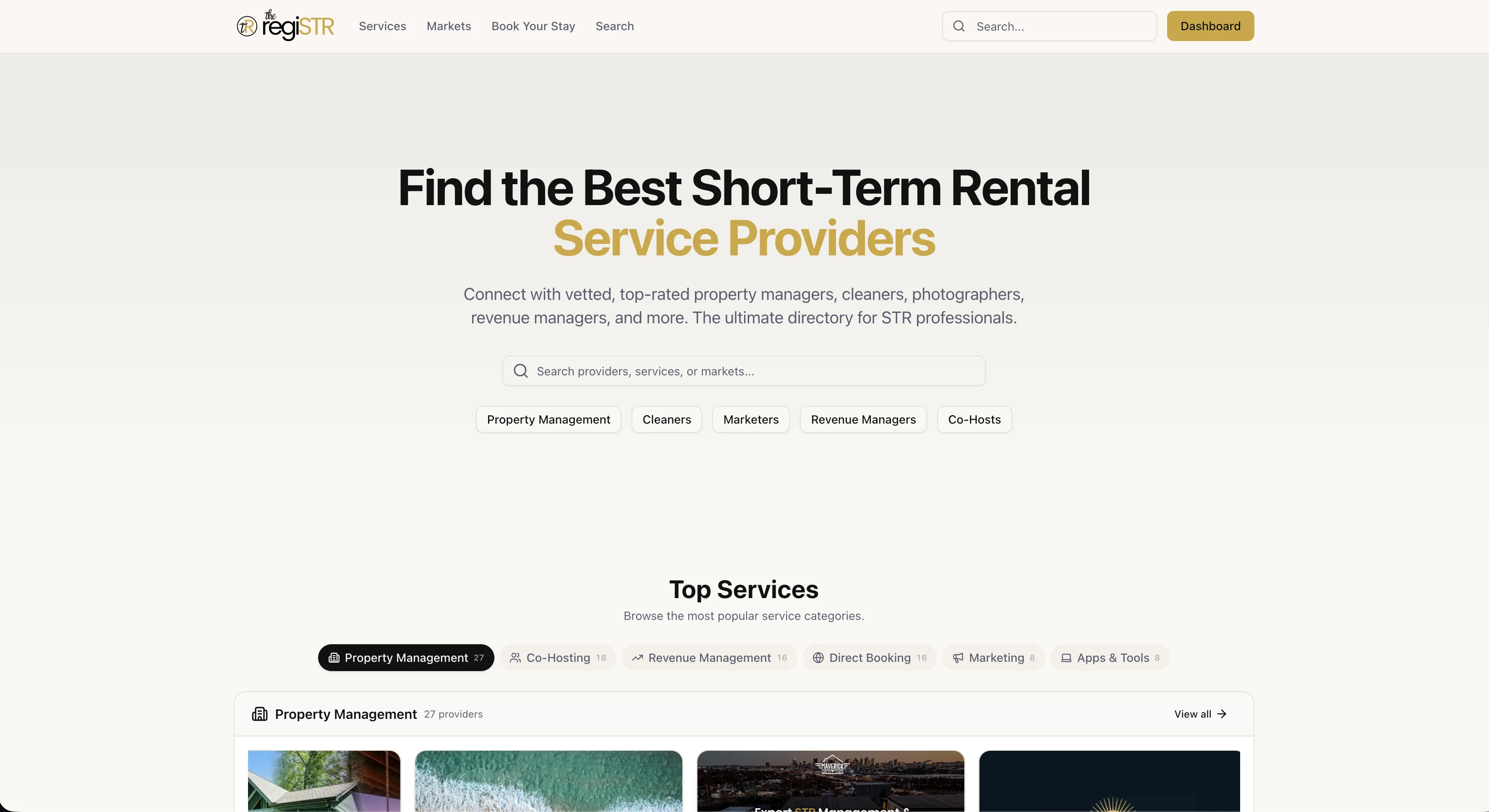
If your gap is local rather than remote, whether that's a cleaner, a co-host, or a full property manager, get started with the regiSTR and browse vetted STR service providers organized by market and category. Sign up free at theregistr.co to see who's already working in your city.
Content powered by inkSTR.co