
Airbnb Designers: How to Hire the Right STR Design Pro
Airbnb designers are interior design professionals who furnish and style short-term rental properties specifically to drive bookings, higher nightly rates, and stronger guest reviews, not just to create a pretty room. Unlike a residential decorator, an Airbnb designer works backward from the listing photo and the guest persona, choosing durable materials, photogenic layouts, and amenity placement that convert browsers into bookers on Airbnb and Vrbo.
Key Takeaways
- An Airbnb designer differs from a residential interior designer by prioritizing photographability, durability, and guest-segment targeting over personal taste or long-term homeowner comfort.
- Furnishing costs for a full turnkey short-term rental design project commonly range from the low thousands for a light refresh to well into five figures for a complete furnish-and-install, depending on square footage and finish level, according to industry design resources.
- The U.S. holds 1.77 million active short-term rental listings projected for 2026, up from 1.69 million in 2026, meaning more properties are competing for the same guest attention on identical search grids (data cited by StayFi).
- A durable three-color palette approach (neutral base, warm secondary, one repeated accent) is a commonly cited framework among STR-focused designers for creating a cohesive look that also photographs consistently across rooms.
- Hosts who skip a pre-shoot design walkthrough with their photographer often end up reshooting rooms after furniture placement clashes with camera angles, adding cost and delay.
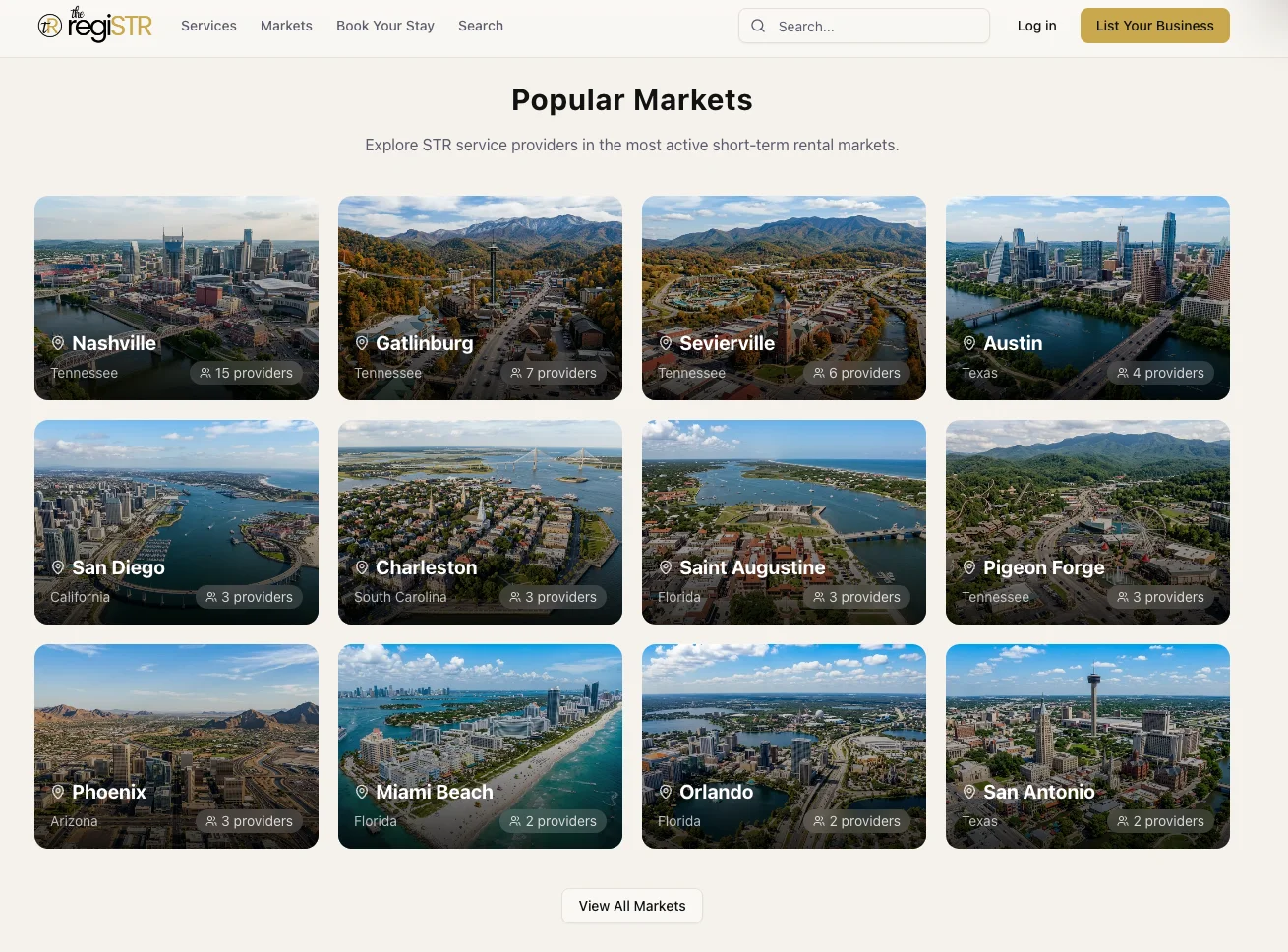
- The regiSTR's Interior Design and Staging directory lists STR-specialized designers by market, filtered by peer vouches rather than anonymous star ratings, so hosts skip the guesswork of vetting design portfolios cold.
Every host eventually hits the same wall: the listing photos look fine, but bookings lag behind comparable properties in the same market. Nine times out of ten, the fix isn't a lower rate. It's the design. Guests scroll fast, and a generic, mismatched, or under-furnished space gets passed over before they ever read the description.
At the regiSTR, we've tracked this pattern across hundreds of STR service provider profiles: hosts who hire a designer with actual short-term rental experience see a very different outcome than hosts who hire a general residential decorator or, worse, wing it themselves with big-box furniture. The difference shows up in the listing photos, in the review language guests use, and eventually in the booking calendar.
This guide covers what an Airbnb designer actually does differently from a traditional interior decorator, what a turnkey design project typically costs, the specific frameworks STR designers use to balance style with durability, and how to vet a design professional before you hand over a deposit. We'll also walk through the questions competing guides skip entirely, like how design decisions intersect with fire safety, child safety, and pet durability, not just aesthetics.
What Makes Airbnb Interior Design Different From Residential Design?
Airbnb interior design is the practice of furnishing and styling a property specifically to perform well in short-term rental listing photos, withstand frequent guest turnover, and appeal to a defined guest persona rather than a single homeowner's taste. It treats the living room as a marketing asset first and a living space second.
A residential designer asks what the homeowner loves. An Airbnb designer asks what a family of four browsing Airbnb at 9pm on a Tuesday will click on first. That's a fundamentally different design brief, and it changes almost every decision: furniture scale, color saturation, lighting temperature, even where the sofa faces relative to the window.
Specifically, STR-focused design also has to account for staff turnover cleaning cycles, not just guest use. A residential designer rarely considers whether a rug can be steam-cleaned in the 90 minutes between checkout and check-in. An STR designer builds that constraint into the material list from day one.
As of 2026, with U.S. short-term rental supply projected to hit 1.77 million listings, the properties that stand out are the ones designed to be found, not just decorated to be liked. Hosts in competitive markets who treat design as an afterthought are effectively competing on price alone, which is a losing long-term strategy against better-staged inventory.
This is exactly the vetting distinction we apply on the regiSTR's Find STR Interior Designers directory: every listed designer has actual short-term rental project experience, not just a general portfolio of residential clients.
What Is the 80/20 Rule for Airbnb?
The 80/20 rule for Airbnb, as commonly applied by hosts and designers, refers to the idea that roughly 80% of a guest's booking decision is influenced by a small set of high-impact factors, primarily photos, location, and price, while the remaining 20% comes from secondary details like amenity lists and house rules.
For design purposes, this means your budget and attention should go disproportionately toward the spaces that show up first in the photo carousel: the living room, the primary bedroom, and any standout feature like a pool, hot tub, or view. A beautifully designed hallway closet does nothing for your click-through rate.
Practically, this changes how a designer allocates a furnishing budget. Instead of spreading funds evenly across every room, an experienced Airbnb designer front-loads spend on the hero shot rooms and keeps secondary spaces, like a second guest bedroom or a laundry nook, functional but modest.
Hosts working with a fixed furnishing budget should ask their designer directly how spend is allocated by room, and push back if the answer sounds evenly distributed rather than weighted toward the rooms guests see first in the listing gallery.
What Is the 75-55 Rule in Airbnb?
There is no verified, industry-standard "75-55 rule" for Airbnb design or pricing. If you've seen this term referenced elsewhere, treat it with caution: it does not appear in Airbnb's official documentation, design publications, or established STR industry frameworks as of 2026.
What we can tell you, based on patterns across STR-focused design projects, is that hosts often look for a simple ratio to guide furnishing decisions, something like "spend this percentage here, this percentage there." The appeal is understandable. But rigid percentage rules rarely survive contact with a real property, because a 400-square-foot studio and a five-bedroom lake house have completely different furnishing needs. Rather than chasing a named formula, work with your designer on a room-by-room priority list based on what guests will actually see in your specific listing photos, then set a budget ceiling per room based on that priority order.
If you come across a numbered "rule" in a blog post or social media reel that sounds too tidy to be true, verify it against an actual source before building your design budget around it. This is the kind of unverified shortcut we specifically avoid recommending on the regiSTR, because bad framework advice costs hosts real money.
What Is the 3-5-7 Rule in Interior Design?
The 3-5-7 rule in interior design is a styling guideline that suggests arranging decorative objects, like books, vases, and accent pieces, in groups of three, five, or seven items rather than even numbers, because odd-numbered groupings tend to read as more visually balanced and intentional to the eye.
In an Airbnb context, this rule shows up most in shelf styling, coffee table arrangements, and console tables, the small vignettes that appear in wide-angle listing photos. A shelf styled with three objects of varying height photographs cleaner than a shelf lined with six identical items spaced evenly apart. Designers working in short-term rentals apply this rule with one added constraint: every object needs to survive guest handling. That means fewer fragile ceramics and more objects with actual weight or purpose, a stack of hardcover coffee table books, a single sculptural bowl, a pair of substantial candle holders.
This is a small detail, but it's the kind of thing that separates a designer who understands photography from one who doesn't. If a stylist hands you a shelf full of delicate, easily-knocked-over pieces for a property with a 48-hour turnover cycle, they haven't thought through the operational reality of your rental.
What Is Airbnb's Design System Called?
Airbnb's internal design organization is not built around a single publicly branded "design system" name in the way some tech companies name their component libraries. Airbnb.design, the company's official design publication, describes its team as cross-disciplinary, made up of designers, researchers, writers, filmmakers, architects, and photographers working together on the platform's product experience.
This is worth understanding because there's a real distinction hosts should draw between two very different things that both get called "Airbnb design": Airbnb's in-house product and experience design team, who build the app and website interface, and independent Airbnb designers, who furnish and style physical rental properties for hosts. If you're searching for help with your listing's app appearance or platform features, that's Airbnb's product team, not something you can hire directly. If you're searching for someone to furnish your guest bedroom and stage your kitchen, that's the interior design category, and that's where a directory like the regiSTR's Interior Design and Staging listings come in.
Conflating the two search intents is one of the most common mistakes we see when hosts research "Airbnb designers" online. Know which one you actually need before you start reaching out.
How Much Does It Cost to Furnish a Short-Term Rental?
Furnishing a short-term rental typically costs anywhere from a few thousand dollars for a light cosmetic refresh to well over $50,000 for a full turnkey furnish-and-install on a larger property, according to industry design resources. The final number depends heavily on square footage, finish level, and whether the designer sources furniture themselves or you provide a budget for them to work within.
Pricing models vary significantly across the category. Some designers charge a flat consultation fee and hand you a shoppable list. Others offer remote e-design packages where you receive a floor plan and product links but do the purchasing and installation yourself. Full-service turnkey providers handle sourcing, delivery, and installation, and they typically charge a premium for that convenience.
| Pricing Model | What's Included | Best Fit |
|---|---|---|
| Consultation-only | A design plan, room layout, and product recommendations; you handle purchasing | Hands-on hosts with time to shop and assemble |
| Remote e-design | Digital mood boards, floor plans, and shoppable lists delivered online | Out-of-state owners managing a property remotely |
| Full-service turnkey | Sourcing, delivery, assembly, and installation handled end to end | Owners who want a move-in-ready property with no personal labor |
| Design-plus-installation | A hybrid: designer sources and installs specific rooms while you handle others | Hosts refreshing part of a property, like just the primary suite |
Notably, none of these pricing models is inherently better. A first-time host furnishing a single condo often gets more value from a consultation-only package than a $40,000 full-service contract. A portfolio investor scaling a fifth property, on the other hand, is usually better served by turnkey service that doesn't eat their time. Comparing quotes side by side against your specific property size and timeline is exactly the vetting step the regiSTR was built to simplify, since you can browse multiple designer profiles by market and service tier in one place.
What Should You Look for When Vetting an Airbnb Design Professional?
Vetting an Airbnb design professional means confirming they have actual short-term rental project experience, not just a general residential portfolio, and that they understand the operational realities of turnover cleaning, guest damage, and listing photography. A polished Instagram feed is not proof of STR-specific expertise.
Most hosting guides stop at "check their portfolio," which is a shallow bar. A stronger vetting process covers procurement logistics, licensing, insurance, and what happens after installation day.
- Ask for STR-specific portfolio examples. Request before-and-after photos from actual short-term rental projects, not staged residential listings for home sales.
- Confirm procurement and delivery timelines in writing. Furniture lead times can run months for certain items; get a realistic install date before you block your calendar.
- Verify business insurance. A designer who is on-site for installation should carry liability coverage in case of property damage during the process.
- Ask about post-installation support. Find out whether the designer handles replacement sourcing if a piece is damaged by a guest within the first few months.
- Discuss durability requirements upfront. Ask specifically about fabric performance ratings, whether upholstery is stain-resistant, and how flooring choices hold up to rolling suitcases and pet traffic.
- Check for local code awareness. A designer working in your market should understand basic fire safety clearances around furniture placement and any local short-term rental regulations affecting egress or occupancy.
- Get a written scope of work. Confirm exactly which rooms, which line items, and which installation tasks are included before signing anything.
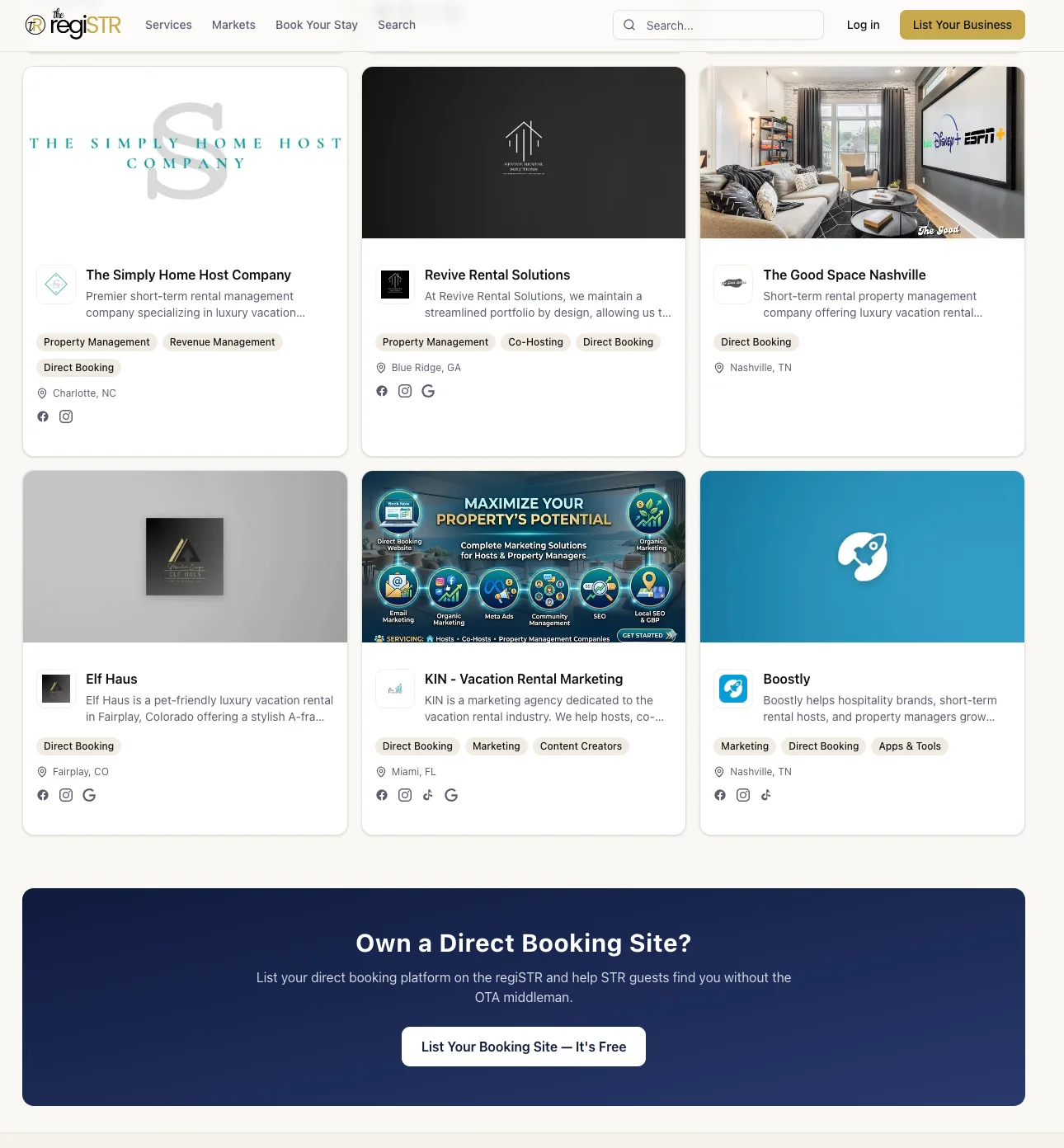
This is precisely the vetting criteria the regiSTR applies before listing a designer in the directory: STR-relevant portfolio work, verifiable market presence, and peer vouches from operators who've actually hired them, not anonymous star ratings that can be gamed with a handful of reviews.
What Do Competitor Guides Miss About Safety and Durability?
Most Airbnb interior design guides focus almost entirely on aesthetics and photography, leaving safety, accessibility, and pet durability as an afterthought. That's a real gap, and it's one hosts pay for later in maintenance costs, guest complaints, or worse, liability exposure. Fire safety around furniture placement matters more in a rental than a private home, because you're not there to notice a space heater too close to a curtain or a blocked emergency exit. A designer with real STR experience will flag clearances around exits, smoke detectors, and heating elements as part of the layout, not after the fact. Child safety comes up constantly with family-oriented properties. That means anchoring tall furniture to walls, avoiding low glass tables in family-marketed units, and choosing corner guards on sharp edges in units that book families with young kids, per the Airbnb Community host guide's broader emphasis on safety-conscious amenities like first-aid kits. Pet durability is its own category. If your listing allows pets, upholstery, flooring, and baseboards all need to survive claws and accidents. A designer who defaults to light-colored linen sofas for a pet-friendly cabin hasn't thought through the actual guest profile using that space. Local short-term rental regulations can also intersect with design decisions more than hosts expect, from occupancy limits tied to bedroom configurations to accessibility requirements in certain jurisdictions. These specifics vary by city and county, so confirm current requirements with your local permitting office rather than assuming a design choice is automatically compliant. Few designers proactively raise these issues unless asked directly. Bring them up in your first consultation call, and treat a designer's willingness to engage with these questions as a signal of real STR expertise versus surface-level styling knowledge.
What Design Framework Do STR Designers Use for Cohesive Rooms?
A commonly cited framework among STR-focused designers is a three-color system: a neutral base color for walls and large furniture, a warm secondary color applied through wood tones and textiles, and one repeated accent color threaded across multiple rooms to create visual continuity from room to room.
This approach solves two problems simultaneously. First, it photographs consistently, so your listing gallery feels like one cohesive property rather than a mismatched collection of rooms. Second, it simplifies replacement: when a throw pillow gets stained or a lamp breaks, you can reorder within the same palette without a full redesign.
Layered lighting is another consistent recommendation among practitioners: combining ambient overhead light, task lighting near workspaces or kitchen counters, and accent lighting like table lamps creates warmth in listing photos that flat overhead lighting alone cannot replicate. One clear focal point per room is a related principle worth following. A room trying to show off a fireplace, a statement headboard, and a gallery wall all at once reads as cluttered in a wide-angle photo. Pick one and build the rest of the room to support it. Local cultural or historical touches, referenced in Airbnb's own community host guidance, also help differentiate a listing from the generic "West Elm catalog" look that's become common across saturated STR markets. A coastal property benefits from a different material and color story than a mountain cabin or a downtown loft, and matching the design to the property's actual setting reads as more intentional to guests browsing search results.
How Do You Design a Rental for a Specific Guest Persona?
Designing for a specific guest persona means choosing furniture, layout, and amenities based on who actually books your property type, family travelers, couples, business travelers, or groups, rather than designing to your personal taste and hoping the right guest shows up.
Families with children prioritize functionality and safety over romantic touches: think durable flooring, a crib or pack-and-play option, and enough dish and cookware inventory to handle a full kitchen for the maximum listed guest count, a specific point the Airbnb Community host guide calls out directly. Couples often respond to more intentional, romantic staging details, a well-placed loveseat, softer lighting, a bathtub if the property has one. Business and remote travelers increasingly expect a dedicated workspace, not a coffee table balanced on a lap. A desk with a proper chair and reliable outlet access near it has become a differentiator, particularly for mid-week bookings that don't rely on tourist demand.
Getting the persona wrong is a common and expensive mistake. A designer who furnishes a family-oriented mountain cabin with fragile glass decor and a minimalist, low-storage kitchen has misread the actual guest who books that property type. Before hiring, walk your designer through your existing booking history and reviews so they understand who's actually staying there, not just who you imagine staying there.
Common Mistakes Hosts Make When Hiring an Airbnb Designer
The most common mistake hosts make is hiring based on aesthetic portfolio alone without confirming the designer understands turnover cleaning cycles, guest damage patterns, and listing photography requirements specific to short-term rentals.
- Skipping the pre-shoot walkthrough. Coordinate your designer and photographer before the shoot date, not after, so furniture placement actually works with camera angles.
- Overpacking drawers and cabinets. The Airbnb Community host guide specifically warns against overpacked kitchen drawers; stock for your maximum guest count, not beyond it.
- Choosing style over serviceability. Delicate fabrics and finishes that require special cleaning will fail fast under STR turnover conditions.
- Leaving cleaning supplies accessible. Store them in a locked cabinet, a specific recommendation from Airbnb's own hosting guidance, rather than an open closet.
- Ignoring the guest persona entirely. A gorgeous design that doesn't match who actually books the property wastes furnishing spend.
- No written scope of work. Verbal agreements on room count, deliverables, and timeline lead to disputes over what was actually promised.
Avoiding these mistakes starts with hiring someone who's actually done this before in a short-term rental context. That's the exact gap the regiSTR's STR Interior Designers directory closes, since every listed provider has been vouched for by real STR operators who've hired them for this exact use case.
Frequently Asked Questions
How do I find an interior designer who specializes in short-term rentals?
Search for designers with a documented STR project portfolio, not just residential work, and ask directly about their experience with turnover durability, guest persona targeting, and listing photography coordination. Directory platforms like the regiSTR filter specifically for this experience by market and category, which is faster than vetting general portfolios cold.
What is the average cost to furnish an Airbnb?
Costs vary widely based on square footage, finish level, and service model, ranging from a few thousand dollars for a light refresh to well over $50,000 for a full turnkey furnish-and-install, according to industry design resources. Get quotes from at least two or three providers against the same scope of work to compare accurately.
What is the 80/20 rule for Airbnb design?
It refers to the idea that a small set of factors, mainly photos, location, and price, drive the majority of a guest's booking decision, so design and furnishing budgets should be weighted toward the rooms that appear first in the listing photo gallery rather than spread evenly across the property.
Is there really a 75-55 rule for Airbnb?
No. There is no verified industry-standard framework by that name in Airbnb's official documentation or established STR design practice as of 2026. Treat any content citing a specific numbered "rule" with skepticism unless it's traceable to a credible source.
How do I know if a designer has actually worked with short-term rental properties before?
Ask for specific before-and-after project photos from short-term rental properties, request references from actual STR hosts they've worked with, and confirm they understand durability and turnover requirements in the initial consultation. A designer who can't speak fluently about guest wear-and-tear or turnaround cleaning hasn't done this work before.
Should I hire a full-service turnkey designer or do remote e-design myself?
Full-service turnkey works best for out-of-state owners or investors scaling multiple properties who want zero hands-on involvement, while remote e-design suits hands-on hosts with time to shop and assemble who want professional guidance at a lower cost. Match the service model to your available time and how many properties you're managing.
How do I improve my Airbnb ranking through design?
Stronger listing photos, driven by cohesive design, proper lighting, and photogenic staging, directly improve click-through rate, which is one of the signals that influences how a listing performs in Airbnb's search results. Pairing professional design with a professional photography shoot, rather than smartphone photos, is one of the most consistently cited recommendations for improving listing performance.
Where This Leaves You Going Into 2026
Design has stopped being a nice-to-have for short-term rentals. With U.S. supply climbing toward 1.77 million active listings in 2026, per data cited by StayFi, standing out in a crowded search grid increasingly comes down to whether your property photographs like it belongs at the top of the page. The hosts winning that battle aren't necessarily spending the most, they're hiring designers who understand guest personas, turnover durability, and listing photography as one connected discipline, not three separate problems.
Whether you need a full turnkey furnish-and-install or just a remote e-design consult for one stubborn guest bedroom, the fastest path to the right hire is comparing vetted options side by side rather than cold-searching portfolios and hoping for the best. Get started with the regiSTR and browse STR-specialized interior designers by market, filtered by real peer vouches instead of anonymous ratings.
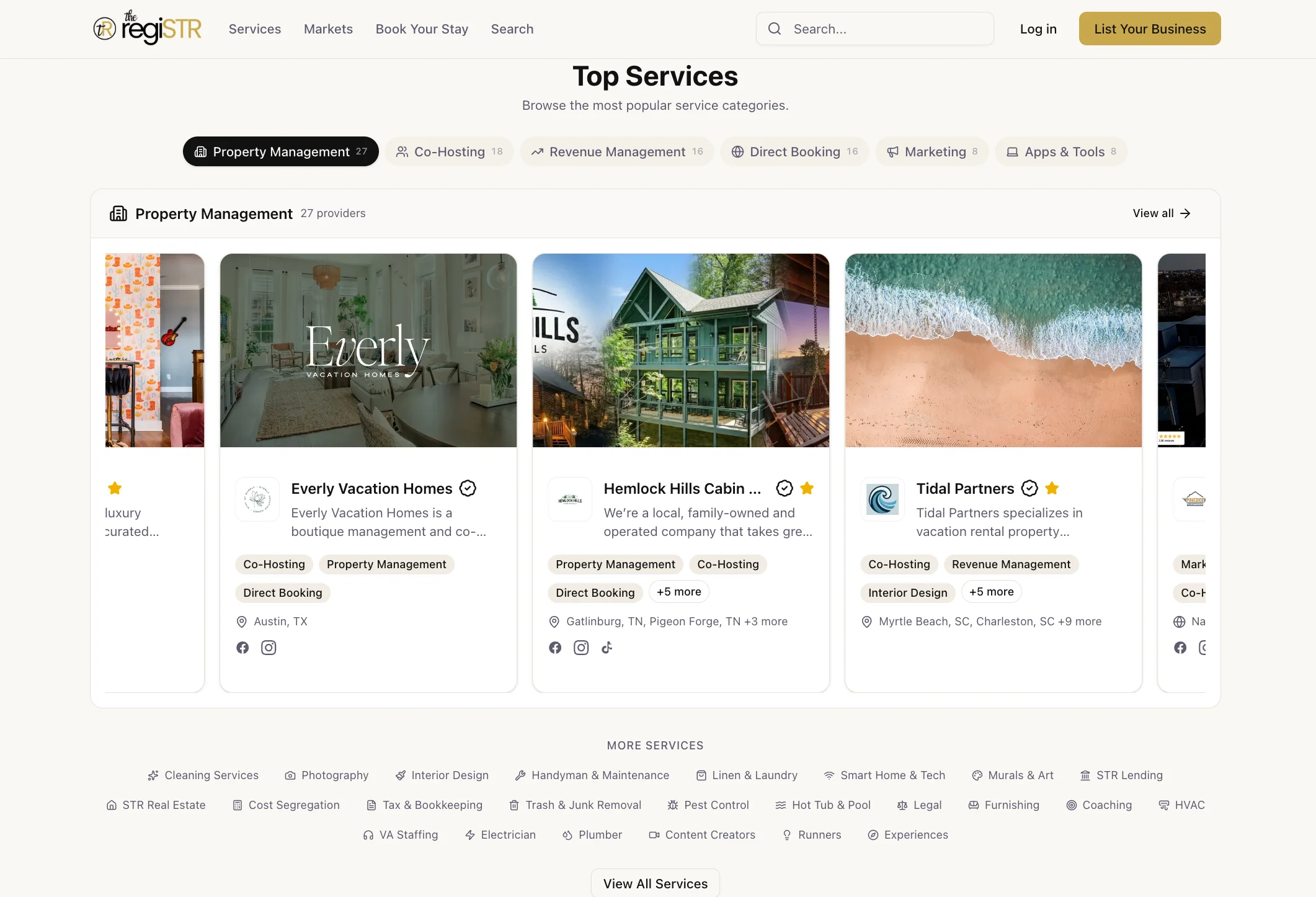
If you're weighing what a well-designed rental actually looks like in practice, a space like The Good Space Nashville shows the payoff: a cohesive palette, a clear focal seating area, and a layout built to photograph well from a wide angle. Browse Find STR Interior Designers to find a professional who can bring that same result to your own property.
Content powered by inkSTR.co